

Appeals court finds it plausible public defender failed to inform client of plea deal
Colorado’s second-highest court has determined a Boulder County judge misunderstood the sequence of events in a criminal case, and it is plausible a public defender was constitutionally ineffective for failing to tell her client 14 years ago about a plea offer that would have freed him from prison by now.
A jury convicted Mark Andrew Barajas of sexual assault in 2009 and he received a sentence of 20 years to life. Barajas subsequently claimed he received ineffective assistance of counsel because the public defender who represented him at the outset of his prosecution allegedly received a plea offer that would have only put Barajas behind bars for 12 years. According to Barajas, she never told him about the proposal.
In 2020, District Court Judge Andrew Hartman dismissed Barajas’ claims, finding the evidence did not support the existence of such an offer.
However, a three-judge panel of the Court of Appeals found that Hartman had misread the record.
In reality, while the private lawyer Barajas hired did not have knowledge of the plea deal, other statements made during Barajas’ case suggested the proposal did exist and the original public defender did know about it.
“Therefore, we conclude that Barajas has sufficiently alleged deficient performance by the public defender,” wrote Judge Jaclyn Casey Brown in the Jan. 5 opinion.
In October 2008, the victim awoke to find a man in her bed having sex with her. She struggled with her assailant, who then fled. A friend took her to the hospital, where she underwent an examination.
Barajas denied committing the offense, but the victim’s DNA was found on his genitals. He alleged he had met the victim that same night, and the DNA transfer could have happened from shaking hands with her. The victim died in a motorcycle accident prior to trial.
The Court of Appeals upheld Barajas’ conviction in 2012 and the state Supreme Court declined to review the case. Then in 2014, Barajas filed a postconviction motion alleging his original defense lawyer failed to inform him of a plea offer from the prosecution.
Under the Sixth Amendment, criminal defendants have the right to effective assistance of counsel, including during plea bargaining. Demonstrating ineffectiveness requires not only that a lawyer’s performance was deficient, but it also harmed the defendant.
Barajas claimed prosecutors extended a deal whereby Barajas would plead guilty to felony menacing in exchange for a 12-year sentence. However, the offer would only last until the case’s preliminary hearing in late 2008. The public defender represented Barajas until January 2009, after which a private attorney took over.
Hartman, in denying Barajas’ request for relief, saw no evidence of that narrative. He cited a memo – written months after the public defender had departed – in which Barajas’ new lawyer first talked about Barajas authorizing plea deal discussions.
That memo was “directly contradictory to (Barajas’) statement that he was unaware until after the trial that an offer had been made,” Hartman wrote.
But the appellate panel believed Hartman misunderstood the timeline. The memo could illustrate Barajas’ private attorney was unaware of a prior plea offer, but not that one never existed before he arrived on the case.
Further, the prosecution’s own statements in court suggested the government had extended an earlier proposal. In 2009, the prosecutor explained that she “told Mr. Barajas’ previous attorneys that if we went to preliminary hearing, the offer was off the table.”
At Barajas’ sentencing hearing, the prosecutor further mentioned that a felony menacing plea would have been consistent with the victim’s wishes. Felony menacing “was really the most significant charge to her because of the fear that she felt,” the prosecutor explained.
Given that circumstantial evidence, the Court of Appeals believed Barajas’ claims were credible.
“And it would have been objectively reasonable to accept twelve years in prison for menacing when facing an indeterminate sentence for a sexual offense,” Brown explained. “So, we think the record sufficiently corroborates Barajas’ claim that he would have accepted the offer.”
The panel returned Barajas’ case to the trial court with instructions to hold a hearing and determine if Barajas received constitutionally-ineffective assistance by his public defender.
At the same time, the appellate judges rejected Barajas’ other claim that his trial lawyer was ineffective for trying to show at trial the victim’s DNA on Barajas’ genitals came from a handshake transfer, rather than from their shared cocaine use. The Court of Appeals decided the focus on the handshake appeared to be a deliberate strategic decision because, even if the theory was less plausible, it did not remind jurors of Barajas’ illegal drug use.
The case is People v. Barajas.


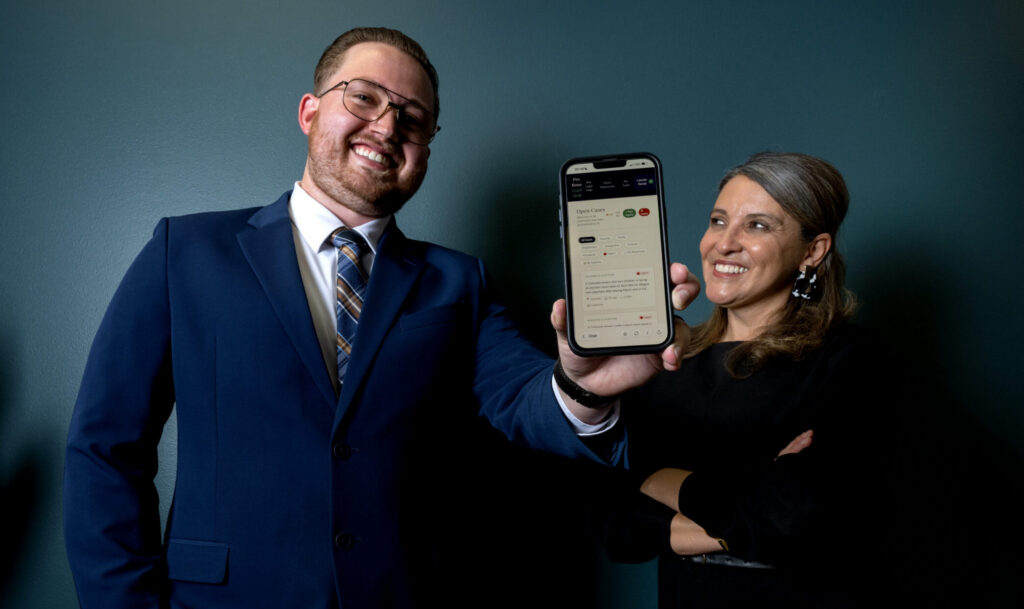
Denver law students create AI-powered tools in federal judge’s ‘design sprint’
Michael Karlik
michael.karlik@coloradopolitics.com
Updated 6 hours ago
A tenant discovered a handwritten note on his door stating he had 48 hours to move out. The landlord changed the locks without notice or court proceedings. The tenant paid rent on time and had never received any complaints about...
First ever disciplinary trial of a Colorado judge scheduled under new system
Michael Karlik
michael.karlik@coloradopolitics.com
Updated 1 day ago
A disciplinary panel on Thursday scheduled a mid-August hearing to adjudicate the alleged misconduct of Montezuma County Court Judge Ian J. MacLaren. Following voters’ passage of constitutional Amendment H in November 2024, adjudication of serious judicial misconduct allegations is open to public...
Appeals court recognizes weekend, holiday rule applies to judicial review deadline
Michael Karlik
michael.karlik@coloradopolitics.com
Updated 1 day ago
Colorado’s second-highest court clarified for the first time on Thursday that the rule extending deadlines in civil cases when the final day falls on a weekend or holiday also applies to litigants seeking review of governmental decisions. Nicholas A. Rigato...
SCOTUS arguments, varied workload: 6 Colorado solicitors general talk about job
Michael Karlik
michael.karlik@coloradopolitics.com
Updated 1 day ago
Six current and former solicitors general of Colorado, including two who have since become members of the bench, spoke to attorneys on Wednesday about how the role has changed over time, what the workload entails, and their experiences arguing at...
Federal judge declines to end Denver sheriff employee’s sex discrimination suit
Michael Karlik
michael.karlik@coloradopolitics.com
Updated 1 day ago
A federal judge tentatively green-lit a former Denver Sheriff Department sergeant’s sex discrimination lawsuit for trial last month, based upon allegations that three female employees were promoted ahead of him despite his qualifications. U.S. District Court Judge Nina Y. Wang...
Corrections officials may be sued for employee’s alleged abuse of detainee, federal judge rules
Michael Karlik
michael.karlik@coloradopolitics.com
Updated 2 days ago
High-level corrections officials may be sued for their own alleged failures to prevent or respond to an employee’s sexual misconduct toward a detainee, a federal judge decided last month. Rajae Bouhamidi was incarcerated at the Denver Women’s Correctional Facility. In...
Colorado GOP request to block unaffiliated voters from receiving Republican primary ballots denied by judge
Ernest Luning
ernest.luning@coloradopolitics.com
Updated 3 days ago
A federal judge on Tuesday denied the Colorado Republican Party’s request for an emergency injunction barring unaffiliated voters from participating in the state’s upcoming Republican primary election. U.S. District Court Judge Philip A. Brimmer said that preventing unaffiliated voters from...
Aurora not liable for suspended officer’s attack on woman, federal court rules
Michael Karlik
michael.karlik@coloradopolitics.com
Updated 3 days ago
The Denver-based federal appeals court decided on Monday that the city of Aurora cannot be held liable for an officer’s attack on a woman while he was serving a suspension for shooting a different person. Wyoma Martinez filed suit against...

Colorado’s unprecedented AI law can’t be enforced yet, judge rules
Marianne Goodland
marianne.goodland@coloradopolitics.com
Updated 3 days ago
A federal judge on Monday issued a delay in enforcing Colorado’s artificial intelligence law, touted by backers as a tool to protect consumers and residents from algorithmic discrimination but which critics called heavy-handed and unworkable. The lawsuit against Senate Bill...
Lawsuit from men wrongly arrested for Denver shooting dismissed by federal appeals court
Michael Karlik
michael.karlik@coloradopolitics.com
Updated 3 days ago
The Colorado-based federal appeals court dismissed a lawsuit last week from two men who were arrested as suspects in a downtown Denver shooting when they instead appeared to be the targets. Trevor Puller and Deandre Hutchinson alleged that they were...
PREV
PREVIOUS

Rich Jones, longtime policy wonk for the Bell, dies at 69
Rich Jones, the longtime director of policy and research for the Bell Policy Center, died Jan. 2 after a long illness. Jones’ funeral will be on Monday, Jan. 9 at 10:30 a.m. at St. Michael the Archangel Catholic Church in Aurora. He will be interred at Fairmount Cemetery at 1:30 p.m. In lieu of flowers, […]

Number of immigrants in Denver triples since emergency declaration
The number of immigrants arriving from South and Central America has more than tripled since Denver’s mayor declared the humanitarian crisis had pushed the city to its breaking point three weeks ago. The crisis, which began spilling into Denver from America’s porous border with Mexico a few months ago and ballooned into a full-blown emergency […]