

10th Circuit upholds sealing of records in response to Colorado Springs church’s harassment
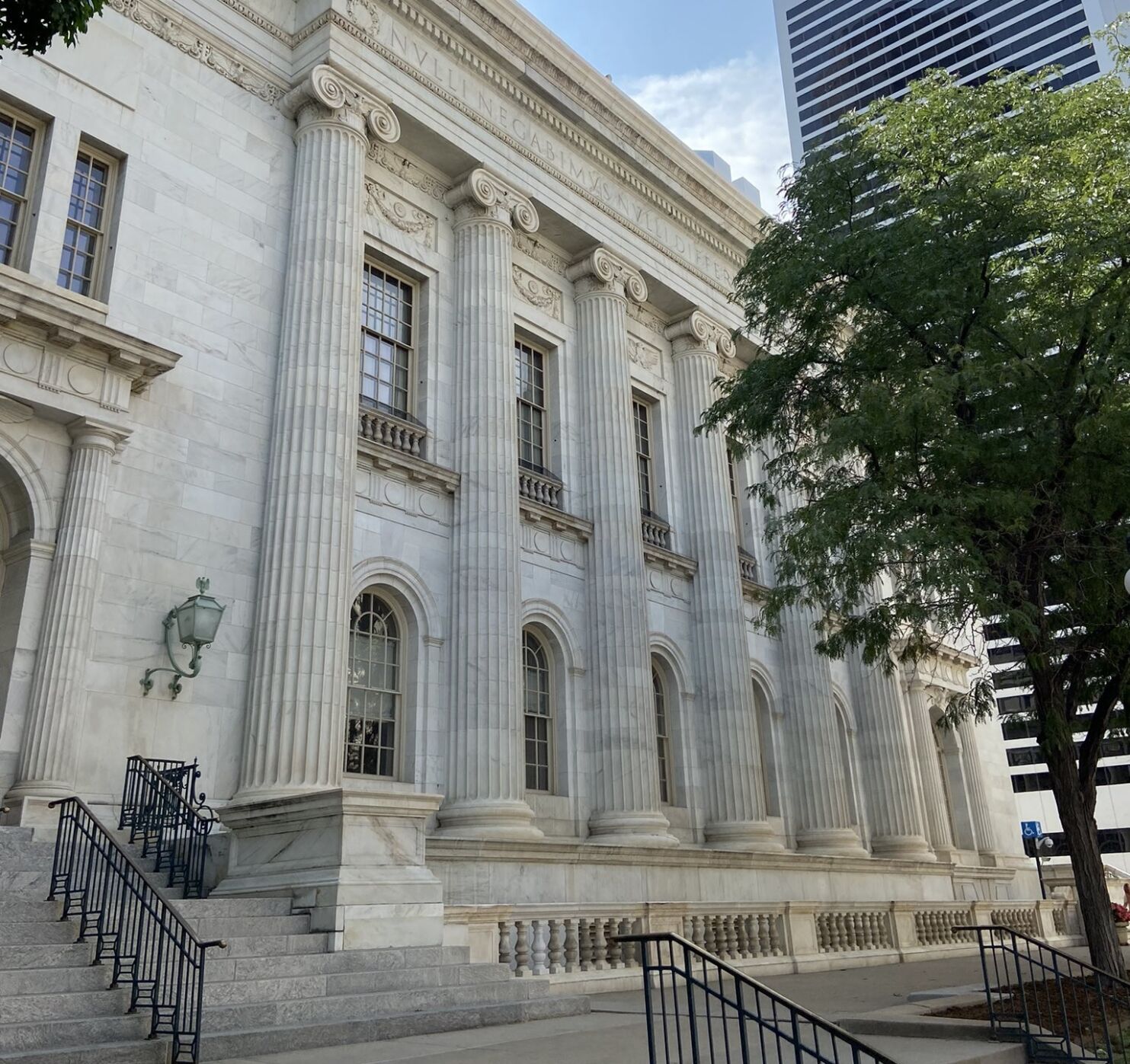
The federal appeals court based in Denver has upheld a trial judge’s decision to block access to certain court records, out of concern that members of a Colorado Springs church would use the information to harass and intimidate witnesses.
A long-running and unusual quest for transcripts has been intertwined with the Colorado Springs Fellowship Church and its pastor, Rose Banks. A federal jury convicted six of her members of wire fraud and other charges following their 2011 trial. One of them received a reduced sentence in 2017 after U.S. District Court Senior Judge Christine M. Arguello learned of Banks’ attempts at controlling the defendant.
There was reportedly a fear of “continued retaliatory harassment” from CSFC following the resentencing hearing, and Arguello granted the defense’s request to seal the transcript and block access to other court filings.
On Thursday, a three-judge panel of the U.S. Court of Appeals for the 10th Circuit found Arguello was justified in her decision.
“The trial judge has some concern based on past conduct that if certain information is shared with Pastor Banks or with the church, it could very well result in harassment of witnesses – just like we had harassment in the past and even, most egregiously, harassment of jurors,” said Judge Carolyn B. McHugh during oral arguments before the panel in November.
The appeal came from David A. Banks, Rose Banks’ son and one of the six criminal defendants nicknamed the “IRP-6.” Federal officials in the mid-2000s pursued an indictment of five Black men and one white man, which drew questions around the time about a racially-motivated prosecution. The men ran IRP Solutions Corporation, which misrepresented its business dealings and ended up owing $5 million to multiple staffing companies.
After representing themselves at trial, a jury found the IRP-6 guilty. Arguello gave them prison sentences ranging from 87 to 135 months. The harshest sentences went to Banks, the chief operating officer, and Gary L. Walker, the company president. The IRP-6 were all members of CSFC.
In 2015, Walker filed a petition for review of his sentence, arguing he had ineffective assistance of counsel during his initial sentencing. Arguello granted a hearing and heard from 16 witnesses, including Walker and several CSFC members.
She found Rose Banks effectively “directed” Walker’s lawyer, who was another church member and who, therefore, had a conflict of interest. The judge listed off other ways Banks had sought to exercise her authority over Walker: alienating him from his wife and son, promising his parents would suffer from cancer for speaking ill of her, and telling Walker that “god is going to bring you down.”
“She told us one time we were in jail, we were in prison, so that we could learn to be better Christians,” Walker, who realized the extent of Banks’ influence after his conviction, told Arguello.
The judge reduced Walker’s sentence from 135 months to 70 months. Walker’s lawyer moved to restrict the transcript, for fear that CSFC members would harass Walker, his parents and the former church members who had spoken. Arguello granted the request.
Gwendolyn Lawson, the lawyer who was conflicted while representing Walker, then tried to obtain the transcript for herself and Walker’s other co-defendants. CSFC also attempted to unseal the proceedings. Arguello allowed Lawson to access her testimony, but otherwise refused to permit access.
In January 2019, the 10th Circuit ordered Arguello to reconsider. In sealing the transcript, she neglected to narrowly fashion the restriction to the stated purpose of preventing harassment. For example, it was not clear to the appellate judges why the testimony of an expert witness, who was unconnected to the CSFC, would need to be shielded.
“Here, the district court issued a series of text orders that neither stated the requirements for restricting access to judicial records nor critically analyzed whether sealing the full transcript was appropriate,” wrote McHugh, who, along with Senior Judge Mary Beck Briscoe, would later sit on the panel hearing David Banks’ appeal.
She added that while CSFC was “far from the most upstanding litigant, the court was still required to carefully consider the public’s interest in judicial records.”
CSFC demanded Arguello recuse herself from the case and a church-connected group posted press releases online accusing her of “concealment of misconduct,” but Arguello largely refused to budge. In a November 2019 order, she went witness-by-witness to explain why their testimony would continue to be shielded. The judge found some witnesses had already “endured harassment” from Rose Banks, and Arguello was “extremely concerned” for the safety of former CSFC members who testified about leaving Banks’ church.
Arguello also raised specific allegations related to the IRP-6’s proceedings. A church member had harassed jurors – which the defendants acknowledged had happened – and Lawson, the lawyer who was conflicted, reportedly substituted a “dummy” binder for a notebook containing evidence in order to abscond with the court documents.
“CSFC lashes out – unrelentingly – towards those whom Pastor Banks perceives to have wronged her or her church,” Arguello wrote. “CSFC wants transcripts of the testimony so that its members, even those who were not present at the hearing, can threaten and harass witnesses who were critical of CSFC.”
CSFC again appealed Arguello’s decision, but the 10th Circuit rejected it as untimely. Then David Banks moved separately to unseal the transcript and other records from Walker’s resentencing. Banks claimed his co-defendant’s records would be useful if he sought a presidential pardon or expungement of his own conviction. Arguello rejected the motion, pointing out Lawson had not even represented Banks at his sentencing like she had with Walker, so the records were irrelevant to any relief he might pursue.
At the 10th Circuit, Banks argued there was no evidence he had harassed anyone. His lawyer told the appellate judges that Banks was denied the records simply for being the member of a religious organization, a punishment akin to “being a Jew” in 1930s Germany.
“The ruling does serious injury to the basic principle of public access,” attorney Bernard V. Kleinman told the panel.
Ultimately, the 10th Circuit concluded Arguello acted within her authority to maintain a seal on the records.
“To be sure, (Banks) argues that the district court did not find that he personally represented a threat of misusing the transcripts and records,” wrote Briscoe in the Jan. 5 order. “But that is immaterial because the district court determined that the threat of misuse of the transcripts and records by Banks’s mother and members of CSFC remained and Banks does not challenge that finding.”
McHugh agreed about the continued sealing of the transcript, but she took issue with Arguello blocking access to the other documents related to Walker’s resentencing. While McHugh acknowledged some court filings contained statements critical of CSFC and should rightly remain sealed, she identified other, more mundane documents Arguello had apparently not analyzed.
“None of the district court’s reasons for maintaining the restriction on portions of the transcript apply to these documents. And having reviewed each document, I do not believe the district court could articulate any non-arbitrary reason for maintaining the restriction to access on these documents,” McHugh wrote.
Kleinman, who represented Banks and also CSFC, said the panel’s decision will enable judges to seal records with “little, or no, basis in fact,” and harms the principle of public access to court records.
During much of the appeal, CSFC and Rose Banks were involved in a defamation lawsuit they had filed against a former attendee of the church, who publicly accused Banks of harassment and labeled the organization a “cult.” The parties settled the case in November after the church agreed to dismiss its complaint.
The case is United States v. Banks.


Trump’s 10th Circuit nominee declines to name 2020 election winner, defends immigration decisions
Michael Karlik
michael.karlik@coloradopolitics.com
Updated 11 hours ago
President Donald Trump’s nominee to the Denver-based federal appeals court declined to say who won the 2020 presidential election during his appearance before the U.S. Senate Judiciary Committee on Wednesday, and defended his recent rulings in immigration detention cases. U.S....
Colorado law allowing lawsuits against ‘conversion therapy’ providers takes effect July 1
Marissa Ventrelli
marissa.ventrelli@coloradopolitics.com
Updated 13 hours ago
With a new law taking effect July 1, Colorado is creating a legal pathway for people to sue licensed providers of “conversion therapy,” even as debate over the practice’s constitutionality continues in the wake of a recent U.S. Supreme Court...
Colorado justices expand ability for civil defendants to avoid participating, win after trial
Michael Karlik
michael.karlik@coloradopolitics.com
Updated 6 hours ago
The Colorado Supreme Court decided on Tuesday that a civil defendant, whose non-participation in the case meant that he legally admitted to the sexual assault allegations against him, could nonetheless prevail after he showed up to testify at trial. A...
Colorado justices find ability to extend appeal deadline applies equally to prosecutors, defendants
Michael Karlik
michael.karlik@coloradopolitics.com
Updated 8 hours ago
The Colorado Supreme Court decided on Tuesday that prosecutors have the same ability as criminal defendants to freeze their deadline to appeal a trial judge’s ruling when they ask for reconsideration, even though the rules do not explicitly say so....
Colorado justices confirm leaving-the-scene prosecutions require no proof of driver’s knowledge
Michael Karlik
michael.karlik@coloradopolitics.com
Updated 1 day ago
The Colorado Supreme Court confirmed on Tuesday that its 20-year-old decision involving drivers who leave the scene of an accident remains good law and prosecutors do not have to prove that such defendants knew they were involved in an accident....

Judge blocks Colorado’s proposed ban on using SNAP benefits for soda
Marissa Ventrelli
marissa.ventrelli@coloradopolitics.com
Updated 1 day ago
A federal judge has temporarily blocked Colorado and several other states from enforcing a proposed “Healthy Choice Waiver” that would have barred Supplemental Nutrition Assistance Program (SNAP) recipients from using their benefits to buy soda and other sugary drinks. Under...
Boulder police overreached in interrogating suspect, Colorado Supreme Court finds
Michael Karlik
michael.karlik@coloradopolitics.com
Updated 1 day ago
Two Boulder detectives violated a man’s constitutional rights by interrogating him at his home using a court order that solely authorized the collection of his DNA evidence, the Colorado Supreme Court concluded on Tuesday. The ruling curtailed the ability of...
Property owners may access evidence before eminent domain decisions, Colorado justices conclude
Michael Karlik
michael.karlik@coloradopolitics.com
Updated 1 day ago
The Colorado Supreme Court ruled on Tuesday that a Douglas County judge incorrectly believed he lacked the authority to allow a property owner to pursue evidence challenging a government entity’s legal right to take its property through eminent domain. In...
Missy Woods accepts plea deal, avoids trial on 102 felony counts
Jenny Deam
jenny.deam@gazette.com
Updated 1 day ago
The former top Colorado Bureau of Investigation forensic scientist accused of altering and deleting DNA evidence in scores of criminal cases across the state for years pleaded guilty to four criminal counts Tuesday in Jefferson County. Yvonne “Missy” Woods, 65,...

10th Circuit grants Boulder-Weld district’s fire chief immunity for firing union leader
Michael Karlik
michael.karlik@coloradopolitics.com
Updated 2 days ago
The Denver-based federal appeals court decided on Monday that the chief of a fire protection district spanning Boulder and Weld counties could not be held liable for terminating a union leader through the process outlined in the collective bargaining agreement....
PREV
PREVIOUS

In legislative limbo, Rep.-elect Brittany Pettersen decries 'surreal' speaker stalemate | TRAIL MIX
It’s like the dog that caught the car and then had to try to drive the contraption. At this writing on the morning of Jan. 6, the slim Republican majority in the U.S. House has spent three days failing to elect a speaker, holding 11 nearly identical votes that saw the speakership slip further from […]

Legislative leaders outline priorities for 2023 session
Four of the legislative leaders for the General Assembly outlined their priorities for the 2023 session that starts Monday in the annual preview hosted by the Metro Denver Chamber of Commerce. The chamber’s priorities for 2023 are similar to those presented by lawmakers during Wednesday’s breakfast: sustainability, including clean air, the current water crisis, public […]