

Sorting out how we’ve sorted ourselves | SONDERMANN
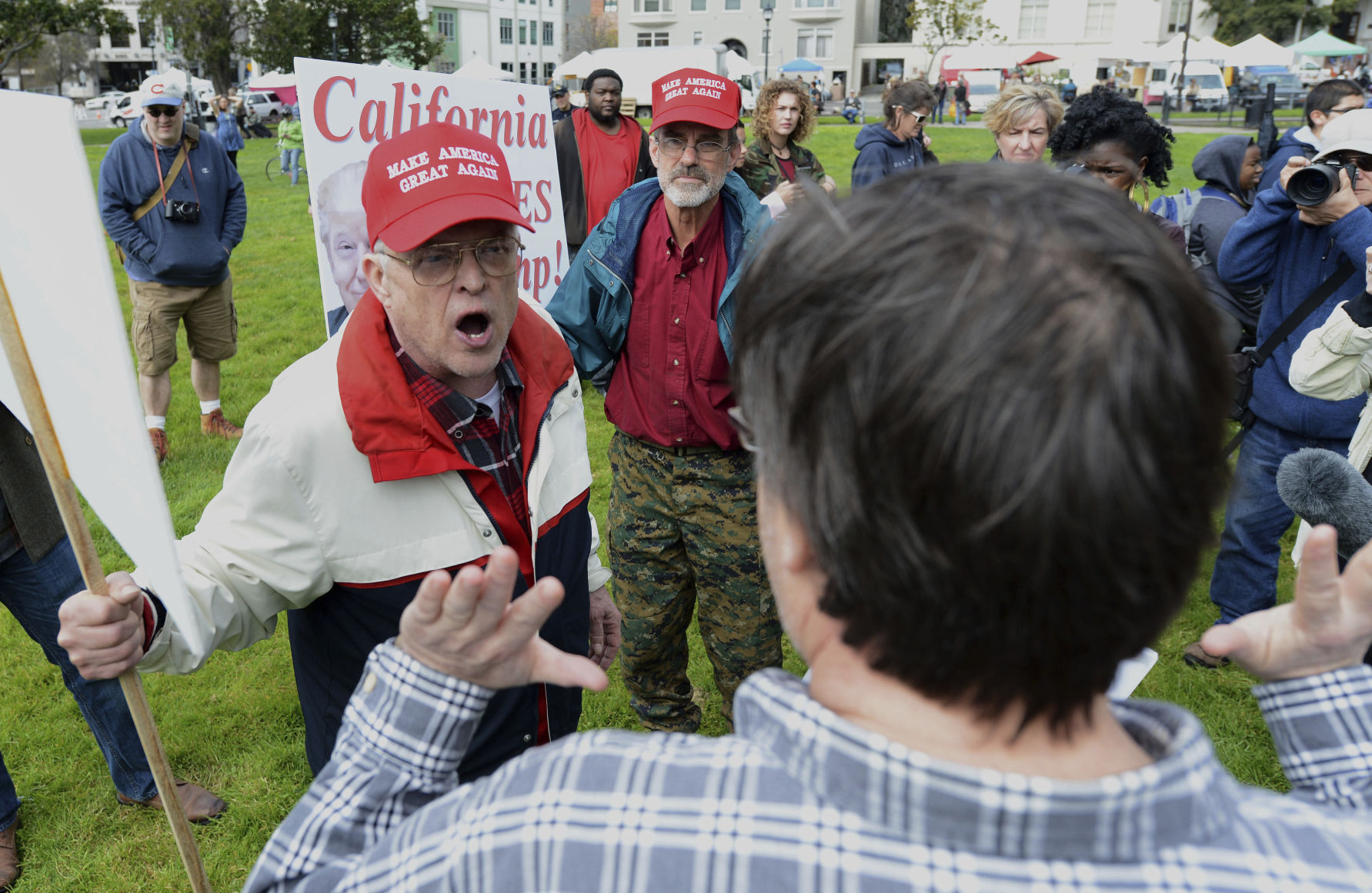
If our political system and broad elements of our culture are out of sorts, as they are, a good deal of the cause lies in the manner in which we have sorted ourselves by political tribe.
Nearly 15 years ago, Bill Bishop wrote what remains for me a formative book, “The Big Sort.” The book’s subtitle said it even better, “Why the clustering of like-minded America is tearing us apart.”
Bishop made the case back in 2008 – before Obama’s presidency and when Donald Trump was still a second-tier television celebrity – that the country was increasingly sorting itself into red and blue by the neighborhood in which we live, the profession we pursue, the school to which we send our kids, and whether and where we worship.
What about using another word for that sorting and calling it what it really is: a type of de facto segregation?
Over the intervening decade and a half, while America continues to break down the racial and ethnic barriers of segregation, our separation into red and blue camps has only intensified. We have grown ever more welcoming and accepting of differences of skin tone, religion, gender and family structure, while sharply more isolated and less tolerant of different viewpoints and political values.
The partition is then further accentuated by media, both the old-fashioned print and broadcast kind, as well as social media.
Most Americans now customize their media sources to suit their established, zealously-held worldview. Those on the right tune into FOX News, listen to their name-brand radio shows, and read publications with a distinct conservative lean. People of the left do the precise inverse in picking media sources with a progressive tilt.
To a scary degree and in far too many quarters, the pursuit of information and balanced perspective has given way to the desire for affirmation. Consumption of media news and opinion these days often brings to mind the old, pugilistic high-school football cheer: “Hit ’em again, hit ’em again, harder, harder.”
Then there is social media with a silo effect that dwarfs even traditional media. Facebook, Twitter and the rest have put the exclamation point on our sorting into distinct, isolated camps.
The algorithms that run these platforms are explicitly designed to reinforce rather than challenge. We get more and more of that which we like or share or retweet. Minute by minute, ever-louder, more polarizing voices gain traction. The walls of the echo chamber grow higher, thicker and impenetrable.
Put it all together and you get America as the calendar turns to 2023. Or, rather, what you get are two Americas with different realities, sometimes even different facts, and far too little overlap or common ground.
The insular sorting now extends as well to our closest relationships. In two recent conversations, including one around our holiday dinner table, we heard from someone who has pulled away from a whole wing of his family because they are “Trumpy” and from a contemporary who flat-out said that political non-alignment would be a deal-breaker when it comes to accepting a child’s prospective partner.
Dating back a few years, 71 percent of Democrats expressed a hesitancy to date someone who had voted for Trump in 2016, including 45 percent who stated it would “definitely” be a no-go. Republicans seemed slightly more open with 47 percent having reservations and 19 percent being adamant that was a relationship line they would not cross.
Parents of young adults are not having it either. A YouGov survey in 2020 showed that an equal 38 percent of both Democrats and Republicans would be upset if their child married outside their political faith. Other surveys put that number even higher.
So much for the quaint notion that opposites attract.
The sorting applies, too, to shopping patterns and affinities. Righteous types on the left avoid Hobby Lobby, Chick-fil-A, Carl’s Jr., Urban Outfitters and Curves fitness clubs. Their counterparts on the right disdain Bank of America, Levi’s, Disney, Netflix and Nike.
The new year could be a time for a self checkup. Do 30 percent or more of your neighbors possess different political values and display opposing political yard signs to those in your lawn?
Sticking with that 30 percent minimum threshold, is at least that share of your social circle of a viewpoint notably different than yours? Ditto for your workplace? For the parents of your kids’ classmates and playmates? For those who might attend your church or synagogue?
Do you cultivate diverse opinion in the media you watch and read? What is the ideological diversity quotient among your social media friends?
And where does political agreement fall among the characteristics you would insist on in a mate? Or in a partner for your child?
These questions might shine a light on the magnitude of your political bubble. They could point to the degree of sorting and exclusion, conscious or subconscious, you have employed in shaping your life.
Within some bounds, there is nothing wrong with holding strong political beliefs. The danger, both personal and societal, lies in walling yourself off from those of a conflicting mindset. Those barriers and such seclusion lead to the demonization of those outside your curated circle.
Per a Pew Research Center study this past summer, there has been an alarming rise in the numbers who regard those of the other party as fundamentally immoral. In 2016, 47 percent of Republicans and 35 percent of Democrats ascribed such ill motive to those of the other affiliation. Even that was a shockingly high number.
By 2022, that figure had exploded to 72 percent of Republicans and 63 percent of Democrats. The divide has grown from disagreement to outright antipathy. It is a direct consequence of the accelerating confinement on each end. And it is simply not sustainable.
If you are looking for a New Year’s resolution, you might consider a goal of breaking free of the comfortable shackles of head-nodding political conformity. You might even find an added measure of understanding and big-heartedness in such engagement. At least, it is worth a try, sort of.
Eric Sondermann is a Colorado-based independent political commentator. He writes regularly for Colorado Politics and the Gazette newspapers. Reach him at?EWS@EricSondermann.com; follow him at @EricSondermann


Supreme Court rules states can count late-arriving mailed ballots, rejecting Trump-led challenge
The Associated Press
the-associated-press@coloradopolitics.com
Updated 46 minutes ago
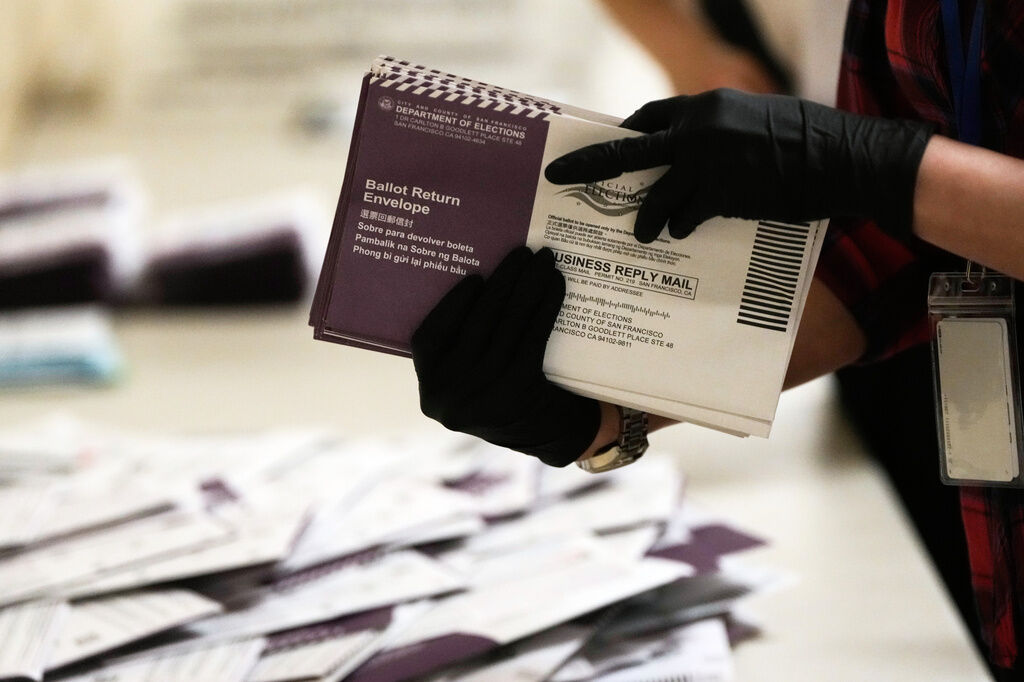
WASHINGTON (AP) — The Supreme Court on Monday ruled that states can count ballots that arrive after Election Day, a persistent target of President Donald Trump. The 5-4 decision rejected a Republican-led attack on laws in more than half the...

3 firefighters who died fighting Snyder Mesa fire identified
Rachael Wright, Special to Colorado Politics
rachael.wright@coloradopolitics.com
Updated 40 minutes ago
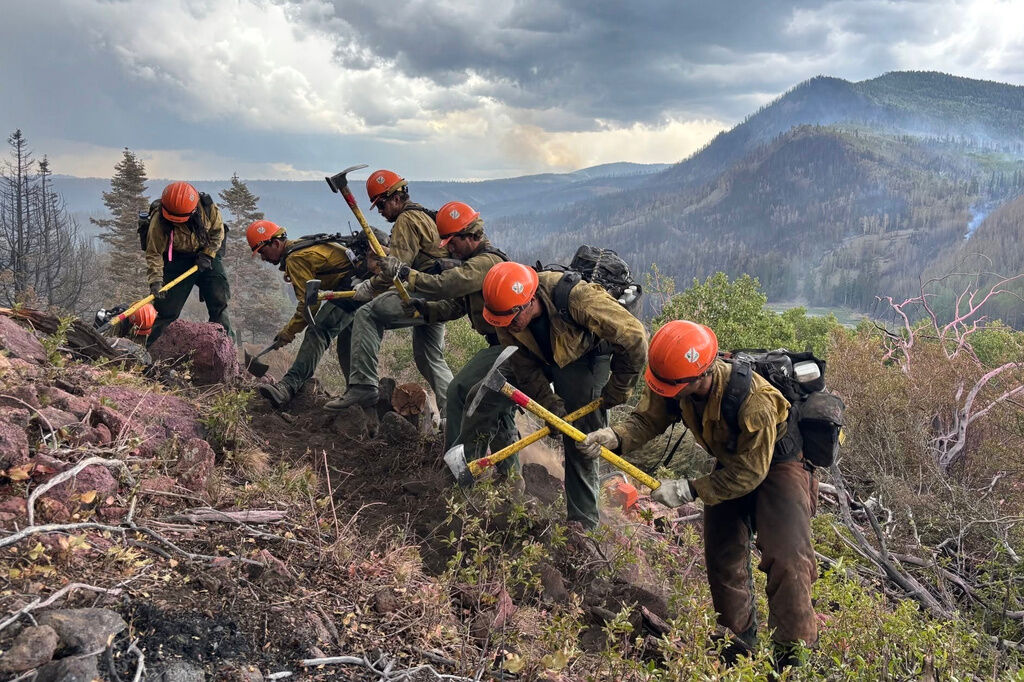
Federal authorities on Monday identified the three firefighters who died responding to the Knowles Fire at the Colorado-Utah border. The U.S. Department of the Interior said the three wildland firefighters were assigned to the Rifle Helitack crew. “(They) engaged in...
Colorado, Utah mourn after 3 firefighters killed in wildfires
Nicholas Fogleman
nicholas.fogleman@denvergazette.com
Updated 17 hours ago
Gov. Jared Polis on Sunday mourned the deaths of three firefighters killed while battling a wildfire on the Colorado-Utah border, calling the loss a tragedy for the state and the firefighting community. The firefighters died Saturday while responding to a...
Understanding Trump’s remarkable political comeback in 2024 | Cronin and Loevy
Tom Cronin Bob Loevy
tom-cronin-bob-loevy@coloradopolitics.com
Updated 15 hours ago
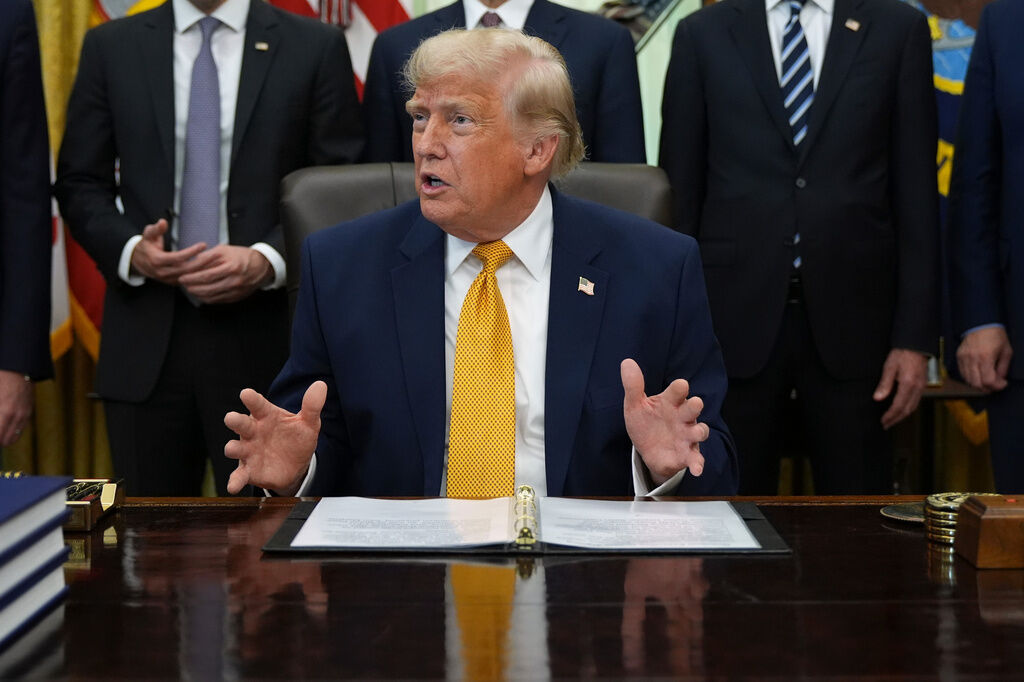
President Donald Trump lost the 2020 presidential election. He inspired a riot at the U.S. Capitol to try to overthrow the results of that election. He was impeached by the U.S. House of Representatives and later was indicted for several...
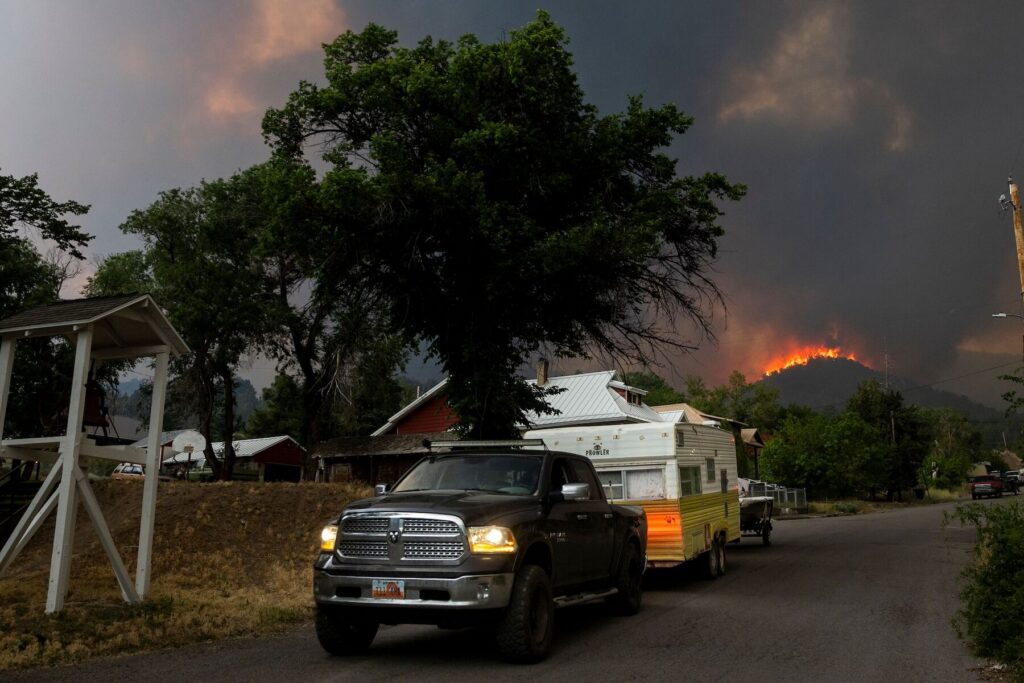
Heat, wind and drought conditions spark wildfires across US West | OUT WEST ROUNDUP
Ernest Luning
ernest.luning@coloradopolitics.com
Updated 1 day ago
Heat, drought spark wildfires Extreme heat and dry, windy conditions fueled several wildfires in the West on June 21, including an uncontained blaze in Utah that forced the evacuation of a small town southwest of Salt Lake City. The Iron...
Crank challenger Jessica Killin signs on to new centrist Democratic group’s ‘Promise to America’
Ernest Luning
ernest.luning@coloradopolitics.com
Updated 24 hours ago
Jessica Killin, one of the Democrats running in Tuesday’s primary for the chance to challenge U.S. Rep. Jeff Crank in Colorado’s 5th Congressional District, joined with more than a dozen incumbent Democratic lawmakers and candidates this week signing on to...
Colorado Politics Calendar June 29-July 5
Rachael Wright, Special to Colorado Politics
rachael.wright@coloradopolitics.com
Updated 5 days ago
CoPo’s weekly political calendar will help you find political and public-policy events throughout Colorado. It includes candidate and issue campaign events, public policy meetings, court hearings, state and local party conventions, assemblies, debates, rallies, parades, speaking engagements, traveling dignitary appearances,...
Gov. Lamm’s GOP challenger gives insights into his campaign | A LOOK BACK
Rachael Wright, Special to Colorado Politics
rachael.wright@coloradopolitics.com
Updated 5 days ago
Forty-five years ago this week: “I see Gov. (Richard) Lamm is fairly popular in general,” said gubernatorial candidate and state Sen. Bill Hughes, R-Colorado Springs. “ … And he’ll be hard to beat.” Hughes was on a whirlwind campaign trail...
Giving credit to Polis where credit is due | SONDERMANN
Eric Sondermann
eric-sondermann@coloradopolitics.com
Updated 5 days ago
It is an understatement to suggest that Gov. Jared Polis has had a tough couple of months. The bloom was already off the rose and Coloradans were paying far more attention to the choice of his replacement than they were...
Bennet, Hickenlooper to vote against Trump’s 10th Circuit nominee from Colorado
Michael Karlik
michael.karlik@coloradopolitics.com
Updated 2 days ago
Colorado’s two Democratic senators will not vote to confirm President Donald Trump’s nominee to a vacancy on the Denver-based federal appeals court. Trump has selected U.S. District Court Chief Judge Daniel D. Domenico, who he appointed as a federal trial...
PREV
PREVIOUS

Colorado Politics recalls stories that defined an unusual midterm | 2022 IN REVIEW
Bookended by tragedies and buffeted by fiercely partisan battles as the midterm elections approached, 2022 saw Colorado begin to move beyond the COVID-19 pandemic and the shattered lives, economy and customs in its wake. The state’s political year was framed by bombshell events outside its borders – from Russia’s invasion of Ukraine to the Supreme […]

Quotes of the year | 2022 IN REVIEW
2022 was a seismic year in Colorado politics, boasting a pair of consequential elections that reshaped coalitions in both parties and extended Democratic dominance, a legislative session that advocates say will reshape the state’s efforts to combat the fentanyl epidemic, and plenty of weird, wacky or wonderful moments in between. Here are some of the […]