

State Supreme Court to hear case implicating constitutionality of ‘red flag’ law
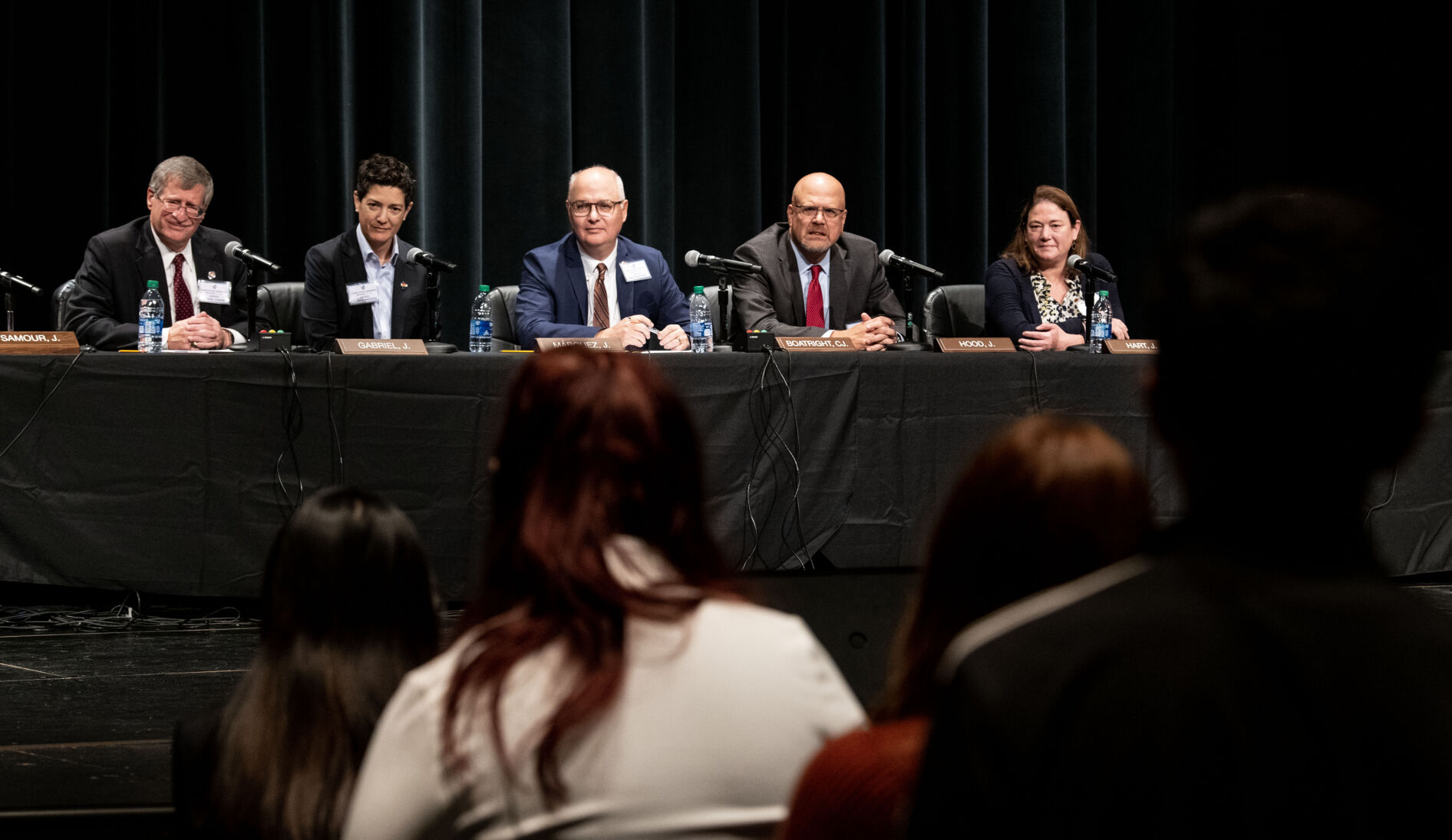
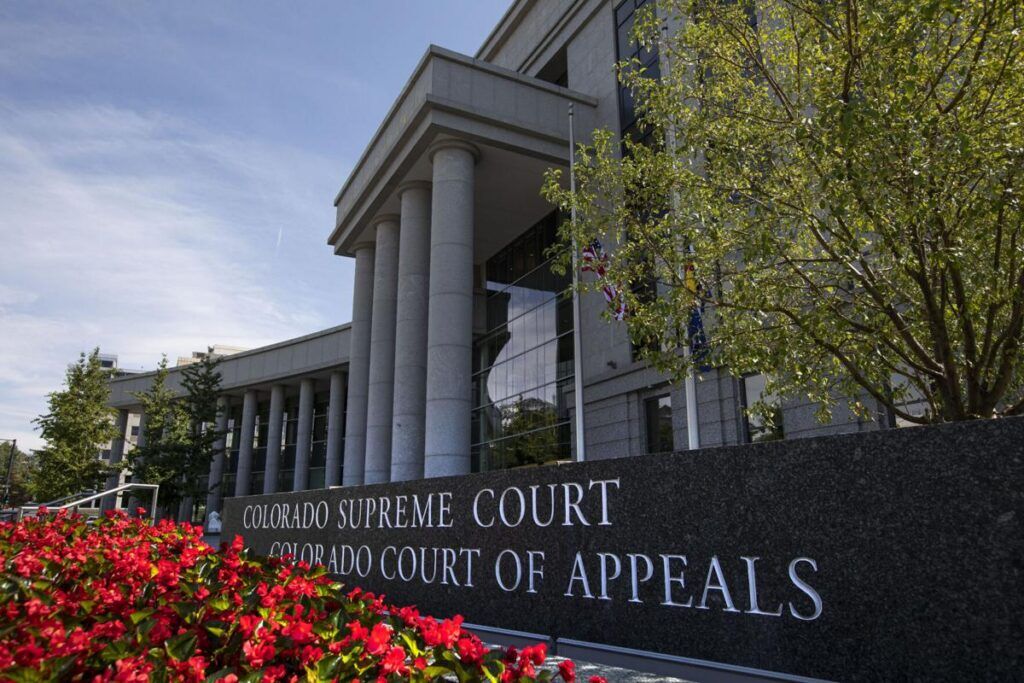
The Colorado Supreme Court has agreed to hear an appeal that questions whether the House of Representatives violated the state constitution in enacting a landmark gun safety law, even though the lawsuit omits several key factual details about what actually unfolded on the floor of the legislature.
On Monday, the court announced it will re-examine its own ruling from 2021 in a similar case involving the General Assembly’s adherence to the constitutional requirement that bills be read “at length.” Last year, the court considered whether compliance with the reading requirement was a “nonjusticiable political question,” which it could not answer without wading improperly into the operations of the legislative branch.
By 4-3, the court decided it could answer whether lawmakers’ actions violated the reading clause. Now, the Supreme Court will determine if the state’s Court of Appeals misread that decision, Markwell v. Cooke, when it opened the door for two Republican lawmakers to challenge the constitutionality of the 2019 “red flag” law.
House Bill 1177 created an avenue for extreme risk protection orders to be issued against people who pose a significant risk to themselves or others. Enacted in response to the slaying of a Douglas County sheriff’s deputy, the red flag law enables judges to temporarily order the confiscation of firearms from a person deemed dangerous.
9News reported in May that courts considered 244 ERPO petitions in the first two years of the law’s operation, covering people who were allegedly threats to others as well as those contemplating suicide.
At the time the legislature debated HB 1177, Republican lawmakers registered vehement opposition. After its passage, three legislators – Reps. Dave Williams of Colorado Springs, Lori Saine of Firestone and Patrick Neville of Castle Rock – plus the pro-gun group Rocky Mountain Gun Owners filed a lawsuit in Denver District Court. They sought a judicial declaration that HB 1177 was “null, void and of no effect” because the House of Representatives violated the reading clause of the constitution.
The six-page complaint quoted from the constitutional requirement that bills be read at length except “upon unanimous consent of the members present.” It also cited the House’s own rules, which clarify that a complete reading is not necessary unless “a member shall request” it.
The lawsuit alleged Williams “requested that the bill be read at length.” Such a reading did not happen, despite “the fact Representative Williams’ request clearly meant that there was not unanimous consent of the members present.” The complaint alleged the same outcome occurred when Saine requested a full reading of the bill.
In reality, the legislative debate did not precisely mirror the allegations in the lawsuit.
During a session of the Committee of the Whole, where HB 1177 was the subject of a prolonged discussion, the video recording shows Williams approaching the microphone at one point.
“Thank you, Mr. Chair. Read the bill at length,” Williams said before walking away. The chair, Rep. Jovan Melton, D-Aurora, in turn ruled the request was not a proper motion.
Rep. Stephen Humphrey, R-Severance, then stood up, saying, “I request that the bill be read at length.” A clerk proceeded to read the bill. Midway through, Humphrey interrupted to withdraw his motion.
Finally, when Saine introduced an amendment, Melton reminded her that discussion should only pertain to the amendment. The comment prompted Saine to turn around.
“Shall we read the bill at length, Mr. Chair?” she asked.
“That motion has already been done and will not be considered,” Melton responded. Saine then continued to speak about her amendment.
The plaintiffs construed those events as creating an “injury in fact” to Williams and Saine, stemming from their constitutional right to ensure a bill be read at length.
A trial judge in Denver dismissed the lawsuit, but while the appeal was pending, the Supreme Court decided Markwell. In that case, Senate leadership used multiple computers talking over each other at high speed to comply with members’ requests that bills be read at length.
The Supreme Court’s majority viewed its limited role as interpreting the reading clause of the constitution, and not dictating how the legislature should conduct its business. It agreed the Senate’s actions violated the reading requirement, but took no further action.
The Court of Appeals, seizing on the Markwell decision, believed the judicial branch had the authority to say whether the House had acted unconstitutionally during the debate on HB 1177.
Even though the legislature may govern itself, wrote Judge Jerry N. Jones for the appellate court, “it may not by rule, or by interpretation or application of a rule, essentially nullify a constitutional requirement.”
The court also determined Williams and Saine allegedly suffered an injury to “their personal right to have the bill read at length,” and consequently had standing to sue.
The government then petitioned the Supreme Court, characterizing the dispute as a clear political question. The Court of Appeals, it argued, had given license to every lawmaker to sue “based on the slightest perceived procedural irregularity.” Williams and Saine reportedly had other options for resolving their dispute under the House rules, and any judicial inquiry into the House’s actions would require testimony from Melton, the chair.
That could pose a problem, as another constitutional provision guarantees that legislators “shall not be questioned in any other place” than the General Assembly.
“Instead, the courts are asked to make a searching factual inquiry into the subjective thought process used by the Chair when denying the legislator-plaintiffs’ reading requests,” wrote Assistant Solicitor General Grant T. Sullivan.
The plaintiffs responded that the government was attempting to have the Supreme Court walk back or overrule the Markwell case. They suggested the Colorado Attorney General’s Office, rather than worrying about the implications of the case, should “urge the General Assembly to re-enact the statute in a way that comports with the Constitution, not to urge reconsideration of an opinion that is less than a year old.”
The Supreme Court has agreed to review whether the appellate court correctly decided Markwell gave the judicial branch the ability to hear the plaintiffs’ challenge, and whether Williams and Saine suffered an injury that enabled them to sue.
The case is Polis v. Rocky Mountain Gun Owners et al.



Parenting from prison: Inmates hope to be present in their children’s lives, while physically absent
Marianne Goodland
marianne.goodland@coloradopolitics.com
Updated 3 hours ago
The room was decorated with balloons, the tables sparking bright with colors as the smell of pizza and cake wafted through the air. As did music. This was, after all, a father-daughter dance. Except this was not a typical father-daughter...
Appeals court confirms Colorado judges can compel electronic records from out of state
Michael Karlik
michael.karlik@coloradopolitics.com
Updated 1 day ago
Colorado’s second-highest court clarified on Thursday that judges are empowered to compel out-of-state companies to produce electronic records under state law. El Paso County jurors convicted Mischa Jargowsky on three counts of money laundering and one violation of Colorado’s organized...
10th Circuit upholds finding of no racial discrimination against family at Denver Chili’s
Michael Karlik
michael.karlik@coloradopolitics.com
Updated 3 days ago
The Denver-based federal appeals court agreed on Wednesday that a Black plaintiff failed to show that a Chili’s manager’s request for her family to provide valid payment at the outset of their meal amounted to racial discrimination. Markesha Futrell-Smith filed...
Appeals court reinstates Mesa County defendant’s request for DNA testing under new Colorado law
Michael Karlik
michael.karlik@coloradopolitics.com
Updated 4 days ago
Colorado’s second-highest court revived a Mesa County defendant’s petition for DNA testing in his three-decade-old attempted murder case on Thursday, concluding that a trial judge wrongly interpreted a recent Colorado law in dismissing the request outright. Jurors convicted Billy Joe...
Appeals court reverses Denver juvenile’s conviction due to improper expert testimony
Michael Karlik
michael.karlik@coloradopolitics.com
Updated 2 days ago
Colorado’s second-highest court reversed a juvenile defendant’s conviction for unlawful sexual contact on Thursday after an expert witness’s testimony improperly suggested the child victim was telling the truth. The defendant, identified as S.H-S., was around 16 years old when he...

Judge orders home confinement for Barry Morphew
Dennis Huspeni
dennis.huspeni@gazette.com
Updated 4 days ago
An Alamosa County district judge has ordered home confinement for Barry Morphew, who is accused of murdering his wife. Barry Morphew, 59, faces a first-degree murder charge in the death of his wife, Suzanne Morphew, who disappeared Mother’s Day weekend...
Appeals court says jury does not need to view porn to determine if it’s ‘obscene’
Michael Karlik
michael.karlik@coloradopolitics.com
Updated 2 days ago
Colorado’s second-highest court ruled for the first time on Thursday that a jury does not always need to view pornographic material to determine if it meets the criteria for obscenity. Mesa County jurors found Shayla Ann Simpson guilty of child...
10th Circuit disagrees Sterling officer had no basis to arrest motorist who lacked insurance details
Michael Karlik
michael.karlik@coloradopolitics.com
Updated 5 days ago
The Denver-based federal appeals court disagreed on Tuesday with a trial judge’s decision to bar evidence from a pat-down search from being used against a defendant. Federal prosecutors obtained an indictment of Jorge Sigala-Baray for being a felon in possession of a...

Colorado Springs officers’ tasing, threats prompt federal judge to block use of suspect’s statements
Michael Karlik
michael.karlik@coloradopolitics.com
Updated 5 days ago
A federal judge blocked the government last month from using some of a defendant’s statements as evidence, reasoning that the defendant made them involuntarily as Colorado Springs officers tased him five times and one officer threatened to kill him. Officers...

Appeals court rejects CDOT employee’s discrimination, retaliation claims
Michael Karlik
michael.karlik@coloradopolitics.com
Updated 3 days ago
Colorado’s second-highest court agreed last week that a Colorado Department of Transportation employee had not shown that his employer discriminated and retaliated against him due to his religion and national origin. Ayman Salloum, who described himself as a 70-year-old Muslim...
PREV
PREVIOUS

Summit County judge resigns days after courtroom tirade that followed monthlong suspension
The Summit County district court judge who recently launched into a courtroom tirade just two days after returning from a mandated suspension and anger-management counseling has resigned. Colorado Watch logo-new District Judge Mark Thompson resigned from the bench, the Colorado Supreme Court announced Tuesday, following a Denver Gazette account of how the judge repeatedly tore […]

Colorado education commissioner Katy Anthes plans to step down in July
Education Commissioner Katy Anthes plans to step down from her position in July, the department announced on Tuesday. Anthes has served as education commissioner since May 2016, when the State Board of Education first appointed her as interim commissioner. She assumed the role of permanent commissioner later that year, becoming the first female commissioner in […]