

State Supreme Court finds no problem with judge terminating parental rights as father struggled to log in

Colorado’s Supreme Court on Monday did not fault a Jefferson County judge for refusing to postpone a hearing in which she terminated a father’s parental rights, even as the man was unsuccessfully trying to connect to the proceedings virtually.
The justices noted that Colorado law permits judges to end the legal relationship between a parent and their child if the parent is unfit, unlikely to change their behavior and has not complied with their treatment plan. Given that the father, identified as R.B., failed to make progress in the case, the Supreme Court saw no indication R.B. would have affected the outcome had he been allowed to testify.
“Father has failed to show how his presence at the hearing could have changed the juvenile court’s determination,” wrote Justice William W. Hood III in the Dec. 12 opinion.
The court elected to review R.B.’s case after the state’s Court of Appeals reached a different conclusion, believing that District Court Judge Ann Gail Meinster abused her discretion by not pausing the termination hearing.
In February 2021, Meinster held a virtual hearing on Jeffco’s request to terminate R.B.’s legal rights over his child, E.B. Although R.B. was not present at the hearing, his attorney was.
Midway through, R.B.’s father suggested R.B. was trying to join the proceedings. Meinster took a break to permit R.B.’s lawyer to contact him, to no avail. R.B.’s attorney explained to the judge that he and his client attempted to reach each other for the last two weeks, but had been unsuccessful. Further, R.B. had a phone that only functioned when connected to wireless Internet. The lawyer asked for a continuance of the hearing so that R.B. could attend and testify.
Instead, Meinster decided to keep going. At the end, R.B.’s lawyer informed Meinster that R.B. was reportedly trying to log in using the public WiFi at a gas station. Meinster, in response, said she could not find “a manifest injustice would occur” if she proceeded with the termination.
“Father’s had ample opportunity to prepare to join today. I’m sorry he wasn’t able to,” she said before terminating R.B.’s legal rights over E.B.
Then in January, a three-judge panel of the Court of Appeals reversed the termination order, disagreeing with Meinster’s handling of the postponement request.
This was “not a case in which father was unavailable to participate in the termination hearing. To the contrary, the record reveals that he was making efforts to secure Wi-Fi access so that he could participate in the hearing,” wrote Judge Craig R. Welling. “Yet, other than briefly pausing the hearing, the court didn’t facilitate father’s efforts to personally participate.”
Welling elaborated that both E.B. and R.B. had an interest in avoiding the wrongful termination of the father’s rights, which Meinster could have accomplished by allowing a short delay to accommodate R.B.’s participation.
After Jeffco appealed to the Supreme Court, the Office of Respondent Parents’ Counsel, which represents indigent parents in welfare proceedings, defended the Court of Appeals’ decision by pointing to the Supreme Court’s own precedent from 1986. At the time, the court defined a parent’s due process rights to include notice of the termination hearing and “an opportunity to protect her interests at the hearing itself.”
But some members of the current Supreme Court observed R.B.’s inability to join the virtual hearing was, in significant part, his own doing.
“It seems to me his choice to go to the gas station isn’t necessarily something that means due process wasn’t provided,” said Justice Melissa Hart during oral arguments in October.
The court’s ultimate opinion reversed the appellate panel, finding R.B. was not prejudiced, or harmed, from the failure to postpone the hearing. Coming into the hearing, R.B. had already admitted to using heroin and methamphetamine consistently, missed virtually all of his drug tests, failed to attend most substance abuse classes, and had stopped attending parental visits for more than half a year.
Given that background, the Supreme Court saw nothing to indicate Meinster’s termination decision would have been different if R.B. testified at the hearing.
Kristofr P. Morgan, R.B.’s attorney, said he was disappointed with the decision.
“My client simply wanted to participate in the termination hearing and was attempting to do so through the protocols set in place by the district court at the time,” Morgan said. “As a result, his voice was not heard in this obviously critical proceeding.”
The case is People in the Interest of E.B.


Federal judge green-lights civil trial against ex-Fort Collins DUI officer
Michael Karlik
michael.karlik@coloradopolitics.com
Updated 2 days ago
A federal judge ruled on Thursday that Fort Collins’ former “DUI officer” will face a civil trial for allegedly investigating a motorist for impaired driving without any reasonable suspicion to do so. In recent years, several people arrested by Officer...

Colorado Supreme Court suspends Mesa County judge pending misconduct investigation
Michael Karlik
michael.karlik@coloradopolitics.com
Updated 14 hours ago
The Colorado Supreme Court suspended Mesa County Court Judge Michael J. Grattan on Thursday amid a misconduct investigation. The court’s Sept. 10 order gave Grattan 21 days to explain why his paid suspension should not continue through the end of...
Colorado Supreme Court changes course, dismisses case about special district bonds
Michael Karlik
michael.karlik@coloradopolitics.com
Updated 14 hours ago
The Colorado Supreme Court declined on Friday to decide a dispute between a large-scale Commerce City development and the various districts financing it, after initially showing interest in the ongoing case. Colorado has roughly 2,800 special districts, which are local...

10th Circuit tosses GEO Group’s pretrial appeal in human trafficking lawsuit
Michael Karlik
michael.karlik@coloradopolitics.com
Updated 2 days ago
The Denver-based federal appeals court dismissed an attempt by The GEO Group on Wednesday to appeal a trial judge’s non-existent decision two months before the company is scheduled to face a civil trial over alleged trafficking violations at the Aurora...
Denver sues Trump to block armed ICE agents from polling sites
Deborah Grigsby
deborah.smith@denvergazette.com
Updated 2 days ago
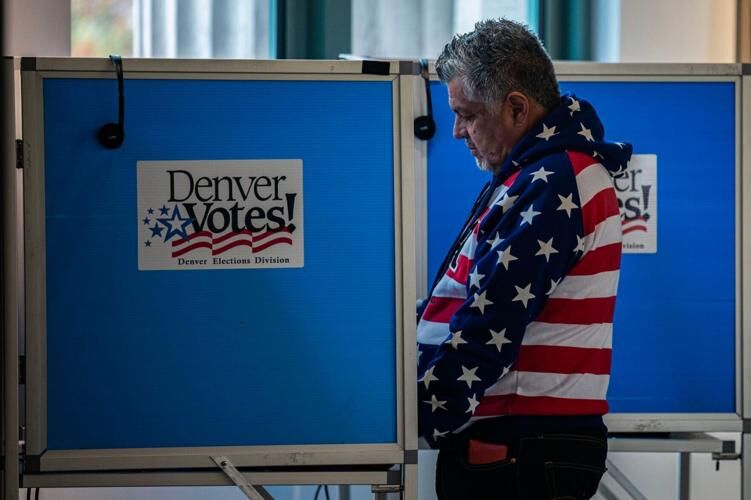
The city of Denver, along with several groups, sued the Trump administration Thursday, seeking to block U.S. Immigration and Customs Enforcement officers who are armed from polling sites during the upcoming midterm elections. In fact, there are no official orders...
Federal judge takes no action against ICE in Colorado after hearing about mistakes, not ‘blatant violations’
Michael Karlik
michael.karlik@coloradopolitics.com
Updated 12 hours ago
A federal judge declined to take action against U.S. Immigration and Customs Enforcement on Thursday after hearing that a pattern of alleged lawbreaking amounted to mistakes and a misunderstanding of the government’s position in court. For nearly a year, Colorado’s...
Colorado doctors, dentists challenge state law on gender‑transition services in new federal lawsuit
Marissa Ventrelli
marissa.ventrelli@coloradopolitics.com
Updated 9 hours ago
A group of Christian doctors and dentists has filed a federal lawsuit challenging a Colorado law they say requires them to provide gender‑transition services that conflict with their religious and ethical beliefs. The lawsuit, filed by the Christian Medical and...
Federal judge directs plaintiff to revise complaint alleging Denver officers’ constitutional violations
Michael Karlik
michael.karlik@coloradopolitics.com
Updated 12 hours ago
A federal judge directed a plaintiff to revise his allegations on Wednesday to more precisely state what two Denver officers and the city itself allegedly did to violate his constitutional rights by facilitating his prosecution for murder until prosecutors dropped...
Lawsuit challenges Douglas County commissioners’ ballot actions
Nicholas Fogleman
nicholas.fogleman@denvergazette.com
Updated 3 days ago
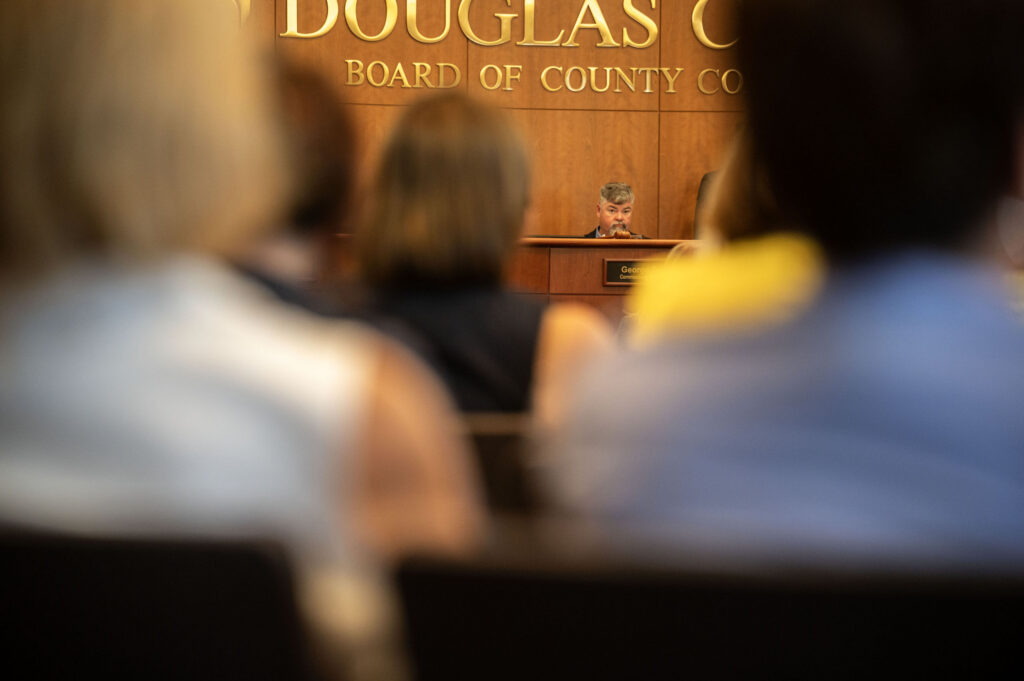
A new lawsuit against Douglas County commissioners seeks to invalidate the board’s intervention in efforts to expand the commission from three members to five and restore the original ballot language approved by more than 20,000 petition signers. The suit marks...
Federal judge explores new sanctions against ex-Colorado judicial discipline director
Michael Karlik
michael.karlik@coloradopolitics.com
Updated 14 hours ago
A federal judge on Wednesday directed Colorado’s former judicial discipline director, for the third time this year, to explain why she should not sanction him for his latest conduct in his litigation against the state’s judiciary. Christopher S.P. Gregory, who served...
PREV
PREVIOUS

State Supreme Court back for arguments, new federal judge holds swearing-in ceremony | COURT CRAWL
Welcome to Court Crawl, Colorado Politics’ roundup of news from the third branch of government. The members of the state Supreme Court are back this week to hear a brief roster of oral arguments, and Colorado’s newest federal judge held her formal swearing-in ceremony in front of friends and family on Friday. Three cases and […]

On teaching race and history, Americans aren't as polarized as national media narrative posits
The pitched battle that erupted in Douglas County’s school district over the teaching of race and history encapsulates the sense of polarization that engulfed America over the last years. Or least that’s the prevailing narrative. But a new study by a group that seeks to understand the forces driving polarization challenges the notion of a […]