

Divided appeals court reinstates criminal charges after judge failed to order witnesses’ arrest
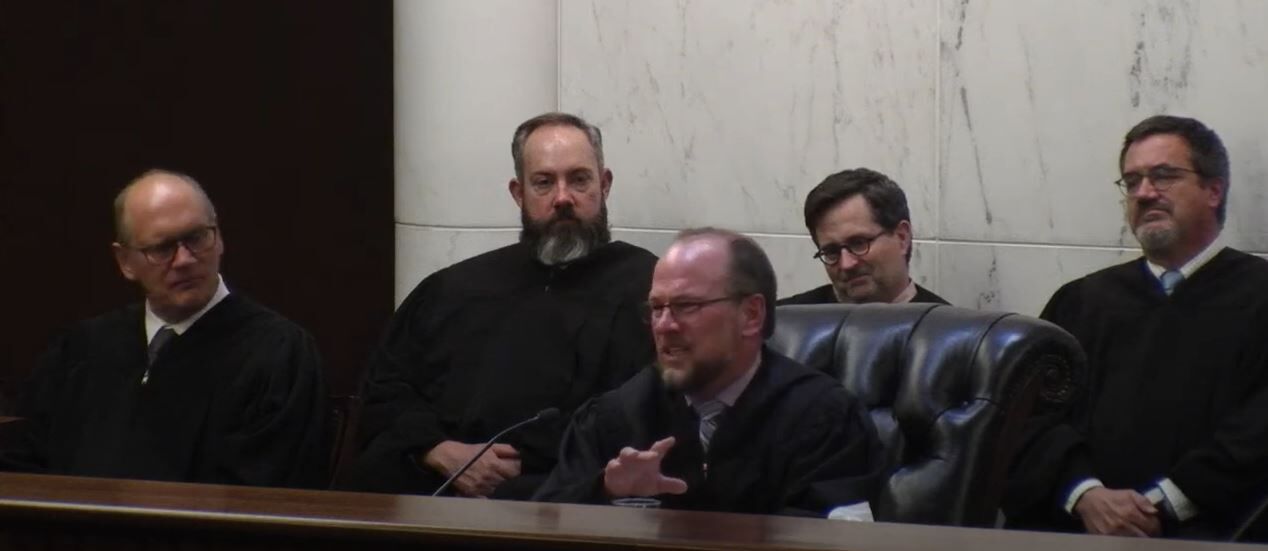
In a divided ruling last week, Colorado’s second-highest court decided an El Paso County judge wrongly dismissed a criminal case when she should have instead issued warrants to arrest the witnesses who failed to appear.
Given the circumstances in March 2021, which included COVID-19 restrictions on jury trials and the prosecution’s lack of evidence, then-District Court Judge Jann P. DuBois threw out the charges against Zacharia Childers after determining the case would not go to trial in time. In doing so, she denied a request from the district attorney’s office to issue arrest warrants against two witnesses who were no-shows.
But by a 2-1 decision, a panel of the Court of Appeals believed the rules of criminal procedure required DuBois to grant the prosecution’s request, with no leeway for her to decide otherwise – thereby keeping the case alive.
“Simply put, based on the plain language of the rule, the prosecution was entitled to have the court issue bench warrants for the arrest of the two nonappearing witnesses,” wrote Judge Craig R. Welling for himself and Judge Jerry N. Jones in a Dec. 8 opinion.
Judge Timothy J. Schutz disagreed. Reading the sequence of events that unfolded in DuBois’ courtroom, Schutz felt the prosecution had the opportunity to ask DuBois for another trial date or otherwise object to the dismissal of the charges. Instead, the prosecutor remained silent on both issues.
“The context in which the requests and objections are made, or not made, to the trial court matters,” Schutz wrote.
A sheriff’s deputy arrived at Childers’ home in Yoder with the intention of performing a welfare check, having received a call about a suicidal person. Then the deputy learned Childers had allegedly threatened a family member with a knife. In response, the deputy arrested Childers and prosecutors charged him with felony menacing and a bias-motivated crime.
Under state law, defendants must be brought to trial within six months of their not guilty plea, with limited exceptions. For Childers, the trial deadline was April 28, 2021. At that time, there were restrictions on the number of jury trials that could occur due to the ongoing COVID-19 pandemic, but Childers’ received a trial date of March 8.
At a pretrial conference on March 5, the prosecutor revealed that two of the witnesses – the victim and another relative of Childers’ – had received a subpoena to testify only a couple of days beforehand. Warning that it would be too late to bring in jurors, DuBois asked the parties to suggest a new trial date before the deadline, but the prosecutor requested to maintain the March 8 date. Childers’ lawyer replied that if the witnesses did not appear, she would ask DuBois to dismiss the case.
When March 8 arrived, none of the prosecution’s witnesses was present, including the family members, a 911 dispatcher and the sheriff’s deputy. As promised, the defense asked to terminate the case, arguing the COVID-19 restrictions meant a trial within the legal deadline would be unlikely.
DuBois asked the prosecutor if the district attorney’s office had even interviewed Childers’ family members yet. No, the prosecutor replied.
“I’m dismissing this case,” DuBois said. “Given the current status of immeasurable cases we have in front of us, if the DA didn’t (subpoena) until a couple of days before the trial, hasn’t interviewed these family members or the victim, then I see no reason – no societal reason – for this to proceed forward since they failed to appear.”
She asked if the prosecutor wanted to add anything on the record, and the prosecutor began to ask DuBois for a bench warrant for the witnesses’ arrest.
“I’m not issuing warrants for them,” the judge interrupted. “These are family members who were served.” DuBois once again asked the prosecutor if there was anything else she wanted to say.
“No,” responded the prosecutor.
The Fourth Judicial District Attorney’s Office then appealed the dismissal of the case. It pointed out that under Colorado’s Rules of Criminal Procedure, judges are required to issue a bench warrant upon request when witnesses who are under subpoena fail to appear. Childers’ attorney, on the other hand, noted the prosecutor never objected to DuBois’ dismissal order.
“When the state shows up for trial with no evidence, dismissal is a perfectly appropriate remedy,” Deputy State Public Defender Mark Evans told the appellate panel during oral arguments.
Jones was the most vocal critic on the appellate panel of DuBois’ actions, speculating “she just didn’t like the case” and never gave the prosecutor an opportunity to ask for a new trial date.
“When the prosecutor starts to talk, the court interrupts her mid-sentence,” Jones said. “She opens her mouth and gets half a sentence out and gets shut down.”
The panel’s majority agreed the prosecution was entitled to have DuBois issue a warrant to arrest the witnesses for their nonappearance, and she acted contrary to the law by denying the request. Given DuBois’ mistake, it did not matter that the prosecution had not specifically objected to the case’s dismissal.
“Asking for bench warrants for the arrest of the two nonappearing witnesses can only be understood as an objection to dismissal of the case,” Welling wrote.
Schutz saw things differently. The prosecution had not spoken to the witnesses prior to trial, insisted on keeping the March 8 trial date and ultimately showed up with no evidence to support its charges, he observed. Schutz also rejected the idea that DuBois had blocked the prosecutor from lodging an objection, noting the judge had asked twice if she had anything else to say.
“I cannot conclude the prosecution was denied the opportunity to request a continuance or object to the dismissal,” Schutz wrote. The failure to do so “cannot be excused.”
The case is People v. Childers.


Federal judge green-lights civil trial against ex-Fort Collins DUI officer
Michael Karlik
michael.karlik@coloradopolitics.com
Updated 17 hours ago
A federal judge ruled on Thursday that Fort Collins’ former “DUI officer” will face a civil trial for allegedly investigating a motorist for impaired driving without any reasonable suspicion to do so. In recent years, several people arrested by Officer...

Colorado Supreme Court suspends Mesa County judge pending misconduct investigation
Michael Karlik
michael.karlik@coloradopolitics.com
Updated 21 hours ago
The Colorado Supreme Court suspended Mesa County Court Judge Michael J. Grattan on Thursday amid a misconduct investigation. The court’s Sept. 10 order gave Grattan 21 days to explain why his paid suspension should not continue through the end of...
Colorado Supreme Court changes course, dismisses case about special district bonds
Michael Karlik
michael.karlik@coloradopolitics.com
Updated 16 hours ago
The Colorado Supreme Court declined on Friday to decide a dispute between a large-scale Commerce City development and the various districts financing it, after initially showing interest in the ongoing case. Colorado has roughly 2,800 special districts, which are local...
10th Circuit tosses GEO Group’s pretrial appeal in human trafficking lawsuit
Michael Karlik
michael.karlik@coloradopolitics.com
Updated 1 day ago
The Denver-based federal appeals court dismissed an attempt by The GEO Group on Wednesday to appeal a trial judge’s non-existent decision two months before the company is scheduled to face a civil trial over alleged trafficking violations at the Aurora...
Denver sues Trump to block armed ICE agents from polling sites
Deborah Grigsby
deborah.smith@denvergazette.com
Updated 2 days ago
The city of Denver, along with several groups, sued the Trump administration Thursday, seeking to block U.S. Immigration and Customs Enforcement officers who are armed from polling sites during the upcoming midterm elections. In fact, there are no official orders...
Federal judge takes no action against ICE in Colorado after hearing about mistakes, not ‘blatant violations’
Michael Karlik
michael.karlik@coloradopolitics.com
Updated 14 hours ago
A federal judge declined to take action against U.S. Immigration and Customs Enforcement on Thursday after hearing that a pattern of alleged lawbreaking amounted to mistakes and a misunderstanding of the government’s position in court. For nearly a year, Colorado’s...
Colorado doctors, dentists challenge state law on gender‑transition services in new federal lawsuit
Marissa Ventrelli
marissa.ventrelli@coloradopolitics.com
Updated 11 hours ago
A group of Christian doctors and dentists has filed a federal lawsuit challenging a Colorado law they say requires them to provide gender‑transition services that conflict with their religious and ethical beliefs. The lawsuit, filed by the Christian Medical and...
Federal judge directs plaintiff to revise complaint alleging Denver officers’ constitutional violations
Michael Karlik
michael.karlik@coloradopolitics.com
Updated 16 hours ago
A federal judge directed a plaintiff to revise his allegations on Wednesday to more precisely state what two Denver officers and the city itself allegedly did to violate his constitutional rights by facilitating his prosecution for murder until prosecutors dropped...
Lawsuit challenges Douglas County commissioners’ ballot actions
Nicholas Fogleman
nicholas.fogleman@denvergazette.com
Updated 2 days ago
A new lawsuit against Douglas County commissioners seeks to invalidate the board’s intervention in efforts to expand the commission from three members to five and restore the original ballot language approved by more than 20,000 petition signers. The suit marks...
Federal judge explores new sanctions against ex-Colorado judicial discipline director
Michael Karlik
michael.karlik@coloradopolitics.com
Updated 2 days ago
A federal judge on Wednesday directed Colorado’s former judicial discipline director, for the third time this year, to explain why she should not sanction him for his latest conduct in his litigation against the state’s judiciary. Christopher S.P. Gregory, who served...
PREV
PREVIOUS

Denver City Council to approve $8 million in airport related contracts
The Denver City Council has 34 resolutions on its agenda ahead of today’s weekly 3:30 p.m. meeting. There are 13 bills being introduced from various committees and 11 that are on final consideration. There is one public hearing. Here’s a list of the major happenings during council today: Contracts and Resolutions: 22-1568, 22-1569 and 22-1570: […]

State Supreme Court back for arguments, new federal judge holds swearing-in ceremony | COURT CRAWL
Welcome to Court Crawl, Colorado Politics’ roundup of news from the third branch of government. The members of the state Supreme Court are back this week to hear a brief roster of oral arguments, and Colorado’s newest federal judge held her formal swearing-in ceremony in front of friends and family on Friday. Three cases and […]