

10th Circuit tosses lawsuit over inmate attack in Clear Creek jail
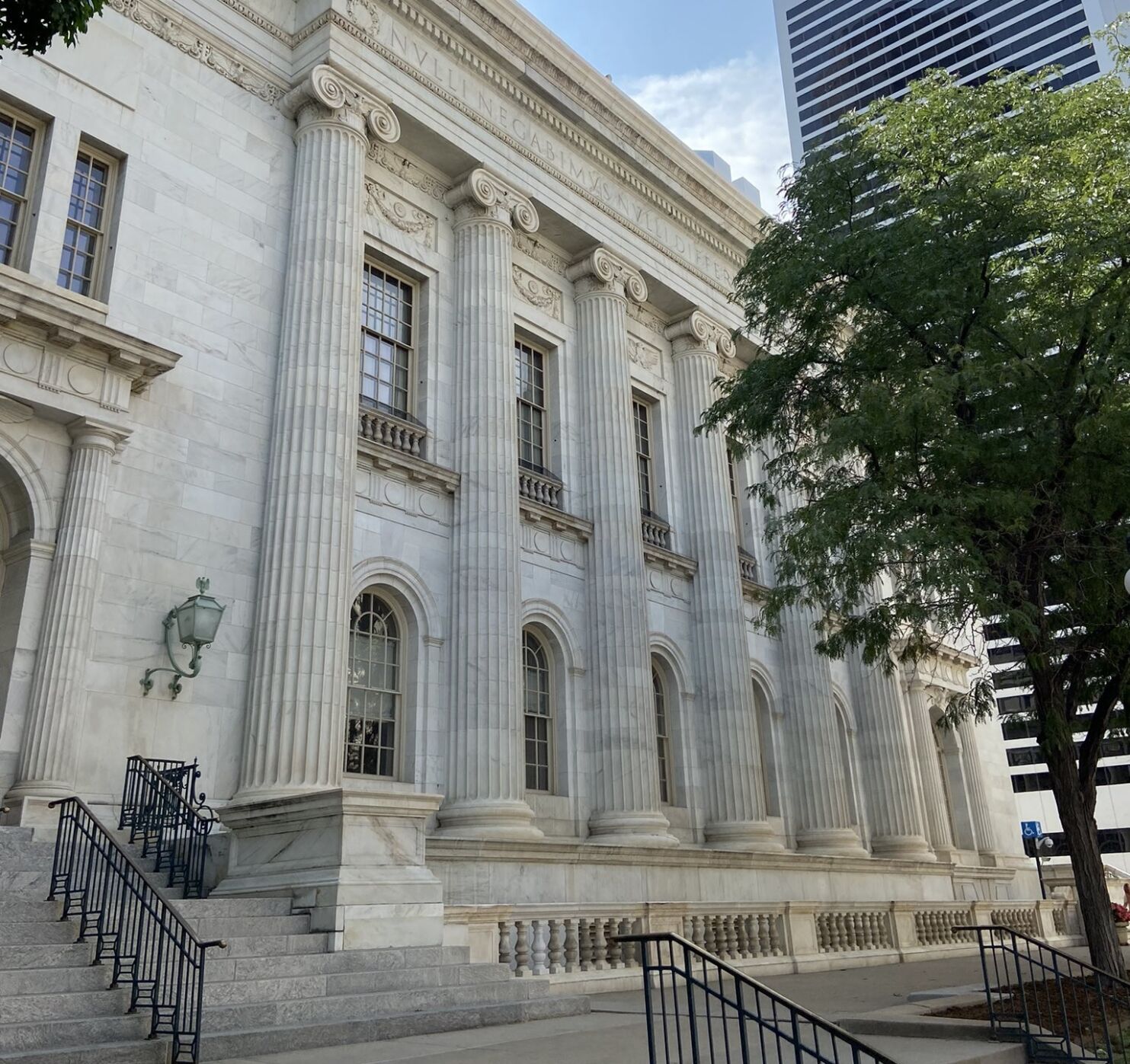
The federal appeals court based in Denver agreed last month that a detainee who was attacked in the Clear Creek County jail failed to allege the sheriff and the county knew of a risk to his safety and disregarded it.
Aaron Dugar claimed Sheriff Rick Albers and the board of county commissioners were liable for his injuries. He argued they had responsibility over policies and customs in the jail that amounted to deliberate indifference – meaning they knew of a substantial risk of harm but ignored the near-certain constitutional violations that would ensue.
After a trial judge dismissed Dugar’s lawsuit, a three-judge panel of the U.S. Court of Appeals for the 10th Circuit upheld that decision. The panel found Dugar had offered no facts to show the decision-makers responsible for jail operations were aware of the allegedly dangerous circumstances that led to Dugar’s attack by fellow detainee Demontrae Wilson.
“Mr. Dugar alleged merely that (1) Sheriff Albers had high-level policymaking authority,” wrote Judge Harris L Hartz, “and (2) conditions at the facility (including overcrowding, the lack of a direct line-of-sight between officers and detainees, and the housing of Mr. Dugar and Mr. Wilson in the same unit) resulted in the attack.”
According to Dugar’s lawsuit, he was detained pending trial at the Clear Creek jail in June 2019. He was housed in the same area as Wilson, who was accused of attempted first-degree murder. One night, Wilson, apparently unprovoked, lunged at Dugar and began striking and stabbing him.
Other detainees intervened to pull Wilson off Dugar, who lay unconscious on his back. Wilson briefly escaped to resume punching Dugar in the head, before the detainees were again able to stop him. Two minutes after the encounter started, sheriff’s deputies entered the pod to seize Wilson.
Court records show Wilson later pleaded guilty to attempted murder. Dugar’s attorney, Mark E. Scabavea, told Colorado Politics that Wilson’s conviction stemmed from the jail attack. Dugar reportedly suffered permanent injuries, including a broken jaw and facial bones, plus head trauma.
Dugar attributed the attack to three alleged policies of the sheriff and Clear Creek County: understaffing, failing to segregate dangerous inmates from the general population and the inability of jail personnel to see the inmates directly. Dugar alleged that, two weeks prior to his attack, one jail deputy admitted that “two officers to supervise 120 inmates was not enough.”
“Logic dictates that an undermanned jail would be less safe for inmates,” wrote Scabavea. “Additionally, logic also dictates that more violent offenders are segregated from the general population so that they can be more closely observed while housing the other inmates in a safer fashion.”
Last year, U.S. District Court Judge William J. Martínez found such allegations insufficient to show Albers and the county knew any of those purported policies created an obvious risk to Dugar’s safety. Further, the fact that Wilson was detained on suspicion of attempted murder did not necessarily indicate he was a threat to other inmates, and Dugar offered no information about Wilson’s inherent likelihood of attacking others.
As for Dugar’s failure-to-intervene claim against the jail deputies themselves, identified only as “John Does,” Dugar “does not allege any facts supporting their knowledge of the risk Wilson posed beyond his charge for attempted murder,” Martínez noted.
On appeal, Dugar only challenged the dismissal of his allegations against Albers and the county. He believed the risk of a constitutional violation would have been “obvious” under the circumstances. But the defendants pushed back, faulting Dugar for not identifying any other incidents of violence that would have specifically shown Wilson was likely to assault another detainee in the jail and would, therefore, have put policymakers on notice about the problem.
“Correctional facilities cannot stop all inmate-on-inmate confrontations and the mere fact that a confrontation occurred does not establish that it was caused by vague allegations of overcrowding,” wrote attorney Nicholas C. Poppe.
The 10th Circuit panel agreed that the lack of allegations pointing to the defendants’ knowledge of an “almost inevitable” injury had doomed Dugar’s lawsuit.
“Even taking as true the allegation that one officer mentioned to another officer two weeks before the attack that the facility was understaffed, Mr. Dugar pleaded no facts indicating Sheriff Albers was aware of this assessment, let alone that he regarded it as true and consciously chose to disregard it,” Hartz wrote in the Oct. 4 order.
“I pled everything that we knew,” Scabavea told Colorado Politics after the decision. “My thought process is the two officers knew it was overcrowded, so, of course, the sheriff knew.”
The case is Dugar v. Board of County Commissioners et al.



Federal judge clarifies ex-GOP treasurer candidate’s burden to prove defamation claims
Michael Karlik
michael.karlik@coloradopolitics.com
Updated 2 hours ago
A federal judge clarified last week that businessman and former Republican statewide candidate Brian Watson will need to surmount a higher hurdle in proving his claim that a party guest’s alleged description of him as a “criminal” amounted to defamation....
Colorado board permits state to appeal injunction against arthritis drug price cap
Marissa Ventrelli
marissa.ventrelli@coloradopolitics.com
Updated 5 hours ago
A Colorado board voted Friday to allow the Attorney General’s Office to fight an injunction against a price cap on a drug that treats arthritis. A U.S. district court judge had granted the company Amgen a preliminary injunction, temporarily blocking...
Federal judge rejects constitutional claims, ‘expressions of hatred’ by Club Q defendant
Michael Karlik
michael.karlik@coloradopolitics.com
Updated 21 hours ago
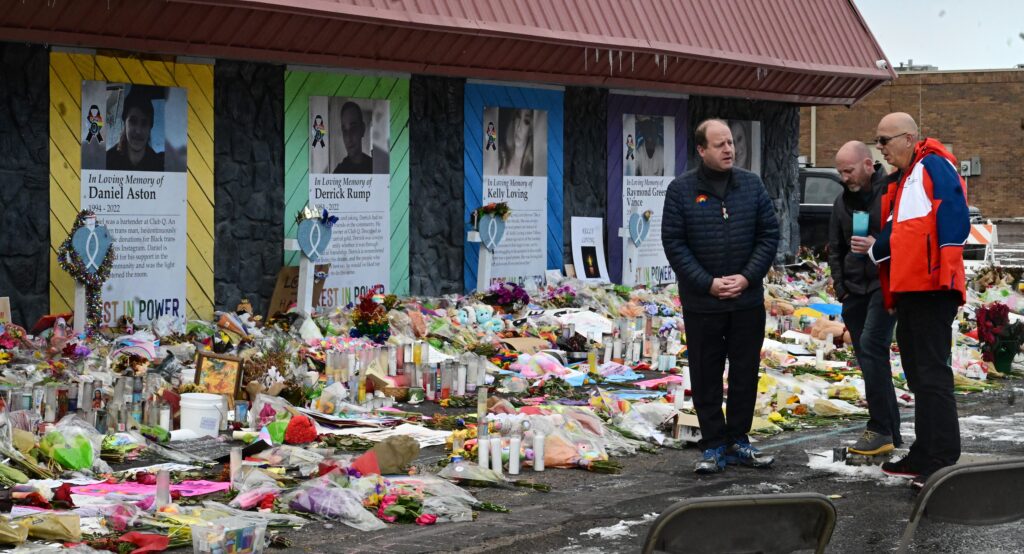
A federal judge rejected a defendant’s claims that he received constitutionally ineffective assistance of counsel while facing federal hate crime and firearms charges for murdering five people at a Colorado Springs LGBTQ nightclub in 2022. Anderson Lee Aldrich is serving...

Divided 10th Circuit upholds Colorado congestion fee on car rentals
Michael Karlik
michael.karlik@coloradopolitics.com
Updated 17 hours ago
The Denver-based federal appeals court concluded on Monday that a 2024 “congestion impact fee” that lawmakers imposed on short-term vehicle rentals did not conflict with a federal prohibition on certain airport-related charges. Beginning in the 1970s, Congress began limiting the...
10th Circuit dismisses woman’s lawsuit following 10-year attempt to undo restraining order
Michael Karlik
michael.karlik@coloradopolitics.com
Updated 4 days ago
The Denver-based federal appeals court rejected a woman’s challenge on Friday to a restraining order imposed on her more than a decade ago, finding that she cannot credibly claim she will be prosecuted for violating the restraining order through her...
10th Circuit dismisses woman’s lawsuit following 10-year attempt to undo restraining order
Michael Karlik
michael.karlik@coloradopolitics.com
Updated 4 days ago
The Denver-based federal appeals court rejected a woman’s challenge on Friday to a restraining order imposed on her more than a decade ago, finding that she cannot credibly claim she will be prosecuted for violating the restraining order through her...
Colorado equal pay law does not require plaintiffs to allege gender-based retaliation, appeals court finds
Michael Karlik
michael.karlik@coloradopolitics.com
Updated 3 days ago
The 2019 Colorado law aimed at rooting out pay discrimination on the basis of sex does not require a plaintiff to allege their employer retaliated against them for sex- or gender-related reasons, the state’s second-highest court decided on Thursday. Lawmakers...
Hudson faces lawsuit over ICE detention facility
Nicole C. Brambila
nicole-c-brambila@coloradopolitics.com
Updated 4 days ago
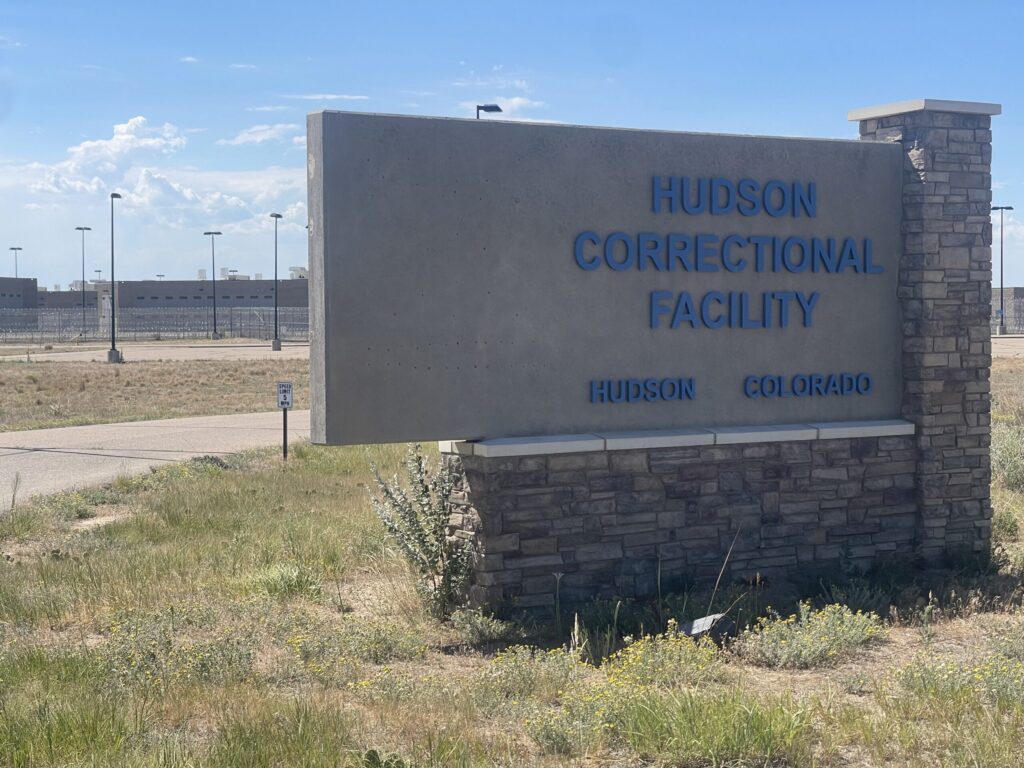
A nonprofit organization filed a lawsuit against the Town of Hudson Wednesday, challenging plans to reopen a former federal prison in the town as a U.S. Immigration and Customs Enforcement detention facility. Together Colorado, along with Janet E. Carlson, filed...
Senate committee advances Trump’s 10th Circuit nominee, as Domenico responds to questions about delays
Michael Karlik
michael.karlik@coloradopolitics.com
Updated 4 days ago
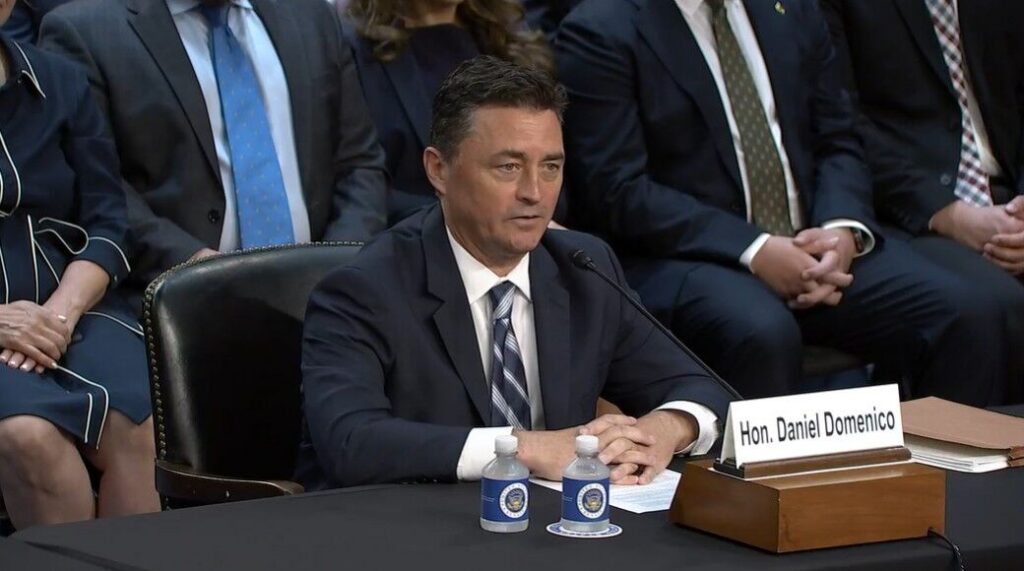
The U.S. Senate Judiciary Committee advanced President Donald Trump’s nominee to the Denver-based federal appeals court on Thursday by a party-line vote of 12-10. U.S. District Court Judge Daniel D. Domenico, who was Trump’s first-term appointee to Colorado’s federal trial...
Colorado justices to hear embryonic donation dispute
Michael Karlik
michael.karlik@coloradopolitics.com
Updated 5 days ago
The Colorado Supreme Court announced on Monday that it will decide whether lower court judges properly applied its framework for adjudicating disputes over the fate of pre-embryos, in which one person wants to use them to become a parent and...
PREV
PREVIOUS

Colorado Springs counseling center offers free therapy for anyone affected by Club Q shooting
MSC Counseling Center, 7375 Adventure Way, off Woodmen and Black Forest roads, is offering free counseling services to anyone affected by the Nov. 19 shooting at Club Q in Colorado Springs. Up to six free sessions are available, said Juliette Cooley of Mountain Springs Church, which provides space for independent counselors to set up therapy […]

Here's the long list of Denver mayoral candidates
The list of declared Denver mayoral candidates is so long, Denver journalists have jokingly resorted to reporting on those not running for Denver’s most powerful elected office. Twenty-one people have declared they’re running, though one has already dropped out. Some names are familiar, but others are political newcomers. How to run for Denver mayor – […]