

ELECTION 2022 | The ‘unrealized potential’ of Latino voters in Colorado elections

From Spanish-language campaign ads to pleas to Latino voters during debates, Latino Coloradans took center stage in this year’s election – and for good reason.
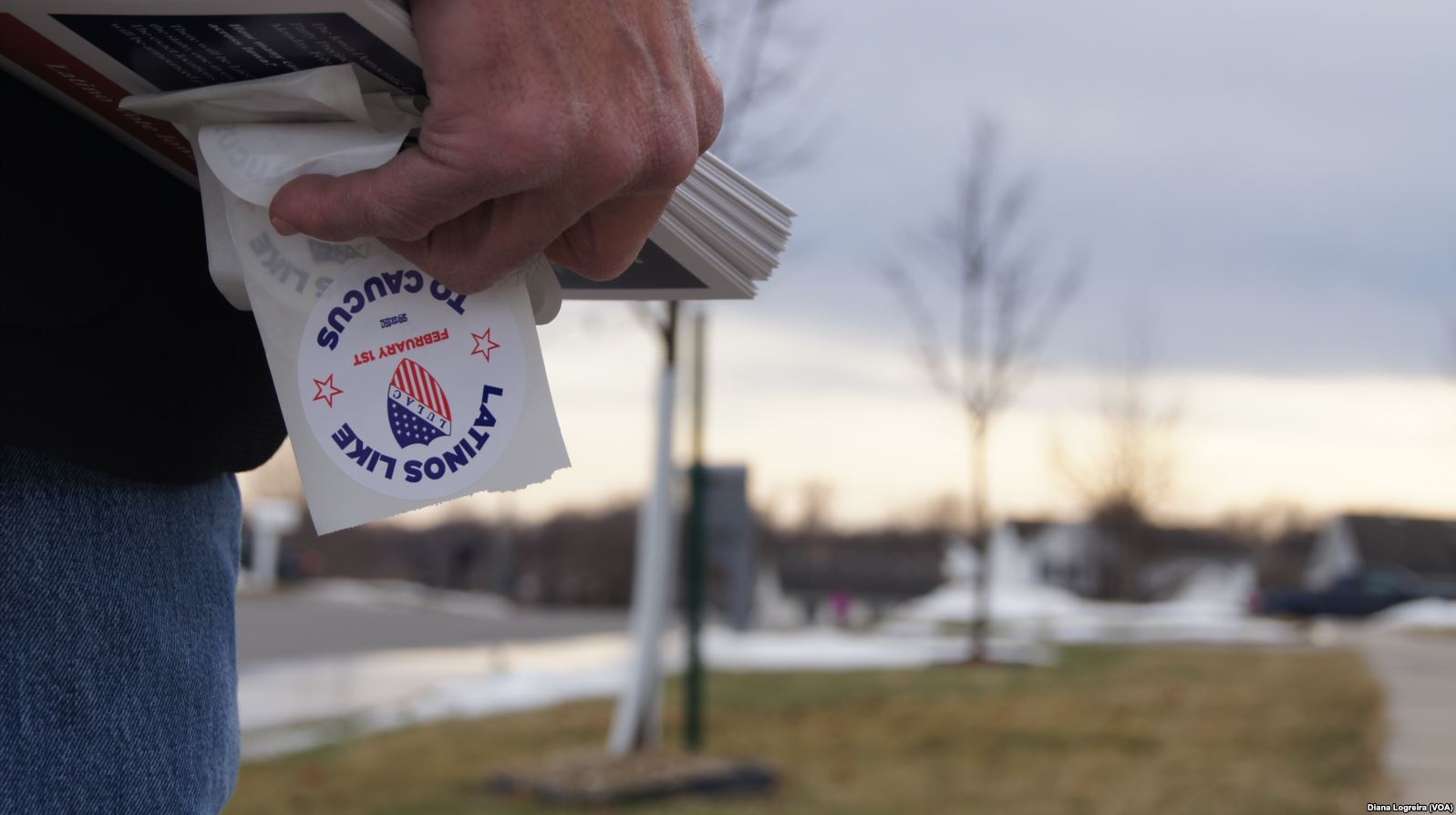
In 2020, 21.9% of Colorado’s population identified as Hispanic or Latino, according to Census results – the highest share since the 1870s. In the last decade, the Latino population of Fort Collins, Colorado Springs and Greeley increased at nearly double the national average, Axios reported. But despite this rapid population growth, local activists have said Latinos remain an untapped political market.
Latinos made up only 11% of Colorado voters in the 2020 presidential election and the 2018 midterm election, according to data from Univision. While a recent poll of registered Latino voters in Colorado found that 61% said they are “100% certain” they will vote this year, a national projection estimates the turnout will be closer to 40% of Colorado’s Latino voting population, keeping their overall make up of voters at only 10.9%.
Growing in population without growing in political strength is an issue unique to Latinos in Colorado and the United States at large, said Celeste Montoya, a University of Colorado professor researching how marginalized communities mobilize to enact change.
“There’s still a lot of unrealized potential,” Montoya said. “While they have the potential to make a substantial difference in elections, an important means of doing that is making sure that they’re engaged, that they’re mobilized, that they make it to the polls.”
While several factors could contribute to lower voter turnout among Latinos – such as language barriers or Latinos being a disproportionately young population – Montoya said the biggest issue is that many Latinos simply do not feel represented in the political system.
The annual Colorado Latino Policy Agenda found that 58% of Latino voters had not been contacted by any political party, campaign or organization this election cycle. Over one-fourth said they do not see their communities’ values reflected in political agendas and more than one-third said they do not trust current political systems. While almost half of respondents self-identified as Democrats, more than 60% said they’ve become more open to changing their political affiliations in the last two years.
“It speaks to the disconnect between parties and the Latino community,” said Alex Sánchez, founder, president and CEO of Voces Unidas de las Montañas and the Voces Unidas Action Fund, which help put out the Colorado Latino Policy Agenda each year. “We’re just not a priority in Colorado politics.”
Recent progress has been made regarding Latino political outreach, such as the Colorado GOP opening a Hispanic Community Center in Thornton, and the state launching a language assistance hotline that offers live ballot translation in Spanish, Korean, Chinese, Taiwanese or Vietnamese.
However, Sánchez said there is still a long way to go – and that some might not be willing to do the work needed to mobilize Latino voters.
“Some parties don’t want to actually engage Latinas and Latinos because they may fear that if they vote, they may not vote with their interests,” Sánchez said. “Some parties don’t want to change the status quo, while other parties just don’t know how.”
Professor Montoya said that, while political parties have begun to put more effort into attracting Latino voters, they still do not understand the long-term potential Latinos have as a voting bloc.
“Paying attention to the Latino population means playing the long game as well as the short game,” Montoya said. “We get caught up in this election and not the election that’s going to happen right after, or what could be possible 10 or 20 years from now. … Districts can switch or they could be flipped, and Latino voters could be a potential for doing that.”
She said young Latinos who are recently coming of voting age are a particularly good opportunity for either party: “They are coming in with a very cynical understanding of the political parties. That’s where there’s both possibility there, but also a lot of work to be done.”
Chuck Montoya, chair of Colorado Latinos Vote, said he thinks political parties finally want to prioritize Latino voters, but they simply do not know what to do.
“What they’re doing is throwing everything at the wall and seeing what sticks,” Montoya said. “What they need to do is get out into the Hispanic community and start hearing what their concerns are. Is it the economy? Is it the environment? Is it affordable housing? Those are the things that the legislators and candidates should be listening to.”
According to the Colorado Latino Policy Agenda, the biggest issues for Latino voters this election are economic in nature, with 50% of respondents saying their economic situation has gotten worse in the last 12 months. The top five policy concerns in order are addressing the rising cost of living, the economy, improving wages, addressing gun violence and creating affordable housing.
However, Sánchez said political parties and candidates should only use this information as a jumping-off point, echoing Montoya’s call for them to go into the field and do some work themselves.
“You should go out and ask voters and ask Latinos what their agenda is and what are the issues that are keeping them up at night,” Sánchez said. “You have our interpretation of the conversations we had with a sample of voters … but it does not excuse a party or a candidate from doing their job investing time, energy and resources and engaging every voter, just as they would for white voters.”
Sánchez said another issue is that Latino voter mobilization is centered on the Front Range, which he argues fails to represent the wide range of voices in the Latino community. This inspired him to start Voces Unidas de las Montañas to elevate Latino voters in the central mountain region.
This is a problem professor Montoya has noticed as well, pointing out that there is strong mobilization and political representation for Latinos in the Denver metro area, but not in rural Colorado, where approximately half of Latino Coloradans live.
She said the diversity within the Latino community is often forgotten, which contributes to unsuccessful efforts to reach Latino voters.
“They vary in terms of a lot of different aspects of their identity, different ages, different national origins, class, education, where they live and differences in political orientation, as well,” Montoya said. “A more nuanced understanding and approach is necessary to really understand the role that they played or could play in future elections.”
Nevertheless, progress is still gradually being made. There are 13 Latino members of the Colorado Legislature, Colorado’s new 8th Congressional District has a 38% Latino population – the highest among the state’s eight congressional districts – and internal mobilization in the Latino community via groups, such as Voces Unidas and Colorado Latinos Vote, is rising fast.
Democratic state Rep. Yadira Caraveo, a Thornton pediatrician, will represent CD8, as results show she has defeated Republican state Sen. Barb Kirkmeyer in a race that lived up to its billing as the most competitive congressional seat in the state, with the contest remaining as tight as a drum as the vote count continued into Wednesday evening.
But for Colorado’s Latino voters to reach their full political potential, activists say parties and candidates need to put real time, money and effort into showing them that they’re a priority. And more importantly, continue to show them that they’re a priority after election season ends.
Whether this will come to fruition during the 2022 election is yet to be seen. The Secretary of State’s Office does not collect data on voters’ race or ethnicities, so it is unclear how many Latinos are turning out in the polls so far. Sánchez said Voces Unidas is doing an exit poll this election for the very first time, hoping to create a better understanding of what roll Latinos play in the election.
“Were Latinos the deciding factor of a ballot initiative or a specific candidate? That’s what we’re trying to do with some of our data,” he said. “But until there is intentional investments of time, energy and resources by the entire political system, we will continue to see our community not at our voting potential.”
However, Montoya with Colorado Latinos Vote said he is hopeful that Latino voters will turn out this November and, if not, during the next presidential election.
“Once everybody’s voice is heard, better decisions can be made,” Montoya said. “If that can resonate to both the general population and the Hispanic voters, I think you’re going to see a bigger turnout.”

Colorado House Democrats’ caucus finances under scrutiny as ethics case against leader advances
Marianne Goodland
marianne.goodland@coloradopolitics.com
Updated 8 hours ago
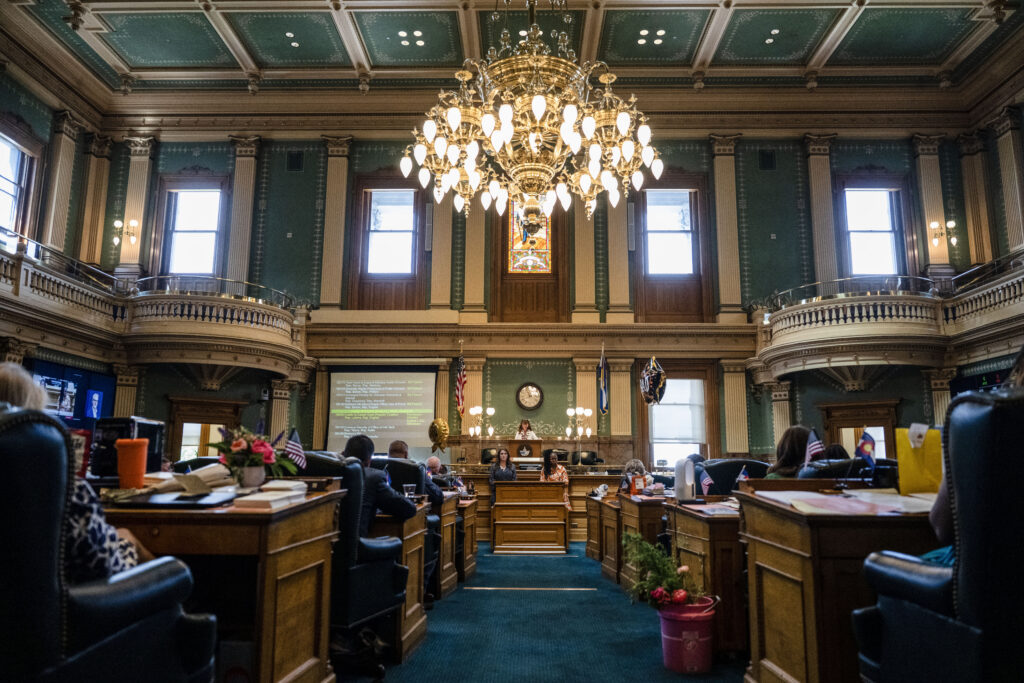
Democratic lawmakers told a legislative ethics panel that a leader’s management of caucus finances left them with unanswered questions, disputed reimbursements and a breakdown in communication that ultimately triggered a formal complaint. The House Ethics Committee is examining a complaint...

Colorado lieutenant governor candidate Markert says early discipline and key mentors set his course
Marianne Goodland
marianne.goodland@coloradopolitics.com
Updated 2 days ago
Editor’s note: This is the first installment in a three-part series examining Colorado’s candidates for lieutenant governor. In this piece, Colorado Politics speaks with George Markert, the Republican running mate to gubernatorial candidate Victor Marx. Marx is competing against Democrat...
Jeff Crank, Jessica Killin set to face off in 2 debates in Colorado’s 5th Congressional District
Ernest Luning
ernest.luning@coloradopolitics.com
Updated 5 days ago
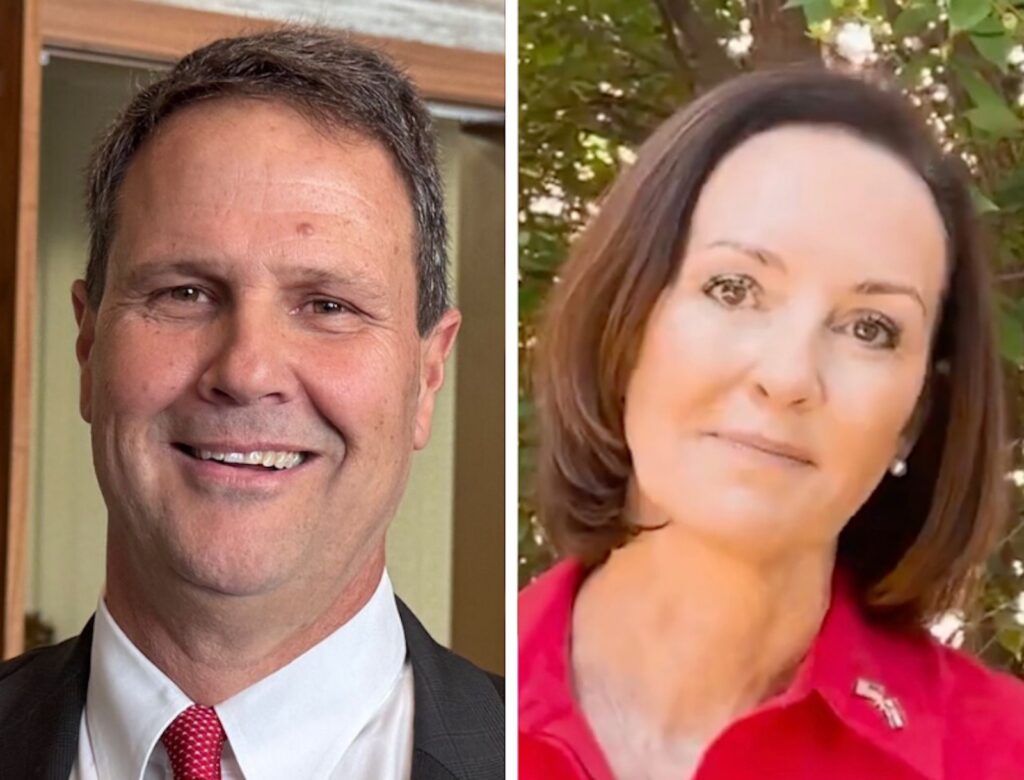
Republican U.S. Rep. Jeff Crank and Jessica Killin, his Democratic challenger, have agreed to debate twice in the weeks leading up to the general election in Colorado’s 5th Congressional District, their campaigns have said. Crank is seeking a second term...

CSI study reviews impacts of Colorado’s mandatory sex‑trafficking sentencing measure
Marissa Ventrelli
marissa.ventrelli@coloradopolitics.com
Updated 2 days ago
A new report by the think-tank Common Sense Institute examines what could happen if Colorado voters approve Initiative No. 108, which establishes mandatory life sentences for offenders convicted of sexual trafficking of a minor. The measure is backed by Protect...
‘Ticked off’: Third-party U.S. Senate candidate in Colorado launches $1.3 million TV ad campaign
Ernest Luning
ernest.luning@coloradopolitics.com
Updated 6 days ago
Bob Chew, the Forward Party nominee for U.S. Senate in Colorado, sends household objects flying in a TV ad set to run statewide through September, backed by $1.3 million in ad reservations across multiple platforms, his campaign told Colorado Politics....

Democratic group aims Spanish-language TV ad at Gabe Evans in Colorado’s battleground 8th CD
Ernest Luning
ernest.luning@coloradopolitics.com
Updated 1 week ago
A national group tied to House Democratic leadership launched a six-figure Spanish-language TV ad in Colorado this week targeting Republican U.S. Rep. Gabe Evans and the GOP’s signature budget legislation. The 30-second spot is part of $15 million in new...
Judge dismisses lawsuit seeking records from Colorado Democratic group
Marianne Goodland
marianne.goodland@coloradopolitics.com
Updated 2 weeks ago
A lawsuit seeking to obtain records from Democratic lawmakers affiliated with a caucus has been thrown out by a Denver District Court judge. On July 17, Judge Ericka Englert dismissed the April lawsuit filed by progressive activist Derrick Blanton, who...

Right-to-natural-gas proposal in Colorado qualifies for ballot
Marissa Ventrelli
marissa.ventrelli@coloradopolitics.com
Updated 2 weeks ago
A citizen initiative that seeks to enshrine the right to natural gas has qualified for the November ballot, Colorado’s election office confirmed on Thursday. Petitions containing signatures for Initiative No. 177 were turned in to the Secretary of State’s Office for review...
What happens if voters pass Colorado’s two competing income tax measures?
Marianne Goodland
marianne.goodland@coloradopolitics.com
Updated 2 weeks ago
The battle between two competing ballot measures — one seeking to cap Colorado’s income tax rate, the other pushing for a tiered system depending on income levels — might come down to whichever ballot proposal gets one more vote. The...

National House Democrats add Colorado seats held by Lauren Boebert, Jeff Hurd to target list
Ernest Luning
ernest.luning@coloradopolitics.com
Updated 1 week ago
The national House Democrats’ campaign arm on Wednesday added the Colorado congressional district held by Republican U.S. Reps. Jeff Hurd and Lauren Boebert to the list of targeted seats the party believes are vulnerable in this year’s midterms. The Democratic...
PREV
PREVIOUS
Twitter to layoff 87 Boulder employees
Twitter’s Human Resources officials Friday informed the Colorado Department of Labor and Employment and Boulder Mayor Aaron Brockett that the company will be laying off 87 employees at its Boulder office. The announcement comes as part of a mass layoff at Twitter which began Friday as new owner Elon Musk makes changes that have raised […]
Divided state Supreme Court says judges cannot review discipline of judicial workers
In an extraordinary decision pitting one part of the state’s judicial branch against another part, the Colorado Supreme Court decided on Monday, by 4-3, that trial judges are not permitted to hear disciplinary appeals involving judicial employees – an option afforded to other government workers. The majority of justices believed the court system’s personnel rules made […]