

Judicial discipline proposals headed to General Assembly
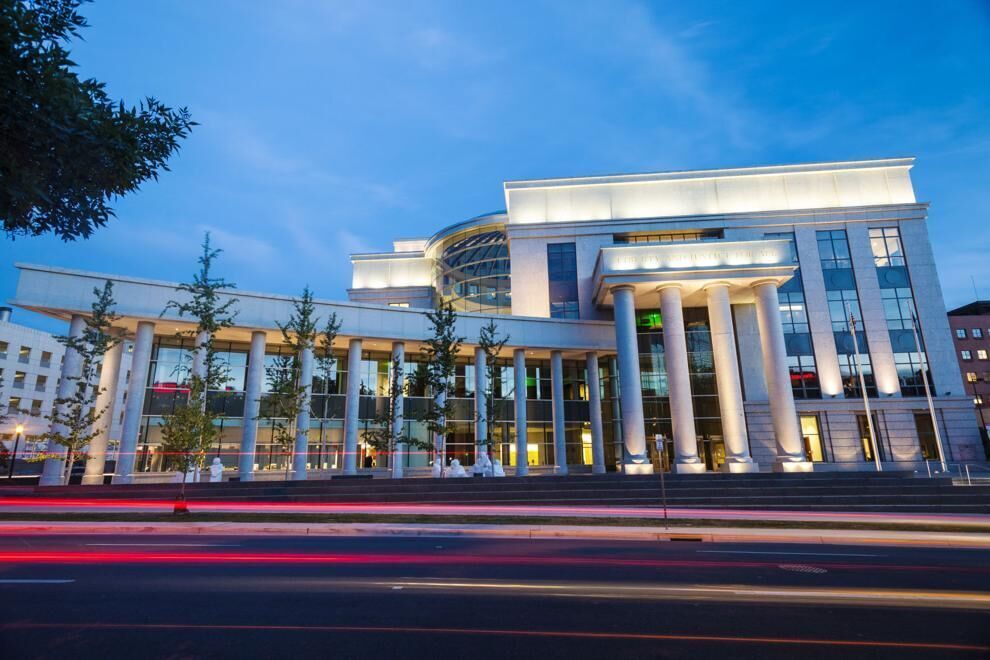
A pair of recommendations to reform Colorado’s system of judicial discipline – including a potential amendment to the state constitution voters could be asked to pass in 2024 – are headed to the General Assembly following Friday’s formal approval by the Legislative Council.
The recommendations came from an interim committee of legislators formed last spring with the passage of a bill that gave independent funding to the Colorado Commission on Judicial Discipline following weeks of contentious public hearings that bared the undertow of discord between that body and the Colorado Supreme Court that sits above it.
Commission members have said, and Supreme Court justices have refuted, the level of cooperation that once existed between the two has been irreparably damaged during inquiries the former had taken up into allegations of misconduct that included sitting and past members of the high court. Those allegations are rooted in a purported contract-for-silence scandal that has rocked Colorado’s third branch of government since it was revealed in newspaper stories nearly two years ago.

The interim committee heard dozens of hours of testimony from a variety of stakeholders about ideas on changing Colorado’s method of disciplining its judges. The most significant change that could occur, should a proposed bill be approved and signed by the governor, is the removal of absolute secrecy over pending judicial discipline matters. Currently, a judge’s discipline record only becomes public if the Supreme Court approves it. The proposed bill would make it public from the filing of formal charges, much like cases in criminal or civil courts, and the hearings thereafter would be open.
Additionally, the bill removes the Supreme Court as overseer of the discipline process. Currently, the court selects three judges, known as special masters, to sit as tribunal in a discipline case. Under the proposal, three people arbitrarily chosen from a larger pool – a trial judge, an attorney and a citizen without connection to either profession – would sit as the tribunal, and the Supreme Court would only act as the appellate review.
And if a sitting or former Supreme Court justice is the subject of or witness in any inquiry, the entire court would be recused and a new panel of seven would be chosen from the state’s 11 Court of Appeals judges.
A third measure of proposed changes would have created an independent ombudsman’s office to walk complainants through the process and keep them updated. Members of the interim committee instead said the measure needed more work at the statehouse. The Judicial Department on Friday confirmed it has plans to create such an office for nonjudicial complaints by its employees. An investigation earlier this year determined the department suffered from employee fears of retaliation for reporting misconduct and insufficient avenues for safe reporting.
“The department is in the planning stages of an organizational ombudsman office or function to provide a safe landing place, support, and resources for employees involved in conflicts with other employees,” spokesman Jon Sarche said in an email. “An ombudsman office or function regarding a judge’s conduct should be outside and independent of the Judicial Department. The department has not proposed and is not discussing an internal ombudsman function for issues related to the conduct of judges.”
Regarding the constitutional amendment, Rep. Mike Weissman, D-Aurora, who chaired the interim committee, told the Legislative Council that “this is one of those issues that is pretty much beyond party,” noting the panel unanimously approved the suggested resolution.
“We also knew that downstream (of needing a two-thirds approval by the General Assembly), a 55% margin we would need to earn in the electorate to pass constitutional changes would require broad support and a pretty good universe of proponents, including members of this legislature and both parties,” Weissman said. “This (measure) represents earnest and legitimate compromise.”


U.S. Rep. Lauren Boebert’s son arrested, faces charges of sexual exploitation of minor
Matt Kyle
matt.kyle@denvergazette.com
Updated 11 hours ago
U.S. Rep. Lauren Boebert’s son Tyler Jay Boebert has been arrested and accused of recording and sharing a video depicting himself having intercourse with a minor, according to court records. The case originated in Garfield County in Western Colorado and...

Colorado audit finds $175K wasted on unused state-issued cellphones
Marissa Ventrelli
marissa.ventrelli@coloradopolitics.com
Updated 13 hours ago
Colorado spent nearly $175,000 on government issued cellphones for employees of various departments that went unused last year, according to a recent state audit. About 400 of the 6,688 cellphones issued to state employees received no calls or texts and...
Adams County water district may proceed with cost-recovery lawsuit against Denver for contamination
Michael Karlik
michael.karlik@coloradopolitics.com
Updated 13 hours ago
A federal judge rejected Denver’s arguments last week for pausing or dismissing a lawsuit brought by an Adams County special district seeking to recover its costs for addressing water contamination as a result of Denver firefighting activities. In January, the...
Hunter shot Colorado wolf after mistaking it for a coyote, wildlife office says
Marianne Goodland
marianne.goodland@coloradopolitics.com
Updated 13 hours ago
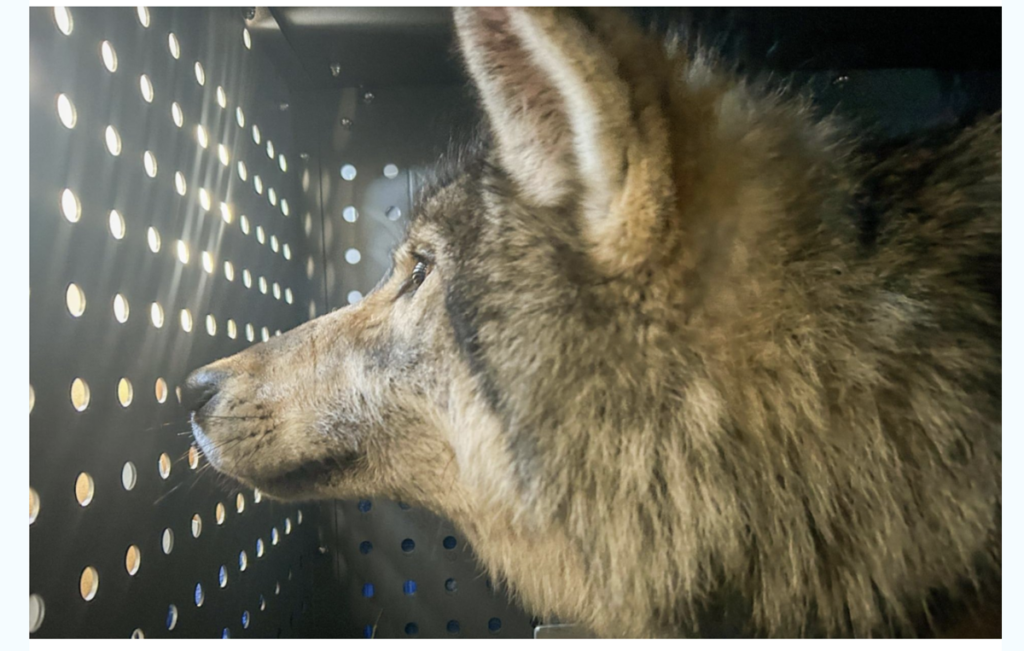
Colorado Parks and Wildlife said Monday that a female wolf from British Columbia that died in January was shot by a hunter who mistook her for a coyote. The wolf, identified as 2504‑BC, was one of 17 wolves relocated since...
Federal judge declines to dismiss First Amendment retaliation claim against prison official
Michael Karlik
michael.karlik@coloradopolitics.com
Updated 9 hours ago
A federal judge agreed last month that an incarcerated Native American woman may pursue her claim of First Amendment retaliation against a prison official who allegedly interfered with her religious exercise. Yvonne Peterson resided at Buena Vista Correctional Facility for...
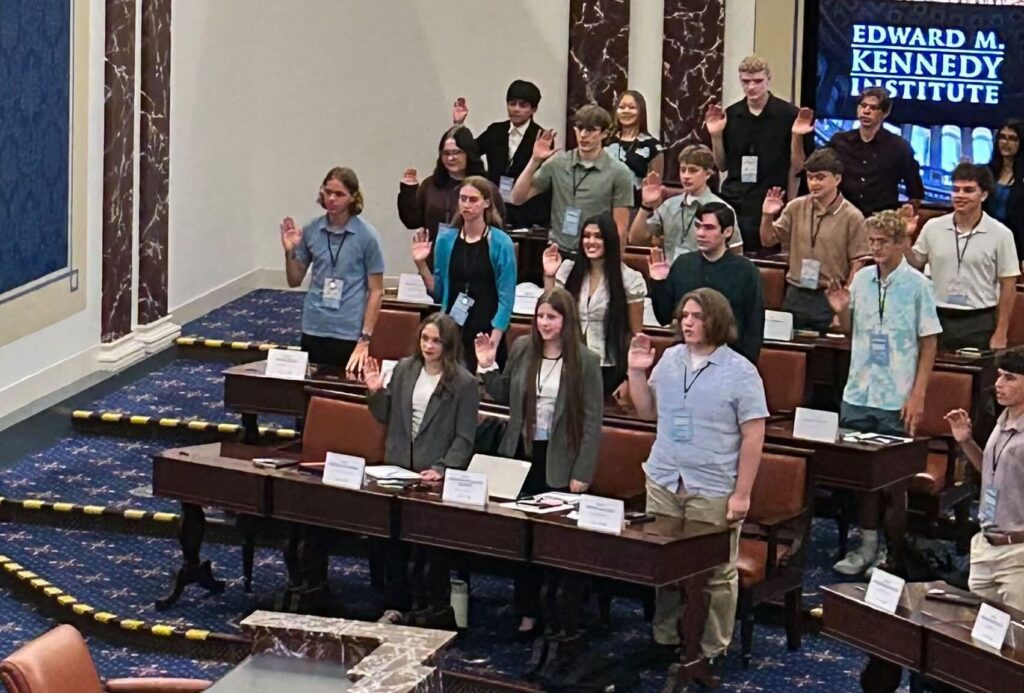
By the students, for the students: Sierra High School represents Colorado in developing national AI framework
Eric Young
eric.young@gazette.com
Updated 11 hours ago
To many, the recent, rapid development of generative artificial intelligence and its lack of frameworks and oversight may evoke comparisons to the unrestrained Wild West in the 1800s or the economic potential of the dot-com boom in the early 2000s....

Colorado’s troubled guardianship office pursues ‘cultural reset’
Marianne Goodland
marianne.goodland@coloradopolitics.com
Updated 10 hours ago
Colorado’s guardianship program, long criticized for mismanagement and high staff attrition, is undergoing a “cultural reset,” as its new director works to repair partnerships and prepare for a major expansion under recent legislation. Created by lawmakers in 2017, the Office...
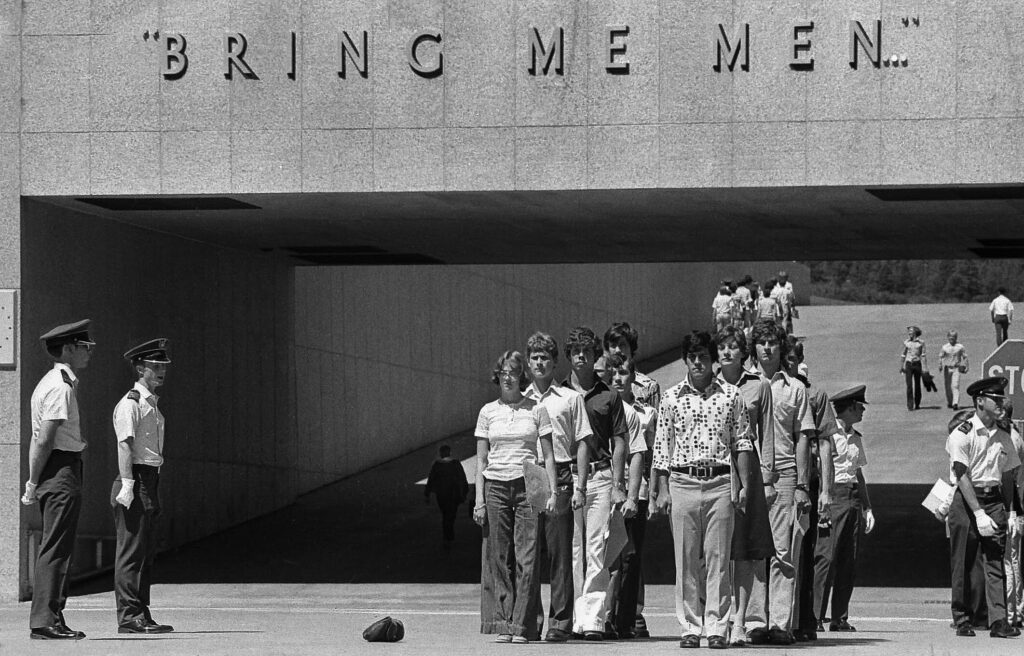
Fifty years later, women reflect on first coed class at the Air Force Academy, struggle for equality
Mary Shinn
mary-shinn@coloradopolitics.com
Updated 3 days ago
When the first female Air Force Academy cadets arrived 50 years ago this summer, they stood in front of an enormous sign on campus that read “Bring me men.” In the shadow of that sign, Kathleen Utley Kornahrens, one of...

As Lake Powell shrinks, marinas are having to adapt to dwindling water levels | OUT WEST ROUNDUP
The Associated Press
the-associated-press@coloradopolitics.com
Updated 6 days ago
ARIZONA Reservoirs near record lows PAGE — The Colorado River’s Lake Powell, the second largest reservoir in the U.S., is shrinking. A record-dry winter and extreme heat — as well as decades of overuse, chronic drought and climate change —...
U.S. Senate OKs funding bill to avoid government shutdown
Wire Services
wire-services@coloradopolitics.com
Updated 3 days ago
Hemp provision became point of contention WASHINGTON • The U.S. Senate in an overnight vote Saturday approved a short-term measure to fund federal agencies into early December and avoid a government shutdown during the middle of campaign season. The late-summer...
PREV
PREVIOUS

Colorado's psychedelics ballot initiative: 5 things to know
Colorado could become the second state after Oregon to allow the use of certain psychedelic substances that are illegal under federal law. But while Oregon voters in 2020 approved the supervised use of psychedelic mushrooms, the citizen initiative on the Colorado ballot in November goes further. Proposition 122 would allow the personal use of psilocybin […]

School's equity training did not amount to hostile work environment, federal judge finds
The Cherry Creek School District said it fired experienced teacher Leslie Shannon after she continued to underperform, was unlikely to improve, and had taken extensive absences that created major burdens for her colleagues. Shannon, however, alleged the only thing that changed in her third and final year with the district was her decision to complain […]