

Colorado judge finds "sea of unreliability" in company’s cellphone mapping data
Police and prosecutors in Colorado and throughout the nation are relying on a company’s cellphone location mapping data to help them convict criminal defendants, but a Larimer County judge’s recent ruling cast doubt on the technology when he barred its use in his courtroom after finding it unreliable and prone to error.
The defense lawyer in that case and an expert witness for the defense say the ruling by the judge could have far-reaching consequences for past criminal convictions and pending criminal cases that relied on the company’s cellphone mapping software.
“Prosecutors and law enforcement throughout the nation have been using data produced by this application to show juries evidence and get convictions in criminal cases,” said the defense lawyer, Lee Christian. “Now it’s been ruled as junk science. How many juries were overly influenced by something not scientific and false?”
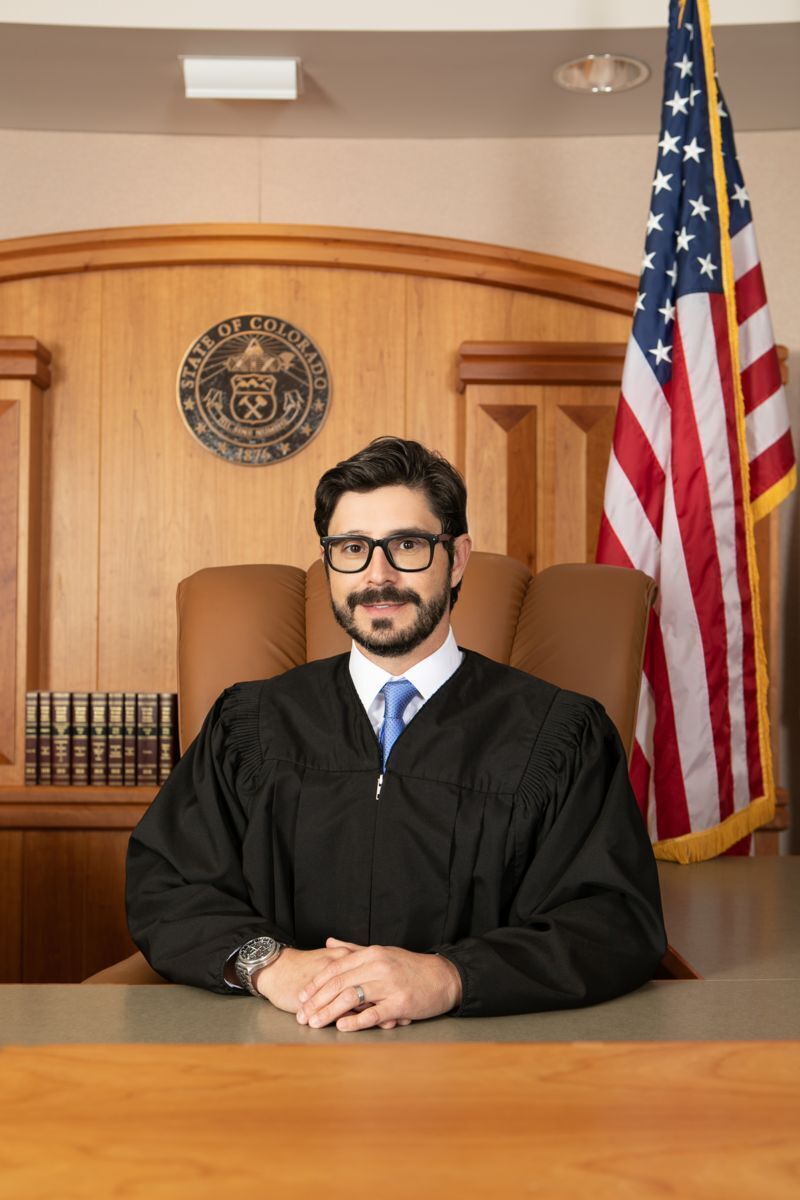
The Sept. 20 ruling from District Court Judge Juan Villaseñor prohibited prosecutors from using cellphone mapping technology from a company founded by a former Arizona police officer in the trial of a 43-year-old defendant charged with three felony counts of stalking his former girlfriend.

Prosecutors ended up dropping those criminal charges, though a jury ended up convicting the defendant last month in a companion case of a misdemeanor assault charge that did not hinge on the cellphone location data.
The judge did not take aim at all cellphone mapping data, which is widely used by law enforcement. Rather his ruling was limited to Trax mapping software from Chandler, Ariz.-based ZetX, which produces aerial maps prosecutors and police use to estimate the location of a defendant’s cellphone during an alleged crime. In 2021, the analytics data corporation LexisNexis acquired ZetX.
“In sum, Trax and its methods have been routinely (and sharply) admonished by the scientific and legal community, and the people haven’t directed the court to any evidence showing otherwise,” Villaseñor wrote in his ruling excluding the use of the Trax technology in the stalking criminal case.
“It’s very likely that a jury would be misled by Trax’s flashy maps and seeming accurate results,” the judge added. “But underneath those surface displays lies a sea of unreliability that the jury won’t see.”
The Gazette found at least 18 other criminal cases during a two-year stretch from 2016 through 2018 that relied on ZetX’s Trax technology, at least partially, throughout the nation, including a double homicide conviction in Weld County.
The law enforcement agencies that use the ZetX Trax technology include the Colorado Springs Police Department and the El Paso County Sheriff’s Office as well as the Fort Collins Police Department among others, said Mark Pfoff, a court-qualified expert in cellular technology and former detective for the El Paso County Sheriff’s Office, who testified for the defense. Denver police say they do not use Trax software from ZetX.
“The ramifications of this ruling could be statewide and even nationwide,” Pfoff said. “Every case that was decided based on information presented by ZetX using Trax could be reviewed and overturned.”
Trax produces aerial maps that plot the location of historical cell-site location and GPS data for cellphones. Police and prosecutors use those maps to identify for juries the estimated location of cellphones carried by defendants and their victims at the time of a crime.
Other companies produce cellphone location maps police use, but the maps produced by the other companies don’t go as far as ZetX does in determining an estimated location of a particular cellphone. The competitors of ZetX identify a cell phone tower antenna that cellphone records indicate was in use. But those firms typically show only the direction of the cellphone tower antenna the cellphone was using, indicating a broad general swath where a cellphone could have been located, Pfoff said.
In contrast, ZetX draws a concentric circle around a cellphone tower and produces maps that indicate a cellphone using that tower likely was located within that circle. The founder of ZetX, Sy Ray, a former sergeant in the Gilbert Police Department in Arizona, claims the maps produced by the Trax software he created are 94%-96% accurate.
Pfoff said police and prosecutors find ZetX’s maps particularly compelling because they reduce ambiguity for a jury and allow law enforcement to dramatically reduce the area where they estimate a cellphone was located.
Villaseñor found that Ray, who did not return telephone messages seeking comment for this article, was not a credible witness.
“He inflated his credentials, inaccurately claiming to be an engineer,” the judge wrote in his ruling, stressing that Ray had testified that he is “more of an engineer than an engineer.”
“As noted, his sole academic degree is an associates, and there’s no evidence that it’s related to engineering. Nor is there evidence that Ray’s taken any engineering classes,” the judge continued. “To be sure, he’s created a booming business and has successfully pitched Trax to several law-enforcement agencies. But a sound business model doesn’t equal an accurate error rate.”
Villaseñor said in his ruling that he found three earlier cases in which challenges to the use of ZetX’s Trax technology were not successful. Judges ended up accepting Trax-related evidence in those cases, but Villaseñor said he found those rulings “unpersuasive.”
“Most compelling are the complete absence of data to support Trax’s purported error rate and the scientific community’s wholesale rejection of Trax’s methods,” Villaseñor wrote in his ruling, noting that he had found three other rulings from judges rejecting Trax-related evidence or expressing skepticism of that evidence.
In the case of the man charged with three counts of stalking in Fort Collins, prosecutors wanted to use Trax cellphone data mapping as evidence to show the defendant was repeatedly near the apartment of his former girlfriend, thereby confirming he was defying a restraining order barring him from stalking her.
The Trax maps produced for the Fort Collins Police Department placed the man in the vicinity of his former girlfriend’s apartment nearly every day between Dec. 30, 2021, and Jan. 11, 2022, the judge noted in his ruling excluding the maps.
Pfoff testified for the defense that Trax isn’t reliable. Pfoff provided as evidence GPS records from Jones’ truck that undercut the cellphone location maps produced by Trax in the case. The truck’s GPS records showed that when Jones was supposedly at the apartment of the former girlfriend on multiple occasions, he was actually driving on an interstate, according to Pfoff.
“The GPS from the truck showed that on multiple occasions that they were trying to suggest he was in that area of the apartment, he was miles away,” Pfoff said in an interview. “He was on the other side of town. They said he was on the west side of Fort Collins, and I could show he was on the northeast side of Fort Collins.”
The GPS mapping backed up the man’s contention that he had been driving back and forth from his home in Cheyenne, Wyo., and his job in Johnstown instead of stalking his girlfriend, Pfoff said.
In addition, security-video footage of the apartment complex undercut the former girlfriend’s contention that she and her son had seen her former boyfriend’s red Dodge Ram driving through the apartment complex on two occasions.
The investigating officer reviewed the security footage for the second day and noted that a red truck was driven through the complex, but the truck wasn’t a Dodge. The judge in his ruling said the officer found that the truck was a Toyota, and the Toyota had a camper on the back when the former boyfriend’s truck did not have a camper.
Larimer county District Attorney Gordon McLaughlin, whose office prosecuted the case, said he still believes ZetX Trax technology is reliable.
“We respectfully disagree with the judge’s ruling and will continue to consider such mapping information when provided by law enforcement investigators as part of a case presentation,” McLaughlin said in a prepared statement. “However, we have also advised local law enforcement agencies that certain judges may not allow such evidence to be presented at trial, and they should therefore endeavor to use other methods and rely on other evidence when available.”
Just how many criminal convictions have relied on Trax mapping technology couldn’t be immediately determined. Ray, the founder of ZetX, claimed in a curriculum vitae he submitted in the case that he has provided training to over 8,000 law enforcement officers, prosecutors and defense experts.
He also stated on the curriculum vitae that he had provided expert testimony from 2016 to 2018 in at least 18 criminal cases. Another case in which Ray testified involved the Oct. 15, 2015, double homicide in a marijuana smuggling killing in rural Weld County. Samuel Pinney, who was 36 at the time of his conviction, was sentenced to two life sentences for the killings in that case.
The Colorado Court of Appeals and the Colorado Supreme Court rejected an appeal of Pinney’s conviction. That challenge, however, did not revolve around the cellphone location testimony in the case from Ray, the founder of ZetX. Instead, the appeal concentrated on other issues, such as the trial judge’s decision to exclude testimony about alleged coercive techniques used during police interrogations.

Order Granting Motion to Exclude Historical Cell-Site Location Information Based on Trax Software.pdf


Denver murder conviction reversed for incomplete self-defense instruction
Michael Karlik
michael.karlik@coloradopolitics.com
Updated 5 hours ago
Colorado’s second-highest court reversed a defendant’s murder conviction last week because a Denver judge gave an incomplete instruction to the jury about the man’s right to self-defense. Donald R. Gonzales and Gary McLaughlin met up in a Capitol Hill parking...
Colorado lawmaker, House leaders named in workplace-retaliation lawsuit
Marianne Goodland
marianne.goodland@coloradopolitics.com
Updated 8 hours ago
A former legislative aide has filed a lawsuit alleging she was mistreated, illegally directed to perform campaign work and harmed by a House leadership structure she charged was fragmented, politicized and ineffective at protecting employees. The lawsuit, filed by Jennifer...
Federal judge hears arguments about Colorado’s 3-day gun purchase waiting period
Michael Karlik
michael.karlik@coloradopolitics.com
Updated 13 hours ago
A federal judge heard arguments on Monday about the constitutionality of a 2023 Colorado law that generally imposes a three-day waiting period on firearm purchases after the initiation of a background check. The test that the U.S. Supreme Court created...
Colorado Supreme Court intervenes in Weld County prosecution dismissed due to Missy Woods misconduct
Michael Karlik
michael.karlik@coloradopolitics.com
Updated 5 hours ago
The Colorado Supreme Court ordered a Weld County trial judge last week to respond to the district attorney’s claim that he improperly dismissed a criminal case because of “outrageous” conduct by the Colorado Bureau of Investigation. Daniel Lee Eatinger stood...
Schoolchildren’s presence at child sex-related trial did not harm Arapahoe County defendant, appeals court says
Michael Karlik
michael.karlik@coloradopolitics.com
Updated 3 days ago
Colorado’s second-highest court decided on Thursday that the presence of a group of schoolchildren on the first day of a child sexual exploitation trial did not violate an Arapahoe County defendant’s constitutional right to a fair trial. Prosecutors charged Jerry...
Appeals court cites week-old Colorado law to reinstate child neglect case at child, father’s request
Michael Karlik
michael.karlik@coloradopolitics.com
Updated 3 days ago
Colorado’s second-highest court invoked a new state law for the first time on Thursday and reinstated a child neglect case that both the child and her father wished to reopen. House Bill 1227 took effect on Aug. 12, reversing a...
Colorado Supreme Court names William Hood as next chief justice
Michael Karlik
michael.karlik@coloradopolitics.com
Updated 4 days ago
The Colorado Supreme Court has selected Justice William W. Hood III to be the next chief justice, the judicial branch announced on Friday. Hood will succeed Chief Justice Monica M. Márquez, who took over the role in July 2024. “I...
Family of slain Lakewood teacher releases statement as murder suspect makes first court appearance
Matt Kyle
matt.kyle@denvergazette.com
Updated 1 day ago
Patrick Theodore Barnett, the Lakewood man accused of killing his wife, a Jeffco Public Schools art teacher, made his first court appearance Friday morning as his wife’s family looked on. The status conference hearing was held before District Court Judge...
Appeals court upholds Park County trophy hunting conviction
Michael Karlik
michael.karlik@coloradopolitics.com
Updated 4 days ago
Colorado’s second-highest court clarified on Thursday that a defendant may stand convicted under the state’s trophy hunting laws if he abandons a bear carcass but returns later to remove the meat. Under Colorado law, it is a felony to detach...
Judge grants partial injunction to GEO in fight against state health inspection law
Kyla Pearce
kyla.pearce@gazette.com
Updated 5 days ago
A judge ruled Thursday that The GEO Group does not have to follow parts of a new state law requiring more frequent health and safety inspections at the U.S. Immigration and Customs Enforcement processing center in Aurora. Under the order...
PREV
PREVIOUS

A LOOK BACK | Dems offer Love $500 to debate McNichols
FIfty-Five Years Ago This Week: Gov. Steve McNichols and his Republican rival, Colorado Springs attorney John Love, held their first debate at Editors Day at Colorado State University in Fort Collins. Commentators said McNichols had held his own, but several others interviewed following the end of the debate felt the governor had already “flunked out […]

Southern Colorado towns weigh retail marijuana sales amid industry downturn
After nearly a decade of legal recreational marijuana possession in Colorado, voters in Colorado Springs, Palmer Lake and Cripple Creek will decide if it’s time to allow sales in each locale. Proponents promise a bump in tax revenues, while opponents argue the social costs are too high. Palmer Lake and Cripple Creek officials say the […]