

HUDSON | Pay up to pacify public prosecutors, defenders
Finding the news behind the news can demand arduous treks into the policy weeds to unveil dysfunction. It’s not uncommon to then discover idiosyncratic legislative histories that prompt bizarre behaviors within public bureaucracies. Recent reports that public defender offices across Colorado are toying with forming a union to petition for better working conditions and improved pay for support staff, but not immediately for attorneys, sounds like a case of special pleading. Teachers, firemen and police, it should be pointed out, have long enjoyed just such collective bargaining privileges.
Current Colorado law, however, does not authorize union representation inside the judiciary department. You might find it surprising to learn employees in district attorney offices are treated differently than those in state public defender offices. Though public defender personnel are state employees, with the sole exception of the elected district attorney, all others are regarded as employees of a special purpose unit of local government. Salaries are funded by county commissioners within each judicial district. Although the origin of this distinction is somewhat obscured by the mists of time, it’s believed prosecution of crimes was traditionally viewed as a part of policing – long the responsibility of local government.
It was only midway through the 20th century that the U. S. Supreme Court confirmed every defendant’s right to an attorney and states were subsequently forced to scramble to create independent public defender systems. In Colorado this has produced profound inequities, particularly in our poorer, rural judicial districts. For states where both prosecution and defense functions are administered by state government there is a largely accurate perception their prosecutors are better funded, better staffed and consequently operate with a decided advantage over public defenders. The first push for union representation on the part of public defenders emerged in these states.
Although unionization advocates in Colorado’s public defender offices complain about onerous caseloads, assistant DAs usually handle even more cases. The difficulty in hiring and retaining support staff is traceable to shortcomings in the state’s personnel system rules. In southern Colorado’s 3rd Judicial District, encompassing Las Animas and Huerfano counties, the past four district attorneys have gone to court to compel adequate appropriations, with one resigning in disgust. In another impoverished district, where there have been constant funding disputes, the approved 2022 budget is the same as it was nine years ago. Within rural jurisdictions, it’s the public defender office which enjoys an advantage over prosecutors.
The legislature distinguishes between judicial districts with more than or less than 100,000 citizens. Larger metropolitan districts along the Front Range generally receive the support they request. Funding for the state’s public defender system is submitted through the judiciary department, although technically not a part of the department itself, where their requests reportedly receive only a cursory review before being transmitted to the legislative Joint Budget Committee. Rural funding disputes between district attorneys and county commissions created enough political noise in former years to cause the legislature to move their personal compensation into the state pay system when several DAs were denied sufficient pay as retaliation from irritated commissioners. A blind eye is turned to the challenge of attracting and retaining qualified staff in both prosecution and defender offices.
During a recent meeting between Gov. Jared Polis and statewide district attorneys, where the question of funding was discussed, the governor indicated he hears complaints from county commissioners that DAs aren’t doing their job. Considering a public concerned with rising crime, this is rather like complaining that your car keeps stalling out because you refuse to purchase gasoline. It’s well past time to coordinate appropriations for both prosecutors and defenders. It is the district attorney, after all, who announces he or she is appearing in court to “represent the people.” Policing may best be left to local government, but controlling crime is surely a statewide responsibility – particularly when curbing online fraud, identity theft and fiscal crimes reaching across arbitrary boundaries.
It’s also past time to reconsider the functioning of the state personnel system. Colorado law requires a “prevailing wage” be offered to all state workers. In fact, a wage survey is required every other year. This results in an adjustment of wage ranges for each position. This proves meaningless when employees do not receive progressive pay raises across their ranges. Yet since the year 2000, budgetary constraints have made it easier to offer minimal, across-the-board increases each year that barely keep pace with inflation. So, not only have wages been effectively frozen, but most state employees are bunched at the bottom of their wage ranges due to this salary compression.
Little wonder turnover is high. Most state workers can walk across the street where private employers provide them with immediate pay hikes. State pensions, unavailable for DA staff, no longer offer an incentive to remain.
Miller Hudson is a public affairs consultant and a former Colorado legislator.

Giving credit to Polis where credit is due | SONDERMANN
Eric Sondermann
eric-sondermann@coloradopolitics.com
Updated 3 days ago
It is an understatement to suggest that Gov. Jared Polis has had a tough couple of months. The bloom was already off the rose and Coloradans were paying far more attention to the choice of his replacement than they were...
Will one unqualified AG replace another? | George Brauchler
George Brauchler
george-brauchler@gazette.com
Updated 2 days ago
Colorado Democrats are poised to nominate another attorney general candidate with de minimis relevant credentials or experience. Far from disqualifying, Colorado’s recent voting history mirrors that of America in favoring biography over experience, partisanship over policy, and emphasizing what divides...
Pueblo’s mayor keeps stirring the pot | Dennis Maes
Dennis Maes
dennis-maes@coloradopolitics.com
Updated 2 days ago
Pueblo Mayor, Heather Graham, has clearly proven to be a disciple of the Donald Trump school of governance. And, like her mentor, she is experiencing the same catastrophic results. The format is to ignore what the electorate approved and expects...
The perils of Colorado’s unregulated abortions | GUEST COLUMN
Colorado Politics
colorado-politics@coloradopolitics.com
Updated 2 days ago
By Tom Perille How did the movement which grew out of a genuine concern for the health and safety of women become the same movement that undermines women’s health and safety today? Despite good intentions, it was a long route...
Sans seniors, what does Colorado’s uninterested early turnout say about our disengaged electorate? | Paula Noonan
Paula Noonan
paula-noonan@coloradopolitics.com
Updated 3 days ago
This primary election is poorly attended. Evidence is in the numbers. About 10% of active registered voters are deciding this year’s primaries with seven days to go. If that number triples by June 30, only 30% of voters will decide...
Who gets to decide Colorado’s economic future? | GUEST COLUMN
Colorado Politics
colorado-politics@coloradopolitics.com
Updated 3 days ago
By Sarah Blackhurst Colorado’s prosperity depends on industries that grow our food, build our future and power our homes. But today, these sectors face an invisible threat from 5,000 miles away: the European Union’s Corporate Sustainability Due Diligence Directive (CS3D)....
We have the chance to change Colorado’s cancer outcomes | PODIUM
Colorado Politics
colorado-politics@coloradopolitics.com
Updated 3 days ago
By Erika Hanson Brown Colorado ranks among the healthiest states in the nation by nearly every measure. Yet even here — amid the Rocky Mountains and our deeply rooted culture of health and activity — cancer casts a long and...
Colorado has a playbook for youth mental health — our next governor must use it | GUEST COLUMN
Colorado Politics
colorado-politics@coloradopolitics.com
Updated 5 days ago
By Karen Ron-Li Liaw From the rural communities on the western slope to the eastern plains, to the major urban regions on the Front Range, Colorado families are navigating an all-too-familiar crisis: kids are struggling, and Colorado’s mental health system...
Pigs engineered to fight alpha-gal syndrome | Rachel Gabel
Rachel Gabel
rachel-gabel@coloradopolitics.com
Updated 5 days ago
If I were an evil genius trying to hamstring animal agriculture, I would create a fly that eats livestock alive and a tick whose bite and spit causes some people to have an allergic reaction to meat. (Insert evil laugh...
Registered voters on the eve of the 2026 primaries | Cronin & Loevy
Tom Cronin Bob Loevy
tom-cronin-bob-loevy@coloradopolitics.com
Updated 1 week ago
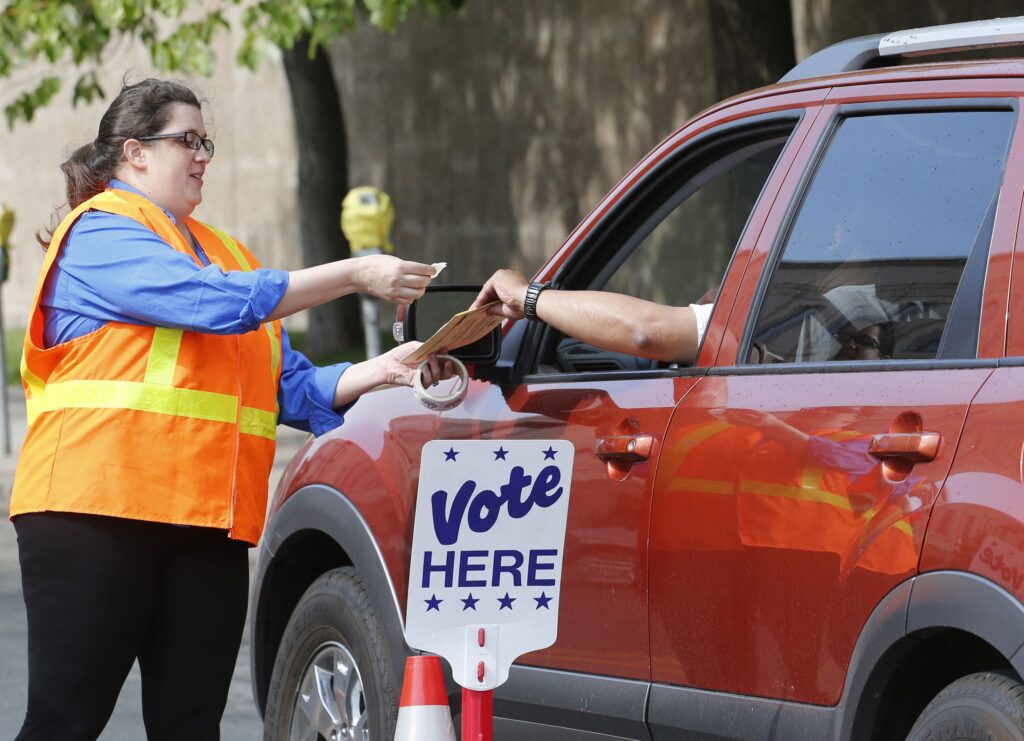
The Colorado Secretary of State’s Office has published the latest voter registration figures for the state and its counties as of June. Colorado ranks among the highest states for independent, or unaffiliated, voters. Only Alaska and Massachusetts have more. New Hampshire, New Jersey, Maine and Oregon also rank highly. So here...
PREV
PREVIOUS

CALDARA | The real story of the Queen’s passing
Jon Caldara As Americans, we have a very odd relationship with the United Kingdom and its monarchy. We seem to love the celebrity and gossip about the royals but, well, we just don’t get “it.” And we should never get it. Many Americans watch the pomp and ceremony of the ascension of a new king […]
GABEL | Activist 'acceptable' animal husbandry inanity
Rachel Gabel Never have I ever had an animal health question and called an urban or suburban legislator for their expertise. Never has an animal-rights extremist group bent on ending animal agriculture showed up in a blizzard to help save calves. And never have I allowed words to pass my lips like “boy, we should […]