

Appeals court rejects ‘low functioning’ defendant’s claim he was incompetent to stand trial

Despite his defense lawyers’ repeated concerns that his mental abilities were deteriorating and he failed to absorb meaningful information about his criminal proceedings, a man was not entitled to yet another evaluation after numerous psychologists found him competent to stand trial, the state’s Court of Appeals has ruled.
A Denver jury convicted Matthew F. Rodriguez in 2019, more than three years after he first appeared in court on charges that he sexually assaulted a child. On Thursday, a three-judge panel of the Court of Appeals concluded Rodriguez’s trial lawyers had presented no fresh information suggesting he was newly incompetent right before his trial, after multiple medical professionals for years had concluded the opposite.
“While Rodriguez is unquestionably a low functioning individual, nothing in the record shows that the court abused its discretion by relying on the medical and psychological specialists who found that Rodriguez’s level of functioning did not dip below the level of competency,” wrote Judge Lino S. Lipinsky de Orlov in the panel’s Sept. 1 opinion.
The constitutional right to due process prohibits bringing a defendant to trial who is incompetent. Under the law, “incompetence” means defendants have a mental disease or defect that makes them incapable of understanding the criminal proceedings or participating in their defense. There are procedures for ordering an evaluation if either party or a judge raises a question about the defendant’s competency.
While defendants who are deemed incompetent can become competent to stand trial and vice versa, a defendant is assumed to be competent unless proven otherwise.
Rodriguez’s lawyers first requested an evaluation in January 2016, alleging he could not meaningfully engage with discussion about his case. Although Rodriguez mentioned to a psychologist that he suffered from a prior head injury, the psychologist did not find evidence of cognitive dysfunction. The psychologist deemed Rodriguez competent to stand trial, given his ability to understand and communicate information about his case.
In 2017, a new public defender joined Rodriguez’s team and asked for a second competency evaluation. The motion cited his “significant defects in memory and comprehension.” A different psychologist evaluated Rodriguez and found no indication his memory was significantly impaired. She suggested Rodriguez may have been feigning cognitive problems.
Yet again in 2017, the defense requested another competency evaluation with a third psychologist. Once more, the psychologist found Rodriguez competent, even if his verbal skills were below average.
For 11 months, District Court Judge Shelley I. Gilman honored the defense’s request to postpone the trial while Rodriguez underwent neurological tests. Around the three-year mark in the case, Rodriguez’s victim had reportedly expressed frustration about the delays. At another competency hearing in August 2018, Rodriguez’s lawyers asked for another delay to assess whether a lack of medication was affecting his competency.
Gilman decided Rodriguez was competent to proceed, and denied a further motion in February 2019 for another psychological evaluation.
“Competency to proceed has been examined for almost three years now and no doctor has found (him) incompetent,” she said. A jury convicted Rodriguez the following week and Gilman sentenced him to 24 years to life on each of his two child sexual assault offenses.
On appeal, Rodriguez claimed Gilman had abused her discretion by declining to order further evaluation in 2019. Rodriguez had recently entered custody, his lawyer explained to the appeals court, which caused him to deteriorate significantly after the previous evaluations.
“According to counsel, it was almost impossible to get through basic conversations with him,” wrote attorney Mallika L. Magner. “The court questioned Mr. Rodriguez, but Mr. Rodriguez was basically unresponsive. Mr. Rodriguez said that he forgot, and began to cry.”
Magner also claimed the problems indicated a “complete breakdown in communications,” in which Gilman should have appointed Rodriguez new lawyers.
The prosecution agreed Gilman could have concluded Rodriguez’s cognition had worsened over time and the prior competency evaluations were no longer valid.
“But the court also could have reached the conclusion that it did – that the years of evaluation and other circumstances made the experts’ opinions reliable, notwithstanding the passage of time,” wrote Assistant Attorney General Patrick A. Withers.
The Court of Appeals panel looked at each of the defense’s requests for a competency evaluation and determined the rationale given in the 2019 request did not differ significantly from the previous motions. There was nothing indicating another psychologist would reach a different conclusion from those who evaluated Rodriguez before, the panel reasoned.
Therefore, trial judges are not wrong to deny requests for competency evaluations when there is no “medical or psychological explanation” for why a previously-evaluated defendant is no longer competent, Lipinsky explained.
“Stripping district courts of their discretion to decline to order a competency evaluation where no such evaluation is warranted would allow lawyers to delay trials for years, if not decades, by filing competency motion after competency motion,” he wrote.
The panel also decided Gilman did not act erroneously when she refused to appoint a new lawyer. The appellate judges reasoned any attorney would likely have encountered the same difficulties in communicating with Rodriguez.
The case is People v. Rodriguez.


10th Circuit dismisses woman’s lawsuit following 10-year attempt to undo restraining order
Michael Karlik
michael.karlik@coloradopolitics.com
Updated 16 hours ago
The Denver-based federal appeals court rejected a woman’s challenge on Friday to a restraining order imposed on her more than a decade ago, finding that she cannot credibly claim she will be prosecuted for violating the restraining order through her...
10th Circuit dismisses woman’s lawsuit following 10-year attempt to undo restraining order
Michael Karlik
michael.karlik@coloradopolitics.com
Updated 18 hours ago
The Denver-based federal appeals court rejected a woman’s challenge on Friday to a restraining order imposed on her more than a decade ago, finding that she cannot credibly claim she will be prosecuted for violating the restraining order through her...
Colorado equal pay law does not require plaintiffs to allege gender-based retaliation, appeals court finds
Michael Karlik
michael.karlik@coloradopolitics.com
Updated 16 hours ago
The 2019 Colorado law aimed at rooting out pay discrimination on the basis of sex does not require a plaintiff to allege their employer retaliated against them for sex- or gender-related reasons, the state’s second-highest court decided on Thursday. Lawmakers...
Hudson faces lawsuit over ICE detention facility
Nicole C. Brambila
nicole-c-brambila@coloradopolitics.com
Updated 1 day ago
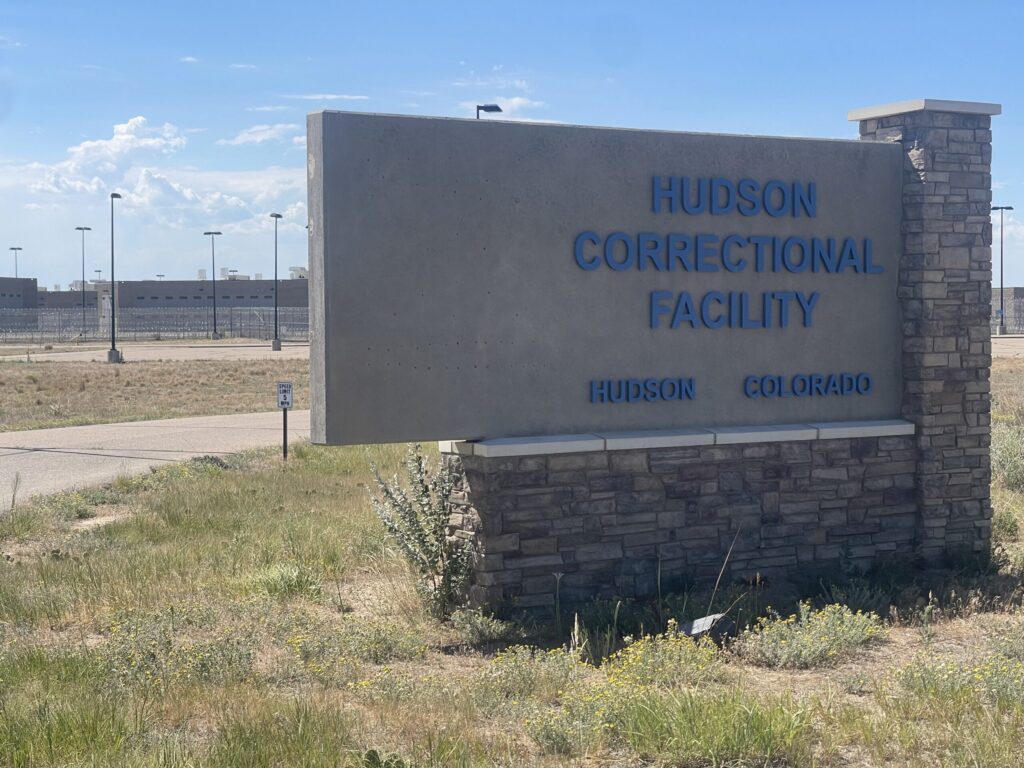
A nonprofit organization filed a lawsuit against the Town of Hudson Wednesday, challenging plans to reopen a former federal prison in the town as a U.S. Immigration and Customs Enforcement detention facility. Together Colorado, along with Janet E. Carlson, filed...
Senate committee advances Trump’s 10th Circuit nominee, as Domenico responds to questions about delays
Michael Karlik
michael.karlik@coloradopolitics.com
Updated 1 day ago
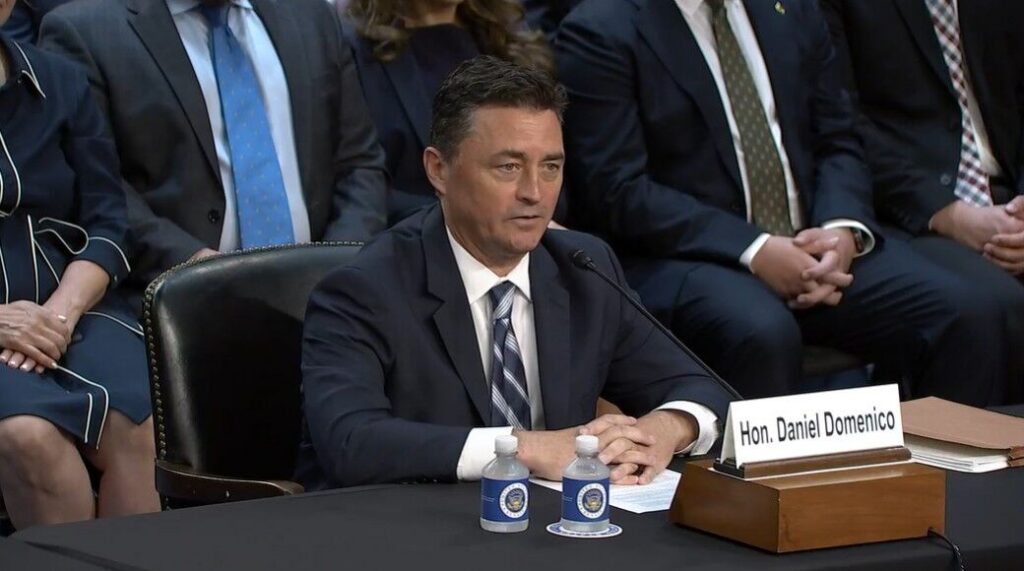
The U.S. Senate Judiciary Committee advanced President Donald Trump’s nominee to the Denver-based federal appeals court on Thursday by a party-line vote of 12-10. U.S. District Court Judge Daniel D. Domenico, who was Trump’s first-term appointee to Colorado’s federal trial...
Colorado justices to hear embryonic donation dispute
Michael Karlik
michael.karlik@coloradopolitics.com
Updated 2 days ago
The Colorado Supreme Court announced on Monday that it will decide whether lower court judges properly applied its framework for adjudicating disputes over the fate of pre-embryos, in which one person wants to use them to become a parent and...

Isolation, emotion, persona: Colorado judicial programming prepares people for life on the bench
Michael Karlik
michael.karlik@coloradopolitics.com
Updated 2 days ago
As a trial judge and now as a member of the Colorado Supreme Court, Justice Carlos A. Samour Jr. has heard the view that being a judge is isolating. “In neither court have I felt isolated. I’ve always interacted a...

Federal judge dismisses Colorado county sheriff’s challenge to law limiting immigration cooperation
Michael Karlik
michael.karlik@coloradopolitics.com
Updated 3 days ago
A federal judge dismissed a challenge from Mesa County Sheriff’s Office leaders last week to a Colorado law limiting public employees’ cooperation with immigration authorities, concluding that the plaintiffs did not allege they engage in any conduct that the law...

10th Circuit raises bar for fraud victims to sue debt collectors over inaccurate information
Michael Karlik
michael.karlik@coloradopolitics.com
Updated 3 days ago
The Denver-based federal appeals court wiped away a jury’s $500,000 award to a fraud victim on Monday and made it more difficult for consumers to hold companies liable for disseminating inaccurate credit information. The Fair Credit Reporting Act regulates credit...

Montezuma County judge’s censure, suspension approved by discipline panel
Michael Karlik
michael.karlik@coloradopolitics.com
Updated 3 days ago
A three-member disciplinary panel accepted, on Monday, an agreement between a Montezuma County judge and the Colorado Commission on Judicial Discipline that specifies he will receive a censure, a suspension, and additional education for his admitted instances of misconduct. Under...
PREV
PREVIOUS

Appeals court overturns Denver murder conviction due to prosecutor's misconduct
Although a single improper statement by a prosecutor during trial will rarely lead to the reversal of a defendant’s convictions, Colorado’s second-highest court last week decided such an extraordinary consequence was necessary – overturning a man’s second-degree murder conviction and 48-year prison sentence. A jury convicted Cain Wilkens in 2018 of murdering his wife, Clarissa […]

Democrat Jena Griswold raises $389,000 in August in reelection bid for Colorado secretary of state
Colorado Secretary of State Jena Griswold plans to report raising more than $389,000 during the five-week fundraising period that ended on Aug. 31, the Democrat’s campaign told Colorado Politics on Tuesday. The eye-popping sum – it’s more than her Republican predecessor, Wayne Williams, raised during his entire 2018 campaign and marks Griswold’s best fundraising month […]