

Reclamation: Upper Basin reservoirs insufficient to save Lake Powell
Flaming Gorge Reservoir, which Bureau of Reclamation officials have used twice during the past two years to add water to the rapidly deteriorating Colorado River system, likely has only enough water left for two more emergency releases, according reclamation officials.
Last summer, the Bureau of Reclamation ordered the release of 125,000 acre-feet of water from Flaming Gorge, located in the northeast corner of Utah and the southwest corner of Wyoming, to help keep Lake Powell from falling too low to produce power. Then, earlier this summer, Reclamation announced that it would release another 500,000 acre-feet of water from Flaming Gorge and hold back 480,000 acre-feet in Powell instead of releasing it downstream to Lake Mead, as it would normally do.
Another 30,000 acre-feet was released from Colorado’s Blue Mesa Reservoir last summer, which along with Flaming Gorge, New Mexico’s Navajo, and Powell itself, was supposed to act as a critical savings account for the river system.
The Colorado River Basin, which is divided into two regions, includes seven states: Colorado, New Mexico, Utah and Wyoming make up the Upper Basin, while Arizona, California and Nevada comprise the Lower Basin. Lake Powell serves as the largest water bank for the Upper Basin, while Lake Mead holds water for the Lower Basin states.
But as drought and climate change continue to sap the Colorado River, even the water in the Upper Basin’s high elevation storage ponds, namely Flaming Gorge, Blue Mesa and Navajo, isn’t enough to protect the larger system, and those kinds of releases can’t go on indefinitely, said Jim Prairie, a hydrologic engineer with Reclamation.
“We could release from Flaming Gorge maybe two more times,” Prairie said at a conference convened by the Colorado Water Congress last week.
And Blue Mesa and Navajo, both now at less than 50% of capacity, are considered too low to provide much, if any, additional relief.
It is analyses like these that prompted Reclamation Commissioner Camille Touton in June to order the seven basin states to find ways to come up with 2 million to 4 million acre-feet of water next year, to inject into the reservoirs to keep them full enough to generate hydropower and supply water.
That means determining which water users and states are going to cut back use.
Tensions are rising as the federal government and the states continue to fail in their efforts to develop a concrete plan that will cut water use enough to come up with that 2 million to 4 million acre-feet.
“If we failed at anything in the drought contingency planning (done in 2019) it is that our vision was insufficiently dark,” said Wayne Pullan, director of Reclamation’s Upper Colorado Region.
As the freefall on the river continues, veteran federal hydrologists and engineers at Reclamation are scrambling to come up with new ways to forecast what is going to happen, using, among other tools, a stress test that is based on recent observed inflows, rather than models.
Hydrologists are also using data that excludes measurements from extremely wet years back in the 1980s, and focuses instead on the most recent dry periods.
Reclamation estimates that Powell will receive just 6.2 million acre-feet of water from the mountain snows in Colorado, Utah, Wyoming and New Mexico in 2022, using its new forecasting models. That is far below the 9.6 million acre-foot average, a figure based on a 30-year average that includes extremely wet periods.
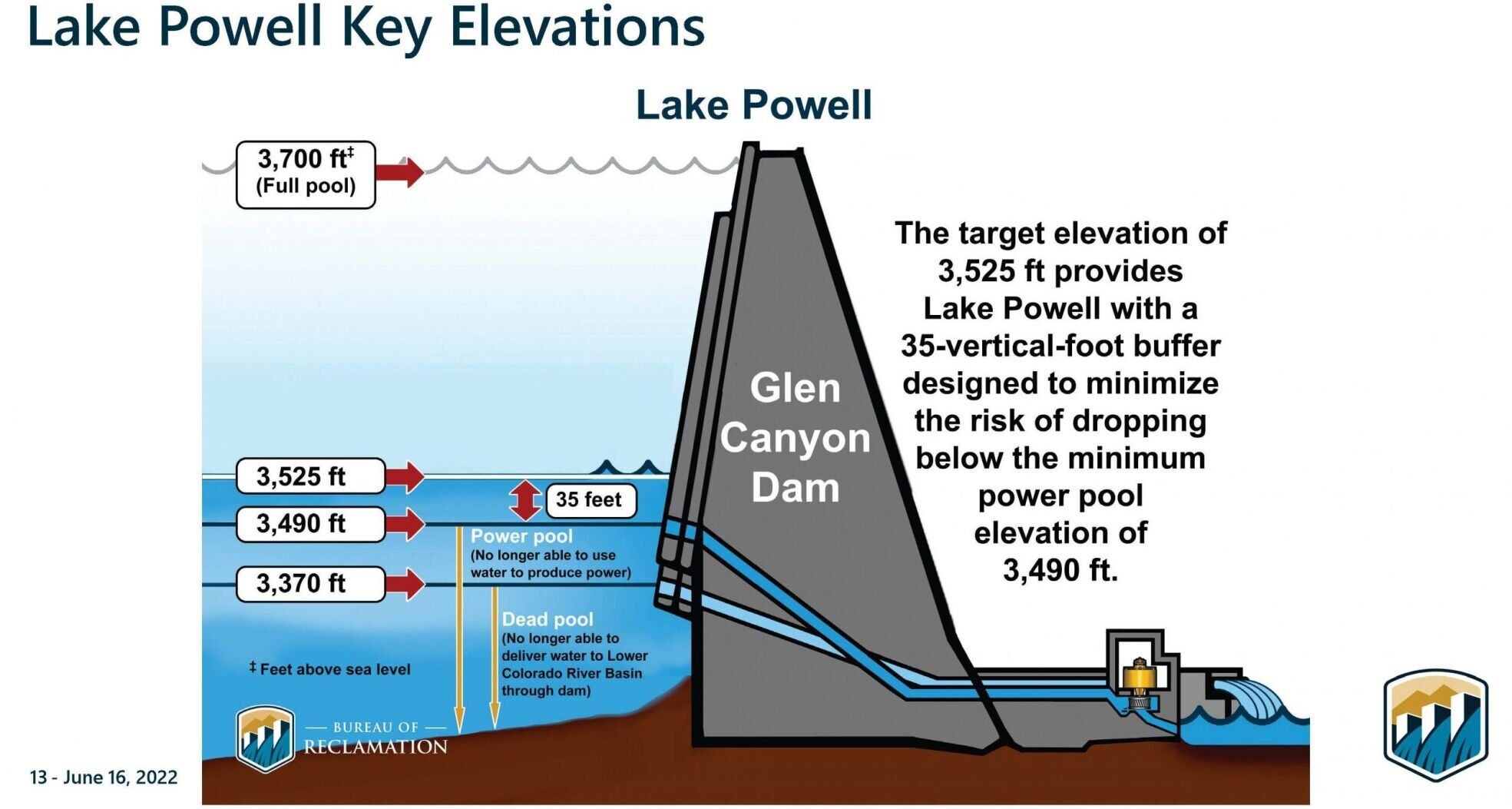
Right now, Powell stands at 3,533 feet, just 8 feet above the top of a buffer pool that must be maintained to keep the reservoir’s power turbines operating. Lake Mead is similarly low, with an elevation of 1,043.42.
Reclamation expects the reservoirs’ levels to continue dropping next year as well. “This could be where our hydrologies are going to stay,” hydrologic engineer Prairie said.
But it isn’t only the one-year outlook that is so troubling, Prairie said. It is the wildly varying temperature scenarios, low soil moisture levels, and shrinking snowpacks that are making it difficult to determine the best methods for keeping the giant river system, and Powell and Mead, from crashing.
Ironically, 2022 is shaping up to be slightly wetter than 2021, when inflow was just 3.5 million acre-feet, well below the 6.2 million acre-feet expected for this year.
Urging water users to move quickly to find ways to deliver and keep more water in the system, Prairie said, “Even if we have a good year next year, it is not going to save us.”


Tiered or capped? Battle over Colorado’s income taxes might come down to one number
Marianne Goodland
marianne.goodland@coloradopolitics.com
Updated 9 hours ago
The battle between two competing ballot measures — one seeking to cap Colorado’s income tax rate, the other pushing for a tiered system depending on income levels — might come down to whichever ballot proposal gets one more vote. The...
10th Circuit says landowner cannot sue ex-Routt County judge for statements in decision
Michael Karlik
michael.karlik@coloradopolitics.com
Updated 11 hours ago
A Routt County landowner cannot sue a former judge for his allegedly inaccurate statements in a case where the landowner was not a party, the Denver-based federal appeals court decided on Wednesday. Anne Fitzsimmons, who lives in Germany, owns a...
Rubio crushes Vance in Western Conservative Summit 2028 straw poll
Kiara Moore
kiara.moore@washingtonexaminer.com
Updated 14 hours ago
Secretary of State Marco Rubio came out on top in this past weekend’s nonpartisan straw poll at the Western Conservative Summit, outpacing a packed field of would-be 2028 presidential hopefuls. Hosted by the Centennial Institute, Colorado Christian University’s public policy...
Supreme Court to open next term with major climate change case
Jack Birle
jack-birle@coloradopolitics.com
Updated 14 hours ago
The Supreme Court’s next term will begin in October with major cases about costly climate change lawsuits and immigration. The high court announced the cases it will hear in the first month of its upcoming term, as the justices remain...

New Colorado laws going into effect cover AI disclosures, medical marijuana access and gambling limits
Marissa Ventrelli
marissa.ventrelli@coloradopolitics.com
Updated 15 hours ago
More than 100 new Colorado laws take effect Aug. 12, bringing changes to chatbot safety rules, psychedelic research, campus wellness checks and sports betting restrictions. Here is a look at some of those laws set to take effect. The law:...

National House Democrats add Colorado seats held by Lauren Boebert, Jeff Hurd to target list
Ernest Luning
ernest.luning@coloradopolitics.com
Updated 13 hours ago
The national House Democrats’ campaign arm on Wednesday added the Colorado congressional district held by Republican U.S. Reps. Jeff Hurd and Lauren Boebert to the list of targeted seats the party believes are vulnerable in this year’s midterms. The Democratic...
Bennet settles campaign finance complaints, admits violating state law
Marianne Goodland
marianne.goodland@coloradopolitics.com
Updated 11 hours ago
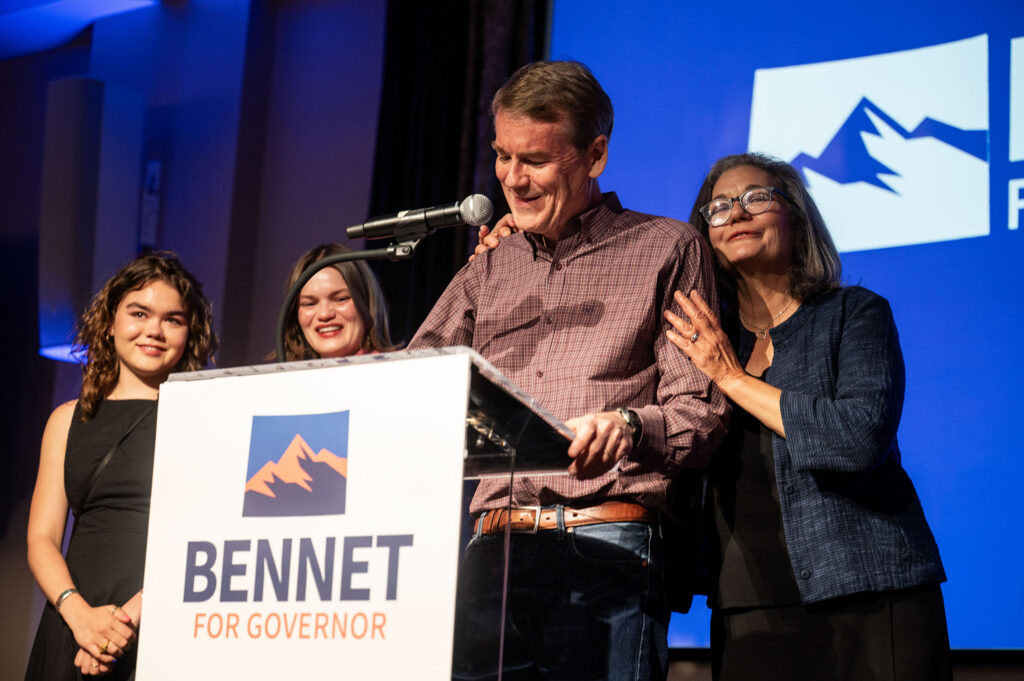
U.S. Sen. Michael Bennet’s gubernatorial campaign has agreed to pay a $7,433 fine for using his Senate campaign account to pay for gubernatorial campaign travel expenses. The July 31 settlement includes an admission by Bennet and his campaign that they...
Colorado to implement new laws on jail standards, safe haven rules, and agricultural labeling
Marissa Ventrelli
marissa.ventrelli@coloradopolitics.com
Updated 16 hours ago
In mid-August every year, a slew of recently passed laws in Colorado go into effect 90 days after the end of the legislative session. This year, all bills without a specified effective date or safety clause — a provision stating...
Colorado records 17th wolf death, a yearling tied to livestock losses
Marianne Goodland
marianne.goodland@coloradopolitics.com
Updated 12 hours ago
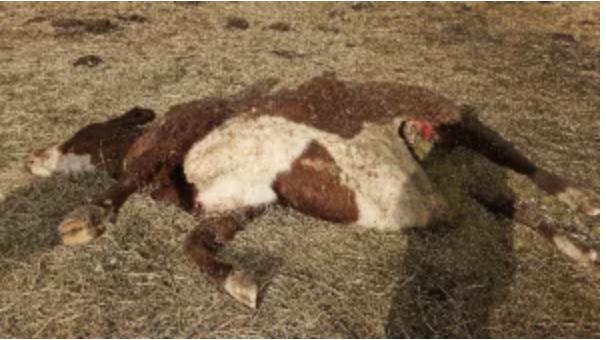
A yearling male wolf in Grand County has become the 17th wolf to die in Colorado in the past two years. Colorado Parks and Wildlife announced that its staff killed the wolf on Aug. 4 because it was believed to...
Parole, appeals deadlines and restitution: Colorado justices accept cases
Michael Karlik
michael.karlik@coloradopolitics.com
Updated 1 day ago
The Colorado Supreme Court announced on Monday that it will determine how a defendant’s parole-eligibility date should be calculated in instances where a new trial results in a sentence being imposed retroactively to the date of the original, since-overturned sentence....
PREV
PREVIOUS

SONDERMANN | A Labor Day look at a changing political landscape
Eric Sondermann An old adage says that Labor Day represents the kickoff of the fall campaign. We only wish it were so. That has become one more dated bit of political wisdom. Campaigns are now almost perpetual. This one started long before the Memorial Day onset of summer, much less the Labor Day seasonal capstone. […]

Appeals court overturns El Paso sex assault convictions due to defense lawyer's own offenses
A defense lawyer had an actual conflict of interest when he represented an El Paso County defendant at the same time the lawyer’s own drunk driving cases were pending before the same prosecutor’s office, Colorado’s second-highest court determined on Thursday. Because the U.S. Constitution guarantees the right to conflict-free legal representation and District Court Judge […]