

Appeals court reverses conviction over La Plata judge’s potentially-coercive comments
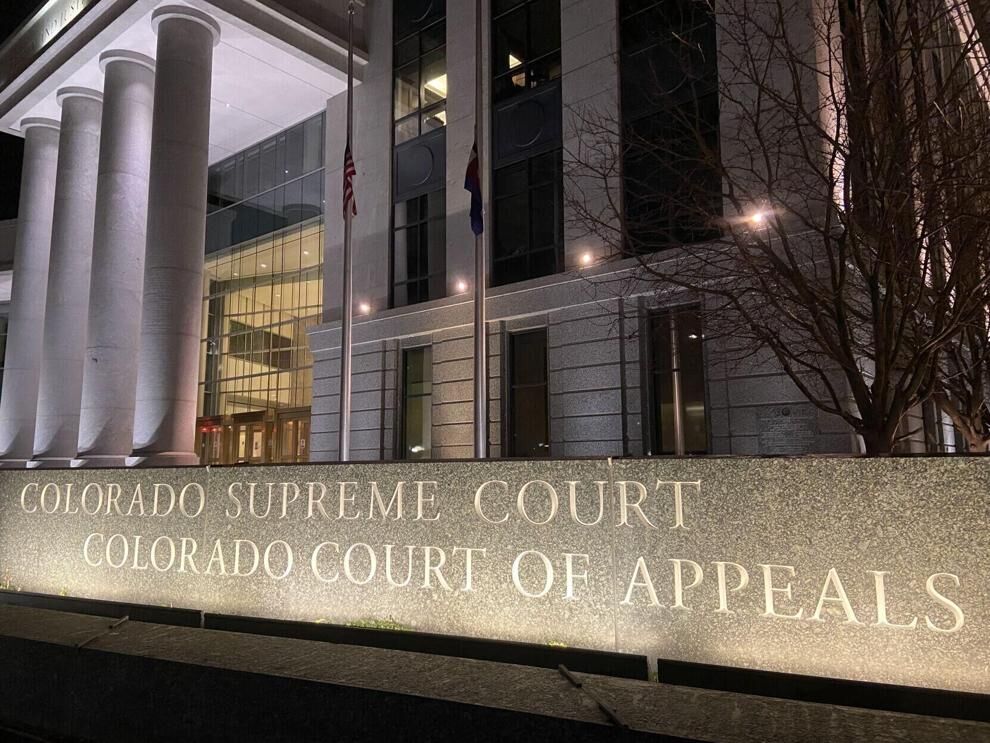
A La Plata County judge potentially coerced jurors into reaching a guilty verdict after they informed him they were “hung up” and “stuck” on one of the defendant’s criminal charges, prompting the state’s Court of Appeals to reverse the conviction.
Although the jury’s description of their problem to District Court Judge Todd P. Norvell was ambiguous, a three-member panel for the appellate court concluded on Thursday that Norvell’s response should have been to further inquire about the nature of the impasse, and not to give jurors further directions.
“The jury had deliberated for three hours before saying that it was ‘hung up’ and ‘stuck’ on the charge of violation of bail bond conditions. After the court declined to inquire whether the jury was deadlocked, and instead gave a written response that led the jury to continue deliberating, the jury reached a unanimous verdict of guilt just nine minutes after,” wrote Judge Michael H. Berger in the Aug. 25 opinion.
That sequence of events, Berger elaborated, suggested Norvell may have impermissibly pushed holdout jurors into convicting Efrain Crespin Palacios, Jr.
Palacios stood trial in 2019 for three alleged offenses: speeding, a traffic infraction; violating a protection order, which is a misdemeanor; and violating his bail bond conditions, a felony. The bond offense was entirely based on Palacios’ violation of the protection order.
An officer had pulled Palacios over for speeding in March 2019 and asked for his registration and insurance. Palacios did not have physical versions of either, explaining that in Texas, where the vehicle was registered, a sticker on the windshield serves as the registration and Texas police can look up insurance information by running the license plate. The officer persisted in asking for proof, leading Palacios to call and text his wife for documentation.
After reviewing the insurance and registration, the officer saw Palacios had a protection order barring him from contacting his wife, and a bail bond agreement that prohibited him from violating the protection order. The officer then arrested Palacios for calling his wife during the traffic stop.
At trial and on appeal, Palacios insisted he only contacted his wife because he believed he had to comply with the officer’s demands. He did not understand that following the officer’s orders would amount to a violation of the protection order.
The jury convicted Palacios of the violation — even though it acquitted him of the original alleged offense of speeding — and the appellate panel decided there was sufficient evidence to sustain that verdict.
In an unorthodox move, however, the panel appeared to disapprove of prosecutors in the Sixth Judicial District Attorney’s Office for going after Palacios with a combination of felony, misdemeanor and traffic charges given how the actual circumstances unfolded.
Typically, “courts have no authority to disturb charging decisions made by a district attorney,” Berger wrote. “That limitation of authority does not, however, prevent us from commenting on what appears to be on this limited record the obvious waste of both executive and judicial branch resources in this case, not to speak of the consequences of those decisions on the defendant.”
The panel did find grounds to overturn Palacios’ conviction for violating his bond conditions. Three hours into deliberations, the jury sent Norvell a note saying they had reached verdicts on the speeding and protection order charges.
But for the bail bond violation, “we are hung up on whether (Palacios) ‘knowingly’ violated the bond. We all agree that (Palacios) violated the bond. It is the word ‘knowingly’ we are stuck.”
Norvell was unsure what the note meant. On the one hand, there could have been a deadlock, with some jurors believing Palacios had not knowingly violated the bond conditions and others believing he had. On the other hand, the note could have indicated confusion about the word “knowingly.”
Although the defense asked Norvell to have the jury indicate whether they were deadlocked, the judge instead sent an instruction telling jurors to consider all of the evidence and the definition of “knowingly” in the jury instructions. Nine minutes later, jurors returned a guilty verdict.
Under the Court of Appeals’ own precedent, instructions to a deadlocked jury can potentially coerce jurors into abandoning their beliefs about innocence or guilt for the sake of reaching a unanimous verdict. In lieu of simply telling a jury to keep deliberating, judges can issue an instruction encouraging jurors to reexamine their own views while not surrendering their “honest convictions.”
However, judges must first determine the likelihood of getting a unanimous verdict. Palacios argued on appeal that his jury suggested it was, in fact, deadlocked, and Norvell had a duty to inquire further.
“While the court presumed that the jury would re-raise its concern if it was unlikely to reach a verdict, this presumption fails to recognize, as our precedent long has, that instructing a jury to continue deliberating when it has reached an impasse can coerce jurors to ‘sacrific(e) their conscientious opinions merely for the sake of reaching an agreement’,” wrote public defender Jessica Sommer.
Prosecutors dismissed those concerns, interpreting the jury’s note as simply asking for clarification about the word “knowingly,” and not confessing to an impasse.
The Court of Appeals agreed Norvell had not performed the required inquiry into the status of the deliberations, and it was possible the jury’s verdict just nine minutes after the judge’s instructions could have coerced holdout jurors. Consequently, the panel reversed Palacios’ conviction for violating bail bond conditions.
The case is People v. Palacios.


10th Circuit dismisses Tina Peters’ challenge to confinement as moot
Michael Karlik
michael.karlik@coloradopolitics.com
Updated 15 hours ago
The Denver-based federal appeals court granted the state’s unopposed request on Wednesday to dismiss former Mesa County clerk Tina Peters’ challenge to her confinement as moot. Although Peters received a commutation of her prison sentence last month from Gov. Jared...

Federal judge declines to recuse from death penalty case after Supermax visit
Michael Karlik
michael.karlik@coloradopolitics.com
Updated 16 hours ago
A federal judge declined to recuse herself last month from a death penalty case arising out of Colorado’s “Supermax” prison, finding that her tour of the facility earlier this year did not bias her decision-making. U.S. District Court Judge Charlotte...
Appeals court clarifies offense of impersonating a peace officer
Michael Karlik
michael.karlik@coloradopolitics.com
Updated 21 hours ago
Colorado’s second-highest court clarified this month that a person commits the offense of impersonating a peace officer if they engage in “any conduct” while pretending to be law enforcement. In a case out of El Paso County, Richard James Coulier...
Colorado Supreme Court reverses 2 Chaffee County judges for imposing fee on habeas petitioner
Michael Karlik
michael.karlik@coloradopolitics.com
Updated 2 days ago
The Colorado Supreme Court rejected two separate appeals earlier this month from an incarcerated defendant seeking immediate release from prison, but concluded that two Chaffee County judges incorrectly required him to prepay filing fees for his cases. David J. Gottorff...
Weld County judge wrongly denied bail to murder defendant in gap between law change
Michael Karlik
michael.karlik@coloradopolitics.com
Updated 2 days ago
Colorado’s second-highest court ruled this month that a Weld County judge was wrong to deny bail to a murder defendant in the window between the state Supreme Court’s recognition of the right to bail and the voters’ subsequent overruling of...

Defendants acquitted by insanity are eligible for records-sealing, appeals court says
Michael Karlik
michael.karlik@coloradopolitics.com
Updated 14 hours ago
Colorado’s second-highest court clarified last month that defendants who are found not guilty by reason of insanity are eligible to have their criminal records sealed from public view. Judges must seal criminal records if, among other things, a defendant is...
Colorado Supreme Court shuts down ‘new form of representation’ in postconviction cases
Michael Karlik
michael.karlik@coloradopolitics.com
Updated 3 days ago
While unrepresented defendants in postconviction proceedings are permitted to have a court-appointed attorney investigate and augment their claims, that is not the case when a private lawyer authors the original petition, the Colorado Supreme Court decided on Monday. In contrast...

Colorado State Shooting Association files constitutional challenge to firearms dealer law
Marissa Ventrelli
marissa.ventrelli@coloradopolitics.com
Updated 3 days ago
A firearms group has filed a lawsuit challenging a recently signed law expanding regulations for firearms dealers in Colorado. House Bill 26-1126 clarifies that firearms dealers must hold both a federal and state license to operate. The bill also allows the...

Colorado justices walk back appeals court’s expansion of rezoning via ballot box
Michael Karlik
michael.karlik@coloradopolitics.com
Updated 3 days ago
The Colorado Supreme Court ruled on Monday that rezonings of planned-unit developments cannot occur through a vote at the ballot box, reversing an appellate decision that found such changes were fair game for a popular vote. In contrast to traditional,...

Colorado Supreme Court recognizes right to self-defense in workplace
Michael Karlik
michael.karlik@coloradopolitics.com
Updated 2 days ago
The Colorado Supreme Court recognized on Monday that there is a right to self-defense in the workplace for which employers may not terminate workers so long as they lawfully exercise that right. The court’s majority in the 5-2 decision cautioned...
PREV
PREVIOUS

10th Circuit rebuffs government for using non-existent rule to deport woman
The federal appeals court based in Denver has rebuked the government for relying on a non-existent rule to proceed with its deportation of a woman from Colorado and for disregarding the U.S. Supreme Court’s recent interpretation of immigration law. Authorities deported Mayra Veronica Estrada-Cardona in 2020 from Colorado after she spent more than 17 years […]

Appeals court finds El Paso defendant never gave up right to jury trial, overturns convictions
Colorado’s second-highest court has concluded an El Paso County judge mistakenly found a defendant had relinquished his constitutional right to a jury trial, when the man had never, in fact, explicitly agreed to do so. A three-judge panel for the Court of Appeals reversed the felony assault and sexual assault convictions of Stacey Joe Yarbrough, […]