

A LOOK BACK | Dem Secretary of State primary hopeful takes one for the party, clears field
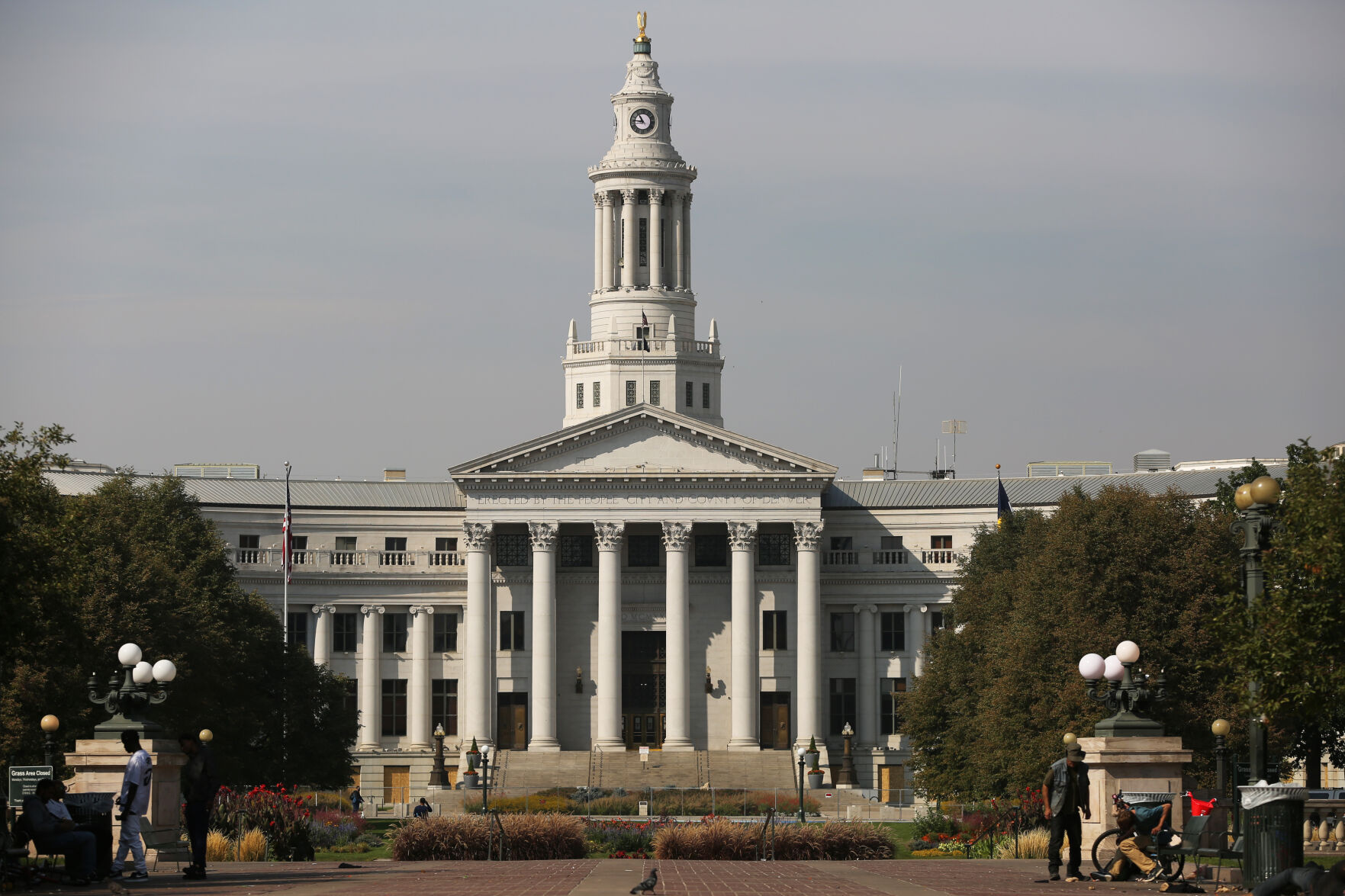
Sixty Years Ago This Week: In a surprise move, Denver City Councilman Joe Ciancio Jr. announced he was withdrawing from the Democratic primary for Secretary of State, leaving Deputy Secretary of State F.J. Serafini without a challenger in the lead up to the general election.
Ciancio told reporters he had withdrawn his candidacy “for the benefit of the Democratic Party, which will now have a candidate who doesn’t have to use his campaign funds in a primary. If things stay as they are, I will run for re-election to the city council.”
With $1,600 already expended in his pre-election campaigning, Ciancio said he expected that a primary would have cost him another $4,000.
Serafini told The Colorado Democrat that he deeply appreciated “Joe’s withdrawing in my favor.”
In other news, members of the Colorado General Assembly convened a meeting at the behest of David Dunklee, chairman of the Denver-area Metropolitan Cooperative Commission to discuss and bring attention to the metro area’s mounting woes.
Dunklee cited a report by the Congressional Government Operations Committee that made the searing conclusion that “the focal point … the clearing house for metro problems is your state government.”
To this effect, a new state department should be formed to handle urban affairs for Colorado, Dunklee argued, and to carry on research and act in an advisory capacity to the governor. But he clarified that such a department would not circumvent or preempt the functions of the state’s planning division or planning commissions and would have no authority to levy property tax.
“Adequate action in the field of metropolitan planning in Colorado would require revision of the constitutional concept of home rule,” Dunklee said. “We have to have metropolitan, not just municipal home rule to deal with problems common to the whole area without taking away the authority of municipalities to handle affairs in their own boundaries.”
But state Rep. Roy Romer, D-Denver, questioned the feasibility of such a department.
“Most of the discussion around metropolitan problems revolves around techniques,” Romer said. “Are we leaving the real power to conduct public affairs in the hands of non-partisan experts … who have no particular philosophy of government?”
Twenty-Five Years Ago: Republican Congressman Bob Shaffer, CD-4, told The Colorado Statesman that he was expecting “big labor bosses” to go hard after him in anticipation of federal legislation he was planning to introduce: the Paycheck Protection Act.
Shaffer’s bill would have prohibited anyone from deducting money from wages to use for political advocacy without specific written authorization from the wage-earners.
“Labor bosses usually deduct union dues directly from the paychecks of union shop workers, and part of those dues are used for lobbying, campaign contributions and the like,” Shaffer said. “The thing I’m trying to do is outlaw the very practice big labor has used for years to raise obscene amounts of cash to spend against pro-business, pro-family candidates like me.”
“This is an issue that has national appeal, for that matter, not just appeal for CD-4 or Colorado,” said Shaffer’s chief of staff Susan Wadhams. “In 1996, organized labor spent $35 million to defeat Republicans.”
Wadhams said that the bill had yet to be formally introduced into the U.S. House of Representatives because Shaffer was still gathering support and co-sponsors for the draft legislation, but it was planned “in the next several months.”
Shaffer added that his interest in writing the Paycheck Protection Act was piqued in the decades following the 1977 U.S. Supreme Court ruling Abood v. Detroit Board of Education that ruled unions could not use dues for political purposes without express permission.
“The Clinton administration has refused to enforce the decision and that triggered the congressman’s bill,” Wadhams said.
Meanwhile Shaffer was facing a potential general election challenger as former Fort Collins Mayor Susan Kirkpatrick had raised $5,000 in funds (triggering an FEC report), and though she hadn’t formally decided whether to launch a bid, had already billed herself as a more moderate candidate who was more in-tune with CD-4 voters than the “ultra-conservative” Shaffer.
Rachael Wright is the author of the Captain Savva Mystery series, with degrees in Political Science and History from Colorado Mesa University and is a contributing writer to Colorado Politics and The Gazette.


Immigration reporting measure fuels debate over Colorado’s role with ICE
Marissa Ventrelli
marissa.ventrelli@coloradopolitics.com
Updated 6 hours ago
A coalition of advocacy groups and several district attorneys rallied outside the Colorado Capitol on Thursday to oppose a ballot measure that, if approved by voters in November, would require state and local law enforcement to cooperate with federal immigration...
Colorado Politics Calendar Sept. 14-20
Rachael Wright, Special to Colorado Politics
rachael.wright@coloradopolitics.com
Updated 3 days ago
CoPo’s weekly political calendar will help you find political and public-policy events throughout Colorado. It includes candidate and issue campaign events, public policy meetings, court hearings, state and local party conventions, assemblies, debates, rallies, parades, speaking engagements, traveling dignitary appearances,...
The African roots of three Colorado leaders | SONDERMANN
Eric Sondermann
eric-sondermann@coloradopolitics.com
Updated 3 days ago
Colorado’s political transformation is measured in many ways. A once reliably red state (with asterisks) became purple and is now a rather deep blue. For better or worse, probably the latter, power is ever more consolidated along the Front Range...
Federal judge green-lights civil trial against ex-Fort Collins DUI officer
Michael Karlik
michael.karlik@coloradopolitics.com
Updated 1 day ago
A federal judge ruled on Thursday that Fort Collins’ former “DUI officer” will face a civil trial for allegedly investigating a motorist for impaired driving without any reasonable suspicion to do so. In recent years, several people arrested by Officer...

Denver police reopen 13 sex assault cases after retesting Missy Woods’ CBI work
Jenny Deam
jenny.deam@gazette.com
Updated 1 day ago
Thirteen previously closed Denver sexual assault cases have been reopened after the city’s crime lab retested DNA evidence once analyzed by former Colorado Bureau of Investigation forensic analyst Yvonne Woods. A police spokesperson told The Denver Gazette the once-closed cases...

Ballot measure aims to shift Colorado sporting goods tax revenue to land, water and wildfire projects
Marissa Ventrelli
marissa.ventrelli@coloradopolitics.com
Updated 6 hours ago
Colorado voters this November will decide whether to direct a share of sales tax revenue from sporting goods — including bicycles and skiing equipment — toward land and water conservation, wildfire prevention and expanding outdoor recreation. Supporters say the measure...

Colorado Supreme Court suspends Mesa County judge pending misconduct investigation
Michael Karlik
michael.karlik@coloradopolitics.com
Updated 8 hours ago
The Colorado Supreme Court suspended Mesa County Court Judge Michael J. Grattan on Thursday amid a misconduct investigation. The court’s Sept. 10 order gave Grattan 21 days to explain why his paid suspension should not continue through the end of...

Trump honors the fallen of the 9/11 terrorist attacks during Pentagon speech
Mabinty Quarshie
mabinty-quarshie@coloradopolitics.com
Updated 1 day ago
President Donald Trump and first lady Melania Trump honored the roughly 3,000 Americans killed during the Sept. 11, 2001, terrorist attacks during a ceremony at the Pentagon. The event marking the 25th anniversary of the deadliest attack on American soil...
Colorado Supreme Court changes course, dismisses case about special district bonds
Michael Karlik
michael.karlik@coloradopolitics.com
Updated 8 hours ago
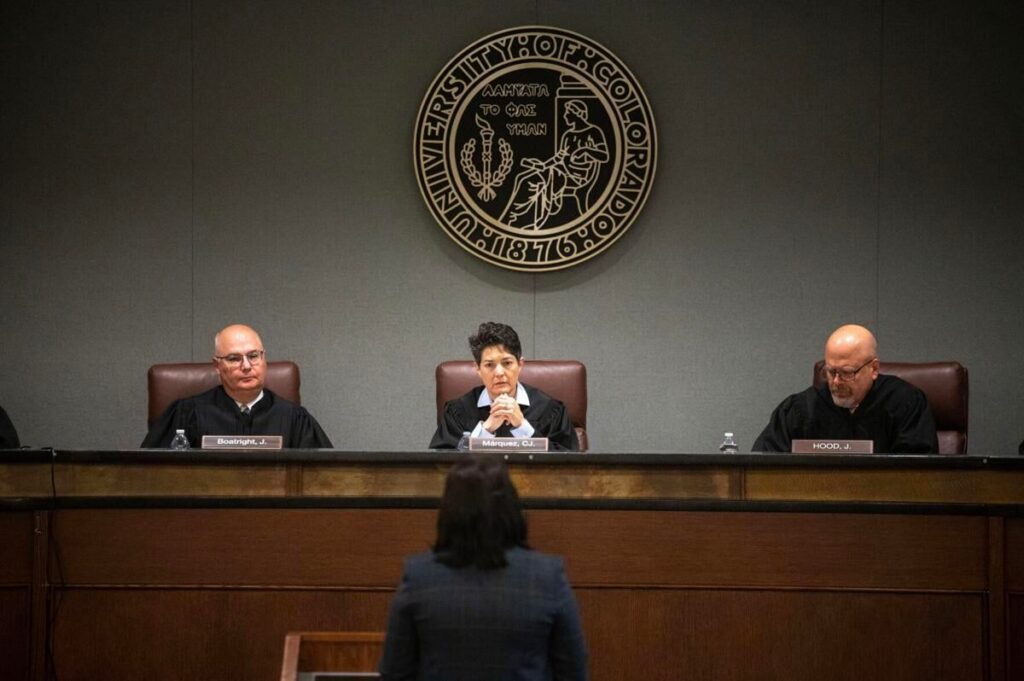
The Colorado Supreme Court declined on Friday to decide a dispute between a large-scale Commerce City development and the various districts financing it, after initially showing interest in the ongoing case. Colorado has roughly 2,800 special districts, which are local...
Colorado leaders express outrage and pain following 9/11 attacks | A LOOK BACK
Rachael Wright, Special to Colorado Politics
rachael.wright@coloradopolitics.com
Updated 2 days ago
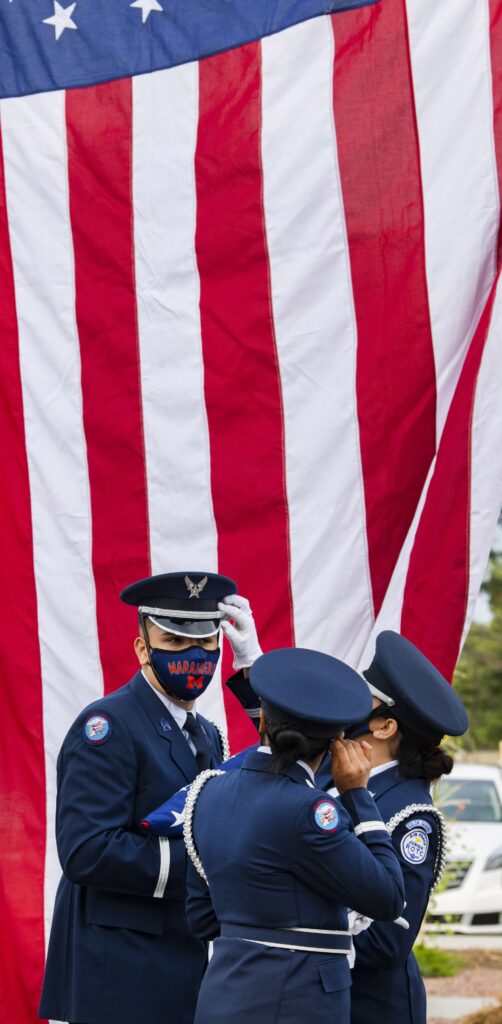
Twenty-Five Years Ago This Week: “Responding to the 9/11 terrorist attacks, Colorado Gov. Bill Owens told reporters in a statement, “I join all Coloradans in expressing outrage and horror at the senseless terrorist bombings in New York and Washington D.C....
PREV
PREVIOUS

TRAIL MIX | Colorado Republicans double down on year-old campaign agenda
Colorado Republicans reaffirmed the party’s and its leading candidates’ election message this week at a press conference devoted to the same policy agenda unveiled a year earlier by the GOP. “Today I’m proud to stand up here with some tremendous candidates from all across Colorado who are focused on making things better for our state […]

Western cities are already learning to live with less water
Urban areas in the West and water districts are working to conserve water from the Colorado River Basin as it continues to face its driest 22-year stretch in more than 100 years. (Video by Skyler Ballard) Mike Petkash’s shaggy black dog Brandy bounded across his backyard chasing after a tennis ball. She leapt up the […]