

SLOAN | A shift in thinking on mental illness
Kelly Sloan

Whatever register it is that tabulates the accumulation of social ills that plague modern society is filling up quickly, and with it the temptation to find answers for their solution. But that temptation does not, generally, run very deep, couched in the contemporary vernacular that limits such thoughts to whatever can be neatly encapsulated on a bumper sticker, internet meme, or Tweet. The complicated issue of mental health has been the victim of such superficial treatment, but the opportunity that proper consideration of the issue holds for offering real solutions is considerable enough that a shift in thinking on the subject is warranted.
I wrote not long ago about the propensity of public calamity to ignite reductionist impulses — a mass shooting, for instance, spurring reflexive cries for gun control from one side, countered by a call to address mental health from the other. Seldom is any thought ever actually given to what these proffered solutions mean, what form they would take, or how they would be enacted. This is tragic in the case of mental health — especially, the numbers tell us, in a place like Colorado.
The figures are arresting. According to Mental Health America, Colorado ranked 45 out of 50 states and the District of Columbia in terms of prevalence of mental illness among adults, and absolute last in terms of adult mental health care — i.e., Colorado adults have some of the highest prevalence of mental health issues in the country but the least access to adequate treatment. A full 23% of Colorado adults are reported to have some form of mental illness, 12% a substance use disorder, and 5% serious thoughts of suicide; and yet 53% have not received treatment. One can imagine the outcry, probably open rebellion, if those figures were attributable to cancer, or diabetes, or broken bones.
The numbers are somewhat more positive for Centennial State youth: the percentage of young Coloradans suffering from a major depressive episode who did not receive treatment fell from 60% in 2017-2018, to 39% the following year, and the number who received consistent treatment increased over the same time from 21.5% to 43.1%. And yet that still leaves nearly 40% of Colorado youth with a major depressive episode devoid of mental health treatment.
What to make of these numbers? Even a cursory glance suggests that there exists a societal gap that cries out for acknowledgement.
While addressing mental illness is not a complete answer that will alleviate every problem — there are a multitude of contributors to a multitude of social problems — a correlation between mental health and many of society’s ills is inescapable. Neither the evidently homeless fellow who strolls down 16th street mall screaming and flailing his arms at an imaginary adversary, nor the troubled young man who decides to shoot up a school are reasonably of sound mind. We are reasonably compelled then to ask whether a school shooting is indicative of a gun problem or a mental health problem. Or if drug-riddled homeless camps are more symptomatic of a free-market capitalist economic system or of the unbudgeability of our approach to mental health care.
It is not safe to say that all social problems will cease if we simply adjust our thinking to contemplate mental health on an equal basis with physical health. Plenty of other factors independent of mental wellbeing, ranging from the rate of illegitimacy to the prevalence of moral relativity, contribute as well. Certainly the field of psychiatry has had its moral controversies over the years, and the temptation always exists among some to commandeer the issue as an excuse to dilute policing and replace law enforcement with some abstract nonsense; or irresponsibly broaden the term “mental illness” to serve as a blanket replacement for responsibility — the frequent attempts by defense lawyers to abuse the insanity defense, for instance. But this should not stop us from being inquisitive about the causes of aberrational behaviour.
Reasonable analysis concludes that reexamining our approach to mental health, treating it as brain health — for that is precisely what it is — will propel us in a positive direction in addressing some of the more compelling social problems we are confronting, including homelessness, drug addiction, suicide, and gun violence. Shifting the paradigm on this will run up against the usual bureaucratic inertia, but might well be necessary if we wish to identify and treat mental problems before they manifest themselves into another tear-stained headline.


A daring and fearless rescuer — is afraid of a debate | Dick Wadhams
Dick Wadhams
dick-wadhams@coloradopolitics.com
Updated 2 days ago
Victor Marx, the Republican nominee for governor who says he can exorcize demons and who claimed he has fearlessly rescued 45,000 women and children during 150 “high-risk” missions around the world, appears to be intimidated by the notion of debating...

Proposed EPA changes could save truckers billions | Rachel Gabel
Rachel Gabel
rachel-gabel@coloradopolitics.com
Updated 2 days ago
Agriculture is in distress across nearly every segment across much of the nation, and certainly to a more dire degree in the western United States. If it were not a historic drought, some pressures could be eased. Others can be...

Colorado Democrats, your time is coming | Jon Caldara
Jon Caldara
jon-caldara@coloradopolitics.com
Updated 2 days ago
Hey, Colorado Democrats! All the fun you’ve had watching Republican dysfunction in Colorado for the last 20 years was just a preview of what is about to happen to you. The Colorado Republican Party no longer exists as a competitive...
The relevance of Watergate more than a half-century later | SONDERMANN
By Eric Sondermann
by-eric-sondermann@coloradopolitics.com
Updated 5 days ago
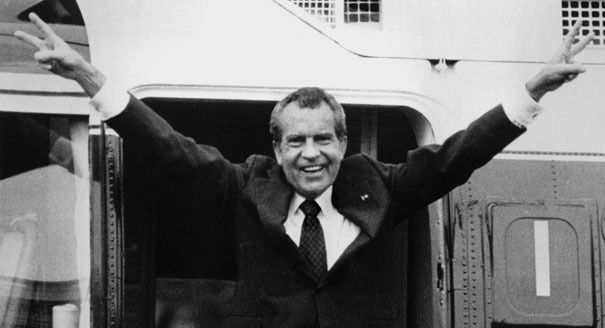
It was the scandal for which all other scandals are now named. In June 1972, a small group of Cuban burglars with high-level connections broke into the headquarters of the Democratic National Committee. Those headquarters were located in the Watergate...
Colorado must continue finding common ground on wildfire policy | GUEST COLUMN
Colorado Politics
colorado-politics@coloradopolitics.com
Updated 4 days ago
By John Herrick Colorado has never lacked for opinions about wildfire policy. We debate forest management, climate change, prescribed burns, land use, air quality and budgets. Those debates are familiar territory, but a new discussion is beginning to happen around...

Proposition NN is the best investment for Colorado’s students and schools | GUEST COLUMN
Colorado Politics
colorado-politics@coloradopolitics.com
Updated 4 days ago
By Justin Ogden Colorado families know what it means to make difficult budget decisions. Inflation has driven up the cost of groceries, housing, utilities and just about everything else. Families like mine work hard to stretch every dollar while still...
Were the primaries a preview for consequential general election? | Paula Noonan
Paula Noonan
paula-noonan@coloradopolitics.com
Updated 5 days ago
Colorado’s political future will go the way of this election. Historically, the state has not had both chambers controlled by a supermajority. This election may change that. The primaries suggest how the general election may play out. Democrats had solid...
Disagreement doesn’t have to mean disrespect | GUEST COLUMN
Colorado Politics
colorado-politics@coloradopolitics.com
Updated 5 days ago
By Vincent Atchity These days, it doesn’t take long to feel overwhelmed by politics. Turn on the news, scroll through social media or read the comments on almost any political post and you’ll find anger, outrage and personal attacks. For...
Keeping Colorado’s kids’ trust online | PODIUM
Colorado Politics
colorado-politics@coloradopolitics.com
Updated 5 days ago
By Stuart Jenkins Almost every day, the kids and teens we serve across Colorado are introduced to new generative artificial intelligence and other emerging technology, including conversational AI systems designed to simulate human conversation. These tools are no longer a...

Marx’s ‘through line’ predates Trump, connects to Maes | FEEDBACK
Colorado Politics
colorado-politics@coloradopolitics.com
Updated 5 days ago
Eric Sondermann is of course correct Victor Marx is an unserious, unelectable, embarrassing Republican nominee for governor of Colorado. But I respectfully submit that the “through line,” as Mr. Sondermann describes it, is not from Trump to Marx, despite their...
PREV
PREVIOUS

CRONIN & LOEVY | 'Out with Iowa; out with New Hampshire'
Tom Cronin and Bob Loevy We are pleased that the national Democratic Party is discussing shaking up the first four states that vote in the U.S. presidential caucuses and primaries. Since 2008, Iowa, New Hampshire, Nevada, and South Carolina have enjoyed having a presidential caucuses or primary day to themselves and being the first four […]

BIDLACK | Is Michael Bennet beatable?
Hal Bidlack A recent Colorado Politics cover story asked the question, is Michael Bennet beatable in November? I certainly hope the answer is no, but the story notes that GOP Senate leader Mitch McConnell recently headlined a fundraiser for Bennet’s opponent, Joe O’Dea in Washington. And McConnell’s support is very likely to be a double-edged […]