

10th Circuit finds ‘some evidence’ supported prisoner discipline despite lack of video footage

The federal appeals court based in Denver agreed “some evidence” supported a prison official’s decision to punish an inmate for possessing a razor blade, even though the disciplinary officer refused the inmate’s request to review surveillance footage that could have shed light on the incident.
Both the government and Darnell Love Pittman Sr. agreed the U.S. Constitution’s guarantee of due process requires certain protections for inmates before prisons can revoke their good-conduct time. However, Pittman alleged he was denied the opportunity to present evidence before an impartial decision maker, after his disciplinary hearing officer determined any video footage showing corrections employees handling Pittman’s property was “irrelevant.”
On Wednesday, a three-judge panel for the U.S. Court of Appeals for the 10th Circuit decided Pittman’s case met the U.S. Supreme Court’s permissive threshold for upholding his discipline, which requires the presence of any evidence that would support a punishment.
“We have no trouble concluding ‘some evidence’ supports the imposition of discipline here,” wrote Judge Jerome A. Holmes in the July 6 order.
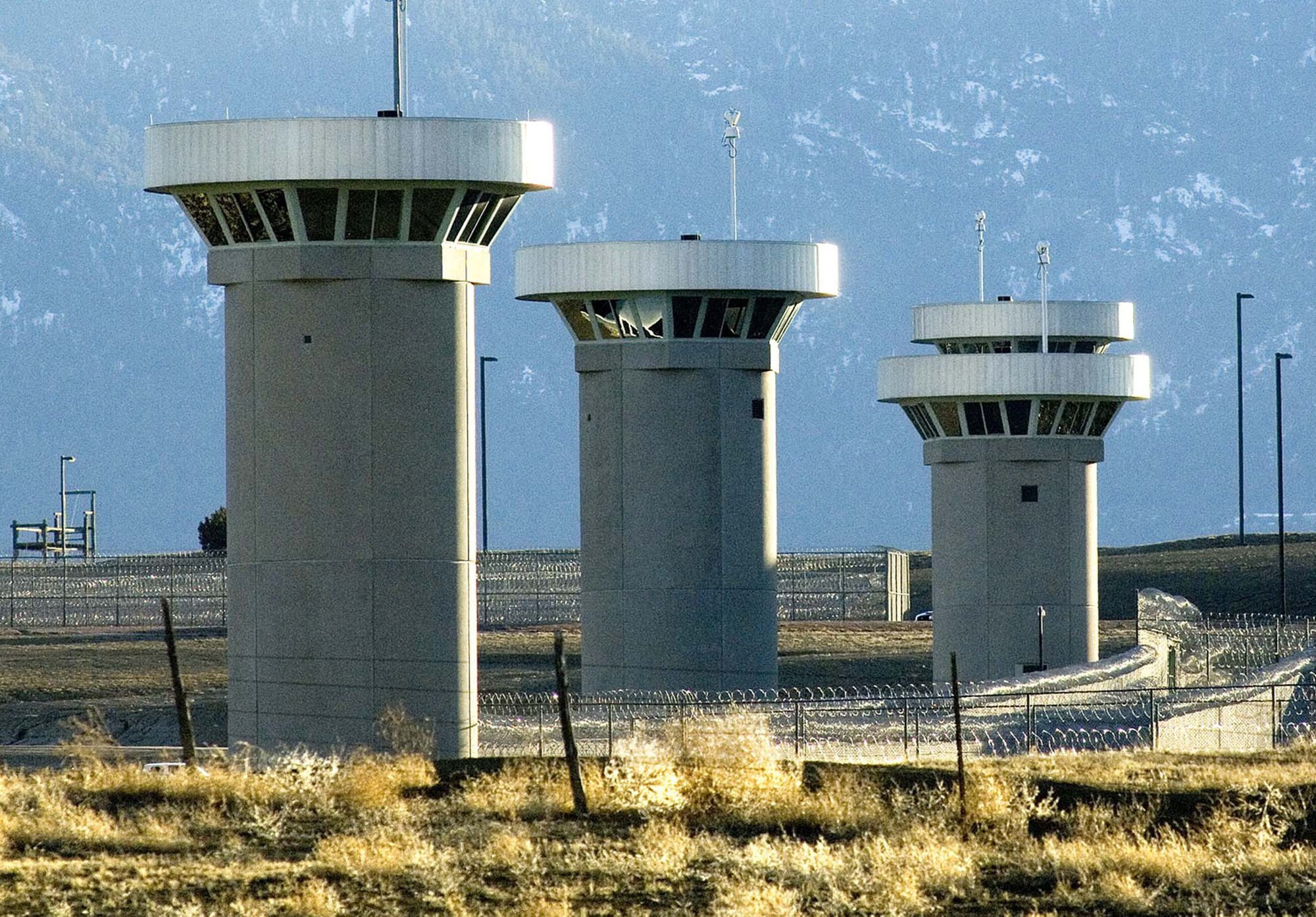
Pittman was incarcerated at the U.S. Penitentiary – Administrative Maximum Facility in Florence on July 6, 2018. A corrections officer, identified in the court proceedings as Megan Boze, collected materials from Pittman’s cell in his absence. Among the items was a macroeconomics textbook with “Property of Darnell Pittman” written in black marker on the spine, along with Pittman’s identifying number.
Boze took the property for inventory and x-ray, where a scan revealed a metal object in the textbook: a concealed 1.5-inch sharpened razor blade. The next day, Boze authored an incident report charging Pittman with possession of a hazardous tool.
Pittman denied the charge, claiming the book was not his and had instead been intermingled with his property. Disciplinary hearing officer Sherry Beicker-Gallegos convened a hearing on Aug. 1. By that time, Pittman had received a staff representative, who Pittman asked to obtain video footage and still photos from cameras in the relevant prison units. Beicker-Gallegos agreed to reconvene the hearing to give Pittman’s representative more time to pursue the evidence.
In the meantime, Beicker-Gallegos emailed Boze asking a series of questions about Pittman’s allegations. Boze replied to clarify her handling of the macroeconomics book, as well as other books outside of Pittman’s cell.
The hearing resumed in September, and Beicker-Gallegos considered evidence from the incident report, photographs of the textbook, Pittman’s submissions in his own defense and the email exchange. In her written decision, she noted video footage was “determined to be irrelevant” and revoked 31 days of Pittman’s good-conduct time.
Pittman filed a petition in Colorado’s federal trial court seeking a review of the evidence and expungement of the incident from his record. Pittman claimed video footage would have been “vital” to determining where Boze had taken his property and whether she left it unsecured overnight. He also referenced a previous case he filed in Colorado involving an alleged forgery of his signature in an unrelated discipline case. The prison expunged the violation before any conclusive findings were made about the signature.
U.S. Magistrate Judge Scott T. Varholak noted Pittman’s disciplinary hearing afforded him the basic legal protections required for inmates, but also went “far and above the requirements of due process.” In an order on March 15, 2021, Varholak wrote that the disciplinary hearing officer would have violated Pittman’s rights only through her unjustifiable refusal to watch the video footage.
With 41 cameras in the relevant prison units and Beicker-Gallegos’ claim that it would have taken an inordinate amount of time to review the footage, Varholak found Beicker-Gallegos’ actions “do not rise to the level of unjustifiable refusal to produce documentary evidence necessary to state a due process claim.”
Pittman appealed to the 10th Circuit, believing Beicker-Gallegos had determined the surveillance video was irrelevant without reviewing any segment of it first. He also pointed out Beicker-Gallegos had shifted her explanation, only mentioning the burden of reviewing the footage after the court proceeding had begun.
Pittman further faulted the disciplinary hearing officer for her email to Boze.
“They are questions that should have been asked in the hearing itself, with Pittman present for them and able to cross-examine Officer Boze on her answers. But that is not what happened,” wrote Pittman’s attorney, Blain D. Myhre.
The government disputed many points in Pittman’s appeal. Pittman reportedly failed to explain how the razor blade could have entered a book labeled with his name in his cell, or how surveillance footage would have helped his case, given the known gaps in camera coverage. Pittman, the U.S. Attorney’s Office alleged, had not made his request for specific video footage before the 14-day deadline when videos are scheduled to be overwritten.
As for Pittman’s claim that the disciplinary hearing officer’s email with Boze was improper, “There is no basis in law for concluding that the mere fact of the communication between the DHO and Boze rendered her anything less than an impartial decisionmaker,” wrote Assistant U.S. Attorney Kyle Brenton.
The 10th Circuit’s panel agreed Pittman’s request for video footage was “so broad and wide ranging” as to interfere with Beicker-Gallegos’ other duties as a disciplinary hearing officer. The panel also detected no bias in the email exchange with Boze.
Pittman’s argument, wrote Holmes, “is particularly misplaced in the prison disciplinary hearing context where, unlike in criminal trials, the accused has no inherent due process right to confront and cross-examine adverse witnesses.”
Given the Supreme Court’s requirement that prison disciplinary decisions must be supported only by “some evidence” – even if the evidence is “meager” – the panel found no due process violation.
The case is Pittman v. Gomez.

Federal judge green-lights excessive force, retaliation claims for trial against Fort Collins officers
Michael Karlik
michael.karlik@coloradopolitics.com
Updated 2 days ago
A federal judge green-lit a jury trial last week against multiple Fort Collins police officers on claims that they used excessive force on one man who was standing unarmed in his underwear, and retaliated against another man for exercising his...

10th Circuit revives wage violation lawsuit against Papa John’s operator
Michael Karlik
michael.karlik@coloradopolitics.com
Updated 3 days ago
The Denver-based federal appeals court on Tuesday reinstated a former Papa John’s delivery driver’s lawsuit alleging violations of federal and state wage law. Steve Mighell worked for one month at a Denver Papa John’s location in summer 2023. He alleged...
Colorado appeals judge’s delays in releasing opinions noted by performance commission
Michael Karlik
michael.karlik@coloradopolitics.com
Updated 2 days ago
The citizen-led performance commission that provides guidance to voters about whether to retain members of Colorado’s second-highest court raised concerns by judges and attorneys that Judge Elizabeth L. Harris sometimes struggles with releasing opinions promptly. Harris, who joined the Court...

Colorado judge explores sanctions against DOJ, ICE for rearresting man 4 days after release on bond
Michael Karlik
michael.karlik@coloradopolitics.com
Updated 3 days ago
A federal judge in Colorado is considering sanctions against the government after immigration agents rearrested a man four days after an immigration judge found him suitable for release on bond. On July 28, U.S. Magistrate Judge N. Reid Neureiter ordered...

Divided disciplinary panel censures Montezuma County judge after agreement reached
Michael Karlik
michael.karlik@coloradopolitics.com
Updated 3 days ago
A disciplinary panel formally imposed a public censure, suspension, and further training on Montezuma County Court Judge Ian J. MacLaren on Tuesday by a 2-1 vote. Under constitutional Amendment H, which voters adopted in November 2024, MacLaren was set to...
Colorado’s Western Slope magistrate judges describe unique role in federal judiciary
Michael Karlik
michael.karlik@coloradopolitics.com
Updated 5 days ago
Two of Colorado’s federal judges stationed on the Western Slope spoke to lawyers on Wednesday about their unique roles, the ways their workloads differ, and the need for more criminal defense lawyers to take cases outside the Front Range. “Here...

Denver sues Philip Morris, other tobacco companies over cigarette butt litter
Deborah Grigsby
deborah.smith@denvergazette.com
Updated 3 days ago
Denver is demanding that some of the biggest tobacco companies in the world pay for the cleanup of discarded cigarette butts on its streets, following a similar campaign that cities in other states have pursued. Denver’s lawsuit, filed this week...

Federal judge rules that request for bond hearing not necessary to challenge immigration detention
Michael Karlik
michael.karlik@coloradopolitics.com
Updated 3 days ago
A federal judge in Colorado ruled last week that it is not mandatory for a person to seek a bond hearing with an immigration judge before they challenge the lawfulness of their detention in federal court. For the past year,...

Boulder Valley School District introduces new policies following antisemitism lawsuit
Marissa Ventrelli
marissa.ventrelli@coloradopolitics.com
Updated 3 days ago
The chief of Boulder Valley School unveiled new policies for the 2026-2027 school year following a lawsuit filed on behalf of a student alleging antisemitic harassment. In June, the Anti-Defamation League filed a federal civil rights complaint against the school...

Colorado NRA chapter seeks injunction against new gun‑training requirement
Marissa Ventrelli
marissa.ventrelli@coloradopolitics.com
Updated 4 days ago
The Colorado chapter of the National Rifle Association is seeking an injunction to stop the state from enforcing a new law that took effect earlier this month. The new law requires anyone buying or selling certain firearms to first complete...
PREV
PREVIOUS

10th Circuit reinstates student's First Amendment lawsuit over anti-Semitic 'joke'
A Cherry Creek High School student has credibly alleged school officials violated his First Amendment rights when they expelled him for an offensive social media post, the federal appeals court based in Denver decided on Wednesday. The U.S. Court of Appeals for the 10th Circuit reinstated the lawsuit of a teenager identified as C.G., largely […]

Former Douglas County assistant principal accuses district of termination over religious beliefs
A fired Douglas County School District coach and administrator filed a lawsuit in federal court last week against his former employer, alleging it terminated him for his religious beliefs about a well-known theater production. Corey McNellis was terminated from Parker’s Ponderosa High School in October 2020 after exchanging emails with colleagues about “The Laramie Project,” […]