

State Supreme Court says censured judge’s admission of bias not grounds to vacate decision
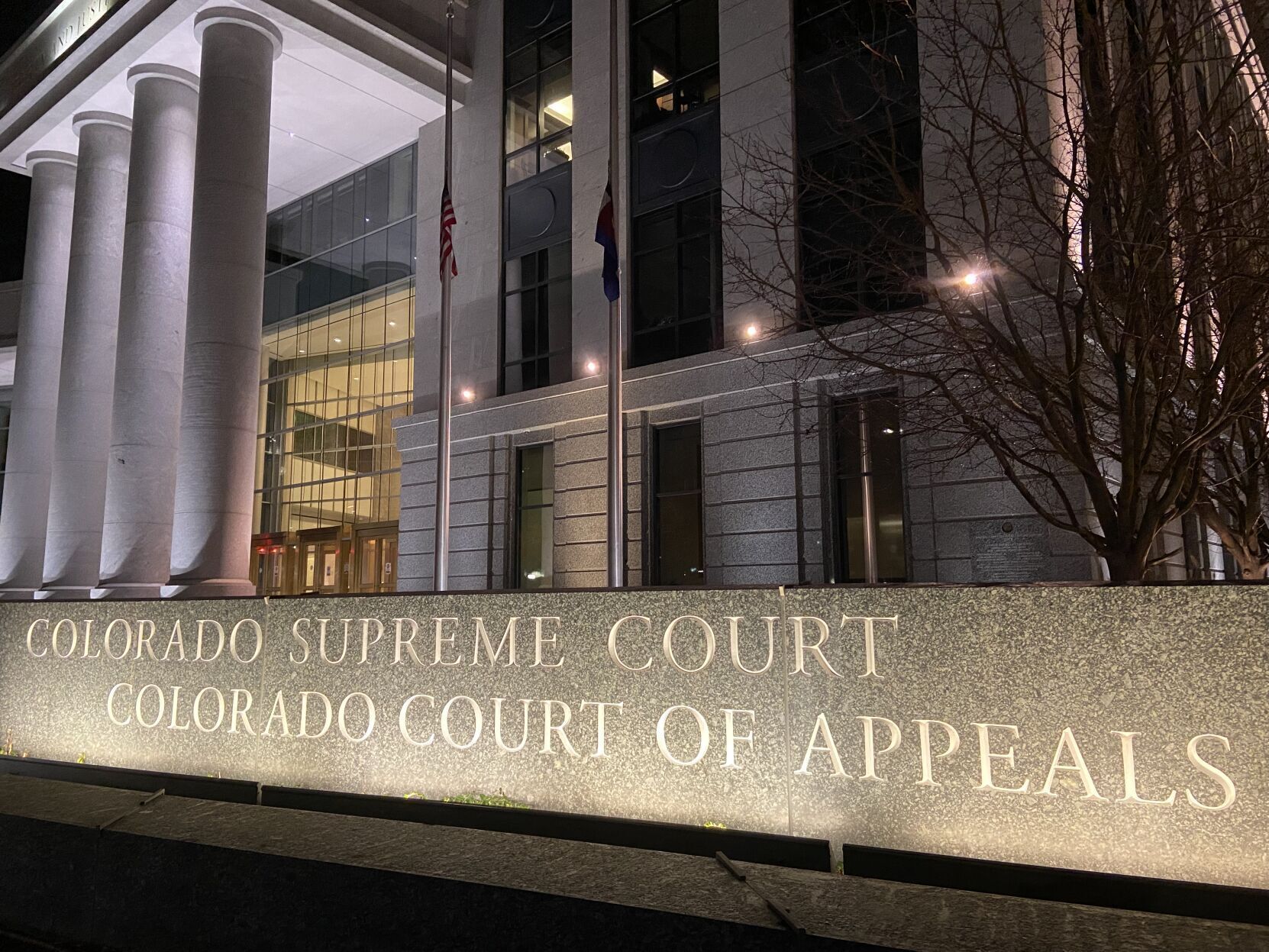
The Colorado Supreme Court on Monday concluded its censure of a former judge for racial bias and professional misconduct does not mean she actually was biased in a child welfare proceeding.
In April 2021, the Supreme Court censured and accepted the resignation of then-Arapahoe County District Court Judge Natalie T. Chase, who admitted to saying the N-word in front of court personnel and to disparaging one of her colleagues. The court’s order came as two parents were appealing Chase’s decision to terminate their rights, and they soon asked for a review of Chase’s potential bias in their case.
After a different trial judge overturned Chase’s termination decision based in part on the censure, the Arapahoe County Department of Human Services asked the state Supreme Court to intervene. The justices agreed with the county that Chase’s admission of bias could not serve as grounds to vacate her decision without something more.
“We disagree with the district court’s broad observation that ‘any bias or prejudice to one person is bias and prejudice to all’,” wrote Justice William W. Hood III in the June 6 opinion. “To be sure, bias inflicted on one person can pollute space shared by others. But that’s not the issue here.”
The parents, identified by the initials S.S. and D.P., had their case begin in November 2019 when Arapahoe County claimed they were using and selling heroin in their home, where they had a three-year-old daughter. Chase presided over the case and quickly placed the girl with her grandparents, where she still resides.
Despite multiple failures of the parents to appear, Chase made supportive or encouraging comments to them throughout the case. Finally, in September 2020, the human services department moved to end S.S. and D.P.’s parental rights. Chase allowed S.S. to have a new lawyer, despite her concerns the request was a delay tactic. The judge granted a four-month postponement, then terminated the parental rights at a hearing in January 2021.
Three months later, the Supreme Court censured Chase.
“You acknowledge that your use of the N-word does not promote public confidence in the judiciary and creates the appearance of impropriety. Although not directed at any person, saying the N-word has a significant negative effect on the public’s confidence in integrity of and respect for the judiciary,” the court summarized at the time. Colorado Politics’ review of the entire allegations showed Chase reportedly used the N-word both on and off the bench when asking why Black people could use the word but white people could not.
In a review of Chase’s termination order after the censure, Kenneth M. Plotz, a retired chief judge from another judicial district, determined Chase’s admitted behavior as a judge plus some of her specific actions in S.S. and D.P.’s case were grounds to overturn her decision.
Bypassing the state’s Court of Appeals, the Supreme Court chose to hear the appeal of Plotz’s findings directly. Hood explained in the court’s opinion that while judges should recuse themselves if they appear to be or are actually biased, only actual bias will cause the justices to question an outcome.
“The party asserting that a trial judge was biased ‘must establish that the judge had a substantial bent of mind against him or her’,” wrote Hood, quoting from a prior case on the subject. The justices determined that S.S. and D.P., who are white, had not shown Chase was biased against them.
“And without a showing of actual bias, the trial court lacked any legal basis for questioning the proceeding’s result,” Hood concluded.
The case is People in the Interest of A.P.


10th Circuit dismisses woman’s lawsuit following 10-year attempt to undo restraining order
Michael Karlik
michael.karlik@coloradopolitics.com
Updated 1 day ago
The Denver-based federal appeals court rejected a woman’s challenge on Friday to a restraining order imposed on her more than a decade ago, finding that she cannot credibly claim she will be prosecuted for violating the restraining order through her...
10th Circuit dismisses woman’s lawsuit following 10-year attempt to undo restraining order
Michael Karlik
michael.karlik@coloradopolitics.com
Updated 2 days ago
The Denver-based federal appeals court rejected a woman’s challenge on Friday to a restraining order imposed on her more than a decade ago, finding that she cannot credibly claim she will be prosecuted for violating the restraining order through her...
Colorado equal pay law does not require plaintiffs to allege gender-based retaliation, appeals court finds
Michael Karlik
michael.karlik@coloradopolitics.com
Updated 16 hours ago
The 2019 Colorado law aimed at rooting out pay discrimination on the basis of sex does not require a plaintiff to allege their employer retaliated against them for sex- or gender-related reasons, the state’s second-highest court decided on Thursday. Lawmakers...
Hudson faces lawsuit over ICE detention facility
Nicole C. Brambila
nicole-c-brambila@coloradopolitics.com
Updated 2 days ago
A nonprofit organization filed a lawsuit against the Town of Hudson Wednesday, challenging plans to reopen a former federal prison in the town as a U.S. Immigration and Customs Enforcement detention facility. Together Colorado, along with Janet E. Carlson, filed...
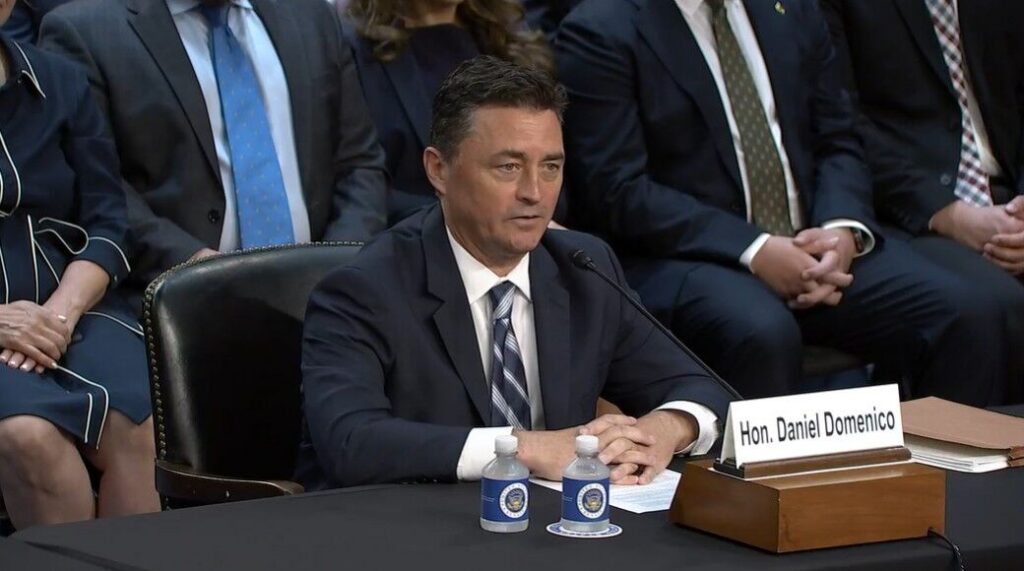
Senate committee advances Trump’s 10th Circuit nominee, as Domenico responds to questions about delays
Michael Karlik
michael.karlik@coloradopolitics.com
Updated 2 days ago
The U.S. Senate Judiciary Committee advanced President Donald Trump’s nominee to the Denver-based federal appeals court on Thursday by a party-line vote of 12-10. U.S. District Court Judge Daniel D. Domenico, who was Trump’s first-term appointee to Colorado’s federal trial...
Colorado justices to hear embryonic donation dispute
Michael Karlik
michael.karlik@coloradopolitics.com
Updated 2 days ago
The Colorado Supreme Court announced on Monday that it will decide whether lower court judges properly applied its framework for adjudicating disputes over the fate of pre-embryos, in which one person wants to use them to become a parent and...
Isolation, emotion, persona: Colorado judicial programming prepares people for life on the bench
Michael Karlik
michael.karlik@coloradopolitics.com
Updated 2 days ago
As a trial judge and now as a member of the Colorado Supreme Court, Justice Carlos A. Samour Jr. has heard the view that being a judge is isolating. “In neither court have I felt isolated. I’ve always interacted a...

Federal judge dismisses Colorado county sheriff’s challenge to law limiting immigration cooperation
Michael Karlik
michael.karlik@coloradopolitics.com
Updated 16 hours ago
A federal judge dismissed a challenge from Mesa County Sheriff’s Office leaders last week to a Colorado law limiting public employees’ cooperation with immigration authorities, concluding that the plaintiffs did not allege they engage in any conduct that the law...
10th Circuit raises bar for fraud victims to sue debt collectors over inaccurate information
Michael Karlik
michael.karlik@coloradopolitics.com
Updated 12 hours ago
The Denver-based federal appeals court wiped away a jury’s $500,000 award to a fraud victim on Monday and made it more difficult for consumers to hold companies liable for disseminating inaccurate credit information. The Fair Credit Reporting Act regulates credit...
Montezuma County judge’s censure, suspension approved by discipline panel
Michael Karlik
michael.karlik@coloradopolitics.com
Updated 3 days ago
A three-member disciplinary panel accepted, on Monday, an agreement between a Montezuma County judge and the Colorado Commission on Judicial Discipline that specifies he will receive a censure, a suspension, and additional education for his admitted instances of misconduct. Under...
PREV
PREVIOUS

Weiser warns against voter intimidation in new advisory
Attorney General Phil Weiser on Monday issued an advisory outlining acts of voter intimidation, which, his office noted, carry a fine of up to $1,000 or up to 364 days of jail time. “Coloradans have the right to a free and fair election,” Weiser said in a statement. “Whether someone chooses to vote via mail, […]

Democrat Phil Weiser doubles fall ad buy to $2 million in reelection bid for Colorado AG
Colorado Attorney General Phil Weiser’s reelection campaign has upped the fall media buy for his reelection bid to $2.075 million, doubling the Democrat’s initial ad reservation made earlier this year. The ad buy – set to begin a month before the November election on statewide broadcast, cable and streaming platforms – amounts to more than […]