

Colorado Springs Gazette: Colorado produces another same-sex marriage conflict
Among an impressive lineup of Western Conservative Summit speakers in Aurora last weekend was Lori Smith, an artist who finds herself at the center of another blockbuster legal and cultural battle the Supreme Court of the United States has agreed to review.
Smith founded and operates 303 Creative, a Colorado-based graphic and website design company. She founded 303 with a commitment to promote causes consistent with her beliefs. Once an atheist, she became a Christian while actively crusading against religion.
She contracts to produce art that supports children with disabilities, heterosexual weddings, overseas missions, animal shelters and veterans. If it doesn’t fall within those lines, she typically takes a pass because she can’t put her heart and soul into the work. She would likely decline to design for a group of able-bodied children – i.e. a soccer team. She has limited bandwidth and prefers to focus on disabled children.
Lots of creative professionals devote themselves to expressions that promote or reflect what’s important to them. The famed photographer John Fields photographs Colorado in all its natural beauty, not New Jersey. Marina Abramovi?’s art celebrates feminism. Horse artists draw, sculpt and photograph horses.
Imagine a country in which the government could force Abramovi? to contract with a men’s rights organization so she wasn’t discriminating on the basis of gender.
Artists make money by creating works and selling them, or by contracting with people to create art that falls within their chosen specialties or purviews. In this case, the distinction between those business models means everything.
Smith used to devote a portion of her creative work to designing artistic websites for weddings. She celebrates marriages between men and women but doesn’t share the same passion for same-sex marriages. It simply does not comport with her religious convictions, whether anyone likes it or not.
The same non-discrimination law the Colorado Civil Rights Commission used to bully Masterpiece Cakeshop owner Jack Phillips in Westminster prevents Smith from discerning which artistic expressions she will or will not produce. As such, she no longer designs wedding art for anyone.
Phillips declined to design cake art for same-sex marriages. The Supreme Court found the Civil Rights Commission guilty of essentially committing a hate crime against the baker, but it did not rule on the merits of the artist’s right to decline designing art he was not enthused about.
Because that question remains in limbo, the court will hear 303 v. Elenis (Aubrey Elenis, director of the Colorado Civil Rights Division) in the fall and will rule next spring.
This may seem difficult, but it isn’t.
We would cringe and protest if Smith were retailing art and refused to sell a pre-made product to a same-sex couple. We cannot and should not discriminate on a basis of sexual orientation in the marketplace of products, homes, housing or services. We must uphold discrimination in contracts for specialized services.
The Smith case involves something other than objective free trade. It is not as if she sells wedding dresses and tuxedos. She contracts to deliver powerful expressions however she sees fit, as protected by the First Amendment.
Government cannot force nor prevent a newspaper from publishing any particular opinion piece, no matter how objectionable. The Supreme Court has made clear the First Amendment applies no more to The New York Times than to a homeless street pamphleteer.
Because of the First Amendment, the government cannot stop a Satanic artist from painting a giant horned goat head and selling it in the open market. Doing so would quash the artist’s freedom of expression. The government can’t even restrain the ugly, hateful signs of an anti-LGBTQ cult that taunts mourners at military funerals.
If the government cannot suppress expression, it certainly cannot compel it by punishing those who decline to produce particular artistic expressions. If it could do so, only our imaginations limit the harmful potential.
The state could compel a white supremacist to portray Martin Luther King, Jr. It could force an atheist artist to paint a crucifix whenever a customer demands it. If authorities compel artistic expression, art and free speech mean nothing.
This is not a case about upholding conventional rights for members of the LGBTQ community. If it were, we would support the state. It’s about enforcing the First Amendment and freedom of expression for everyone without regard for the values of the state, popular sentiment, or the mores of the majority.
Colorado Springs Gazette editorial board

Will one unqualified AG replace another? | George Brauchler
George Brauchler
george-brauchler@gazette.com
Updated 1 day ago
Colorado Democrats are poised to nominate another attorney general candidate with de minimis relevant credentials or experience. Far from disqualifying, Colorado’s recent voting history mirrors that of America in favoring biography over experience, partisanship over policy, and emphasizing what divides...
Pueblo’s mayor keeps stirring the pot | Dennis Maes
Dennis Maes
dennis-maes@coloradopolitics.com
Updated 1 day ago
Pueblo Mayor, Heather Graham, has clearly proven to be a disciple of the Donald Trump school of governance. And, like her mentor, she is experiencing the same catastrophic results. The format is to ignore what the electorate approved and expects...
The perils of Colorado’s unregulated abortions | GUEST COLUMN
Colorado Politics
colorado-politics@coloradopolitics.com
Updated 1 day ago
By Tom Perille How did the movement which grew out of a genuine concern for the health and safety of women become the same movement that undermines women’s health and safety today? Despite good intentions, it was a long route...
Sans seniors, what does Colorado’s uninterested early turnout say about our disengaged electorate? | Paula Noonan
Paula Noonan
paula-noonan@coloradopolitics.com
Updated 2 days ago
This primary election is poorly attended. Evidence is in the numbers. About 10% of active registered voters are deciding this year’s primaries with seven days to go. If that number triples by June 30, only 30% of voters will decide...
Who gets to decide Colorado’s economic future? | GUEST COLUMN
Colorado Politics
colorado-politics@coloradopolitics.com
Updated 2 days ago
By Sarah Blackhurst Colorado’s prosperity depends on industries that grow our food, build our future and power our homes. But today, these sectors face an invisible threat from 5,000 miles away: the European Union’s Corporate Sustainability Due Diligence Directive (CS3D)....
We have the chance to change Colorado’s cancer outcomes | PODIUM
Colorado Politics
colorado-politics@coloradopolitics.com
Updated 2 days ago
By Erika Hanson Brown Colorado ranks among the healthiest states in the nation by nearly every measure. Yet even here — amid the Rocky Mountains and our deeply rooted culture of health and activity — cancer casts a long and...
Colorado has a playbook for youth mental health — our next governor must use it | GUEST COLUMN
Colorado Politics
colorado-politics@coloradopolitics.com
Updated 4 days ago
By Karen Ron-Li Liaw From the rural communities on the western slope to the eastern plains, to the major urban regions on the Front Range, Colorado families are navigating an all-too-familiar crisis: kids are struggling, and Colorado’s mental health system...

Pigs engineered to fight alpha-gal syndrome | Rachel Gabel
Rachel Gabel
rachel-gabel@coloradopolitics.com
Updated 5 days ago
If I were an evil genius trying to hamstring animal agriculture, I would create a fly that eats livestock alive and a tick whose bite and spit causes some people to have an allergic reaction to meat. (Insert evil laugh...
Registered voters on the eve of the 2026 primaries | Cronin & Loevy
Tom Cronin Bob Loevy
tom-cronin-bob-loevy@coloradopolitics.com
Updated 7 days ago
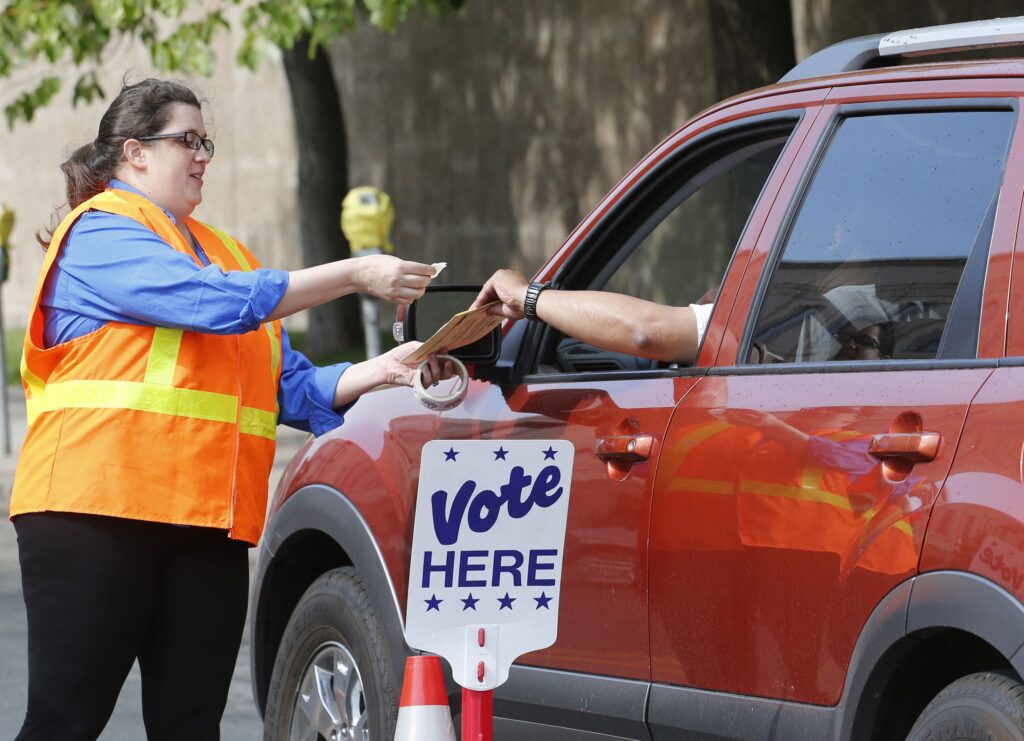
The Colorado Secretary of State’s Office has published the latest voter registration figures for the state and its counties as of June. Colorado ranks among the highest states for independent, or unaffiliated, voters. Only Alaska and Massachusetts have more. New Hampshire, New Jersey, Maine and Oregon also rank highly. So here...

A room for Sundance, a reality check for big-government Boulder | Jon Caldara
Jon Caldara
jon-caldara@coloradopolitics.com
Updated 1 week ago
There are few things more satisfying to watch than socialists getting mugged by reality. The Sundance Film Festival is invading my hometown of Boulder early next year. Sundance drew 85,000 attendees last year in Park City, Utah. Boulder’s hotel room...
PREV
PREVIOUS

GABEL | Activist anti-artificial insemination absurdity
Rachel Gabel Consumers want to know that agriculture producers are doing the right thing, be it on a ranch, hog operation, feedyard, grain farm or dairy. This has been demonstrated to producers through consumers’ use of their food dollars, though from this side of the supply chain it’s sometimes difficult to hear over the din […]
Denver Gazette: Endorsement — Boebert exhibits traits of a legacy leadership
Most of Colorado’s congressional delegation subsists in a state of obscurity. Then there’s 3rd Congressional District Rep. Lauren Boebert, who breaks the mold. Though her mildly bombastic style keeps conventional Republicans on edge, this Western Slope business entrepreneur stands as Colorado’s first nationally relevant politician since the era of Sens. Bill Armstrong and Gary Hart, […]