

NOONAN | Colorado doesn’t value its school kids
How many ways can Coloradans tell our children how much they’re not valued? Over ten billion ways, at last count. That’s roughly how much the state has shorted Colorado’s school children in funding for more than a decade.
This year’s state budget adds $545 per student for school finance and cuts the negative factor in deficits to districts from $503 million to $321 million. State Sen. Rachel Zenzinger (D-Arvada) claims the deficit shrink is historic.
State Rep. Julie McCluskie (D-Dillon) called the negative factor buy-down a record at Gov. Jared Polis’s bill signing of the Public School Finance Act, HB22-1390. Zenzinger explained that the legislature couldn’t eliminate this year’s school funding deficit due to inflation. But inflation will eat into the increase in funding and decrease in deficit and generally produce a flat result.
With urgency, McCluskie says the legislature wants to complete the deficit buy-down “in the next year or two.” Children, don’t hold your breath.
Zenzinger is thrilled over the funding improvement for special education. Last year, the state only pitched in 35% of necessary funding and this year it’s increasing the amount to 75% or $80 million.
The senator exclaims the $80 million will be transformational! According to Zenzinger, schools are currently providing services but “just getting by.” With the $80 million, districts can pay para-professionals more or hire more aides. That help doesn’t really make up for the lost services in previous years.
To truly “transform” special-ed funding and services, the state would have to kick in at least the 65% of additional dollars missed last year and maybe another 50% increase on top of that and keep that funding up for every year. That way, kids who received minimal services earlier might catch up with more services in the near future. None of this would help the children who graduated.
To sum up how much school children are not valued by voting Coloradans, the total deficit makeup is more than $10 billion plus the hundreds of millions the state shorted special education students over the years. When legislators speak about this debt in one-year increments, voters can lose sight of the enormous total debt. Only when the total is evened up and reparations are sent to shorted graduated students can Zenzinger and others hail a transformation.
Despite the funding shorts over the years, the 2022 state legislature voted to continue its current accountability system that relies heavily on standardized testing to measure education performance. That program is money down a rat hole.
Democrats for Education Reform, their chums at various foundations and non-profits, and Republicans just can’t admit that the state’s accountability program has plundered school budgets without improving results.
SB22-137 on Transition Back to Standard K-12 Accountability, sponsored by Sen. Zenzinger and Congressional candidate Don Coram, drags schools back to 2018 as the basis for levels of attainment upon which schools in 2021-2022 will be measured. Understand that by 2018, public schools were underfunded by roughly $7 billion over eight years.
The bill reboots the years counted for schools on performance watch. The performance watch clock will start ticking in 2023-2024 with the 2019-2020 school year as a basis for consecutive years measured. Given that many students have lost ground due to COVID disruptions, it’s unknown whether any academic growth or academic achievement numbers from 2019-2020 have any relevance to school and student performance today.
By 2023-24, the public school finance under-funding could easily reach $11 billion if it indeed takes the legislature another “year or two” to reduce the annual “negative factor” to zero.
Add SB22-070 to this “historic” public school funding situation. This legislation, sponsored by state Sen. Jeff Bridges (D-Greenwood Village) and on its way to the governor, requires schools to base 30% of teacher performance evaluation on academic growth of students. This begins in 2023-2024.
The student academic growth measure has always been dubious. It’s supposed to gauge how much a student has improved academically from one year to the next compared to other students with the same general achievement data points. What it doesn’t do is adjust for the variables that affect students from one year to the next, like COVID and distance learning. These faux measures would be ridiculed in a business setting.
On the hopeful side, Coloradans can show some student love by voting YES on the initiative for Healthy Meals for All Public School Students. At least kids can go to school on full stomachs.
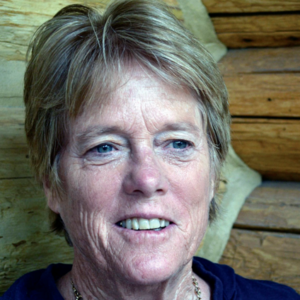
Paula Noonan owns Colorado Capitol Watch, the state’s premier legislature tracking platform.


DEA’s Miguel Chino describes Colorado’s place on the ‘fentanyl pill superhighway’ | The OpEdge Podcast
Tony Olivero
tony.olivero@gazette.com
Updated 1 hour ago
Miguel Chino, Acting Special Agent in Charge of the Drug Enforcement Administration’s Rocky Mountain Field Division, joins The OpEdge to paint the picture of Colorado’s place on America’s “fentanyl pill superhighways.” Chino updates Gazette and Colorado Politics Deputy Opinion Editor...
A right to buy a product? | Hal Bidlack
Hal Bidlack
hal-bidlack@coloradopolitics.com
Updated 18 hours ago
A recent story in Colorado Politics caught my eye, as I learned of a “citizen initiative” that has qualified for the November ballot. It seems supporters of Initiative 177 have collected enough signatures, 146,165 legitimate ones out of a total...

Fourteen years after Aurora — we can’t afford to go backward | GUEST COLUMN
Colorado Politics
colorado-politics@coloradopolitics.com
Updated 17 hours ago
By John Hickenlooper and Gabby Giffords Two Saturdays ago, a gunman shot and killed three people and wounded several others in Twin Falls, Idaho. This latest deadly shooting comes only days after we remembered the lives we lost 14 years...

A daring and fearless rescuer — is afraid of a debate | Dick Wadhams
Dick Wadhams
dick-wadhams@coloradopolitics.com
Updated 3 days ago
Victor Marx, the Republican nominee for governor who says he can exorcize demons and who claimed he has fearlessly rescued 45,000 women and children during 150 “high-risk” missions around the world, appears to be intimidated by the notion of debating...

Colorado’s ballot-initiative process again a battleground for deep pockets, special interests — not the people | Miller Hudson
Miller Hudson
miller-hudson@coloradopolitics.com
Updated 1 day ago
The Oxford English Dictionary defines a constitution as, “The set of fundamental principles according to which a state is constituted and governed, a body of rules prescribing the major elements of the structure and activities of any organization.” Somewhere in...

Proposed EPA changes could save truckers billions | Rachel Gabel
Rachel Gabel
rachel-gabel@coloradopolitics.com
Updated 3 days ago
Agriculture is in distress across nearly every segment across much of the nation, and certainly to a more dire degree in the western United States. If it were not a historic drought, some pressures could be eased. Others can be...

Colorado Democrats, your time is coming | Jon Caldara
Jon Caldara
jon-caldara@coloradopolitics.com
Updated 3 days ago
Hey, Colorado Democrats! All the fun you’ve had watching Republican dysfunction in Colorado for the last 20 years was just a preview of what is about to happen to you. The Colorado Republican Party no longer exists as a competitive...
Perspective: Hunters and anglers are pushing back
Chris Dorsey
chrisd@gmail.com
Updated 1 day ago
For generations, Coloradans hunted elk, caught trout and managed wildlife without consulting a constitutional attorney. That was before wildlife management became a recurring statewide election issue, replete with consultants, national pressure groups and enough political mail to denude an aspen...
The relevance of Watergate more than a half-century later | SONDERMANN
By Eric Sondermann
by-eric-sondermann@coloradopolitics.com
Updated 6 days ago
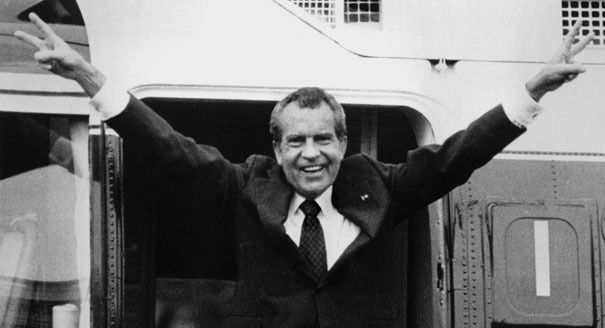
It was the scandal for which all other scandals are now named. In June 1972, a small group of Cuban burglars with high-level connections broke into the headquarters of the Democratic National Committee. Those headquarters were located in the Watergate...
Colorado must continue finding common ground on wildfire policy | GUEST COLUMN
Colorado Politics
colorado-politics@coloradopolitics.com
Updated 5 days ago
By John Herrick Colorado has never lacked for opinions about wildfire policy. We debate forest management, climate change, prescribed burns, land use, air quality and budgets. Those debates are familiar territory, but a new discussion is beginning to happen around...