

HUDSON | Climate change — sleeper issue come November


With the Legislature adjourned for another year, we can focus our full attention on the 2022 midterm elections. How lucky can we be? Truth be told, at least for Colorado, that may prove a dull exercise. Republicans appear intent on pursuing their recent strategy of choosing certain electoral suicide in preference to any real chance of winning at the ballot (drop-off) box. And, of course, statewide races are not actually midterms, but promise four more years of Democratic domination at the Capitol.
It was Ambrose Bierce who observed we are all lunatics of a sort, but it’s the capacity to appraise our own delusions that offers a path to sanity. Republicans have always evidenced a propensity for claiming their election losses provide ample evidence voters have been duped, cheated or misled. It’s far easier to believe Dominion voting machines are manipulated by clever Democrats than to accept the possibility a majority of voters are simply rejecting what Republicans have to offer.
What are we to make of a Congressional candidate who goes to court demanding to be identified as “Let’s Go Brandon” on the Republican primary ballot? What pool of voters might be persuaded by such a stunt and who thinks it smart to seek their support? Something far short of a November majority, I suspect. I’d like to agree that Democrats possess the requisite skills to steal an election, but Will Rogers got it right nearly a century ago when he observed, “I am not a member of any organized political party, I am a Democrat.”
Just as the Russian assault on Ukraine caught Americans largely by surprise, another crisis is simmering on a back burner of our political stove. And, as Harry Truman observed, if you can’t take the heat it might be a good time to exit the kitchen. Climate change, global warming and related environmental disruptions are creeping up on the human race. We have grown accustomed to the resilience of natural ecosystems – they can take a lot of abuse with little apparent damage. The danger of course is that they also tend to collapse without warning. One evening you are fishing and the next morning, following an acid rain, the fish are floating on the surface.
For reasons too complicated to explain here, my college degree was in zoology. Consequently, I still subscribe to biology journals and have been reading Oliver Milman’s “The Insect Crisis: The Fall of the Tiny Empires that Run the World.” We are passingly familiar with the colony collapse disorder that’s been destroying beehives worldwide and undermining pollination of the 60% of food crops that depend on them for fertilization. Though reliance on neonicotinoid pesticides has surely contributed to this decline in hive health, together with a growing reliance on mono-culture farms that limit the variety of bee diets (yes, this matters), their number one threat is now climate warming.
It was only a few decades ago that most rural Colorado pick-up trucks sported “bug-bras” to protect radiators from a crust of insect splatter. They are rarely seen today. As Milman reports, insects are far more sensitive to temperature change than we realized, “Heat things up a little bit and an animal (or insect) can move a little closer to the poles or up a mountain to find suitably cool temperatures. But there’s a limit to this. Crank the temperature up further or faster and they struggle to survive.” Not all species are at risk. Houseflies, mosquitos and many other pests are expected to double their numbers across North America by 2080, proving things can always get worse.
Marine scientists are finding sea temperatures rising. Seventy percent of climate warming eventually works its way into our oceans. Salt water holds less oxygen when it warms. This not only contributes to coral bleaching that kills coastal reefs, but creates fish die-offs that threw millions of rotting carcasses last year onto beaches near Naples, Florida. Widespread de-oxygenization is destabilizing the entire marine food chain, threatening extinction for many larger species that currently support commercial fisheries. Fish catches have been shrinking for decades. Whether a population collapse is imminent, or even preventable if it is, remains unknown.
In the face of what appears to be an inevitable conversion of our planet’s energy budget from fossil fuels to predominantly sustainable and renewable resources, several states (mostly Republican) have been adopting legislation that punishes banks, hedge funds and financial investors that are refusing to continue funding fossil-fuel projects. This is a fool’s wager. As The New Republic magazine recently noted, there are more “No Compromise Climate Candidates” running for Congress than ever before. Their campaigns refuse to accept fossil fuel donations. This may not be a winning message yet, but we’re only one crop failure away from a landslide voter response in their favor. Just wait!
Miller Hudson is a public affairs consultant and a former Colorado legislator.


Will one unqualified AG replace another? | George Brauchler
George Brauchler
george-brauchler@gazette.com
Updated 1 day ago
Colorado Democrats are poised to nominate another attorney general candidate with de minimis relevant credentials or experience. Far from disqualifying, Colorado’s recent voting history mirrors that of America in favoring biography over experience, partisanship over policy, and emphasizing what divides...

Pueblo’s mayor keeps stirring the pot | Dennis Maes
Dennis Maes
dennis-maes@coloradopolitics.com
Updated 1 day ago
Pueblo Mayor, Heather Graham, has clearly proven to be a disciple of the Donald Trump school of governance. And, like her mentor, she is experiencing the same catastrophic results. The format is to ignore what the electorate approved and expects...
The perils of Colorado’s unregulated abortions | GUEST COLUMN
Colorado Politics
colorado-politics@coloradopolitics.com
Updated 1 day ago
By Tom Perille How did the movement which grew out of a genuine concern for the health and safety of women become the same movement that undermines women’s health and safety today? Despite good intentions, it was a long route...
Sans seniors, what does Colorado’s uninterested early turnout say about our disengaged electorate? | Paula Noonan
Paula Noonan
paula-noonan@coloradopolitics.com
Updated 2 days ago
This primary election is poorly attended. Evidence is in the numbers. About 10% of active registered voters are deciding this year’s primaries with seven days to go. If that number triples by June 30, only 30% of voters will decide...

Who gets to decide Colorado’s economic future? | GUEST COLUMN
Colorado Politics
colorado-politics@coloradopolitics.com
Updated 2 days ago
By Sarah Blackhurst Colorado’s prosperity depends on industries that grow our food, build our future and power our homes. But today, these sectors face an invisible threat from 5,000 miles away: the European Union’s Corporate Sustainability Due Diligence Directive (CS3D)....
We have the chance to change Colorado’s cancer outcomes | PODIUM
Colorado Politics
colorado-politics@coloradopolitics.com
Updated 2 days ago
By Erika Hanson Brown Colorado ranks among the healthiest states in the nation by nearly every measure. Yet even here — amid the Rocky Mountains and our deeply rooted culture of health and activity — cancer casts a long and...

Colorado has a playbook for youth mental health — our next governor must use it | GUEST COLUMN
Colorado Politics
colorado-politics@coloradopolitics.com
Updated 4 days ago
By Karen Ron-Li Liaw From the rural communities on the western slope to the eastern plains, to the major urban regions on the Front Range, Colorado families are navigating an all-too-familiar crisis: kids are struggling, and Colorado’s mental health system...

Pigs engineered to fight alpha-gal syndrome | Rachel Gabel
Rachel Gabel
rachel-gabel@coloradopolitics.com
Updated 4 days ago
If I were an evil genius trying to hamstring animal agriculture, I would create a fly that eats livestock alive and a tick whose bite and spit causes some people to have an allergic reaction to meat. (Insert evil laugh...
Registered voters on the eve of the 2026 primaries | Cronin & Loevy
Tom Cronin Bob Loevy
tom-cronin-bob-loevy@coloradopolitics.com
Updated 6 days ago
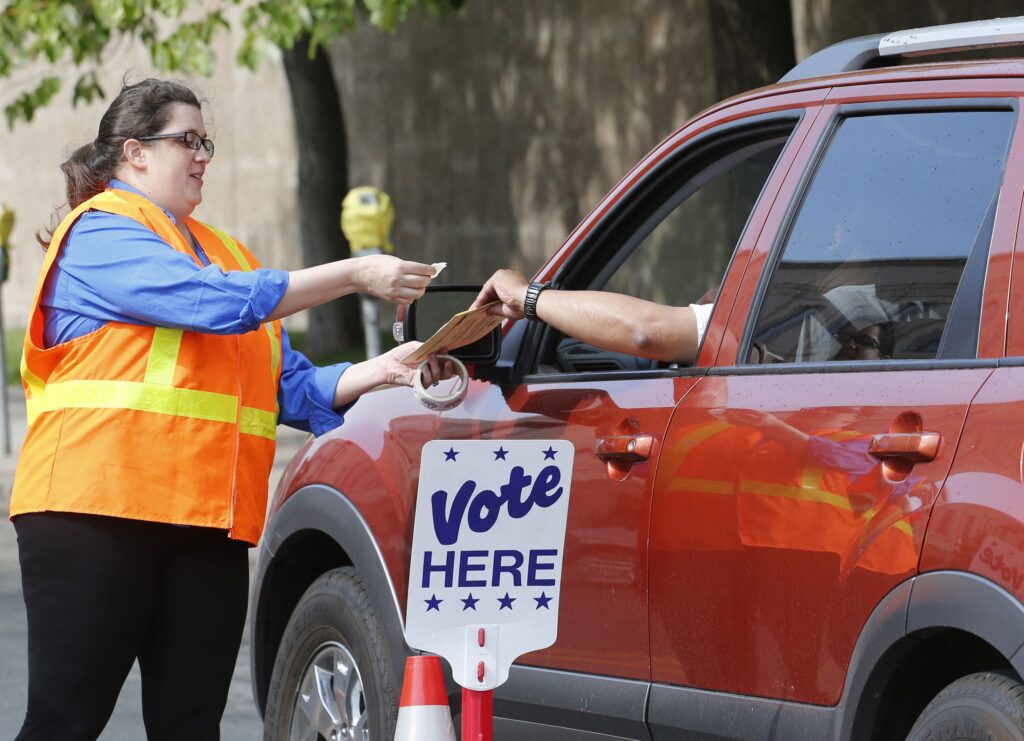
The Colorado Secretary of State’s Office has published the latest voter registration figures for the state and its counties as of June. Colorado ranks among the highest states for independent, or unaffiliated, voters. Only Alaska and Massachusetts have more. New Hampshire, New Jersey, Maine and Oregon also rank highly. So here...

A room for Sundance, a reality check for big-government Boulder | Jon Caldara
Jon Caldara
jon-caldara@coloradopolitics.com
Updated 1 week ago
There are few things more satisfying to watch than socialists getting mugged by reality. The Sundance Film Festival is invading my hometown of Boulder early next year. Sundance drew 85,000 attendees last year in Park City, Utah. Boulder’s hotel room...
PREV
PREVIOUS

GABEL | Who on Cap Hill will carry ag torch into future?
Rachel Gabel There will be a void when the legislative session gavels back in without Sen. Jerry Sonnenberg, Sen. Don Coram, and Sen. Kerry Donovan. Sonnenberg, a farmer and rancher from Sterling, served 16 consecutive years, beginning in the House and moving to the Senate when former Sen. Greg Brophy was term limited. I’ve long […]
Denver Gazette: A deserved twofer for the Nuggets’ MVP
When the NBA announced 76 players to its 75th Anniversary team to start this season – a tie resulted in the extra selection – there was no more glaring omission than the Denver Nuggets’ Nikola Jokic. Jokic, who this past week was awarded his second-consecutive MVP trophy, was one of only two MVPs in history […]