

HUDSON | The constitutionality of Roe
When I returned to the United States from the Navy in 1970, my family moved into a poorly constructed garden-apartment complex in Lanham, Maryland, just outside Washington, D.C. Little did we know these seemingly cutting-edge residences would become “ready-made,” low-income housing within twenty years. Nonetheless, they offered a few amenities for parents, including playgrounds for numerous children. Although my son wasn’t yet walking, he could spend hours crawling in a sandbox, pushing debris into his diapers. Because of my irregular work schedule, I shared many of those hours with him, in the company of young mothers.
Anti-war sentiment was peaking across the country at the time and it wasn’t long before my adult companions discerned that I had spent the past few years serving in an American military fighting an unpopular war in Vietnam. The animosity directed toward veterans was a very real thing then and prompted many returning soldiers and sailors to hide their service. One morning several of these Moms pounced on me and demanded to know why I hadn’t fled to Canada? It incensed me that these women, who were not and had not faced the military draft, were so quick to pass judgment on the men who did. The fact I had joined Colonel Ed King’s (Pentagon war briefer to the Joint Chiefs of Staff), and John Kerry’s Vietnam Veterans Against the War upon my return failed to persuade them I was any less flawed a human being.
They were not moved by my plea that generations of Hudson men had fought in wars since the American revolution, most recently my father and grandfather during World Wars I and II. They argued I bore no responsibility to respond to my country’s demand that I serve in an immoral contest – that accepting jail or exile were better choices. On impulse I offered the following defense: “In a democracy, that choice is not mine to make. Conscription of young men to fight wars has a long and honorable history. Now, with my service completed, I’m free to object to this war and I do.” I pointed out they would never face this decision and should not attempt to place themselves in my shoes.
Roe v. Wade was still three years over the horizon, but public debate regarding abortion had been raging for the better part of a decade. I plunged into a comparison. “As a woman, you will never have to make the decision I made. I have no animus toward those who choose prison or exile in protest. I respect their readiness to pay the legal price for their protest. As a man, I will never have to consider an abortion. Consequently, I have no standing – no right – to enforce a decision upon you one way or the other. It’s your body, an abortion should be your choice. It is and always should be your private decision. I suggest you exercise a similar restraint when judging my choice.”
That opinion hasn’t changed over the ensuing 50 years. A friend of my daughter had three abortions before she graduated from high school. I personally found her substitution of abortions for contraception distasteful, if not unethical, but we each have the right to make ignorant choices. Freedom includes the freedom to be wrong, to act stupidly. Justice Alito, one of the Federalist Society’s “originalists” on the Supreme Court, is apparently alarmed he cannot find a mention of abortion in the Constitution. Why is he surprised? The Constitution was written by men who failed to accord women the vote – men who judged slaves to be three-fifths the worth of free persons and also limited the franchise to property holders. Nor did these men mention automobiles, airplanes, nuclear weapons, television, computers, the Internet or social media.
Nonetheless, our democracy must address the challenge of managing the disruptive changes that technology has thrust upon society. There are no 18th century guideposts for this task – few originalist paths to follow. As Abraham Lincoln noted, there are times when we must think anew. Abortion in the 21st century is a far safer proposition for women than it was in 1783. One male senator observed last week that an impending repeal of Roe will almost surely save many lives. Whose lives? Certainly not the women forced to consider desperate measures to find non-medical abortions. It’s utterly preposterous to presume we can or should return to the agrarian mindset of the 1700s (while remembering to take vaccines with us, of course).
There were concerns raised earlier this year whether the Legislature should attempt to codify a guaranteed access to abortion before the Supreme Court took action on Roe. Colorado voters have, after all, repeatedly protected such access for six decades. The female legislators who ratified this right in 2022 deserve our thanks.
Miller Hudson is a public affairs consultant and a former Colorado legislator.

Colorado has a playbook for youth mental health — our next governor must use it | GUEST COLUMN
Colorado Politics
colorado-politics@coloradopolitics.com
Updated 7 hours ago
By Karen Ron-Li Liaw From the rural communities on the western slope to the eastern plains, to the major urban regions on the Front Range, Colorado families are navigating an all-too-familiar crisis: kids are struggling, and Colorado’s mental health system...

Pigs engineered to fight alpha-gal syndrome | Rachel Gabel
Rachel Gabel
rachel-gabel@coloradopolitics.com
Updated 18 hours ago
If I were an evil genius trying to hamstring animal agriculture, I would create a fly that eats livestock alive and a tick whose bite and spit causes some people to have an allergic reaction to meat. (Insert evil laugh...
Registered voters on the eve of the 2026 primaries | Cronin & Loevy
Tom Cronin Bob Loevy
tom-cronin-bob-loevy@coloradopolitics.com
Updated 3 days ago
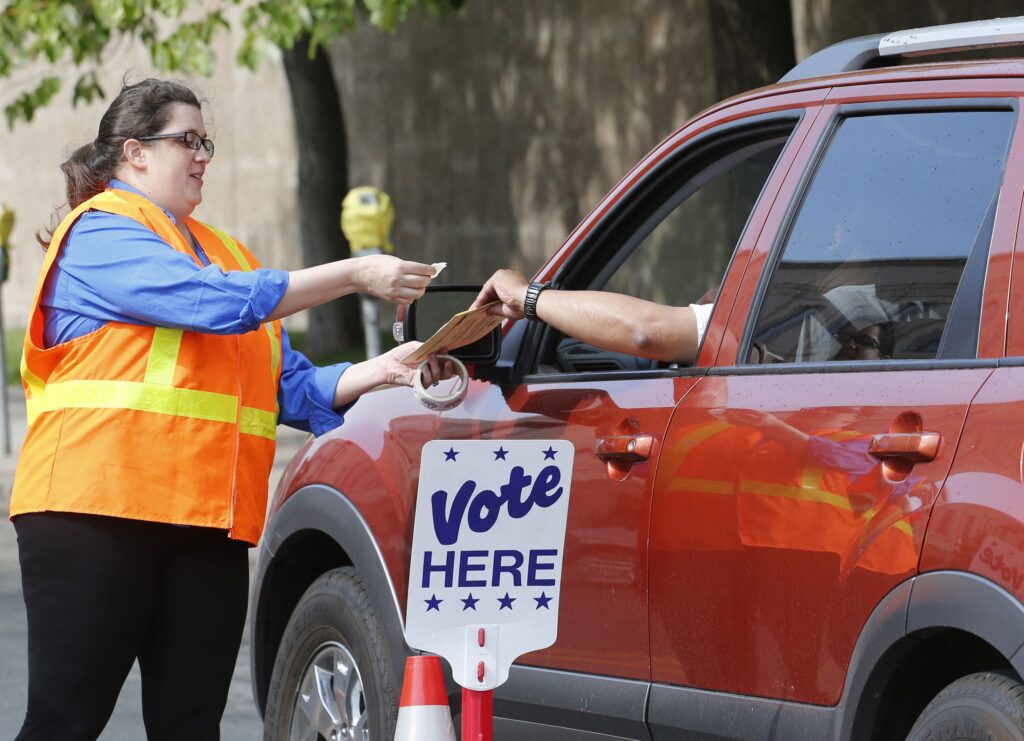
The Colorado Secretary of State’s Office has published the latest voter registration figures for the state and its counties as of June. Colorado ranks among the highest states for independent, or unaffiliated, voters. Only Alaska and Massachusetts have more. New Hampshire, New Jersey, Maine and Oregon also rank highly. So here...

A room for Sundance, a reality check for big-government Boulder | Jon Caldara
Jon Caldara
jon-caldara@coloradopolitics.com
Updated 5 days ago
There are few things more satisfying to watch than socialists getting mugged by reality. The Sundance Film Festival is invading my hometown of Boulder early next year. Sundance drew 85,000 attendees last year in Park City, Utah. Boulder’s hotel room...
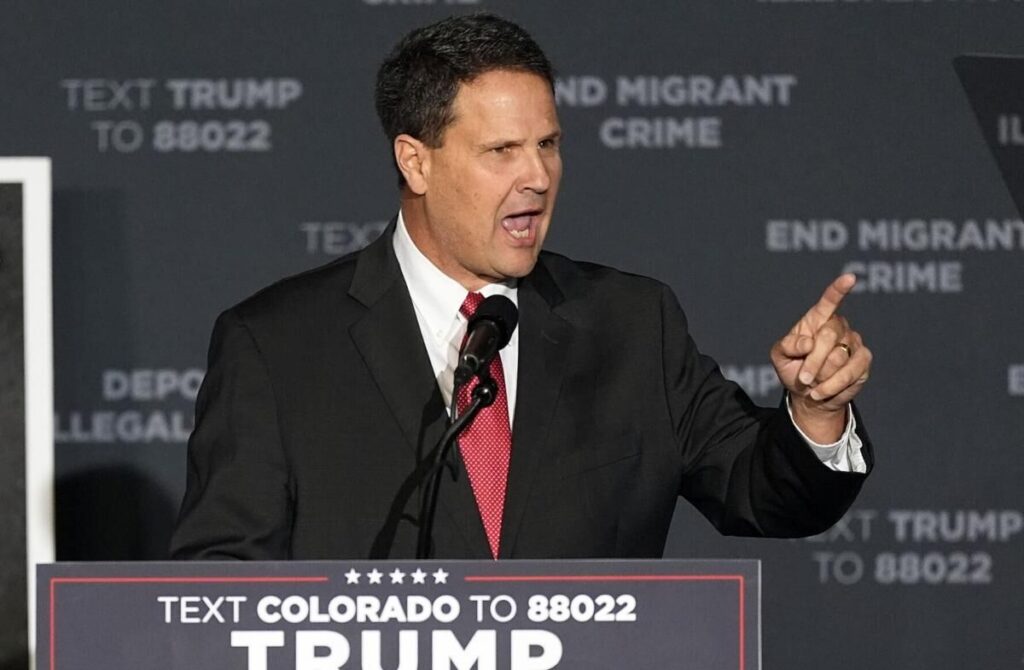
Rep. Jeff Crank thinks Democrats are too focused on Trump, not enough on Colorado Springs | Vince Bzdek
Vince Bzdek
vince.bzdek@gazette.com
Updated 2 days ago
For U.S. Rep. Jeff Crank, who’s unopposed in the Republican primary for the 5th Congressional District but the main target of both candidates in the lively Democratic primary, the big question in the midterms is not who will stand up...
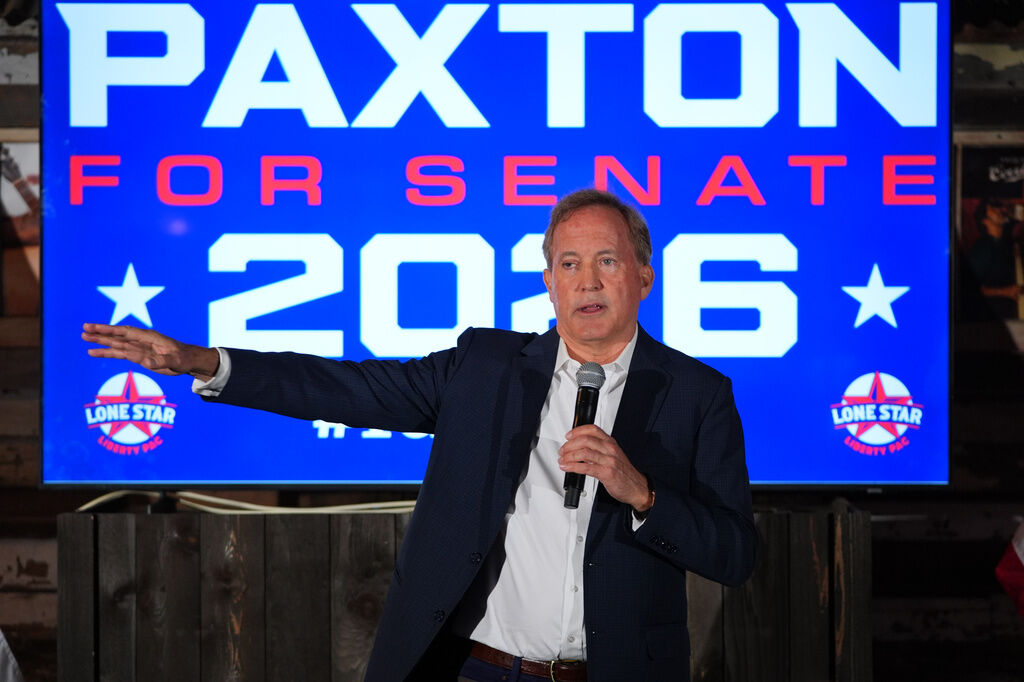
Does character matter anymore? | SONDERMANN
By Eric Sondermann
by-eric-sondermann@coloradopolitics.com
Updated 6 days ago
The last few weeks have been illuminating in the manner of a headlamp pointing the way to some deep, dark, murky netherworld. Graham Platner, a hero to the populist set on the Democratic side, became his party’s Senate nominee in...

Private equity has no place in health care | GUEST COLUMN
Colorado Politics
colorado-politics@coloradopolitics.com
Updated 5 days ago
By Miah Ntepp Of all the financial pressures placed on working people in this country, the skyrocketing costs of health care rank near the top. As families struggle under the cuts to Medicaid made by the Trump administration, they are...
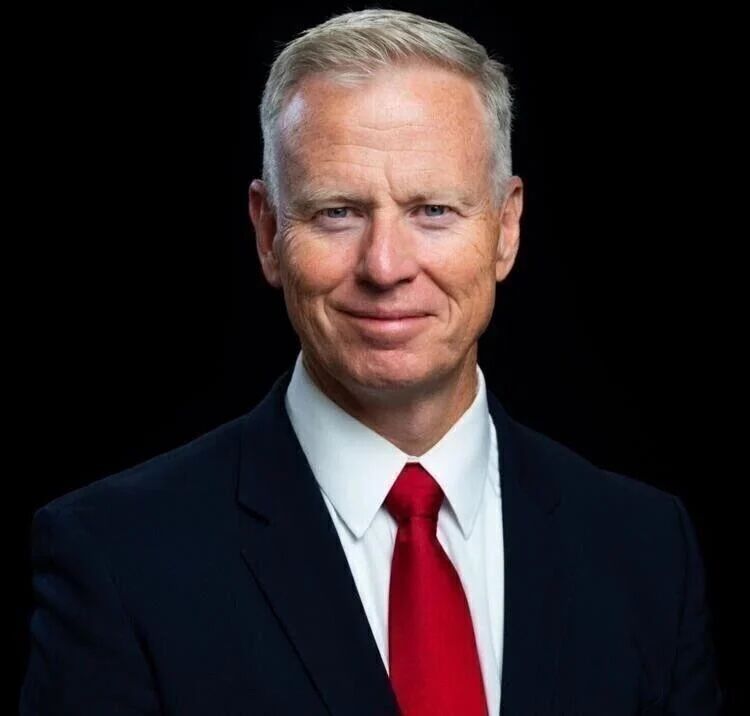
Some pointed questions for the gubernatorial hopefuls | George Brauchler
George Brauchler
george-brauchler@gazette.com
Updated 6 days ago
Earlier this month, the Republican and Democratic candidates for governor participated in a televised interview moderated by well-known, left-leaning legacy media folks. Predictably, the questions asked of the GOP candidates were more aggressive, pointed, biographical and almost entirely disconnected from...
Chaotic funding throws monkey wrench into governor’s-race money madness | Paula Noonan
Paula Noonan
paula-noonan@coloradopolitics.com
Updated 6 days ago
Chaos Monkey, Inc., gave a trifle $20,000 donation to Rocky Mountain Way (RMW), the independent expenditure committee (IEC) supporting U.S. Sen. Michael Bennet for Colorado governor. But why, Coloradans should ask, would a guy who has assigned his contributor name...

Lindsay Datko on school safety, misconduct and transparency in Jeffco schools | The OpEdge Podcast
Tony Olivero
tony.olivero@gazette.com
Updated 7 days ago
Jeffco Kids First founder Lindsay Datko joins The OpEdge to explore concerns about school safety, staff misconduct and transparency in Jefferson County Schools. Datko tells host and investigative columnist Jimmy Sengenberger why she believes Colorado’s second-largest district has too often...
PREV
PREVIOUS

Let’s curb distracted driving in Colorado now
Shelley Forney Another “Distracted Driving Month” in April goes by and still no hands-free law has been passed since my daughter Erica’s death 14 years ago due to a distracted driver on their cell phone. Instead, Colorado has seen a 50% increase in traffic deaths since 2011 due to the spike in unsafe drivers according […]

GABEL | The selfless spirit of our state's sheep men
Rachel Gabel Lamia, a village in Greece, bears resemblance to Meeker, or at least that’s how the story goes. A number of Greek immigrants followed the promise of a better life to America, leaving impoverished Greece behind. Many of them found work in the coal mines around Price, Utah, including a man named Regis Halandras. […]