

Republican sponsor takes name off hemp bill, alleges bill was ‘hijacked’ by marijuana industry
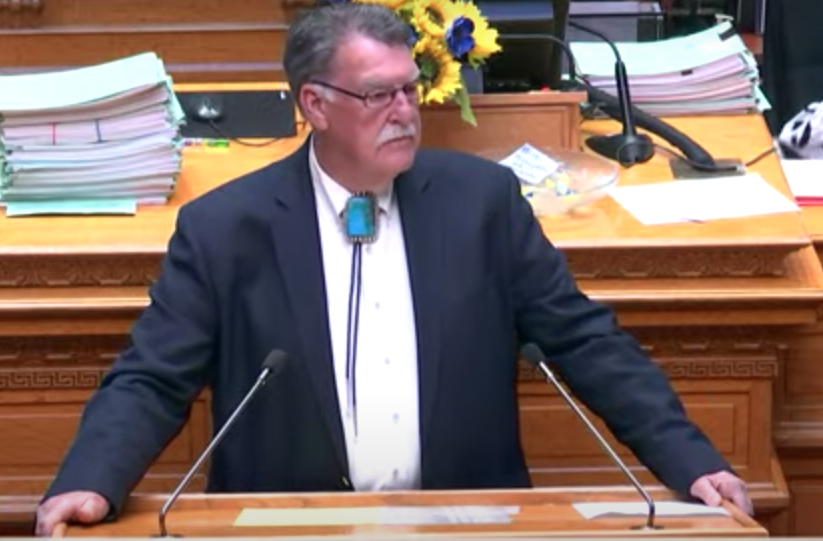
A Republican senator has pulled his name from bipartisan legislation seeking to regulate hemp, alleging the bill’s Democratic co-sponsors allowed the legislation to be “hijacked” by the marijuana industry.
As introduced, Senate Bill 205 would have established new definitions for adult use of cannabis products, artificially derived cannabinoid, intoxicating cannabinoid, and tetrahydrocannabinol. The measure would task the Marijuana Enforcement Division in the Department of Revenue to come up with rules that set limits for the amounts of tetrahydrocannabinols (THC) and intoxicating cannabinoids in adult use cannabis products, as well as establish procedures for designating and transferring an adult use cannabis product as a retail marijuana product.
But critics claimed it was a giveaway to the marijuana industry, which would have had total control over the production of intoxicating hemp products, particularly those containing Delta-8 THC.
The bill’s fiscal analysis explained it this way: Delta-9 THC occurs naturally in cannabis and is the main psychoactive ingredient in medical and retail marijuana. Industrial hemp is defined in Colorado law as cannabis that contains a Delta-9 THC concentration of no more than three-tenths of one percent on a dry weight basis. That low content means it’s not considered a Schedule 1 controlled substance.
But now industrial hemp products exist with what’s known as Delta-8 THC, which is synthesized from CBD with the use of solvents and which has psychoactive and intoxicating effects. Those products are not regulated by the state, the fiscal analysis pointed out.
Senate President Steve Fenberg, D-Boulder, a co-sponsor of SB 205, noted during a committee hearing Monday that the conversation on Delta-8 THC products has been going on for a couple of years. He thought the parties had come up with a compromise solution.
But the pushback from the hemp industry indicated otherwise, so he threw out the original bill and replaced it with language allowing the Colorado Department of Public Health & Environment to regulate the products, and a task force will be formed to look at future rules.
The makeup of that committee is what set off Sen. Don Coram, a Montrose Republican, on Thursday during second reading debate on the bill. He offered an amendment to shake up the representation, seeking to put more people affiliated with the hemp industry on the task force.
While Fenberg described what that committee did, Coram stood by his arms crossed.
“It’s not often you find yourself in the situation where your principles are conflicted. That’s what’s happening to me today,” he said.
When the constitutional amendment legalizing recreational marijuana and hemp was passed, Coram and a colleague ran a bill to put hemp under the Department of Agriculture.
“We were adamant that there would be separation between hemp and marijuana,” he said, noting the separation had been maintained from 2013 until now.
Coram said he was pleased to be on a bill regulating Delta-8 and Delta-10. But the bill was hijacked by marijuana, he said.
“You will be told there is an agreement between hemp and marijuana. That’s partially true,” he said, referencing an agreement between Charlotte’s Web, a multi-million dollar hemp company, and the industry. But others in the hemp industry, such as small operators, have been totally locked out.
Phone calls and emails were not returned, Coram claimed. There is no consensus among the hemp industry and marijuana, except for the giant, he said.
He acknowledged there are people in the hemp industry who are straddling the gray line and whose products are showing up in convenience stores.
“I want to get Delta-8 and Delta-10 off the streets, but this is the wrong vehicle because of a lack of representation of the ‘little guy,'” he saiid.
The Coram amendment lost on a division vote.
While he acknowledged the amendments made the bill better, Coram told the Senate he was never involved nor invited to participate in the drafting of the amendments, particularly the one that changed the bill to put the issue under a task force that critics allege is slanted toward the marijuana industry.
“Wait until it happens to you. My principles will not allow me to stand and say ‘it’s okay.’ It’s not okay for a billion-dollar industry to put their foot on the neck of the little farmer just trying to raise a crop,” he said.
Coram then had his name removed as a sponsor from the bill. He told Colorado Politics later that he was not involved with the bill’s original drafting, but wanted to be a co-sponsor because he is committed to dealing with the problems raised by Delta-8 and Delta-10 THC.
But his biggest problem with the bill is “the lack of representation of hemp in the bill itself,” he said. “To put the hemp industry under the control of marijuana – they’re cousins but not kissing cousins. It’s the big bullies of marijuana trying to shut down the hemp industry,” he added.
SB 205 will go to a formal vote in the Senate on Friday and if adopted, heads to the House.
marianne.goodland@coloradopolitics.com

A summertime all-you-can-eat political buffet | SONDERMANN
Eric Sondermann
eric-sondermann@coloradopolitics.com
Updated 4 days ago
We find ourselves in the doldrums of August with a complete dearth of political news. Yeah, right. These days, that train never stops moving. It is a 24/7/365 express amplified by 24/7/365 media. Let me respond with one of my...

GOP worker pleads guilty to campaign funds embezzlement scheme | A LOOK BACK
Rachael Wright, Special to Colorado Politics
rachael.wright@coloradopolitics.com
Updated 4 days ago
Forty-five Years ago this week: After pleading not guilty to a Denver federal grand jury indictment of five counts of bank embezzlement, Eve Lynn Lincoln, a Colorado Republican Party employee, decided to plead guilty to one count: using bank credit...
Schoolchildren’s presence at child sex-related trial did not harm Arapahoe County defendant, appeals court says
Michael Karlik
michael.karlik@coloradopolitics.com
Updated 12 hours ago
Colorado’s second-highest court decided on Thursday that the presence of a group of schoolchildren on the first day of a child sexual exploitation trial did not violate an Arapahoe County defendant’s constitutional right to a fair trial. Prosecutors charged Jerry...
Appeals court cites week-old Colorado law to reinstate child neglect case at child, father’s request
Michael Karlik
michael.karlik@coloradopolitics.com
Updated 8 hours ago
Colorado’s second-highest court invoked a new state law for the first time on Thursday and reinstated a child neglect case that both the child and her father wished to reopen. House Bill 1227 took effect on Aug. 12, reversing a...
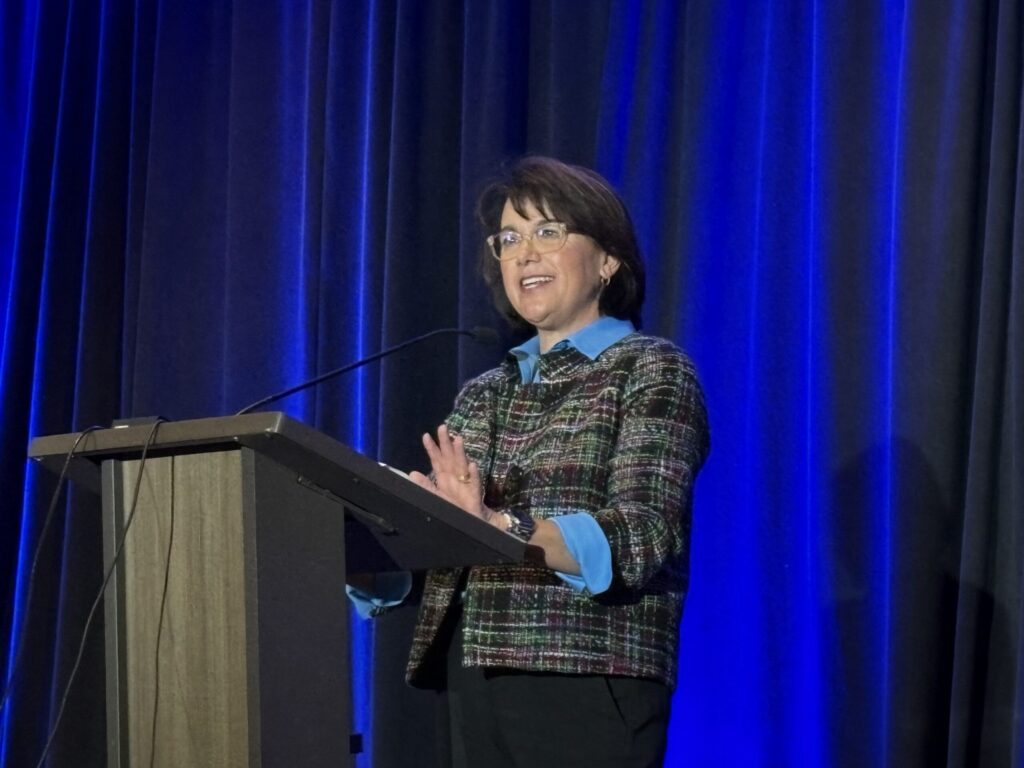
Democratic candidate in Colorado’s 4th CD urges long-term water planning
Marianne Goodland
marianne.goodland@coloradopolitics.com
Updated 8 hours ago
The Democrat hoping to become the next representative of Colorado’s 4th Congressional District on Thursday made her case on the final day of Colorado Water Congress in Steamboat Springs. Eileen Laubacher, who spent 34 years in the U.S. Navy and...

Castle Rock council declines to censure member accused of misconduct
Nicholas Fogleman
nicholas.fogleman@denvergazette.com
Updated 2 days ago
A Castle Rock Town Council meeting Tuesday became consumed by allegations that a councilmember attempted to trade a town policy decision for the withdrawal of a recall effort against him. The allegations against Councilmember Mark Davis surfaced during public comment...
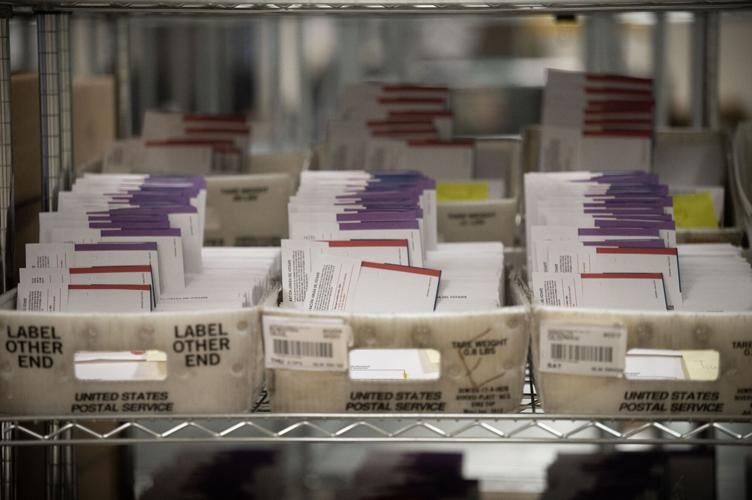
Proposal to cap Colorado income tax rate qualifies for November ballot
Thelma Grimes
thelma.grimes@coloradopolitics.com
Updated 1 day ago
Election officials on Thursday confirmed that the proposal to cap the state’s income tax at the current rate submitted signatures and voters will consequently decide its fate this November. The fight over tax rates is part of the tug and...
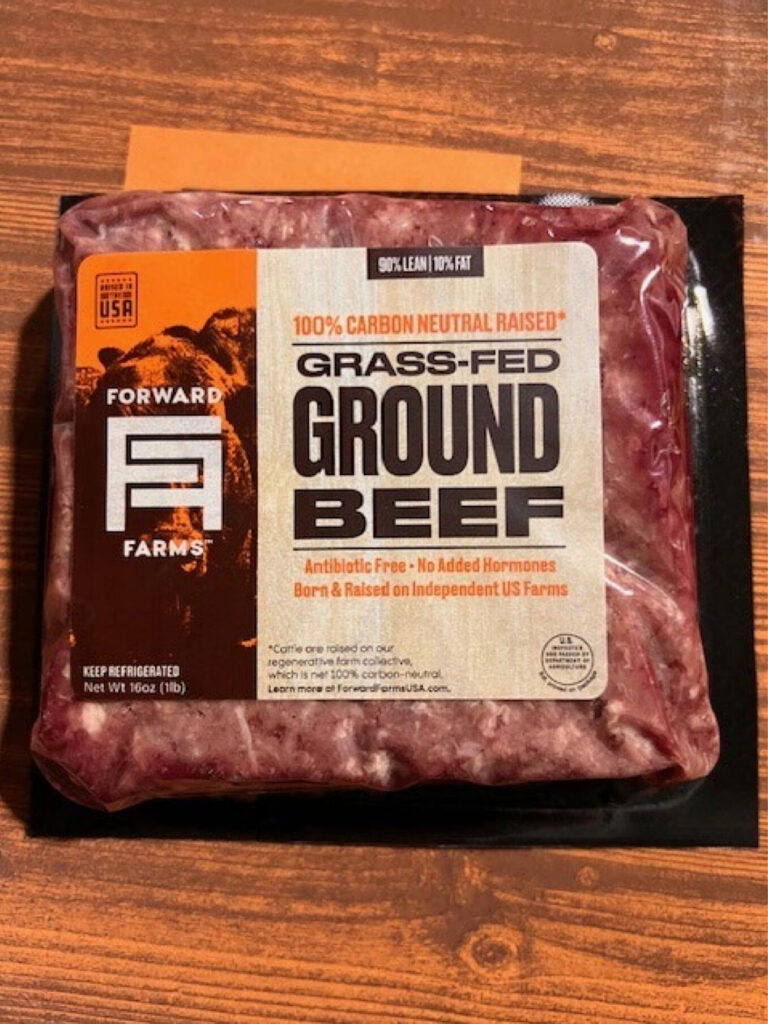
Trump reaches deal to halt tariffs on beef for 90 days in bid to lower prices
Rena Rowe
rena.rowe@washingtonexaminer.com
Updated 2 days ago
President Donald Trump announced Friday that he had reached a deal to temporarily ease tariffs on beef imports, saying the move would help lower prices for families as the United States faces a severe cattle shortage and record-high beef prices....
Budget red ink threatens to spike inflation and unemployment
Zach Halaschak
zach-halaschak@coloradopolitics.com
Updated 2 days ago
The ticking time bomb that is the national debt just crossed the $40 trillion mark and could spark a fiscal crisis that could throw the economy into disarray, spiking unemployment and exploding inflation. Republicans and some centrist Democrats have long...
Colorado Supreme Court names William Hood as next chief justice
Michael Karlik
michael.karlik@coloradopolitics.com
Updated 1 day ago
The Colorado Supreme Court has selected Justice William W. Hood III to be the next chief justice, the judicial branch announced on Friday. Hood will succeed Chief Justice Monica M. Márquez, who took over the role in July 2024. “I...
PREV
PREVIOUS

Norm Early, Denver's first Black district attorney, dies
Norm Early, Denver’s first Black district attorney and a champion for victims’ rights, has died in Denver of complications from diabetes, according to family members. “He was always a family man, always smiling. Whenever we would go out to eat, he had the whole restaurant laughing,” said his niece, Malika S. Flowers of Atlanta. Early […]

Justices asked to endorse hybrid model of calculating parole eligibility
In an unusual display of unity before the Colorado Supreme Court, both the government and inmate Nathanael E. Owens agreed that he was entitled to have his parole eligibility date calculated in a way that would move his potential release date one year earlier. However, Owens asked the justices to go further and order the Colorado […]