

Colorado lawmakers send $36.4 billion state budget to Polis

The state House and Senate on Thursday signed off on the next fiscal year’s spending plan, but not without a few fireworks over what didn’t make it to the final budget.
Notably, the two chambers agreed to reverse the Senate’s decision, which Republicans pushed, last week to add half a billion dollars in education funding.
The Joint Budget Committee, acting as a conference committee, didn’t exactly follow what representatives and senators voted for when the budget proposal went through their respective chambers.
Indeed, the final 2022-2023 spending plan hews closely to the original amount that legislators introduced – roughly $36.4 billion.
The House’s version of House Bill 1329 had added 12 amendments, which increased appropriations by $63.2 million, of which $8.7 million came from the general fund.
When the bill and its accompanying budget-balancing measures reached the Senate, that chamber kept 11 of the 12 amendment, and then added 10 more. The Senate’s additions increased appropriations by $731 million, which included $522.5 million in general fund dollars and $152 million in cash funds for capital construction, according to a budget document.
“It was an extraordinary increase” that put the budget out of balance, Joint Budget Committee Chair Rep. Julie McCluskie, D-Dillon, told the House on Thursday.
All but about $5.5 million of those additions hit the cutting room floor after the conference committee met Wednesday.
Here’s what stayed or adopted by both the House and Senate:
- $75,000 for the Beef Sticks for Backpacks program at Colorado State University
- $75,000 for the Agricultural Leadership Program in the Department of Agriculture
- $100,000 for the AgNext Climate Change Program at Colorado State University
- $1.5 million for the Tony Grampsas Youth Services Program in the Department of Human Services. The amount was reduced from $3 million.
- $500,000 for the Eviction Legal Defense Fund in the Judicial Department. The amount was reduced from $1 million.
- $1 million for an environmental impact study ordered by the federal government on the reintroduction of wolves at Department of Natural Resources. It was reduced from $1.9 million.
- $500,000 for the Collaborative Performance Management Program at Department of Human Services. It was reduced from $2 million.
- $200,000 for Court Appointed Special Advocates in Judicial Department. It was reduced from $500,000.
Here are the additions:
- $200,000 for rural mental health programs in the Department of Agriculture
- $500,000 to the Department of Health Care Policy and Financing, with a a footnote directing the money to expand the non-invasive prenatal testing benefit. It was reduced from $750,000.
- $250,000 to the Immigration Legal Defense Fund in the Department of Labor and Employment. The original amount was $500,000.
- $600,000 for deputy district attorney training on 48 hour bond hearings in the Department of Law. The original amount was $450,000.
Here’s what went by the wayside:
- A Senate amendment to add $503 million to the Department of Education, with half going to teacher pay and the other half paying down the budget stabilization factor.
- A House amendment that would have cut expansion funding for the Office of Public Guardianship to begin pilot programs in two rural judicial districts. The office is expected to submit a report in January on the program, but the expansion would only have been in place for less than six months before that report is due. The Joint Budget Committee voted, 4-2, to reject the House amendment – the same votes case in favor of expanding the program in March.
- A Senate amendment that would have directed $141 million in federal ARPA money and institutional resources for capital construction and controlled maintenance projects.
Joint Budget Committee members earlier warned colleagues that some would not be happy with the conference committee report, where the two chambers ultimately reconciled their differences.
But what riled some House Republican lawmakers was the elimination of an amendment to boost state trooper pay at $2.3 million.
Minority Leader Rep. Hugh McKean, R-Loveland, told the House that when an amendment is adopted in both Houses, it speaks for the people of the state. He noted that the trooper pay amendment was, in fact, approved in both chambers.
Rejecting that amendment, when 100 members of the legislature agreed to do something, is wrong, McKean said.
When the General Assembly can’t find the money to fund pay increases for troopers, “shame on us,” said the Republican leader, who called it a core function of government.
“We spoke as a body!” he said. “Next year, our troopers will be moving backwards.”
McKean urged colleagues to reject the conference committee report, which lost on a mostly party-line 39-24 vote. Rep. Kim Ransom, R-Littleton, a Joint Budget Committee member, voted with the Democrats.
McCluskie said the Joint Budget Committee honored the voice of the House and Senate in its conference committee report.
She pointed out that all POST-certified pay, including for troopers, employees in the division of Parks and Wildlife and in the Department of Corrections, is being studied and that report is expected in September. McCluskie noted several departments raised the issue of retention and pay.
She also said the state will invest in overtime pay and for more full-time employees for the Capitol Complex, and all state employees are getting a 3% pay increase, including troopers.
The House adopted the conference committee report and voted along party lines to send the budget to the governor.
Republican senators also complained about the changes the Joint Budget Committee made.
Sen. Paul Lundeen, R-Monument, who co-sponsored the $503 million amendment for education, pointed out that the entire chamber approved the added spending.
It was the will of this body, he argued.
The Senate ultimately adopted the conference committee report and approved HB 1329 on a 21-14 vote, with Sen. Bob Rankin, R-Carbondale, the Joint Budget Committee’s senior member, voting along with the Democrats to pass the spending package.
The Long Bill now goes to Gov. Jared Polis, who has 10 days to act on the spending plan.


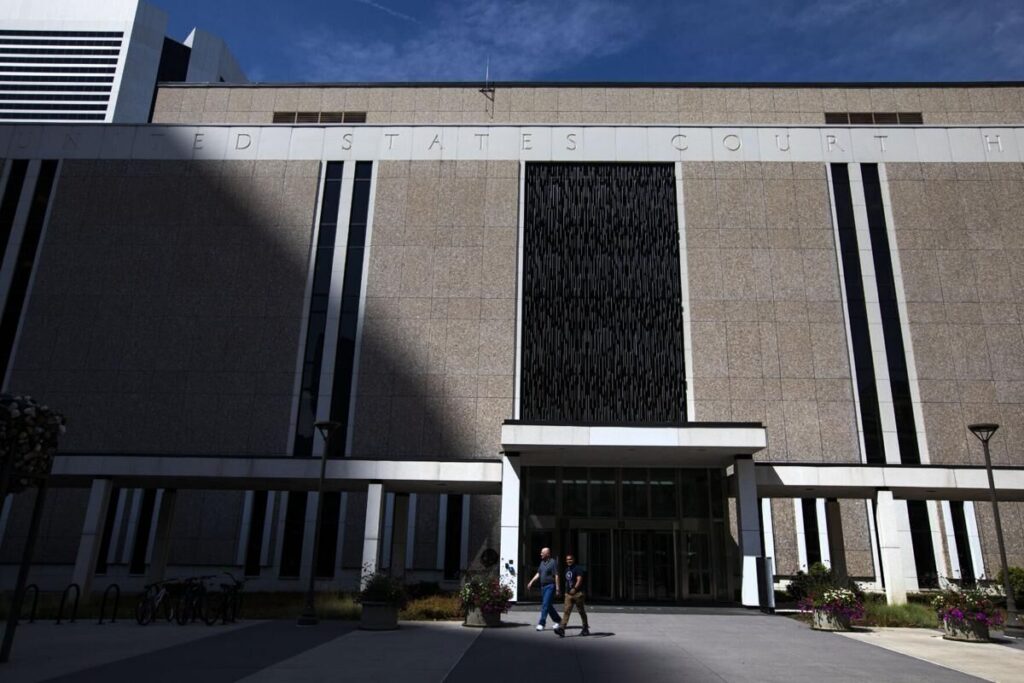
Federal judge dismisses ex-Colorado judicial discipline director’s conspiracy lawsuit
Michael Karlik
michael.karlik@coloradopolitics.com
Updated 15 hours ago
A federal judge dismissed a lawsuit from Colorado’s former judicial discipline director on Tuesday, finding that he failed to adequately state claims for conspiracy or constitutional violations. Christopher S.P. Gregory, who served as the executive director of the Colorado Commission on Judicial...
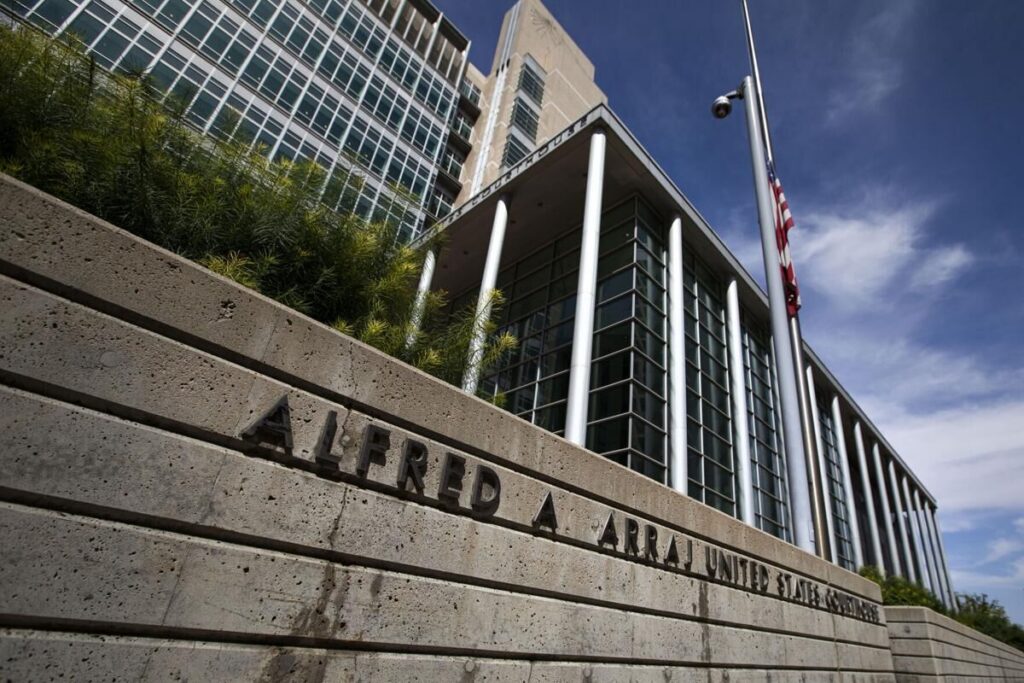
Federal judge allows retaliation claims to proceed against prison officials
Michael Karlik
michael.karlik@coloradopolitics.com
Updated 13 hours ago
A federal judge agreed last week that a man incarcerated at Sterling Correctional Facility had credibly alleged that employees retaliated against him for filing grievances, including by taking away his disability accommodations and turning off his electricity. Louis Peoples Jr.,...
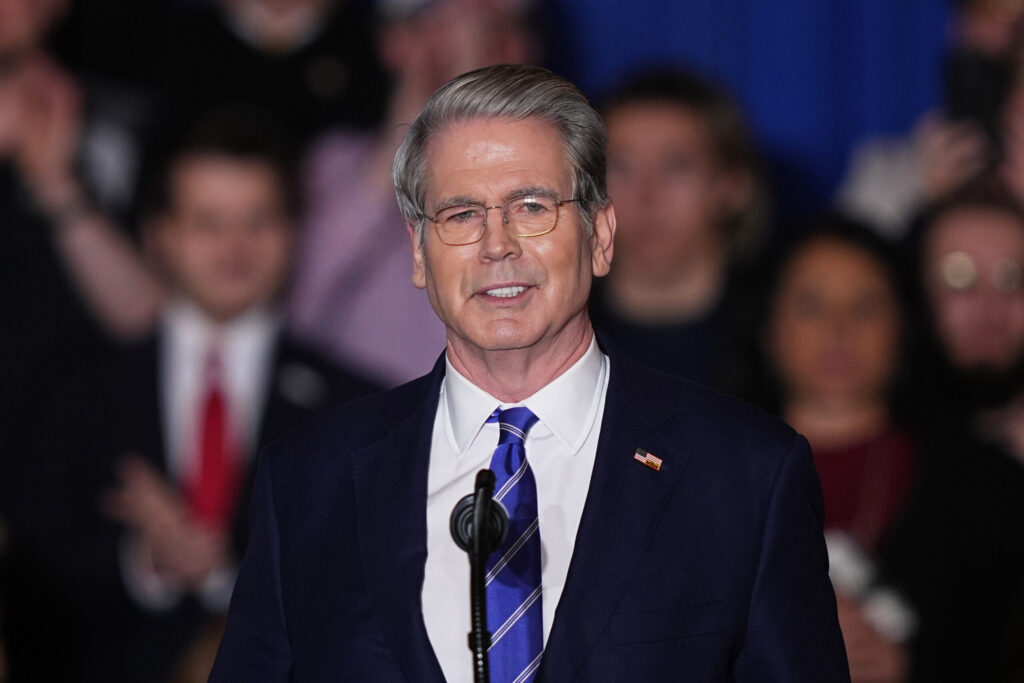
Treasury releases five-step guidance for employers to make contributions to Trump Accounts
Christian Datoc
christian-datoc@coloradopolitics.com
Updated 19 hours ago
Treasury Secretary Scott Bessent published new guidance Tuesday outlining the specific steps employers must take to contribute to employee Trump Accounts. The accounts, one of the most popular provisions included in President Donald Trump’s One Big Beautiful Bill Act, are...

Denver schools to refinance bonds to create capacity for future borrowing
Nico Brambila
nico.brambila@denvergazette.com
Updated 16 hours ago
Less than two years after voters approved a record $975 million school bond, Denver Public Schools is refinancing older debt — a move district officials say will save taxpayers money while creating capacity for another bond election. The district has...

Russia frees imprisoned US Marine over health concerns
Brady Knox
brady-knox@coloradopolitics.com
Updated 20 hours ago
Russia freed former U.S. Marine Robert Gilman upon the urging of U.S. officials so he could receive medical care in the United States. Gilman, 32, was released after 1,666 days in prison, having been arrested on Jan. 17, 2022. Eric...

Colorado students push AI task force as schools navigate new tech era
Marissa Ventrelli
marissa.ventrelli@coloradopolitics.com
Updated 13 hours ago
A group of students is urging lawmakers to establish a task force on artificial intelligence in education to advise districts on how to ensure that pupils and educators use the technology effectively without becoming overly reliant on it. The students...

Parker data center could get $19M tax rebate from Douglas County
Nicholas Fogleman
nicholas.fogleman@denvergazette.com
Updated 22 hours ago
At a time when Denver and Front Range governments are restricting or banning data center development, Douglas County commissioners are poised to approve a $19.3 million tax rebate agreement Tuesday for a new data center under construction in Parker. The...

Denver City Council rejects contract that would have given video maker 8-year deal
Deborah Grigsby
deborah.smith@denvergazette.com
Updated 1 day ago
Denver’s Office of Human Resources will have to get creative to attract new city employees and place them in “hard-to-fill” jobs after a proposed five-year contract extension, valued at $600,000, failed to gain favor with the Denver City Council. The...
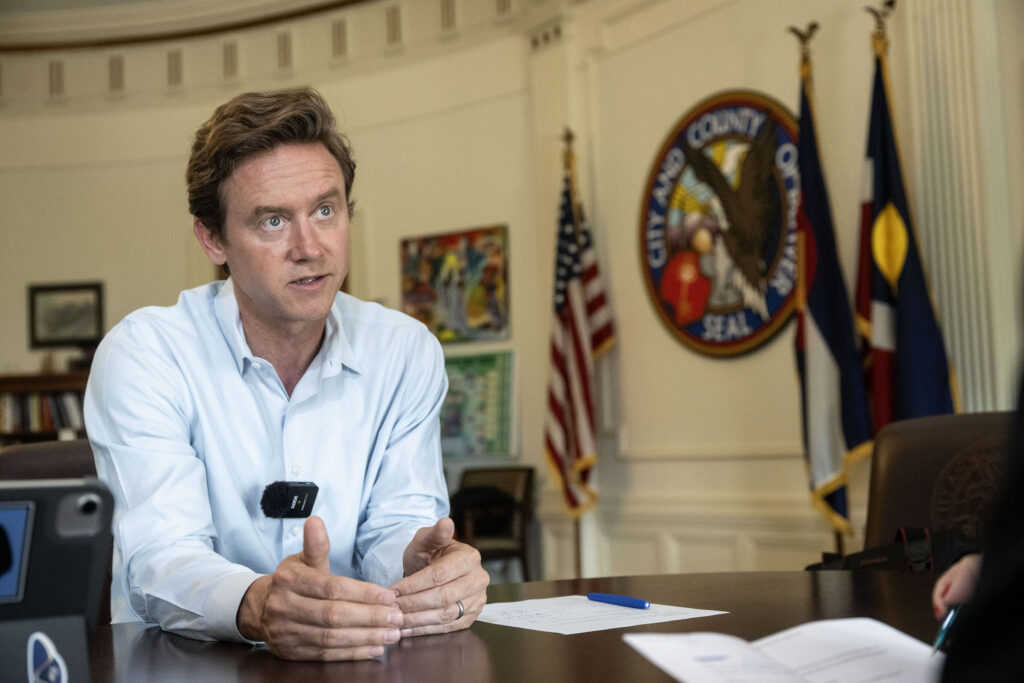
Denver Mayor Mike Johnston files to run for reelection in 2027
Michael Braithwaite
michael.braithwaite@gazette.com
Updated 1 day ago
Denver Mayor Mike Johnston officially filed his paperwork Monday to run again for Denver’s mayoral office next year. The filing comes weeks after Johnston confirmed to The Denver Gazette that he would seek reelection as he focuses the final year...

U.S. Rep. Lauren Boebert’s son arrested, faces charges of sexual exploitation of minor
Matt Kyle
matt.kyle@denvergazette.com
Updated 2 days ago
U.S. Rep. Lauren Boebert’s son Tyler Jay Boebert has been arrested and accused of recording and sharing a video depicting himself having intercourse with a minor, according to court records. The case originated in Garfield County in Western Colorado and...
PREV
PREVIOUS

Colorado legislature advances 3 bills to fight catalytic converter theft
Three bills addressing the unprecedented rise in thefts of catalytic converters in the state are working their way through the Colorado legislature. Catalytic converters are exhaust emission control devices that contain precious metals trading at record prices. Catalytic converter thefts increased by more than 5,000% in Colorado from 2019 to 2021, going from 189 to […]

House GOP spokeswoman criticized for tweet blasting Democratic lawmaker
Update 4/16/22: the tweet has been deleted. A Republican legislator on Thursday defended his Democratic colleague from criticism over the latter missing a crucial committee vote on a measure that seeks to confront Colorado’s fentanyl crisis. House GOP spokesperson Isabelle Daigle criticized Rep. Steven Woodrow, D-Denver, on Twitter after Woodrow skipped the House Judiciary Committee hearing on […]