

Colorado panel advances bill to ban talking on hand-held cellphones while driving

A Colorado panel unanimously advanced legislation Tuesday to ban adults from talking on cellphones while driving, except for when using a hands-free accessory, such as a Bluetooth headset.
Under current law, adult drivers are allowed to use cellphones for calls but they cannot text or browse the internet. If passed, Senate Bill 175 would prohibit all hand-held cellphone use. Drivers under the age of 18 are already prohibited from all cellphone use, including hands-free.
“I have been hit twice by a distracted driver,” said bill sponsor Sen. Chris Hansen, D-Denver. “This is a bill that, at its heart, is about improving the culture of safety in the state. … The basic principle here is that folks need to have their hands free so they can safely operate their vehicle.”
Last year, 91% of Coloradans admitted to driving while distracted, according to a survey from the Colorado Department of Transportation. The survey found that 54% of drivers said they read text messages while driving and nearly 50% talk on cellphones without hands-free accessories – which would be prohibited under the proposed bill.
In 2020, there were 10,166 car crashes involving distracted drivers in Colorado, resulting in 1,476 injuries and 68 deaths, the department said. In 2021, there was a 47% increase in fatal crashes caused by distracted driving statewide, according to the Colorado State Patrol.
The Senate Transportation and Energy Committee approved the bill in a bipartisan 5-0 vote Tuesday, following testimony from several victims of crashes caused by distracted driving.
“I was rear-ended three times within a six-month period,” said Northglenn resident Bob Frank, adding that one driver was talking on the phone and two were texting. “One driver, when I got out to check to see if they were okay, their response was, ‘I gotta hang up, I just hit somebody.’ They hadn’t even put their phone down yet.”
Boulder resident Craig Towler said he lost both of his legs after he was crushed between two cars in 2016. He said the near-fatal incident was caused by a distracted driver who crashed into a parked car behind Towler, pushing it forward and pinning him between it and his own car, which he was unloading.
“Though I am thankful to be alive today, my life was changed forever,” Towler said. “What happened to me is preventable. … We can no longer sit on the sidelines watching people be killed knowing that there is a solution. And if we do nothing, we only have ourselves to blame when the next person is killed in a crash that could’ve been prevented.”
Under the proposed bill, a driver caught using their cellphone would get a $75 fine and two license suspension points for the first offense. If a driver gets another citation within 24 months, they would face a $150 fine and three points for the second offense, and a $250 fine and four points for all subsequent offenses. The fines and points could be waived if the driver proves to the court they have purchased a hands-free device, Hansen said.
Drivers exempt from the bill would include first responders, utility workers, commercial truckers, commercial license holders, drivers using their cellphones to report emergencies and drivers who are lawfully parked.
“The bill is about saving lives,” said Sen. Rhonda Fields, D-Aurora, the other bill sponsor. “So much can go wrong when you take your eyes away from the road. … We’re trying to shift the culture and the mindset as it relates to having a hand-held device while you’re driving. We’re asking people to wait.”
Using hand-held cellphones while driving is already banned in 24 states and Washington D.C., according to the National Conference of State Legislatures.
Colorado lawmakers have tried to ban talking on the phone while driving at least three other times. In 2020, Hansen sponsored SB20-65, which is nearly identical to the new SB-175. Hansen’s predecessor, Sen. Lois Court, D-Denver, also pushed similar bills in 2018 and 2019.
The most recent bill in 2020 passed the state Senate but was rejected in a House committee due to concerns that it would result in disproportionate policing and racial profiling. Hansen said he updated the bill this year to include demographic reporting and a requirement that police cannot issue the citation unless they explicitly see a driver using their phone.


Federal judge hears arguments about Colorado’s 3-day gun purchase waiting period
Michael Karlik
michael.karlik@coloradopolitics.com
Updated 8 hours ago
A federal judge heard arguments on Monday about the constitutionality of a 2023 Colorado law that generally imposes a three-day waiting period on firearm purchases after the initiation of a background check. The test that the U.S. Supreme Court created...
U.S. Supreme Court clears way for Trump mail voting order in advance of midterms
Wire Services
wire-services@coloradopolitics.com
Updated 12 hours ago
WASHINGTON • The U.S. Supreme Court on Monday cleared the way for President Donald Trump to move ahead with an executive order that seeks to restrict the mailing of ballots to American citizens in an eligible voters list. The executive...
Colorado Supreme Court intervenes in Weld County prosecution dismissed due to Missy Woods misconduct
Michael Karlik
michael.karlik@coloradopolitics.com
Updated 11 hours ago
The Colorado Supreme Court ordered a Weld County trial judge last week to respond to the district attorney’s claim that he improperly dismissed a criminal case because of “outrageous” conduct by the Colorado Bureau of Investigation. Daniel Lee Eatinger stood...

Trump opens ‘economic D-Day’ offensive against Iran as war nears six-month mark
Christian Datoc
christian-datoc@coloradopolitics.com
Updated 16 hours ago
President Donald Trump is seeking to increase the financial pressure on Iran with new secondary sanctions on nations and foreign actors propping up the regime’s economy as the war between the United States and Tehran nears the six-month mark. Treasury...

Trump announces 50% tariffs on Canadian cars, auto parts, and steel
Naomi Lim
naomi-lim@coloradopolitics.com
Updated 17 hours ago
President Donald Trump escalated the trade war with Canada after talks collapsed last week, announcing Monday that the United States would impose 50% tariffs on cars, trucks, automotive components, and steel starting Jan. 1, 2027. “Canada has been ripping off...
Iran puts out propaganda video tracking Barron Trump’s location, offering $10 million for his assassination
Timothy Nerozzi
timothy-nerozzi@coloradopolitics.com
Updated 18 hours ago
The Islamic Revolutionary Guard Corps is putting a hit out on President Donald Trump’s son, Barron Trump, with an inflammatory video claiming to track his location. State-run television in Iran is broadcasting a propaganda video claiming to show the locations...
Nevada sues Trump administration over Colorado River cuts
Marianne Goodland
marianne.goodland@coloradopolitics.com
Updated 10 hours ago
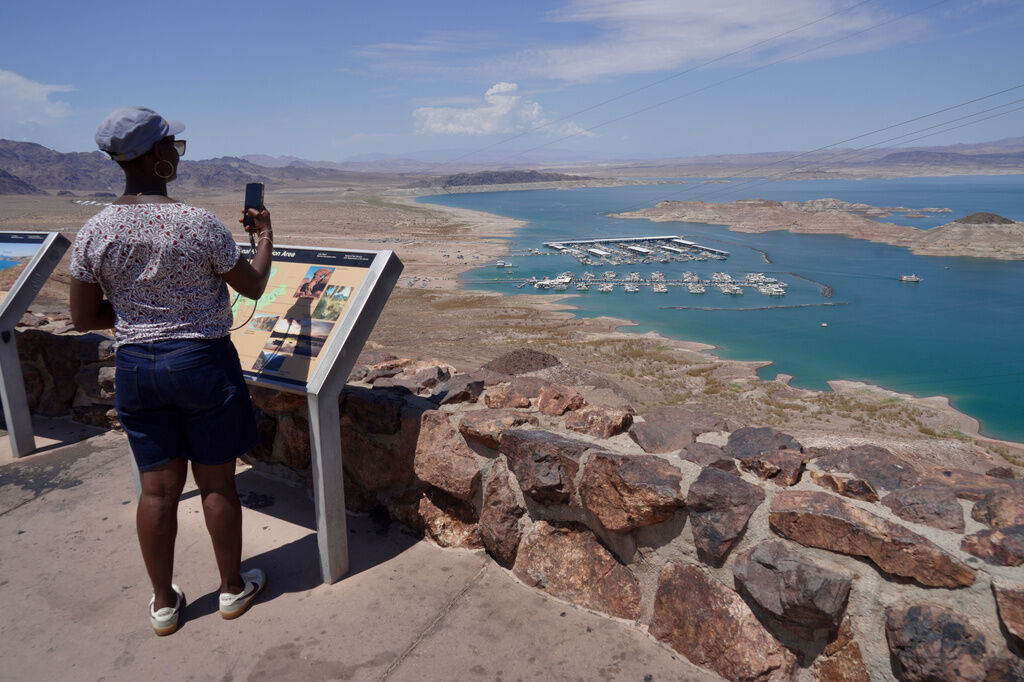
On Monday, the state of Nevada filed a lawsuit against the Trump administration and Interior Secretary Doug Burgum, seeking to block the Colorado River management plan. On Friday, Burgum released a “record of decision” that would reduce water allocations to...

Healthcare Freefall: Longer drives, fewer options for maternity care in Colorado
Thelma Grimes
thelma.grimes@coloradopolitics.com
Updated 20 hours ago
Editor’s Note: Colorado’s healthcare system is entering a period of accelerating instability — a “tsunami,” as multiple leaders describe it — driven by collapsing hospital finances, shrinking Medicaid reimbursements, disappearing services and a political fight over who is responsible for...
Polis requests federal disaster declaration for Colorado wildfires and floods
9News
9news@coloradopolitics.com
Updated 14 hours ago
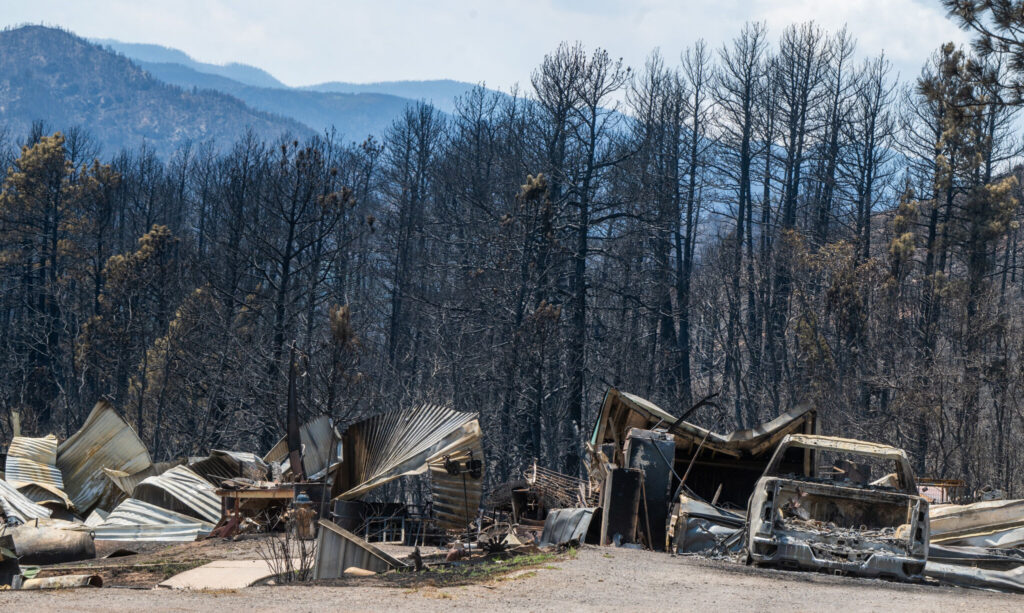
On Sunday, Gov. Jared Polis officially requested a Major Disaster Declaration from President Donald Trump and the Federal Emergency Management Agency to support recovery from two wildfires and the subsequent flooding and debris flows on both burn scars. Polis requested a declaration...
US strikes another boat in eastern Pacific, killing two, Pentagon says
The Associated Press
the-associated-press@coloradopolitics.com
Updated 21 hours ago
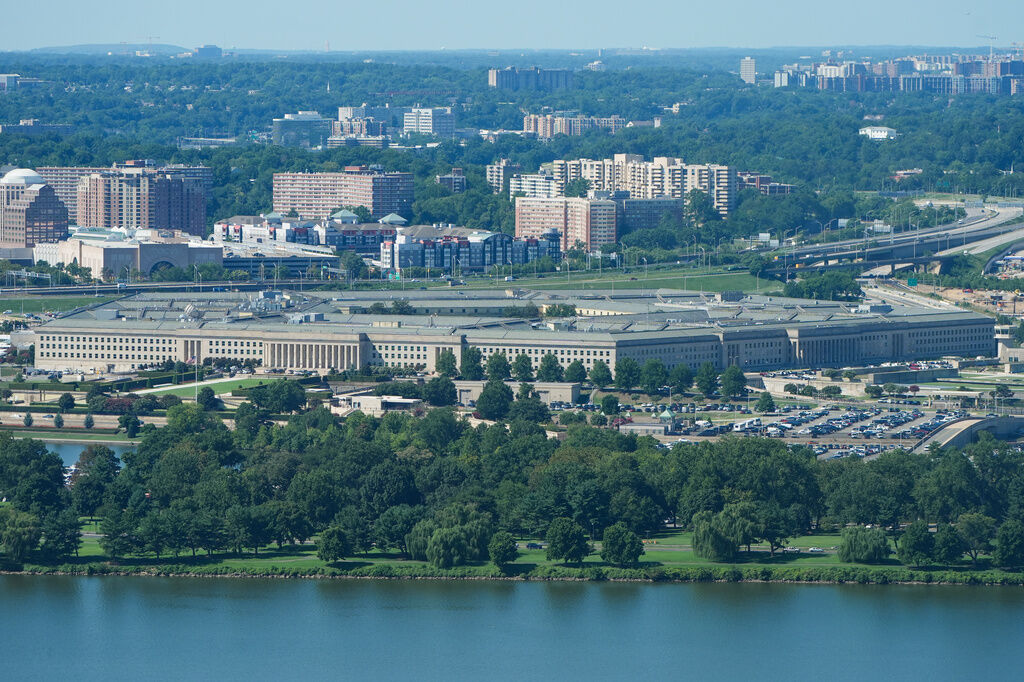
U.S. forces have struck another vessel in the eastern Pacific, killing two people the Pentagon says were trafficking drugs. The U.S. Southern Command announced the strike in a social media post early Monday. The death toll from the Trump administration’s...
PREV
PREVIOUS

Democrat Yadira Caraveo qualifies by petition for primary ballot in Colorado's new 8th CD
State Rep. Yadira Caraveo, a Thornton pediatrician, became the first Democrat on Tuesday to qualify for the party’s primary in Colorado’s newly created 8th Congressional District after election official determined she submitted more than enough signatures to make the ballot. The announcement came just hours before Caraveo was set to compete with Adams County Commissioner […]

Denver Health expands addiction medicine center with focus on youth, training
With millions of dollars in new funding and amid a spiraling overdose crisis, Denver Health announced that it’s expanding its addiction services with an eye toward youth and establishing an academy to offer trainings on behavioral health and substance use. Much of the fresh funding comes from a $1.5 million national grant, a $1.2 million […]