

Q&A with Rep. David Ortiz | Finding his way
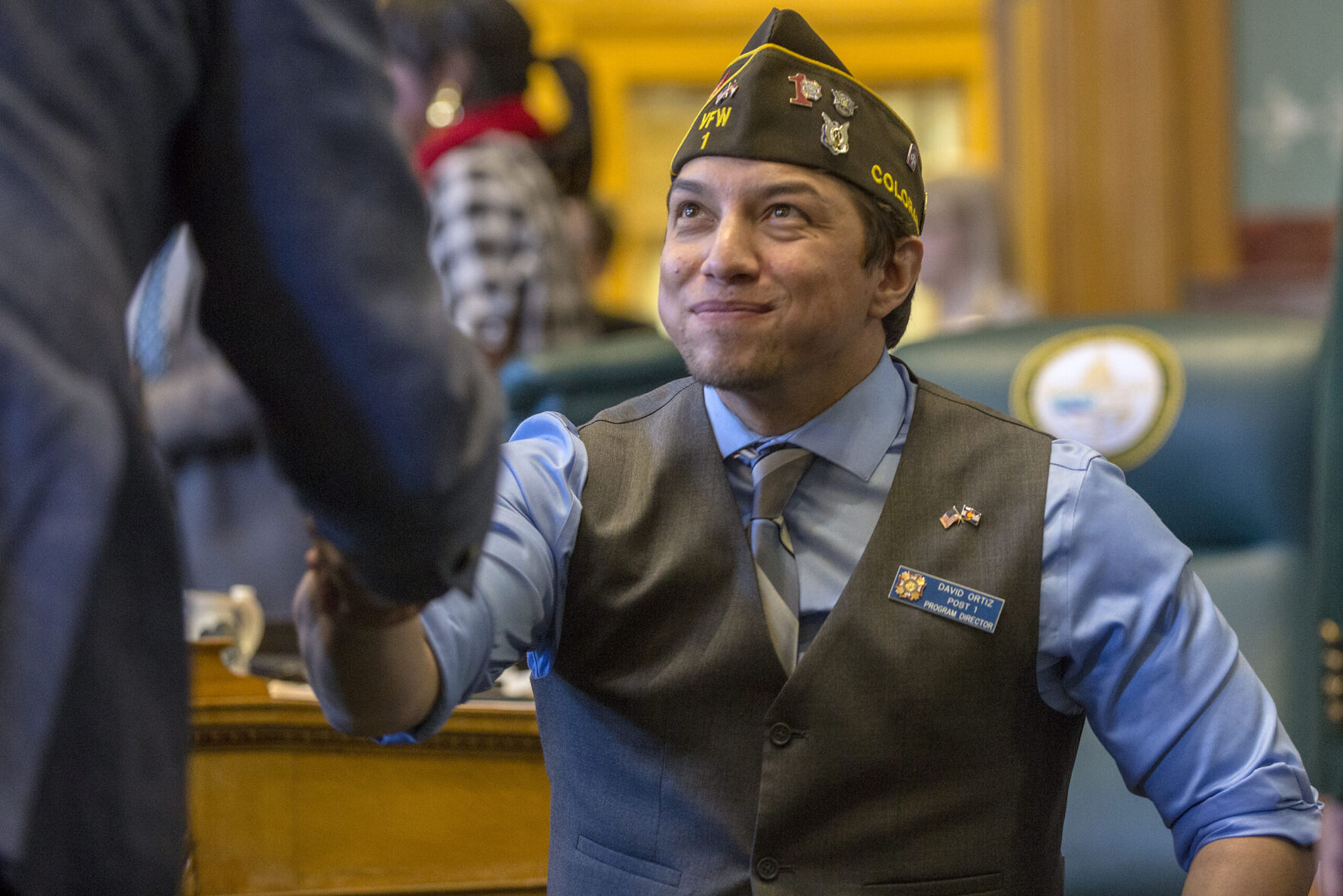
Rep. David Ortiz never imagined himself as a member of Colorado’s General Assembly, despite years of advocating for others.
Nearing the end of his first term in office, Ortiz spoke about how he got to the state Capitol and his unique story of success.
On June 21, 2012, while flying over the Khost province south of Baghran in Afghanistan, the helicopter crashed. He was paralyzed from the waist down in that accident.
Colorado Politics: What made you want to be a pilot?
Ortiz: My dad was in the Air Force as a pilot. He started off flying B52s, and then he got selected to fly B1s, so aviation’s always been in my family and always been in my blood. But I wanted to seek my own path. I went to college first on a scholarship, and then I worked for the mayor’s office in Houston and then worked worked for Catholic charities to help resettle evacuees from Hurricane Katrina, but I really wanted to serve my country in a more intense way. So, that’s why I looked at the Army. I looked at the Army because this is kind of a dig at my dad. I didn’t wanna fly “idiot circles at 30,000 feet.” (That’s a joke Army people tell about the Air Force). I wanted to be involved and close to the fight. So, I wanted to fly helicopters in the Army.
CP: You had mentioned, when you were chairing the committee of the whole (on March 24), that the first time you saw a wheelchair, it was very much “that isn’t for me.” Tell me about how that mindset had to change
Ortiz: You’re talking to somebody who was a five-minute mile (runner), not exaggerating. The last race that I ran was the Tillman run, which happens in April, on my base in Afghanistan. So, someone that was an avid runner and dancer, to then being confined to a bed. Their only way out is a wheelchair. It’s not just understanding what that life could look like because of ableism. I really didn’t have anyone in my family that lived that way. I never lived that way. I never went out of my way to get to know somebody that lived that way.
You think about it. Plenty of groups are dealing with this discrimination and dealing with their own systemic issues, but which one of the legislators in that chamber can say they couldn’t do their job just because of who they were? And until they made those renovations, I was the only one who could say that.
So that’s what I mean when I say ableism. That was internalized in me. If I thought this world was accessible as a leg walker, if I thought this world was made for people also that live with a disability as a leg walker, then I wouldn’t have come to that injury with so much dark negativity, wishing that I had died in that crash.
CP: How long did it take?
Ortiz: Emerging care was from June until August (2012), and then inpatient rehab was from August until January. And I had polytrauma associated with that. I had external fixators on my lower limbs all the way up until April of 2013. I had hardware, I was in active recovery for a very long time after I had that external hardware removed in April or May. I went to Craig Hospital for a reevaluation in June. So they accepted me and they fitted me for orthotics to be able to stand up by locking out at the knee and hips.
They put me in gait training, as well as supplemental training in October through Thanksgiving. And I fell in love with Colorado.
I had been here just once before for high altitude mountain training right before deployment in June or July 2011. I was a runner. I went to the [Manitou] incline and fell in love with it then, and knew I would come back but didn’t think it would be under those circumstances.
CP: What did you want to do next?
Ortiz: I got the Army to move me here on a permanent change of station. I started my medical retirement process in February of 2014. And I closed on my home, got a new vehicle with hand control.
These are the things that led to my freedom. Got my home renovated during the summer of 2014 so it could be accessible and was finally medically retired in May of 2015. It took that long for me to become independent, medically stable, and in a place where I could be medically retired.
Because of my experience advocating for myself and for others with other spinal cord injuries, the battalion commander, said “You’re really outgoing. You’re really policy savvy. You should get involved with the United Veterans Coalition in Colorado.” Under the UVC, I got to know the humble, but amazingly knowledgeable Bill Hanna (a former legislative liaison for the Department of Human Services and longtime lobbyist in Colorado).
UVC was his way of paying it forward. He always felt like he owed the country something and wanted to serve veterans. So, he was slumming it with us because we couldn’t really afford to pay him what he deserved to make, but he was still working for us anyway. If there were more people like Bill Hanna this world would be a much better place.
He saw something in me that I didn’t see in myself. He said, ‘You’re very charismatic and you’re very outgoing and you’re tenacious. I think you should think about doing this for a living, advocating for veterans.” I was thinking about going to law school at the time because I thought that was the way to do it.
But since being in Colorado, I knew advocacy was my path and the books could wait. Bill Hanna offered me a mentorship to work under him and learn directly from him, and he has forgotten more about the place than most people know in their entire life. I decided to hold off on school because this opportunity presented itself under Bill Hanna. I learned so much, but not enough, if that makes sense. For him to try and tame me, I’m sure was an experience for him.
One of the first debates we got into was with Sen. Lois Court around an income tax exemption for military retirement. We had a strategy going into the meeting. Bill said, “I want you to listen more than you talk. And just let me guide it a little bit, but listen more than you talk and take my lead when you’re going to engage.”
The entire plan went out the window when she made the comment that “I don’t think someone that’s only worked 20 years and is retired deserves [an exemption]. I don’t know if their retirement should be tax exempt.”
I proceeded to inform her quite passionately that those who are in 20 years were away from their family for eight to 10 of those 20 years. I started turning into like a debate back and forth. And I just remember Bill Hanna looking at me like, “This is not the plan.”
But that made me love and respect Sen. Court because she’s a straight shooter and very blunt.
So, Bill Hanna was my mentor. He’s the one that got me into this career path. And I am better for having known him and still knowing him.
He’s my Yoda. He’s so knowledgeable, wise and calm and peaceful.
CP: Who else do you look to as a mentor?
Ortiz: I would be remiss if I didn’t say Sen. (Brittany) Pettersen because she actually was the one that recruited me to run for office.
She was at a legislative mental health event that I was running for veterans specifically, but we had veteran and non-veteran leaders. She asked, “Have you ever thought about running for office?” I was 36 and said maybe later but not right now. I really enjoy what I’m doing. And like any amazing leader, when she knows she’s right, she doesn’t take “no” for an answer. I must have told her “no” five different times, but she would not give up.
We’ve got great leadership, and even though I don’t talk to these leaders every day, we’re really lucky to have Speaker (Alec) Garnett. I think he’s very even-keeled. He brings a sense of humor and some levity to it. Sometimes he brings a firm hand when he needs to, but he doesn’t depend on it, which I respect. We’ve got a majority leader who’s been through some really tough things in her life and really just overcame and emerged as a leader. I’m just lucky with who I get to be around as mentors.
CP: How hard was that first campaign in 2020?
Ortiz: I would say it was probably the third hardest thing I’ve done in my life. No. 1 is combat deployment. No. 2 was surviving and then rebuilding my life after being injured. And then No. 3 would be running for office because you’re always on, and you’re always thinking of ways to communicate with the constituents and with the voters.
I realized I need to be my genuine self and I feel rough around the edges. So, they were not really sure if they were gonna give this crusty, grizzled veteran a chance, who really didn’t have too much of a history or place in the Democratic Party. I was a PCP (precinct committee person) and did some background stuff, but as an advocate lobbyist, you have to be nonpartisan for the most part.
Campaigning during a time of COVID, in some ways, for me made things easier. My primary appointment was literally trying to outwalk me, [saying] that’s just the way it was.
But given that we had to live in this new reality around social media and video conferencing and videos, you have to understand that I was confined to my hospital bed from June of 2012 and really didn’t become free of hardware until I was just in my chair.
I had an entire year where I learned to use video conferencing and social media. So, I feel like my injury got me ready for what it was like to run a campaign during a pandemic. I had an amazing team, my campaign manager and a field director who started off as an intern for me, who recruited 15 individuals whose average age was 17 that made over 175,000 phone calls for my campaign. It was really just a dream team of community and people coming together that wanted to see me be successful.
CP: Where do you see your legislative career going? Do you think about doing something beyond being in the General Assembly?
Ortiz: I guess the short answer is I will serve as long as the people keep asking me to serve. I’m idealistic when it comes to the Constitution and the democratic republic that I raise my right hand for. But now that I get to serve this new way and as long as they let me, whether I have ambitions for higher office or not, my focus is right here in HD 38.
I think I’ve been through enough trauma and trials in my life to know you can make all the plans you want and life can have a different outcome for you. And you just have to make the most of it.
That’s the way I’ve learned to live my life is, and that makes it sound serious. I will always find joy where I’m at. I will make the most out of the situation I find myself in and find joy and try and serve others and help others, no matter where I’m at. Right now, the people of HD 388 see fit to have me here. And if they choose to keep me here, I’ll keep serving them.
CP: What’s something about you that most people don’t know? Hidden talents?
I love martial arts and I still do, even though I live life in a wheelchair. I love the feeling of flying, which is why I mono-ski, the closest I can get to feeling like I’m flying.
As far as hidden talents go, I’m still learning that about myself in a chair.
CP: Favorite music or a favorite musician?
Ortiz: Maná, a Spanish rock band. I have a very eclectic taste of music: Willie Nelson, Tim McGraw, George Strait, Billy Idol, the Clash, Twisted Sisters, AVN, Bad Bunny.
CP: What did you want to be when you were five?
Ortiz: I wanted to be a pilot, without hesitation.
CP: Family?
Ortiz: my mom and my dad are my heroes. They are the best example of human beings that I’ve been lucky enough not to choose. You’re born with your parents, you don’t get to choose your parents. My dad is one of nine, and my grandfather was a tenant farmer, a sharecropper who worked hard enough to own some of the land that he was a tenant farmer on.
My dad didn’t have a lot of money growing up and he knew one of the only ways he was going to college is if it was paid for. He was inspired by the Barnstormers, given that his family was farming. And so he applied for the Air Force Academy and was one of a handful of Latinos that were selected to go. He was a graduate of the class of 79.
My mother’s side of the family were farmers in Mexico growing corn and agave, and they migrated here when she was 15 years old. She’s such a hard worker and just loved with every ounce of her.
She is the example of what it is to be a Christian, but she’s tenacious, too. You threaten her own and she will rise up in a heartbeat to protect her own. She’s where I get a lot of my fire; my dad’s the more laid back one.
CP: if you could meet any person in history, who would it be?
Ortiz: Zhuge Liang, a Chinese advisor from the Three Kingdoms. He was a genius when it came to strategy. St. Augustine because he was just a regular guy doing stupid crap in college, pulling pranks and dating around, and just a normal human who had this massive conversion to the faith and became a saint.
And Aristotle, the father of Western philosophy and Western thought, because he described God as a self thinking thought. That annoyed me so bad [in college] because, of course, a philosopher would think, “God is a self thinking thought,” just like a mathematician will say, “God is the perfect math equation,” and an artist will say, “God is the perfect painting.”
I raised my hand, being annoyed by that, and my philosophy teacher asked what’s missing. And I thought about it for a second: love. He said that’s where St. Thomas Aquinas comes in. And that’s when I realized how foundational Aristotle was for so many theologians and philosophers.
Fast facts
Age: 39
Nickname: “Little Papi,” a reference to another David Ortiz, the Boston Red Sox player who is known as Big Papi.
The son of an Air Force pilot and Air Force Academy graduate, Ortiz calls himself as an “Air Force brat,” which meant he moved around a lot. He was born in Rapid City, South Dakota, but also spent time in Virginia, Texas, Louisiana, California, Arizona and North Dakota.
Family: Ortiz is the oldest of four, with one sister in Kansas City. An older brother, Michael, was his best friend when he was injured, and the person that Ortiz said helped him get his life together. “He’s my Samwise,” Ortiz said. “He carried me and helped me carry this burden.” Another brother who is 18 years younger than Ortiz, and who came to live with him for a semester “as punishment” because he was failing classes. His parents sent him to Ortiz to learn how to study and learn discipline. “A teen can be a pain in the butt,” Ortiz said.
Education: Joint degree in business administration and international studies from the University of St. Thomas in Houston.
Married to Kate since August, 2021.
Military experience: joined the Army in January 2008, initially trained as a warrant officer and then as a helicopter pilot.





Top officials in Arizona’s Maricopa County agree on how to oversee elections | OUT WEST ROUNDUP
The Associated Press
the-associated-press@coloradopolitics.com
Updated 4 days ago
ARIZONA Officials agree on election oversight PHOENIX — Election officials in Arizona’s most populous county reached an agreement a week before the state’s July 21 primary on how to jointly oversee the vote, ending a prolonged legal battle. Republican Maricopa...

Colorado Politics Calendar Aug. 3-9
Rachael Wright, Special to Colorado Politics
rachael.wright@coloradopolitics.com
Updated 4 days ago
CoPo’s weekly political calendar will help you find political and public-policy events throughout Colorado. It includes candidate and issue campaign events, public policy meetings, court hearings, state and local party conventions, assemblies, debates, rallies, parades, speaking engagements, traveling dignitary appearances,...

The primary political reform and precondition for all others | SONDERMANN
Eric Sondermann
eric-sondermann@coloradopolitics.com
Updated 4 days ago
In its current state, the American political system has no end of ailments. Far too many factors accelerate polarization and work against moderation and narrowing the differences. Media, and the way so many citizens limit themselves to agreeable, reinforcing sources,...
Susemihl wins surprise victory to replace Steve Durham as Colorado Springs state senator | A LOOK BACK
Rachael Wright, Special to Colorado Politics
rachael.wright@coloradopolitics.com
Updated 4 days ago
Forty-five years ago this week: In a closed session, the vacancy committee for Colorado’s Senate District 12 selected attorney Peter Susemihl to complete Sen. Steve Durham’s, R-Colorado Springs, term. Durham resigned his seat to become Region 8 Director of the...

10th Circuit partially revives lawsuit over 2020 Denver protest injuries
Michael Karlik
michael.karlik@coloradopolitics.com
Updated 2 days ago
The Colorado-based federal appeals court revived a man’s claims against Denver on Friday after concluding a trial judge resolved the case in the city’s favor without analyzing two of the three instances of alleged excessive force and other constitutional violations....

At conservative summit, Colorado Republican leaders concede Democrats’ election edge
Marissa Ventrelli
marissa.ventrelli@coloradopolitics.com
Updated 23 hours ago
Four Republican state lawmakers told attendees at a gathering of conservative leaders on Friday they doubt their party can win statewide races, noting that Colorado’s electorate has been shifting toward Democrats but adding they see an opening in several pockets....
Federal judges find Colorado immigration judge violated several orders
Michael Karlik
michael.karlik@coloradopolitics.com
Updated 16 hours ago
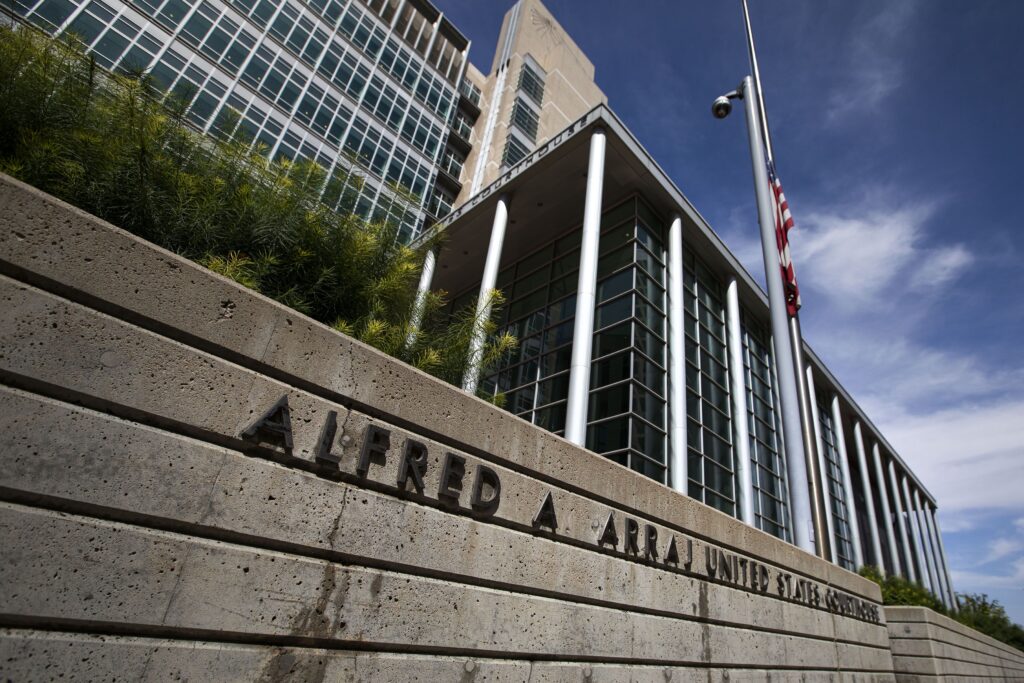
Multiple federal judges in Colorado have freed people from immigration custody after determining that one immigration judge violated their directives for properly conducting bond hearings. For nearly a year, Colorado’s U.S. District Court has faced a flood of habeas corpus petitions...
Q&A with Mike Pence | Former vice president says GOP’s populist turn from conservatism isn’t permanent
Ernest Luning
ernest.luning@coloradopolitics.com
Updated 20 hours ago
Former Vice President Mike Pence says he’s concerned that the Republican Party has taken a populist turn away from bedrock conservative principles during President Donald Trump’s second term, but he believes the party will return to its roots when Trump...

New federal plan sets short-term rules for Colorado River management
Marianne Goodland
marianne.goodland@coloradopolitics.com
Updated 2 days ago
Interior Department’s plan spares Colorado from mandatory cuts for now After years of stalled negotiations among the seven states that rely on the Colorado River, the federal government on Friday released its own plan for managing the drought-strained system. Calling...
Fauci’s diary details blooming outrage toward ‘far right,’ softness toward Biden and China
Hudson Crozier
hudson.crozier@washingtonexaminer.com
Updated 2 days ago
Dr. Anthony Fauci increasingly railed against “far right” critics of his approach to COVID-19 issues while describing strong support from the Biden White House in his pandemic-era diary, which was recently released by Congress. The former National Institute of Allergy...
PREV
PREVIOUS

Colorado panel advances reporting requirements for health care sharing ministries
A legislative effort to require reporting by health care sharing ministries in Colorado passed its first hurdle Friday, receiving approval from the House Health and Insurance Committee. Health care sharing ministries have surged in popularity in recent years, with supporters describing them as cheaper alternatives to insurance and opponents calling them scams. If enacted, House […]

Denver Health Foundation announces new executive director, board members
The Denver Health Foundation announced a new executive director Monday, as well as two new members of its board of directors. Crystal Potter Rivera, who joined the foundation in 2012, is its new leader, after her predecessor, Linda Ford, departed to “pursue part-time consulting work and ease into retirement,” according to a Denver Health news […]