

Colorado bill aims to ban talking on cellphones while driving, unless hands-free

A bill introduced to the Colorado legislature Friday seeks to ban adults from talking on cellphones while driving, except for when using a hands-free accessory like a Bluetooth headset.
Under current law, adult drivers are allowed to use cellphones for calls but cannot text or browse the internet. If passed, Senate Bill 175 would prohibit all hand-held cellphone use. Drivers under the age of 18 are already prohibited from all cellphone use, including hands-free.
“We’re trying to change the culture of distracted driving,” said bill sponsor Sen. Chris Hansen, D-Denver. “We have a huge number of accidents that are being caused by distracted driving. … People need to feel confident that they can be safe on the roads. This is about saving lives.”
Last year, 91% of Coloradans admitted to driving while distracted, according to a survey from the Colorado Department of Transportation. The survey found that 54% of drivers said they read text messages while driving and nearly 50% talk on cellphones without hands-free accessories – which would be prohibited under the proposed bill.
In 2020, there were 10,166 car crashes involving distracted drivers in Colorado, resulting in 1,476 injuries and 68 deaths, according to the department.
“When you reach for a phone or turn your attention away from the road, you aren’t just risking your own safety, you are risking the safety of everyone on the road with you,” said Sam Cole, the department’s traffic safety manager, when the data was released. “They are putting more than just their own lives at risk when they drive distracted.”
Using hand-held cellphones while driving is already banned in 24 states and Washington D.C., according to the National Conference of State Legislatures.
This is not the first time Colorado lawmakers have tried to ban talking on the phone while driving. In 2020, Hansen sponsored SB20-65, which is nearly identical to the new SB-175. Hansen’s predecessor Sen. Lois Court, D-Denver, also pushed similar bills in 2018 and 2019.
The most recent bill in 2020 passed the state Senate but was rejected in a House committee due to concerns that it would result in disproportionate policing and racial profiling. Hansen said he updated the bill this year to include demographic reporting and a requirement that police cannot issue the citation unless they explicitly see a driver using their phone.
“We’ve done a lot of studying of other states that have primary infraction rules,” Hansen said. “We think we can prove both before we pass the bill and after it goes into effect that it’s not leading to a problem of racial profiling.”
However, Hansen’s changes do not address all concerns. Eight Republican senators voted against SB20-65 in 2020, arguing that it would over regulate drivers and calling it an example of “nanny state” legislation.
Sen. Jim Smallwood, R-Parker, voted against SB20-65 in 2020 and said he doubts he will support SB-175 this year.
“I really can’t see myself supporting another effort to have the government dictating good judgement to our otherwise law-abiding and safe driving citizens,” Smallwood said. “I find these attempts to be virtually unenforceable and a new, unnecessary burden on law enforcement who should really be spending their efforts to curb the violent crime wave we are seeing in Colorado.”
Under the current proposal, a driver caught using their cellphone would get a $150 fine and two license suspension points for the first offense. If a driver gets another citation within 24 months, they would receive a $250 fine and three points for the second offense and a $500 fine and four points for all subsequent offenses.
Drivers exempt from the bill would include first responders, utility workers, commercial truckers, drivers using their cellphones to report emergencies and drivers who are lawfully parked.



10th Circuit rejects ‘penalty’ for children of naturalized citizens seeking visas
Michael Karlik
michael.karlik@coloradopolitics.com
Updated 13 hours ago
The Denver-based federal appeals court joined three of its peers earlier this month and determined the child of a newly naturalized U.S. citizen is not moved to a longer visa line as a result of his parent gaining citizenship, and...
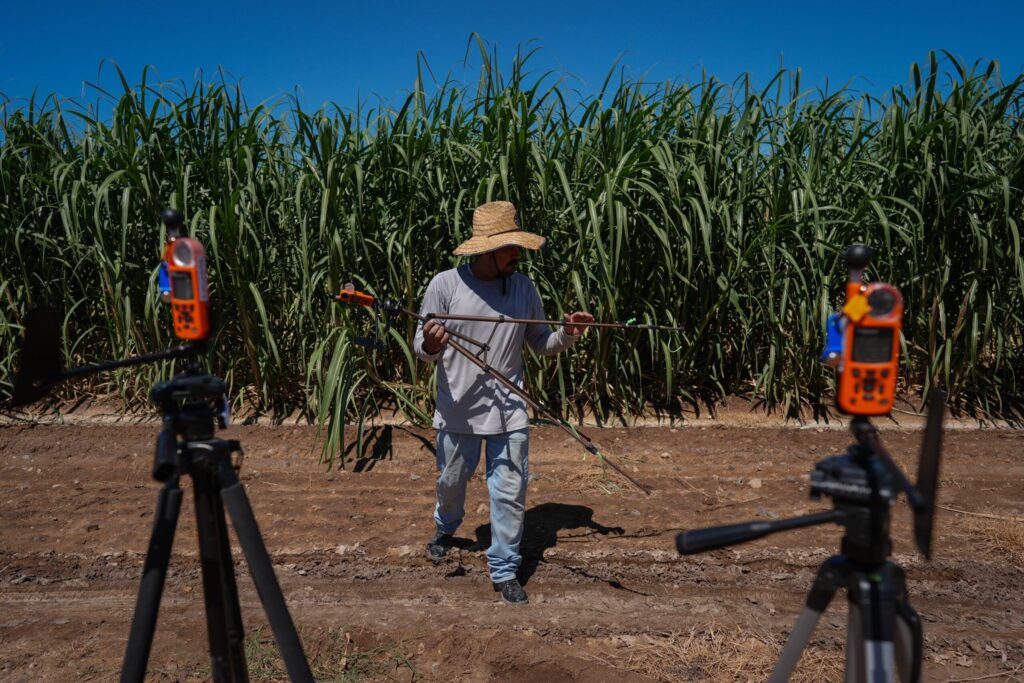
Colorado committee votes to rename César Chávez Day to Farm Workers Day
Marianne Goodland
marianne.goodland@coloradopolitics.com
Updated 14 hours ago
A Colorado House committee has voted to rename the March 31 state holiday from César Chávez Day to Farm Workers Day, following a national shift prompted by sexual abuse allegations against Chávez. House Bill 1339 was introduced on Friday and...
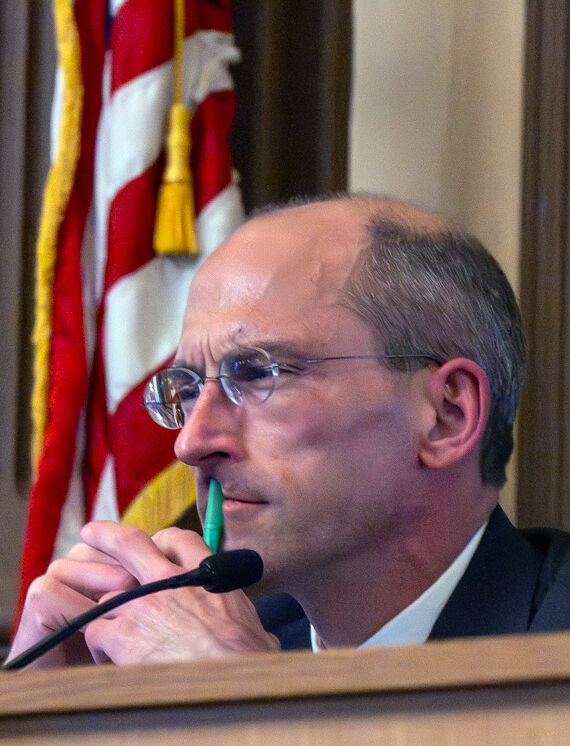
Colorado Sen. Mike Weissman calls for cold water on heated hate speech
Marianne Goodland
marianne.goodland@coloradopolitics.com
Updated 16 hours ago
Likening the recent record-setting warm temperatures to hot political rhetoric, Colorado Sen. Mike Weissman, D-Aurora, pleaded for an end to death threats and other hate speech directed at lawmakers of both parties. “The increasingly tragic reality of our politics, however, like...

Ethics panel dismisses complaint against Colorado agency chief Dan Gibbs
Marianne Goodland
marianne.goodland@coloradopolitics.com
Updated 13 hours ago
A state ethics panel has dismissed a complaint against Dan Gibbs, executive director of the Colorado Department of Natural Resources. The complaint, filed in December 2021 by the Republican-affiliated group Defend Colorado, alleged Gibbs awarded the think tank Keystone Policy...
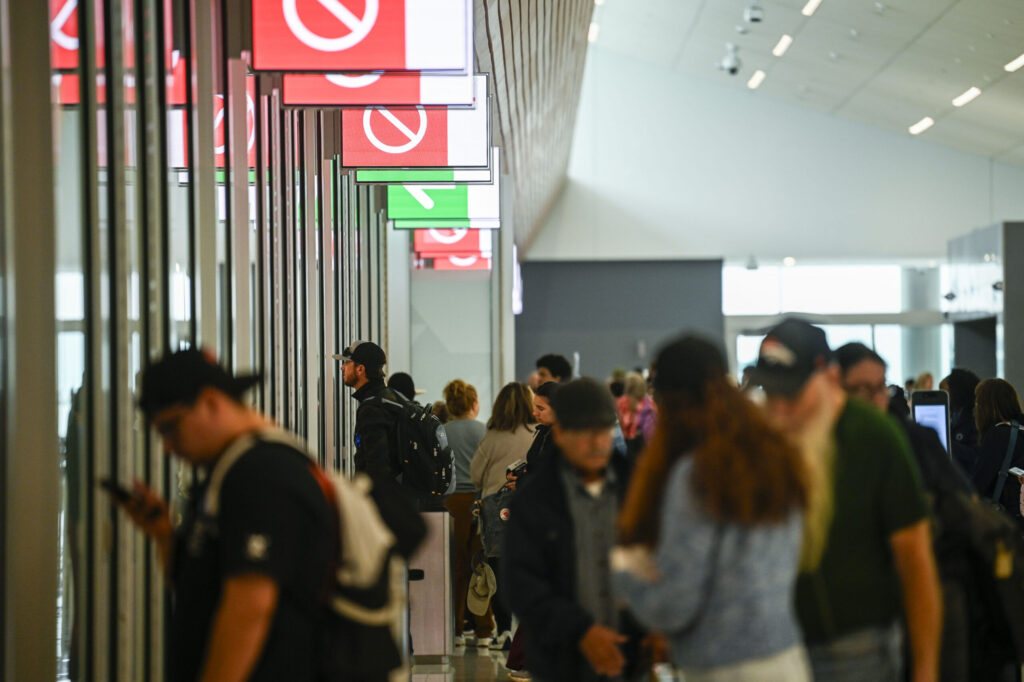
Denver airport hasn’t had notice ICE agents will assist TSA yet. Wait times are short, though
Bernadette Berdychowski
bernadette.berdychowski@denvergazette.com
Updated 16 hours ago
As President Donald Trump deployed immigration agents to help U.S. airports manage hours‑long security lines during the partial government shutdown, Denver International Airport remained relatively calm on Monday. At the nation’s third‑busiest airport, TSA PreCheck lanes remained open to start...
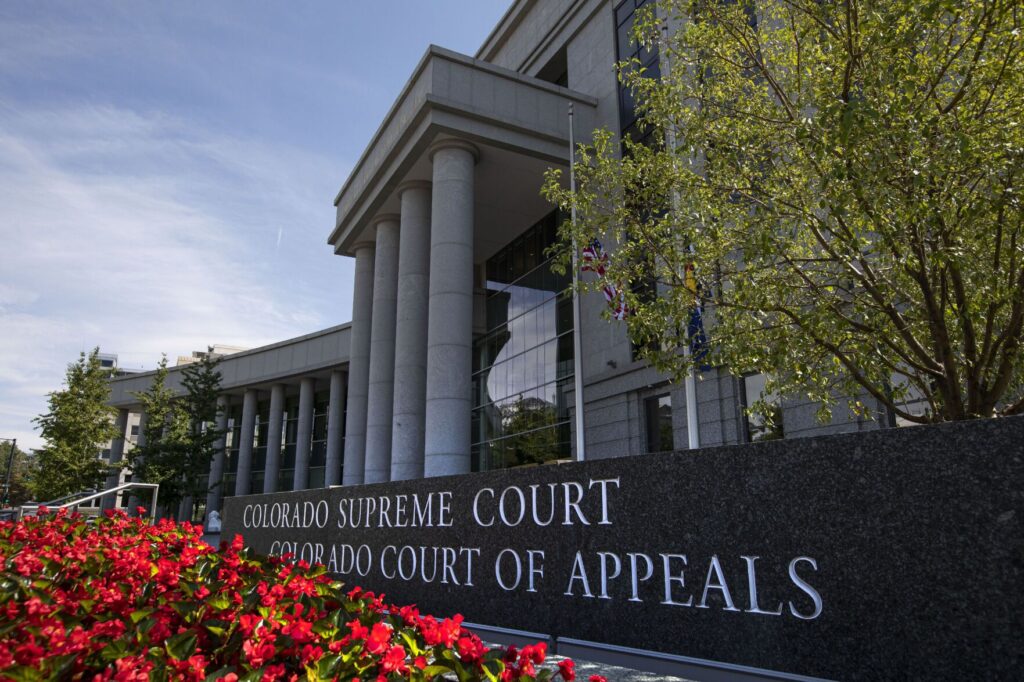
Appeals court recognizes longer window to sue insurers for withholding policy details
Michael Karlik
michael.karlik@coloradopolitics.com
Updated 9 hours ago
Colorado’s second-highest court split with its own prior decision earlier this month and concluded injured motorists have two years, not one, to sue insurance companies for withholding relevant information about an at-fault driver’s policy. In 2019, Colorado lawmakers enacted a measure to...
Trump open to $5 billion ICE funding cut if SAVE Act package passes
Zach LaChance, Washington Examiner
zach.lachance.washington.examiner@gazetteedit.wpenginepowered.com
Updated 20 hours ago
President Donald Trump signaled he is open to a $5 billion funding cut for U.S. Immigration and Customs Enforcement if the Senate passes the Save America Act, along with other amendments. “I don’t think we should make any deal with...

Appeals court decides free speech cases, error-prone judge reversed again | COURT CRAWL
Michael Karlik
michael.karlik@coloradopolitics.com
Updated 20 hours ago
Welcome to Court Crawl, Colorado Politics’ roundup of news from the third branch of government. The state’s Court of Appeals decided multiple cases implicating free speech rights, plus Colorado’s most error-prone judge was reversed on appeal yet again. Heard on...
It’s time to let unaffiliated voters caucus | Vince Bzdek
Vince Bzdek
vince.bzdek@gazette.com
Updated 21 hours ago
There’s no getting around it: Colorado’s 3,000 county caucuses, which just wrapped up recently, left half the electorate out in the cold. Since unaffiliated voters now make up 51% of all Colorado voters, a majority of Colorado electors are barred...

With new medical school set to open, Feinstein will step down as UNC president
Hap Fry, Special to The Gazette
hap-fry@gazette.com
Updated 13 hours ago
GREELEY • Dr. Andrew “Andy” Feinstein, the charismatic president of the University of Northern Colorado, has announced that he will step down from his leadership role just on the cusp of what is perhaps his signature accomplishment being realized. He’ll...
PREV
PREVIOUS

Colorado's lawmakers propose to spend $36.4 billion, which funds 3% raise for government workers
Colorado’s lawmakers are proposing to spend $36.4 billion – about $3.5 billion more compared to current allocations – to fund state operations in the next fiscal year. Under the proposal, state employees will receive a 3% across the board raise, but no merit increases. Counting general fund money alone, the plan calls for major increases […]
Fourth COVID dose for older Coloradans could be recommended as early as this week, state says
Another COVID-19 booster dose could be recommended for older Coloradans as soon as Tuesday, a Colorado health official said Monday afternoon, though federal funding worries may disrupt further distribution plans. Both Pfizer and Moderna, the makers of two-dose initial vaccines with a third booster, have submitted documents to federal health regulators to receive approval for […]