

CDC study projects 37.8% of Coloradans have contracted COVID, among lowest levels in US
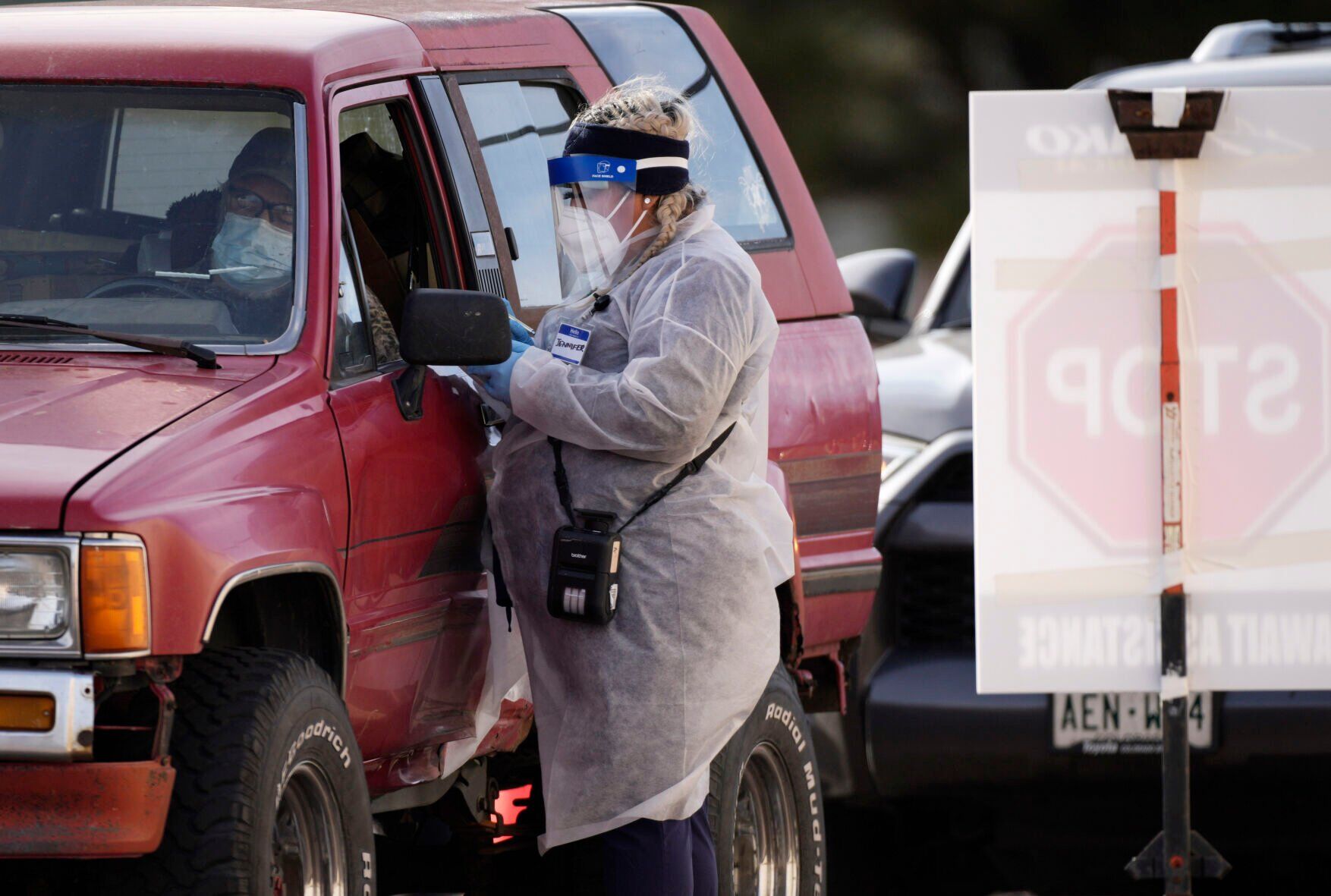
Nearly 38% of Coloradans are estimated to have been infected with the novel coronavirus through January, a Centers for Disease Control and Prevention study found, putting the Centennial State ahead of much of the rest of the nation.
Only eight states, plus Puerto Rico, are estimated to have had fewer residents infected with the virus, according to CDC data. The projections indicate 2.09 million Coloradans have been infected, and roughly 10% of those cases came during the first month of the omicron wave that began in mid-December.
A year ago, the CDC estimated that nearly 686,000 Coloradans had been infected. The 12 months that followed would see the wide availability of vaccine but also the emergence of two infectious variants that drove up case rates for the latter half of 2021.
The CDC’s study, which it updates regularly, relies on results from “residual serum” from other, non-COVID-19 tests. That residue, collected from two private labs, is tested for antibodies for the virus. The results do not include people who have been vaccinated against the virus.
The study’s updated results come as Colorado – and much of the United States – emerges from the omicron wave and enters into what experts hope will be a quiet spring for a pandemic entering its third year. Cases here have dropped significantly since the omicron wave peaked in mid-January: The state has reported fewer cases on average over the past seven days than it has at any point since July. Hospitalizations have plunged by roughly 1,300 in six weeks; there have not been this few Coloradans hospitalized with COVID-19 since the first week of August.
The CDC’s projections reflect several hundred thousand more infections than what’s reported by the state Department of Public Health and Environment. As of Thursday afternoon, the state reports that just over 1.3 million cases have been reported here, some of which are re-infections.
Overall, the CDC estimates that 43.3% of the United States has contracted the virus, putting Colorado more than 5 percentage points ahead of the national average and well into the top 10. The state similarly has had one of the lowest death rates in the nation, though more than 12,500 Coloradans have died due to COVID-19 since the pandemic began almost exactly two years ago.
“We applaud Coloradans who have gone above and beyond in the past two years to slow disease transmission by getting vaccinated and staying up to date on all recommended COVID-19 vaccinations, staying home when sick and following other public health guidance like wearing masks and avoiding large crowds,” a spokeswoman for the state health department said in an email this week. “With their commitment, according to the CDC, compared to other states, Colorado ranks 10th lowest for deaths per 100,000 over the course of the pandemic.”
Jon Samet, the dean of the Colorado School of Public Health, said Colorado has done better than average. Though the state has had moments where it was among the worst in the nation for case rates, “everybody shared that status across time.”
He attributed Colorado’s success – relative to other parts of the nation – to two things.
“One is we’ve had some parts of the state that constitute large proportions of the population that have been quite adherent with vaccination and non-pharmaceutical interventions,” Samet said, referring to things like masking and social distancing. “And I think the state and counties have been willing – for the most part – to implement measures as they’ve been needed. So I think it’s a combination of doing what public health needed to do, and also people in our state – for the most part, certainly not all and it’s (patchy) – but being adherent enough to the recommendations in public health orders.”
Nearly 73% of Coloradans over the age of 4 are fully vaccinated, according to state data, and 81.3% have been inoculated with at least one dose. Samet and a team of experts estimated last month that 90% of Colorado is likely immune to omicron, thanks to infection and vaccination.


10th Circuit grants immunity to officers for fatal Manitou Springs shooting
Michael Karlik
michael.karlik@coloradopolitics.com
Updated 9 hours ago
The Denver-based federal appeals court ruled on Wednesday that responding officers from Manitou Springs and El Paso County cannot be held constitutionally liable for shooting and killing a man after a 20-minute standoff. Wilford Deweese allegedly pulled out a gun...

10th Circuit rejects invitation for full-court review of tax-avoidance case
Michael Karlik
michael.karlik@coloradopolitics.com
Updated 6 hours ago
The Denver-based federal appeals court declined to reconsider the standards for holding entities liable for their tax-avoidance schemes, with a majority of judges voting against full-court review on Monday. In April, a three-judge panel of the U.S. Court of Appeals...

GOP gubernatorial candidate Victor Marx pushes aggressive water-storage expansion at Colorado Water Congress
Marianne Goodland
marianne.goodland@coloradopolitics.com
Updated 10 hours ago
Victor Marx, the Republican nominee for governor, took the spotlight Wednesday during the opening day of the Colorado Water Congress, laying out how he says the state should approach its water future. Marx told the standing-room-only audience in Steamboat Springs...

Colorado AG sues GEO Group over noncompliance with tuberculosis investigation
Kyla Pearce
kyla.pearce@gazette.com
Updated 8 hours ago
The Colorado Attorney General’s Office on Wednesday filed a lawsuit against GEO Group, which operates the Aurora ICE Processing Center, alleging the company failed to comply with a state tuberculosis investigation. Weiser’s lawsuit demands that GEO provide “critical information” needed...

U.S. Rep. Lauren Boebert stresses storage, forest health and Upper Basin rights at Colorado Water Congress
Marianne Goodland
marianne.goodland@coloradopolitics.com
Updated 9 hours ago
Republican U.S. Rep. Lauren Boebert used her brief Wednesday appearance at Colorado Water Congress to tout her record on delivering water projects for the state and her district. Boebert, who is running for her second term representing Colorado’s 4th Congressional...

Trump has a 96% endorsement success rate. Here are the Republicans he’s backed who have lost
Mabinty Quarshie
mabinty-quarshie@coloradopolitics.com
Updated 12 hours ago
President Donald Trump’s 2026 primary endorsement success rate remains staggeringly high, but the president has seen a growing number of losses stack up in recent weeks. According to Ballotpedia, Trump has endorsed in 313 U.S. Senate, U.S. House, and state...

Colorado judge blasts state forensics lab in dismissing child sex case
Jenny Deam
jenny.deam@gazette.com
Updated 7 hours ago
In a potentially widely consequential action, a Weld County district judge dismissed a child sexual assault case, citing the ongoing scandal at the Colorado Bureau of Investigation’s forensic lab that “has left a dark mark on the history of Colorado...

Colorado officials urge stronger water safety after 8 drownings and multiple Front Range rescues
Elizabeth Pond
elizabeth.pond@denvergazette.com
Updated 6 hours ago
At least eight people have drowned in Front Range waters since mid-March, including two at Eleven Mile Reservoir, three at Cherry Creek Reservoir, one at Rockbridge Lake and two at Lake Pueblo State Park. In the wake of these deaths,...

Vehicle registration crackdown across Front Range starts next week
Nick Smith
nick-smith@coloradopolitics.com
Updated 14 hours ago
Colorado drivers with expired tags or unregistered vehicles still have time to get registered before a scheduled enforcement crackdown starts next week. According to an announcement from the Colorado Springs Police Department, a multi-agency enforcement effort will happen across the...

Aurora grapples with affordable housing needs, deficits
Kyla Pearce
kyla.pearce@gazette.com
Updated 14 hours ago
Aurora is grappling with affordable housing needs as demand for project funding increases and the state cuts grant money. Currently, the city needs about 12,000 affordable housing units, Martin Petrov at Aurora Housing Authority told members of the Housing, Neighborhood...
PREV
PREVIOUS

Senate panel advances remedy for immigration consequences of guilty pleas
A Senate panel unanimously advanced legislation Thursday that, if enacted, would allow immigrants who plead guilty to certain crimes a way to remedy resulting immigration consequences. Senate Bill 103 would let criminal defendants challenge their guilty pleas for municipal offenses and class 1 or 2 misdemeanors if they had not been advised of the immigration […]

Republican Tina Peters hit with contempt of court citation in Mesa County
Mesa County Clerk Tina Peters was ordered on Wednesday to appear later this month before a Mesa County District Court judge on a contempt of court citation alleging that she lied to another judge about videotaping a court hearing. Peters, a Republican candidate for Colorado secretary of state, is also facing separate misdemeanor obstruction charges […]