

Lawmakers give bill allowing hospital visits another chance after heartbreaking testimony from families affected by COVID
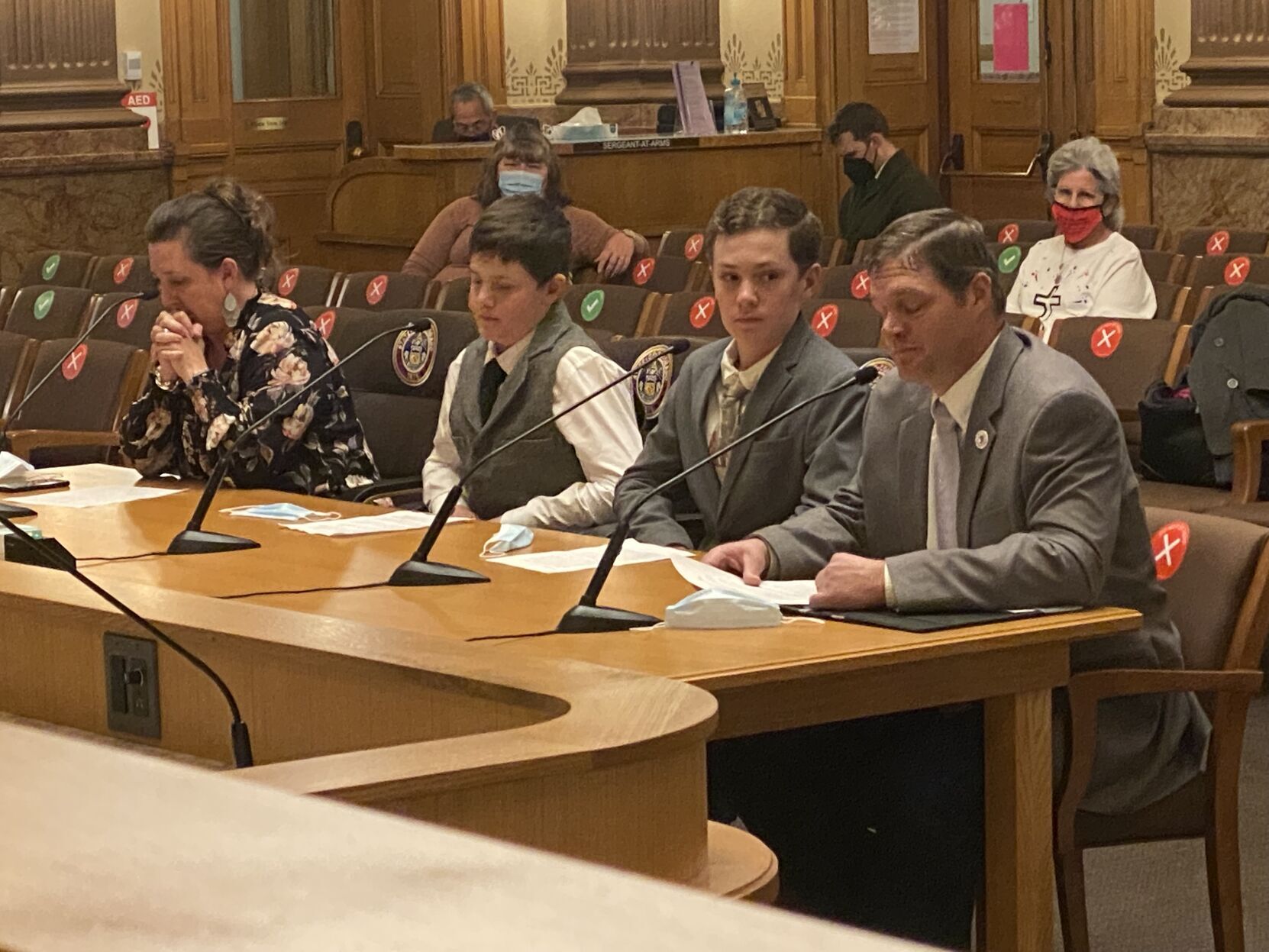
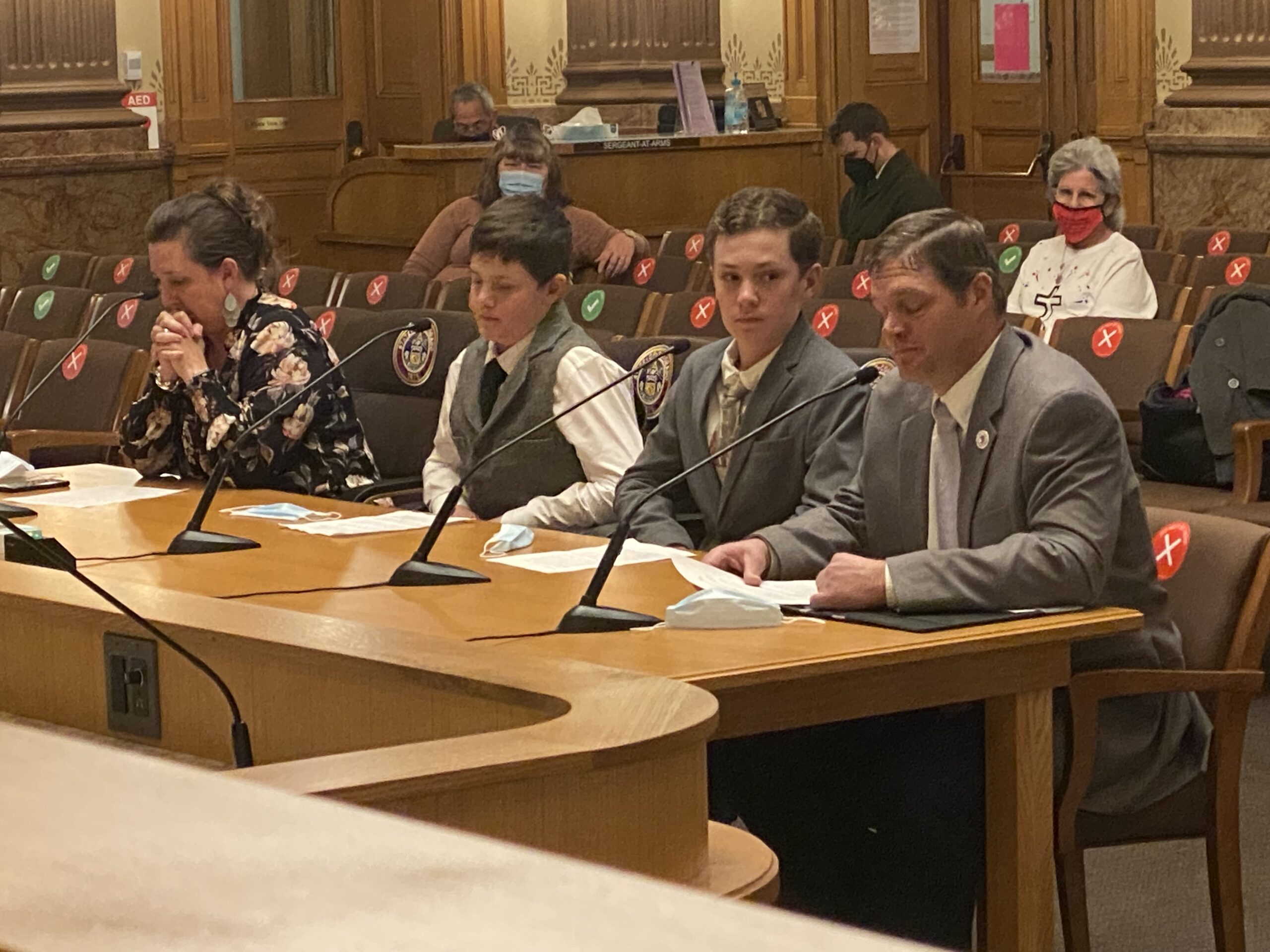
Richard Gillham, a resident of Peetz in northern Logan County, was a farmer all his life. Rim Ranch, which his family owns, is one of Colorado’s Centennial farms, a designation awarded to farms that have been in the same family for at least 100 years.
He loved his wife of 48 years, Nita, and adored his sons, Roy and Daniel, their wives, and his five grandsons.
On Tuesday, members of his family pleaded with legislators at the state Capitol to pass Senate Bill 53, which seeks allow a person admitted to a hospital or nursing facility at least one visitor.
They told a heartbreaking story. Richard, the Gillham patriarch, died after complications of COVID-19 in a hospital bed in January last year without a family member by his side.
It’s a scene that played over and over again across the country as the world grappled with a shape-shifting virus that took the lives of nearly a million Americans. The tenacity and pernicious of COVID-19 had forced hospitals, health care facilities and senior living homes to greatly limit, and, in many instances, eliminate the ability of family members to visit and hold their loved ones for the last time. Indeed, the virus stole away the rituals that, for thousands of years, allowed human beings to grapple with sickness and process the pain of death.
Listen to the testimonies here
Richard, fearing that he would be separated from his family and not see them in person again, had delayed going to the hospital for two weeks after he got sick with COVID, according to his widow, Nita.
“As we rode down over the hill and looked at our pastures, he said, ‘I don’t think I will ever see this again,'” Nita said. Two days later, he was moved to a hospital in Greeley because he had to be intubated. Nita never saw him in person again. This was the beginning of the horror and nightmare, Nita said. She wasn’t given the chance to talk with his doctors or to make decisions, she said. He died on Jan. 30, 2021 – 19 days after going to the hospital.
Daniel Gillham, one of Richard’s sons, said his dad was emaciated and malnourished the last time he saw him.
“I wouldn’t have recognized him on the street,” he said.
Sen. Jerry Sonnenberg, R-Sterling, the bill’s sponsor, argued that it’s not only viruses that kill.
“People have died of broken hearts,” he told members of the Senate State, Veterans and Military Affairs Committee.
The bill intends to address what Richard’s grandson, Matt Gillham, 11, called “solitary confinement”: keeping family away from loved ones who face depression and isolation because of facility policies that have barred visitors during the pandemic.
It requires health care facilities to have clear visitation policies, with restrictions that could limit visitors to reduce the heightened risk of transmitting a disease during a health emergency, such as the COVID-19 pandemic. But the bill also says a facility cannot block visitors strictly because of that risk. Under the proposal, facilities would be allowed to require testing, masking and a signed waiver on the risks, and deny visitors who show symptoms.
In a hearing that left many in tears, the Senate State, Veterans and Military Affairs Committee heard from witnesses who testified on how their loved ones died without family to hold their hand and comfort them in their final moments.
That testimony weighed heavily on committee members, including chair Sen. Julie Gonzales, D-Denver, whose voice cracked with emotion, listened and talked to witnesses. Gonzales’ family lost three members a year ago to the virus; all had funerals in the same week.
When someone in her family goes to the hospital, the family goes along, taking shifts, she said. But not for COVID, she said.
“It’s what we do. We were robbed of that,” she said.
SB 53 is the third attempt to allow family visitation at health care facilities during the pandemic. The Gillhams also testified in a hearing on the 2021 version, which ran into trouble over how the state policy would sync up with Medicaid and Medicare requirements.
After Richard died, and while they were waiting for the mortician, Nita spoke to one of the nurses, who told her his own story of working with COVID patients and the burnout he faced.
“This could be alleviated by having family there,” Nita told the committee.
The only testimony against the bill came from the Colorado Hospital Association’s Josh Ewing, who said the stories the committee would hear are incredibly tragic.
He said health care facilities take the welfare of patients, residents and their families very seriously, and they continue to do everything in their power to protect everyone who walks through their door, including frontline personnel who, at great risk to themselves, never wavered in caring for community members throughout the COVID 19 pandemic.
Ewing acknowledged that restricting visitation is hard on patients, families and the health care staff, and that those restrictions should be avoided if possible. He said facility staff have found creative ways to maintain connections through phone calls, video chats, outdoor meetups and even car parades.
But visitation is not an absolute right, Ewing told the committee. He said multiple COVID outbreaks throughout the pandemic have led to clinical decisions to restrict visitation, and some of that policy comes from the federal government.
He said “visitation policies must be rooted in the latest science” and best practices in infection control to ensure the safety of patients, visitors and health care workers. SB 53, he argued, lacked the flexibility that facilities would need in order to respond to “rapidly evolving public health scenarios.”
In response, Sonnenberg noted the bill’s language takes into account the guidelines around Medicare and Medicaid restrictions, and that he added amendments suggested for the 2021 bill from opponents.
SB 53 says a health care facility shall not impose restrictions or limitations that are more restrictive than the current guidelines on visitation issued by the federal Centers for Medicare and Medicaid Services. Sonnenberg also said that, if that language is not enough to satisfy critics, he would amend it.
A representative of the state Department of Public Health and Environment, Elaine McManus, said the bill does not appear to conflict with federal guidelines.
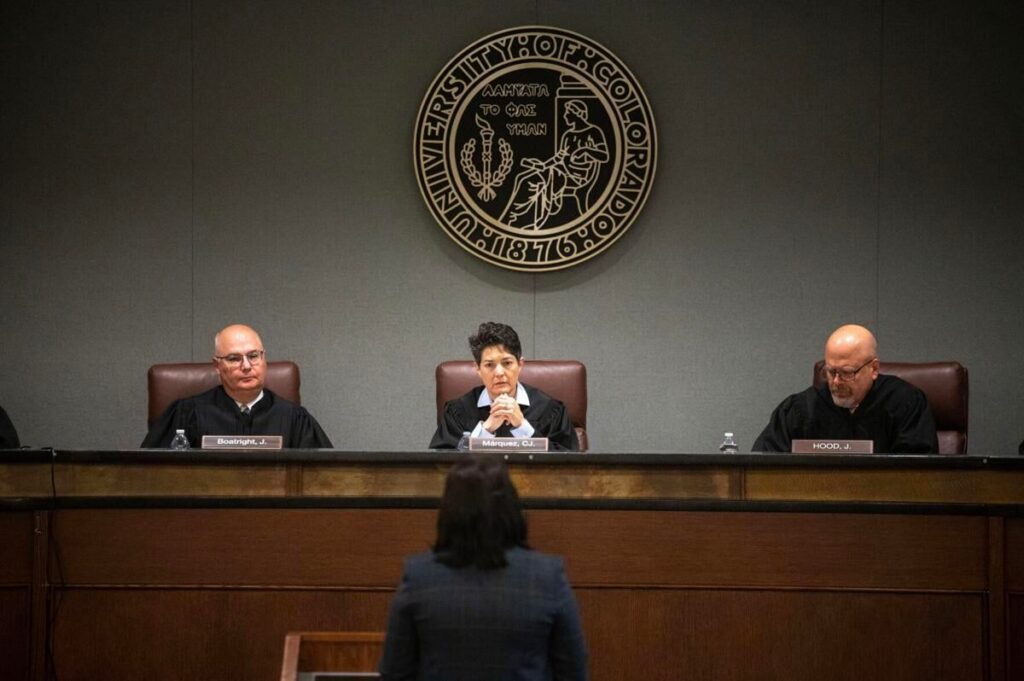
But it was the testimony from those who have lost loved ones that produced the strongest reactions in the Old Supreme Court chambers where the hearing took place.
Steven Reiter’s wife, Elizabeth, died at the CU Hospital at Anschutz after being admitted for double pneumonia and a blood infection in 2020. He was not allowed to see her, he told the committee.
“Had we been allowed one screened visitor per day with no time limits, my boys would still have their mother,” he said. Reiter now runs the Never Alone Project, which focuses on mobilizing efforts to combat the isolation that resulted from the pandemic.
Dr. Jeff Leininger, a family medicine specialist in Denver, testified in favor of the bill, too. Overly restrictive visitation policies hurt families, he said.
Medical research shows the loss of emotional and physical connection with loved ones has devastating effects on mental and physical health, he told the committee.
“For years, long before COVID, hospitals have relied on patient and family-centered care because of its proven benefits. Regrettably, those benefits were roughly cast [aside] during the COVID-19 pandemic,” he said.
Leininger recounted the stories of two patients. One patient, Larry (not his real name), previously had cancer, which robbed him of his ability to communicate. His wife, Sue (not her real name), helped him communicate, even after he contracted COVID and needed hospitalization. He left one hospital against medical advice because the facility would not let Sue be at his side to help him.
At the second hospital, she was at his side until he went into the intensive care unit, after which Sue was denied the opportunity to physically visit with Larry, and watched him take his last breath on an iPad, according to Leininger.
Another patient, Kevin, spent six weeks alone in the hospital with COVID, the doctor said, adding his family was finally allowed to see him the day he died.
“Please consider the plight of these patients and their loved ones,” Leininger asked the committee. “As a physician, I ask you to support the health and wellbeing of my patients and all Coloradans” by supporting SB 53.
The testimony was among the most heartbreaking he has ever heard, said Sen. Cleave Simpson, R-Alamosa, who noted he’s been in hearings surrounding child abuse.
Assigning a Republican-sponsored bill to the Senate State Affairs committee usually has just one outcome: a vote to kill it. Sonnenberg and some of the witnesses said they knew this was likely.
But Gonzales, at the end of the two-hour hearing, said she was not prepared to take action on it, her voice often breaking with emotion. She told witnesses she hopes they could find some measure of comfort and healing through this process of sharing the stories of their loved ones.
She then announced she would postpone action on the bill, and pledged to ask the questions raised by the witnesses. That decision saved the bill from the chopping block – for now at least.
Sonnenberg, his voice also breaking, said SB 53 is one of the most important bills he’s carried in his 16 years in the legislature.
“Look how many people it’s affected,” he said. To Gonzales, Sonnenberg pleaded. “Let’s go to the [Senate] President and put your name on the bill. Let’s you and me fix this.”
Heartbreaking testimony from families affected by COVID saves bill allowing hospital visits


Grand Canyon flooding threatens economy that’s still recovering from a fire | OUT WEST ROUNDUP
Ernest Luning
ernest.luning@coloradopolitics.com
Updated 3 days ago
ARIZONA Flooding slams park’s economy Deadly flooding at the Grand Canyon is damaging the area’s economy, with a washed-out pipeline severing the South Rim’s water supply and shutting down lodging at the popular tourist vista for an indefinite period. The...

Immigration reporting measure fuels debate over Colorado’s role with ICE
Marissa Ventrelli
marissa.ventrelli@coloradopolitics.com
Updated 16 minutes ago
A coalition of advocacy groups and several district attorneys rallied outside the Colorado Capitol on Thursday to oppose a ballot measure that, if approved by voters in November, would require state and local law enforcement to cooperate with federal immigration...

Colorado Politics Calendar Sept. 14-20
Rachael Wright, Special to Colorado Politics
rachael.wright@coloradopolitics.com
Updated 4 days ago
CoPo’s weekly political calendar will help you find political and public-policy events throughout Colorado. It includes candidate and issue campaign events, public policy meetings, court hearings, state and local party conventions, assemblies, debates, rallies, parades, speaking engagements, traveling dignitary appearances,...
The African roots of three Colorado leaders | SONDERMANN
Eric Sondermann
eric-sondermann@coloradopolitics.com
Updated 3 days ago
Colorado’s political transformation is measured in many ways. A once reliably red state (with asterisks) became purple and is now a rather deep blue. For better or worse, probably the latter, power is ever more consolidated along the Front Range...
Federal judge green-lights civil trial against ex-Fort Collins DUI officer
Michael Karlik
michael.karlik@coloradopolitics.com
Updated 2 days ago
A federal judge ruled on Thursday that Fort Collins’ former “DUI officer” will face a civil trial for allegedly investigating a motorist for impaired driving without any reasonable suspicion to do so. In recent years, several people arrested by Officer...

Denver police reopen 13 sex assault cases after retesting Missy Woods’ CBI work
Jenny Deam
jenny.deam@gazette.com
Updated 11 minutes ago
Thirteen previously closed Denver sexual assault cases have been reopened after the city’s crime lab retested DNA evidence once analyzed by former Colorado Bureau of Investigation forensic analyst Yvonne Woods. A police spokesperson told The Denver Gazette the once-closed cases...

Ballot measure aims to shift Colorado sporting goods tax revenue to land, water and wildfire projects
Marissa Ventrelli
marissa.ventrelli@coloradopolitics.com
Updated 16 hours ago
Colorado voters this November will decide whether to direct a share of sales tax revenue from sporting goods — including bicycles and skiing equipment — toward land and water conservation, wildfire prevention and expanding outdoor recreation. Supporters say the measure...

Colorado Supreme Court suspends Mesa County judge pending misconduct investigation
Michael Karlik
michael.karlik@coloradopolitics.com
Updated 18 hours ago
The Colorado Supreme Court suspended Mesa County Court Judge Michael J. Grattan on Thursday amid a misconduct investigation. The court’s Sept. 10 order gave Grattan 21 days to explain why his paid suspension should not continue through the end of...

Trump honors the fallen of the 9/11 terrorist attacks during Pentagon speech
Mabinty Quarshie
mabinty-quarshie@coloradopolitics.com
Updated 2 days ago
President Donald Trump and first lady Melania Trump honored the roughly 3,000 Americans killed during the Sept. 11, 2001, terrorist attacks during a ceremony at the Pentagon. The event marking the 25th anniversary of the deadliest attack on American soil...
Colorado Supreme Court changes course, dismisses case about special district bonds
Michael Karlik
michael.karlik@coloradopolitics.com
Updated 18 hours ago
The Colorado Supreme Court declined on Friday to decide a dispute between a large-scale Commerce City development and the various districts financing it, after initially showing interest in the ongoing case. Colorado has roughly 2,800 special districts, which are local...
PREV
PREVIOUS
Biden deploying 3,000 troops to fortify Europe amid Russia-Ukraine standoff
President Joe Biden has decided to deploy thousands of troops to and within Europe amid the Russia-Ukraine standoff. Biden’s decision, which the Pentagon announced on Tuesday, comes as the United States continues to attempt to thwart off a possible Russian invasion of Ukraine as the former has amassed a military buildup of more than 100,000 […]

House Minority Leader Hugh McKean draws familiar primary opponent
Austin Hein, who spent 16 months as the communications director for the Colorado House GOP caucus, has launched a bid to challenge House Minority Leader Hugh McKean in the June primary. Hein was communications director from July 2019 to November 2020 for then-House Minority Leader Patrick Neville, R-Castle Rock. When Neville stepped down as minority […]