

SENGENBERGER | Bennet’s filibuster folly
If Senators Michael Bennet and John Hickenlooper get their way, Americans will start losing a critical protection in the U.S. Senate – all so Democrats can wrest away authority from states like Colorado concerning elections. While Democrats claim the Senate must rid itself of cloture and the filibuster to ensure “voting rights,” the long-term damage will be considerable.
The filibuster is a tactic used by opponents of a bill to prevent it from coming to the Senate floor for a final vote. Ending a filibuster requires 60 votes for cloture, the Senate procedure to limit debate to thirty hours.
Some argue these tools excessively slow progress, but they actually exemplify the Senate’s core function. As James Madison, Father of the Constitution, wrote in Federalist No. 62, the Senate must be an “impediment… against improper acts of legislation” and a “complicated check on legislation.”
The filibuster constitutes one of the last vestiges of true republican government. As originally constituted, the Senate had two senators per state, regardless of population, and they were chosen by state legislatures to represent the states themselves.
“The necessity of a senate is not less indicated by the propensity of all single and numerous assemblies, to yield to the impulse of sudden and violent passions, and to be seduced by factious leaders into intemperate and pernicious resolutions,” Madison explained.
When the 17th Amendment was ratified in 1913, senators were suddenly elected by popular vote. No longer do they represent their respective states; rather, they represent the people of their states. Consequently, senators are far more influenced by whims of the moment.
The filibuster tempers senators’ temptations to rush ahead with hasty, ill-conceived legislation. It encourages the Senate to consider bills diligently and thoroughly.
In a Senate speech in 2017, Sen. Chuck Schumer (D-NY), then minority leader, asserted the filibuster “is the most important distinction between the Senate and the House.”
“Without the 60-vote threshold for legislation, the Senate becomes a majoritarian institution like the House, much more subject to the winds of short-term electoral change,” he explained. “No Senator would like to see that happen, so let’s find a way to further protect the 60-vote rule for legislation.”
Schumer was right then. While he’s conveniently changed his mind for political purposes today, his words still ring true – and exemplify why Republican leader Mitch McConnell (R-Kentucky) rejected President Trump’s calls for Republicans to abandon the filibuster to pass his agenda.
Soon, Senate Democrats are expected to hold a vote to change the filibuster rules and “carve-out” an exception for “protecting the right to vote.” The intent is to pass an “election and voting rights package” which would circumvent three Supreme Court decisions, restrict what states are able to do regarding election security and mandate that states abide certain election requirements, right down to how many polling places and their hours of operation.
“This debate in Congress… is really around federalism and who should control how elections are conducted,” Pam Anderson, Republican candidate for Secretary of State and former Jefferson County Clerk, summarized with me on KNUS radio. “I find, in my experience, that best innovation, best practices as we’ve experienced here in Colorado comes from the local level.”
Indeed, Colorado’s evolution to host one of the nation’s most robust and secure election systems took a great deal of time to work out with many legislative, regulatory and procedural fixes over many years. If Congress micromanages elections at the federal level, this will make Colorado less nimble and constrict our flexibility to continue making improvements.
There is no definitive case that Republicans are actually “suppressing the right to vote” nationwide. On the contrary, the question is entirely up for debate. Changing the filibuster to enable sweeping, nationwide action with a one-size-fits-all approach -on a debatable issue – is as unwise as it is dangerous.
If Senate Democrats “carve-out” the filibuster for something they’ve deemed acceptable, it will likely spark a chain of events that will ultimately do away with the filibuster’s critical protection against impulsive legislation. Recent political history proves this.
Former Sen. Harry Reid (D-Nevada) died last week at 82. Reid was responsible for executing the “nuclear option” as Senate Majority leader in 2013. That year, he led the Democratic majority under President Obama to eliminate the filibuster for executive branch appointments and judicial nominees. While he excluded the U.S. Supreme Court from this change, the minority cautioned that Democrats would rue the day.
In 2017, when Republicans retook control of the Senate and the presidency, they decided to add SCOTUS to the list of filibuster exceptions. It was the logical next step: If every other nomination could avoid the filibuster, why shouldn’t the Supreme Court? Consequently, Trump and Senate Republicans put Justices Neil Gorsuch, Brett Kavanaugh and Amy Coney Barrett on the bench – shaping a 6-3 right-leaning SCOTUS majority.
Now, Democrats claim that, because “voting rights are fundamental to our democracy,” a filibuster carve-out for their chosen bill is justified. Why stop with voting and elections?
And if Democrats have decreed their sweeping bill on “voting rights” deserves a filibuster exemption, why can’t Republicans do the same on “election integrity” when it’s their turn? Gun rights?
If Bennet votes for this so-called filibuster “reform,” he will dramatically weaken our nation’s system of checks and balances and enable Congress to perpetrate a massive federal power-grab of Colorado’s elections. Voters must then hold him accountable in November.
Jimmy Sengenberger is host of “The Jimmy Sengenberger Show” Saturdays from 6-9am on News/Talk 710 KNUS. He also hosts “Jimmy at the Crossroads,” a webshow and podcast in partnership with The Washington Examiner.

Sans seniors, what does Colorado’s uninterested early turnout say about our disengaged electorate? | Paula Noonan
Paula Noonan
paula-noonan@coloradopolitics.com
Updated 10 hours ago
This primary election is poorly attended. Evidence is in the numbers. About 10% of active registered voters are deciding this year’s primaries with seven days to go. If that number triples by June 30, only 30% of voters will decide...

Who gets to decide Colorado’s economic future? | GUEST COLUMN
Colorado Politics
colorado-politics@coloradopolitics.com
Updated 10 hours ago
By Sarah Blackhurst Colorado’s prosperity depends on industries that grow our food, build our future and power our homes. But today, these sectors face an invisible threat from 5,000 miles away: the European Union’s Corporate Sustainability Due Diligence Directive (CS3D)....

We have the chance to change Colorado’s cancer outcomes | PODIUM
Colorado Politics
colorado-politics@coloradopolitics.com
Updated 10 hours ago
By Erika Hanson Brown Colorado ranks among the healthiest states in the nation by nearly every measure. Yet even here — amid the Rocky Mountains and our deeply rooted culture of health and activity — cancer casts a long and...

Colorado has a playbook for youth mental health — our next governor must use it | GUEST COLUMN
Colorado Politics
colorado-politics@coloradopolitics.com
Updated 2 days ago
By Karen Ron-Li Liaw From the rural communities on the western slope to the eastern plains, to the major urban regions on the Front Range, Colorado families are navigating an all-too-familiar crisis: kids are struggling, and Colorado’s mental health system...

Pigs engineered to fight alpha-gal syndrome | Rachel Gabel
Rachel Gabel
rachel-gabel@coloradopolitics.com
Updated 3 days ago
If I were an evil genius trying to hamstring animal agriculture, I would create a fly that eats livestock alive and a tick whose bite and spit causes some people to have an allergic reaction to meat. (Insert evil laugh...
Registered voters on the eve of the 2026 primaries | Cronin & Loevy
Tom Cronin Bob Loevy
tom-cronin-bob-loevy@coloradopolitics.com
Updated 5 days ago
The Colorado Secretary of State’s Office has published the latest voter registration figures for the state and its counties as of June. Colorado ranks among the highest states for independent, or unaffiliated, voters. Only Alaska and Massachusetts have more. New Hampshire, New Jersey, Maine and Oregon also rank highly. So here...

A room for Sundance, a reality check for big-government Boulder | Jon Caldara
Jon Caldara
jon-caldara@coloradopolitics.com
Updated 6 days ago
There are few things more satisfying to watch than socialists getting mugged by reality. The Sundance Film Festival is invading my hometown of Boulder early next year. Sundance drew 85,000 attendees last year in Park City, Utah. Boulder’s hotel room...
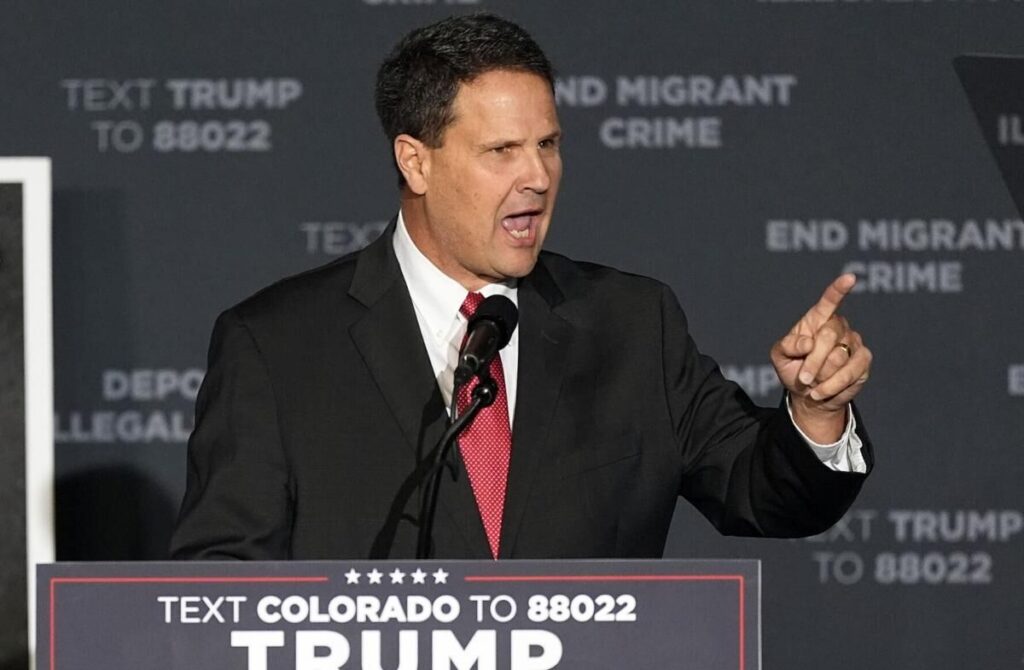
Rep. Jeff Crank thinks Democrats are too focused on Trump, not enough on Colorado Springs | Vince Bzdek
Vince Bzdek
vince.bzdek@gazette.com
Updated 3 days ago
For U.S. Rep. Jeff Crank, who’s unopposed in the Republican primary for the 5th Congressional District but the main target of both candidates in the lively Democratic primary, the big question in the midterms is not who will stand up...
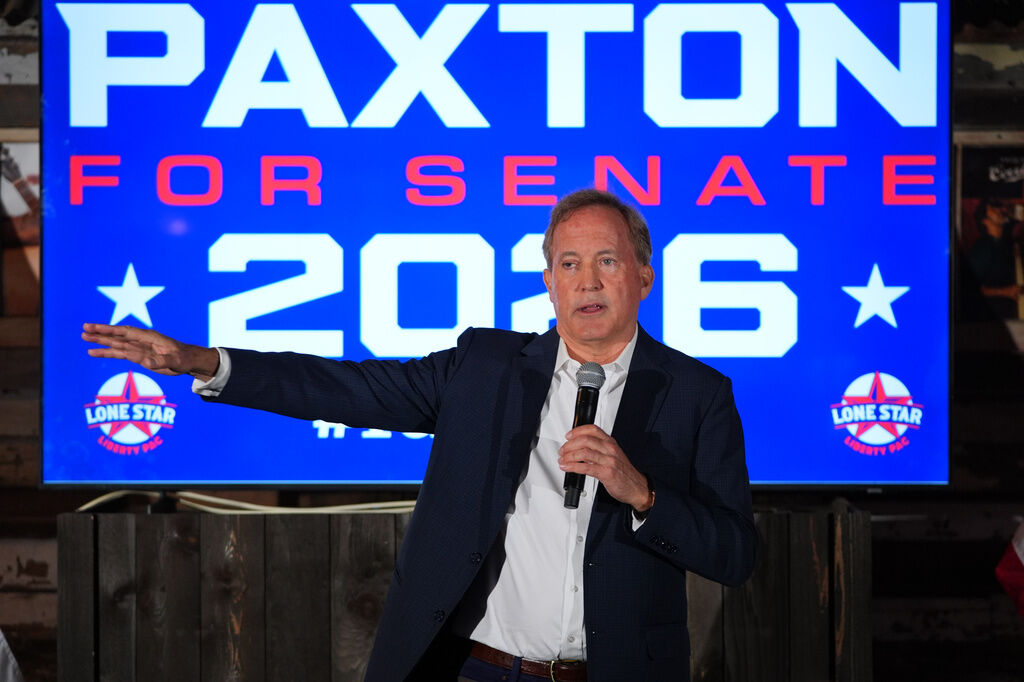
Does character matter anymore? | SONDERMANN
By Eric Sondermann
by-eric-sondermann@coloradopolitics.com
Updated 1 week ago
The last few weeks have been illuminating in the manner of a headlamp pointing the way to some deep, dark, murky netherworld. Graham Platner, a hero to the populist set on the Democratic side, became his party’s Senate nominee in...

Private equity has no place in health care | GUEST COLUMN
Colorado Politics
colorado-politics@coloradopolitics.com
Updated 6 days ago
By Miah Ntepp Of all the financial pressures placed on working people in this country, the skyrocketing costs of health care rank near the top. As families struggle under the cuts to Medicaid made by the Trump administration, they are...
PREV
PREVIOUS

PODIUM | Protect our kids from high-potency pot
Michelle Priola Our oldest child started using high-potency marijuana at the age of 14. He got it from his friend’s older brother. His discovery has had a profound impact on his life and our family. Three years later, he dropped out of high school and faced mental health crises. We enrolled him in a $45,000 […]
Colorado Springs Gazette: Keep Colorado schools open, in person
The word on omicron – from research institutions in Europe, to hospital corridors in Colorado – is that this latest COVID variant doesn’t appear to be as severe as earlier iterations. That’s so even as cases are surging. Despite the mounting COVID caseload, in fact, hospitals in our state by and large haven’t been overwhelmed […]