

Unite for Colorado ordered to pay $40,000 in fines tied to campaign finance complaint

Unite for Colorado, a dark money group that spent $4 million on statewide ballot measures in 2020, has been ordered to pay $40,000 and divulge its donors.
Scott Wasserman of the Bell Policy Center, and Katherine Dorman, a teacher in the Douglas County School District, filed the first campaign finance complaint with the Secretary of State’s office against Unite on Aug. 27, 2020. Both filed a second complaint against Unite in 2021 that is still moving through the process.
The first complaint alleged Unite raised and spent millions of dollars, and, through a “shell” organization, concealed the source of those funds.
According to the complaint, Unite spent $4 million to persuade voters to approve three ballot measures on the 2020 ballot: Proposition 116, which reduced the state’s income tax rate; Proposition 117, which required voter approval for new state-run enterprises; and, Proposition 113, which sought to overturn the General Assembly’s passage of the National Popular Vote. Voters approved the first two and rejected the third.
Unite is registered as a 501(c)(4), which, under Internal Revenue Service rules, is classified as a “social welfare” organization that engages in educating the public. In practical terms, so long as the organization spends less than 50% of the money it raises on political activities, it doesn’t have to disclose its donors. Unite was formed in November 2019 and led by Dustin Zvonek, now an Aurora City councilman.
The complaint against Unite said its only purpose is to engage in political activities. In addition to paying for petition circulation for Propositions 116 and 117, the complaint noted a YouTube video by Unite that criticized former governor and now-U.S. Sen. John Hickenlooper over ethics issues, but then moved on to seek online support for a ballot measure that would extend the amount of time citizens have to file complaints with the state Independent Ethics Commission. That ballot measure never moved beyond approval of the ballot title.
Initially, the elections division of the Secretary of State dismissed the complaint, stating it “failed to allege sufficient facts to support the alleged violations.” In January, then-Deputy Secretary of State Ian Rayder denied the division’s motion and ordered it back for further action.
In February, the division filed a formal complaint with the Office of Administrative Courts, which handles campaign finance complaint hearings.
Administrative Law Judge Matthew Norwood ruled in August, following a hearing, that Unite is an issue committee.
Unite made approximately $17 million in expenditures in 2020, with $4 million spent to support or oppose the three ballot measures, according to the ruling.
“This demonstrates that support and opposition of the proportions was a considerable portion of its activities,” the ruling said. In addition, the ruling said “there is no evidence that Unite has any other business than ‘issue advocacy’ on its website.” That website no longer exists.
Norwood ordered Unite to immediately register as an issue committee, file reports of its expenditures and contributions. He also fined the organization $40,000.
Unite appealed to the Colorado Court of Appeals, which dismissed the appeal on Nov. 5.
The final agency order issued Dec. 8 by Deputy Secretary of State Christopher Beall said the case “presents an important issue in Colorado: may an organization that raises and spends multiple millions of dollars in support of or opposition to several statewide ballot measures, engaging in substantial efforts to persuade citizens what to vote on and how, legally do so without disclosing to the public where the money is coming from or where it is going?”
The answer, the order said, is “no.”
If upheld, the fine would be the largest in state history.
The final order mandates Unite register as an issue committee, report its contributions and expenditures and pay the $40,000 fine.
Unite for Colorado also operated an independent expenditure committee, which spent $1.6 million to support Republicans or oppose their Democratic opponents for the state Senate. All but $75,000 of its contributions came from Unite for Colorado, making it a dark money group, so called because it does not disclose its donors. The other $75,000 came from another dark money group, Ready Colorado.
An affiliated group, Unite for Colorado Action, spent $185,000 to oppose Hickenlooper in 2020, according to Federal Election Commission records.
The second complaint, filed Aug. 18, 2021 by Wasserman and Dorman, is tied to Unite’s $1.28 million support for Proposition 120, a measure aimed at reducing property taxes for certain kinds of properties; and, Amendment 78, which would have required the General Assembly to appropriate certain custodial funds. Voters rejected both measures in November.
The complaint was initially put on hold, pending the outcome of the 2020 case. The 2021 complaint seeks to require Unite to file as an issue committee and report its contributions and expenditures.
With the final agency order out of the way for the 2020 complaint, the 2021 matter is now awaiting a hearing with the Office of Administrative Courts.
Unite’s attorney, Suzanne Taheri, did not respond to a request for comment on whether the organization plans to appeal the final agency order.



Republican Victor Marx taps George Markert as his lieutenant governor pick in Colorado’s gubernatorial race
Ernest Luning
ernest.luning@coloradopolitics.com
Updated 1 day ago
Colorado Republican gubernatorial nominee Victor Marx named George Markert, a retired Marine colonel, as his running mate for lieutenant governor Friday morning, saying the former U.S. Senate candidate will bring “exceptional character, proven leadership and a lifetime of serving others”...
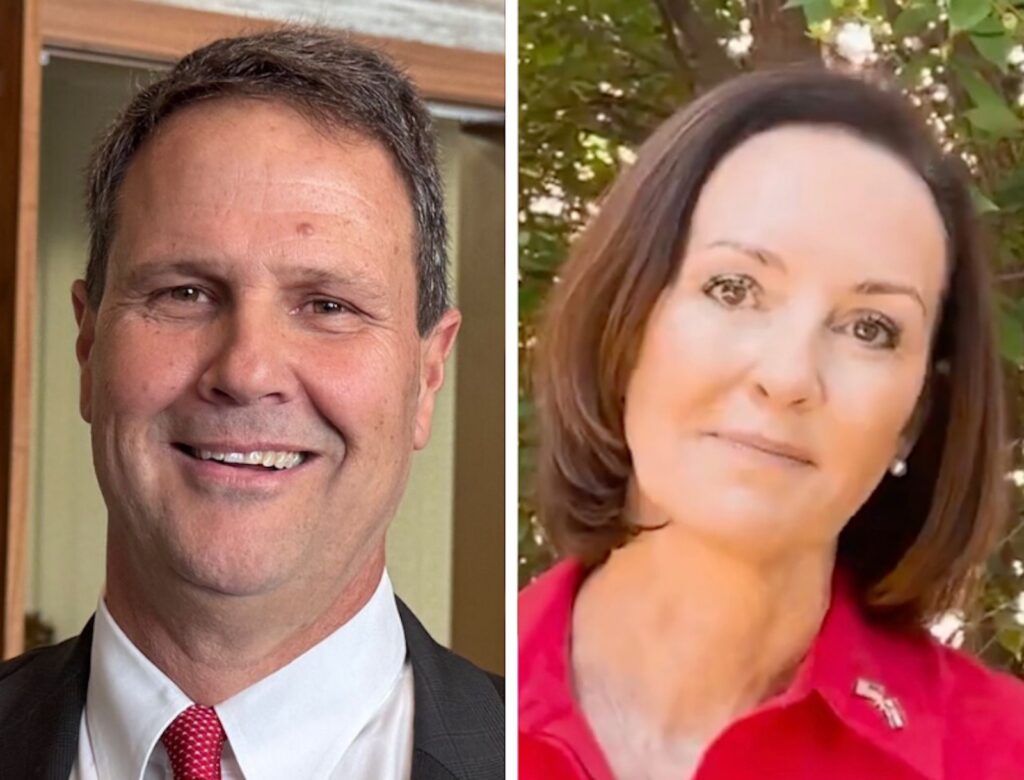
Democrat Jessica Killin’s internal poll shows dead heat with U.S. Rep. Jeff Crank in Colorado’s 5th CD
Ernest Luning
ernest.luning@coloradopolitics.com
Updated 2 days ago
Jessica Killin, the Democratic nominee in Colorado’s 5th Congressional District, is in a statistical tie with Republican U.S. Rep. Jeff Crank, according to an internal poll released this week by Killin’s campaign. The poll of likely general election voters, conducted...

Victor Marx says he’ll only debate Phil Weiser once in Colorado governor’s race — without a moderator
Ernest Luning
ernest.luning@coloradopolitics.com
Updated 2 days ago
Colorado Republican gubernatorial nominee Victor Marx said on Tuesday that he will participate in only one debate with Attorney General Phil Weiser before the November election — and he challenged the Democratic nominee to hold the event without a moderator....
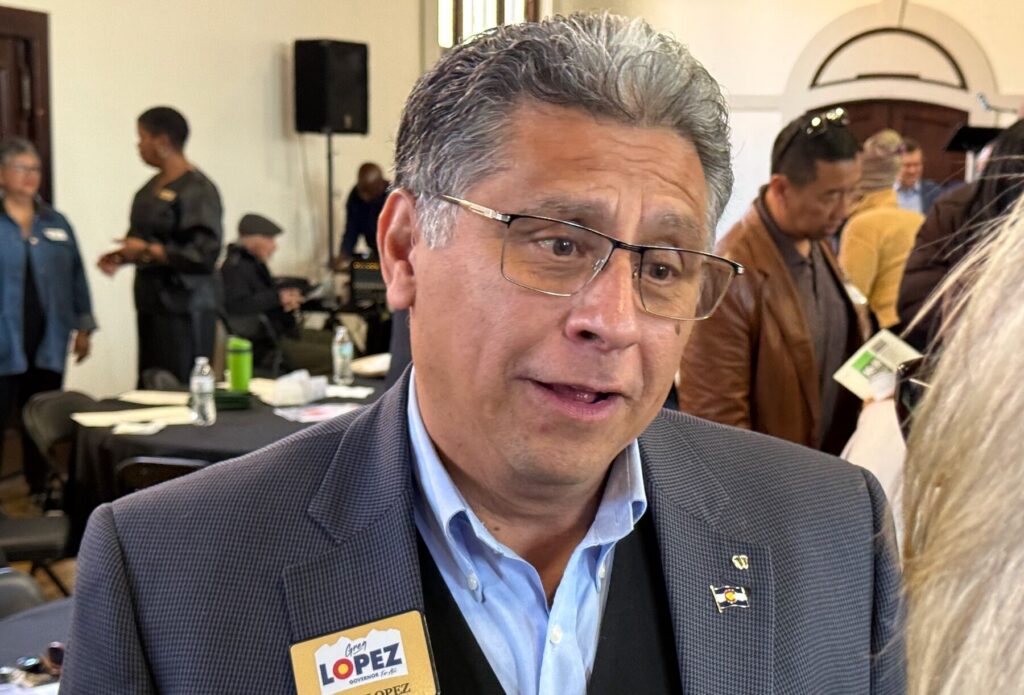
Independent gubernatorial candidate Greg Lopez, a former GOP congressman, qualifies for Colorado ballot
Ernest Luning
ernest.luning@coloradopolitics.com
Updated 4 days ago
Unaffiliated gubernatorial candidate Greg Lopez, a former Republican congressman from Elizabeth who left the GOP to run as an independent, has qualified for the ballot by submitting enough petition signatures, the Colorado Secretary of State’s Office said Tuesday. He’ll face...

Surprise candidate Shimon Blau cleared to face off against Melat Kiros in November
Ernest Luning
ernest.luning@coloradopolitics.com
Updated 1 week ago
Unaffiliated congressional candidate Shimon Blau, a Denver doctor, has qualified by petition for the general election in Colorado’s 1st District, where Democrat Melat Kiros defeated 15-term U.S. Rep. Diana DeGette in last month’s primary, the Colorado Secretary of State’s Office...
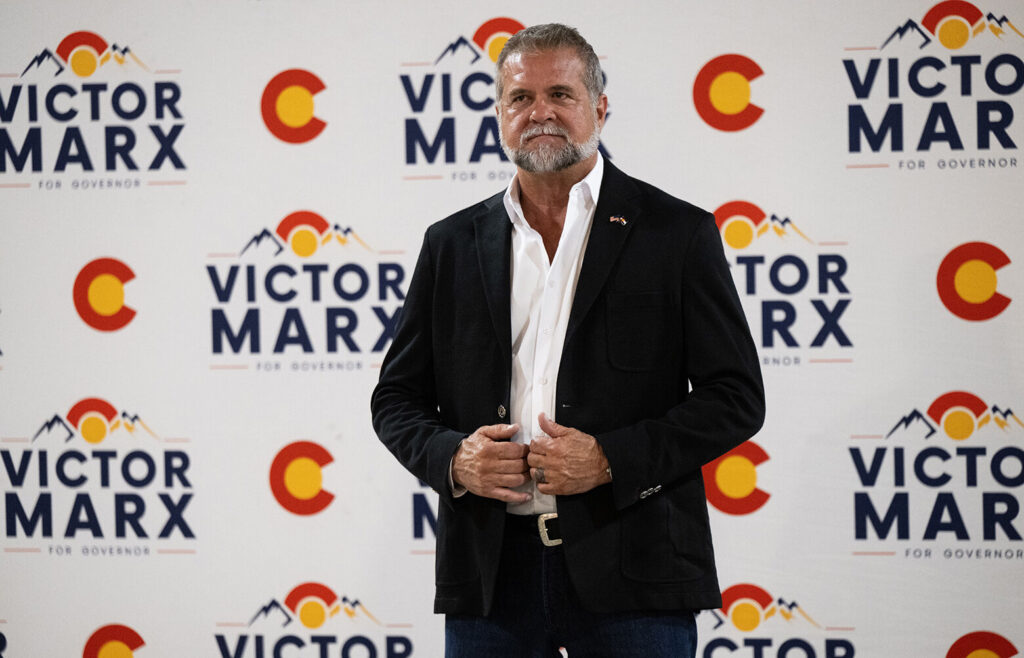
Victor Marx, GOP candidate for governor, faces 100-plus campaign finance complaints
Marianne Goodland
marianne.goodland@coloradopolitics.com
Updated 5 days ago
Victor Marx’s gubernatorial campaign has been hit with more than 140 campaign finance complaints, although most have been consolidated by the state’s election office because they follow similar alleged violations. Marx faces Attorney General Phil Weiser, who won the Democratic...

Jefferson County to fill commissioner vacancy after Dahlkemper tapped for lieutenant governor
Matt Kyle
matt.kyle@denvergazette.com
Updated 1 week ago
Democratic gubernatorial nominee Phil Weiser on Wednesday announced that Jefferson County Commissioner Lesley Dahlkemper would be his lieutenant governor, meaning she would be leaving her commissioner seat open should he win the race in November. However, Dahlkemper’s term was already...
Democrat Phil Weiser names Jeffco Commissioner Lesley Dahlkemper as his gubernatorial running mate
Ernest Luning
ernest.luning@coloradopolitics.com
Updated 1 week ago
Colorado Attorney General Phil Weiser, the Democratic nominee for governor, on Wednesday named Jefferson County Commissioner Lesley Dahlkemper to be his lieutenant governor running mate in the general election. Calling her “someone who can be a governing partner,” Weiser said...
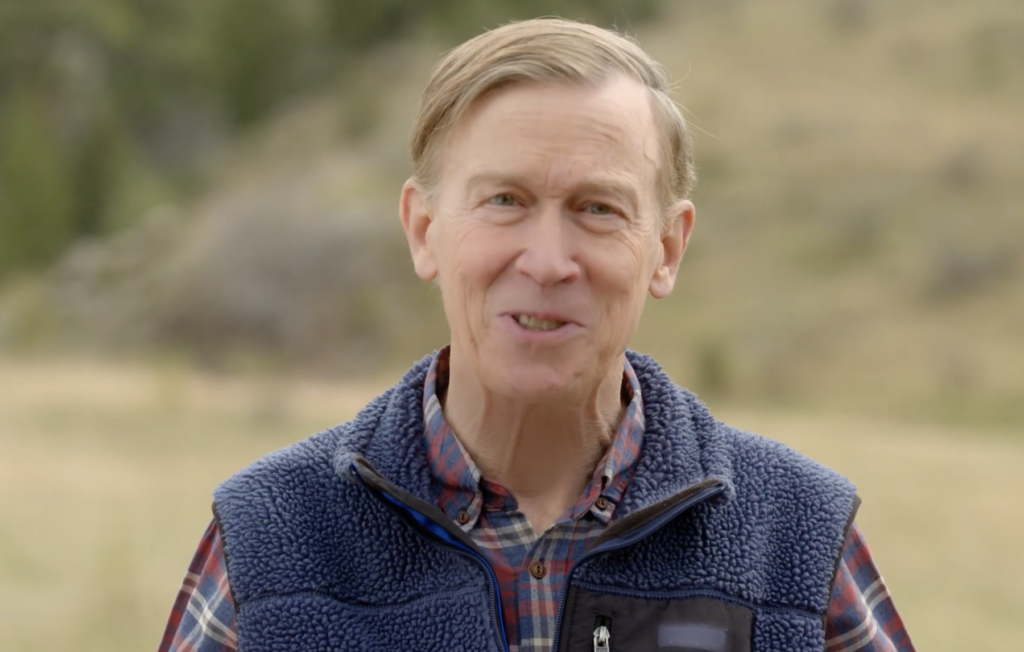
Democrat John Hickenlooper hauls in $1.3 million in 2nd quarter in Colorado’s U.S. Senate race
Ernest Luning
ernest.luning@coloradopolitics.com
Updated 2 weeks ago
U.S. Sen. John Hickenlooper’s reelection campaign raised just over $1.3 million in the year’s second quarter and finished the period with $2 million in the bank, leaving the first-term Democrat with nearly 80 times as much cash on hand as...

Campaign launched to redirect $1 billion in TABOR refunds to education
Marissa Ventrelli
marissa.ventrelli@coloradopolitics.com
Updated 2 weeks ago
A coalition that includes the state teachers’ union on Tuesday launched a campaign for a ballot proposal that would reduce more than $1 billion in taxpayer refunds and spend the money on education. The measure is among several campaigns taking...
PREV
PREVIOUS

Q&A with Maria Garcia Berry | Cuban immigrant rewrites Colorado history
In Colorado politics, Maria Garcia Berry gets the job done, whatever the job might be. Most often, they’re the biggest jobs in town. Between her and husband, Chuck Berry, a former 14-year state legislator and speaker of the House, the Berry name is written in the footnotes of Colorado history over the last four decades. […]
Colorado's 3rd omicron variant case found
A Jefferson County woman has tested positive for the omicron variant, the state health department said Monday, marking Colorado’s third known case of the latest strain of the virus. The woman had recently traveled to Africa and has not had symptoms, said Jessica Bralish, spokeswoman for the state Department of Public Health and Environment. The […]