

Appeals court finds no racial violation after prosecutor excused Black juror for looking ‘sour’
The Court of Appeals determined an El Paso County prosecutor did not violate the prohibition on race-based dismissals of jurors by removing a Black woman from the jury pool because she had a “sour look.”
The decision implicates a 35-year old judicial test for bias that critics say is too easy to evade and fails to account for the unconscious motivations of attorneys.
Calil Jamari Witherspoon appealed his 2019 convictions for attempted first degree assault, menacing and prohibited use of a weapon by arguing that the trial court judge improperly denied his challenge to the dismissal of a Black woman from his jury. Known as a “Batson challenge,” the legal objection stems from the U.S. Supreme Court’s 1986 decision in Batson v. Kentucky, which forbade intentional race-based discrimination in jury selection.
But on Thursday, a three-judge panel for the state’s appellate court concluded that District Court Judge Jill Brady had not committed an error by deciding the prosecutor had offered sufficient non-racial reasons for striking the woman identified as T.D. from the jury.
At Witherspoon’s trial, the unnamed prosecutor used one of her peremptory strikes – which allow for the dismissal of a juror without an explanation – to excuse T.D. The defense raised a Batson challenge, noting her race and arguing the prosecutor had not even asked T.D. any questions.
The prosecutor responded that T.D. “wrote in her questionnaire that she was upset about the wait to get into the courthouse and the secondhand smoke and that it was cold. Her whole demeanor all day looks like we’ve been putting her out, sour look on her face.”
The prosecutor then acknowledged that T.D. had cracked a joke when the defense attorney asked what her definition of a child was (“My opinion of a child is once he can’t be on my income tax, they are not a child.”). But otherwise, the prosecutor continued, “she looked like she was not happy to be here.”
When one of the parties makes a Batson challenge, they must state a plausible claim that a juror is being struck because of their race. The party seeking to excuse the juror must offer a race-neutral reason for doing so, and the judge then weighs the evidence and decides whether the strike likely involves purposeful discrimination.
But critics of the Batson process point out that attorneys can outmaneuver the racial prohibition by simply providing alternate explanations, or by citing characteristics of jurors that are not explicitly racial, but reflect implicit biases. For example, excusing jurors who have an arrest record is more likely to affect people of color.
The state of Washington adopted a rule change in 2018 recognizing the historical justifications used to strike jurors of color, including their status as a non-native English speaker, their views on policing and their demeanor. Those factors are now presumed to be invalid in the face of a Batson challenge.
The Colorado Supreme Court had the opportunity to adopt a similar rule this year, but turned down the proposal. In a report to the Court from a majority of members of a committee on the rules of criminal procedure, there was an awareness that excusing a juror based on her demeanor can be problematic.
“[M]any peremptory challenges currently survive a Batson objection because the challenging party offers a race-neutral characterization of the prospective juror’s demeanor,” the report noted. “While demeanor may still constitute a valid race-neutral reason, this [proposal] simply requires corroboration of the prospective juror’s alleged demeanor by either the trial court or opposing counsel in order to sustain the peremptory challenge on that basis.”
That is not what happened at Witherspoon’s trial.
In response to the prosecutor’s observation that T.D. was “not happy to be here,” the defense attorney said T.D. had been listening and paying attention, and had indicated she would hold the prosecution to its burden of proving the defendant guilty.
Brady denied the Batson challenge. Without stating whether she agreed with the prosecutor’s characterization of T.D.’s demeanor, she found the explanation credible. The prosecutor had offered a race-neutral reason for striking T.D., Brady elaborated, based on T.D.’s “sour attitude toward the system or process earlier in her jury questionnaire by indicating that she didn’t like having to wait in line or the smell of secondhand smoke, and [being] disengaged from the process and that’s why she struck her, not on the basis of race.”
The defense attorney later stated that the prosecutor could have been basing her assumptions on unconscious racial stereotypes.
The Court of Appeals panel acknowledged that it would have been better for Brady to have documented her own conclusions about T.D.’s demeanor during jury selection. But overall, the panel found no reason to doubt her decision.
“[T]he trial court did expressly find that the prosecutor’s stated reasons for exercising the peremptory challenge were credible,” wrote Judge John Daniel Dailey, who also is the chair of the committee that suggested the rule change. “We have no basis to question that credibility determination.”
Ann Roan, a criminal defense attorney, believed Witherspoon’s case illustrated the fallacy of relying on an attorney’s perception of a juror’s demeanor to explain away potential racial motivations.
“The defense counsel made it clear this was not what that lawyer had observed. And the judge never made a record that the judge independently observed and corroborated what the prosecutor claimed to have seen,” she said.
Research has documented the various ways in which Black people are subject to misperception. A 2019 paper described how non-Black research participants had a harder time distinguishing between genuine and fake smiles on Black faces than white faces. Subjects in a 2017 study categorized young Black men as larger and more physically threatening than white men based on images. And a 2009 analysis found several studies showing interracial interactions cause “anxiety, fear, and sometimes even anger.“
In addition to a Washington-style rule change, others have suggested eliminating peremptory challenges entirely or implementing implicit bias training for lawyers as a more effective means of combating racial discrimination in jury selection than the current Batson standard.
Last month, the state Supreme Court heard oral arguments in the case of a Batson challenge involving a Hispanic defendant in Denver. A Court of Appeals panel found the prosecutor did not offer sufficient race-neutral explanations for striking a Hispanic juror and ordered a new trial. However, in that case, in contrast to Witherspoon’s, the prosecutor actually mentioned the juror’s race in explaining her actions.
The case is People v. Witherspoon.

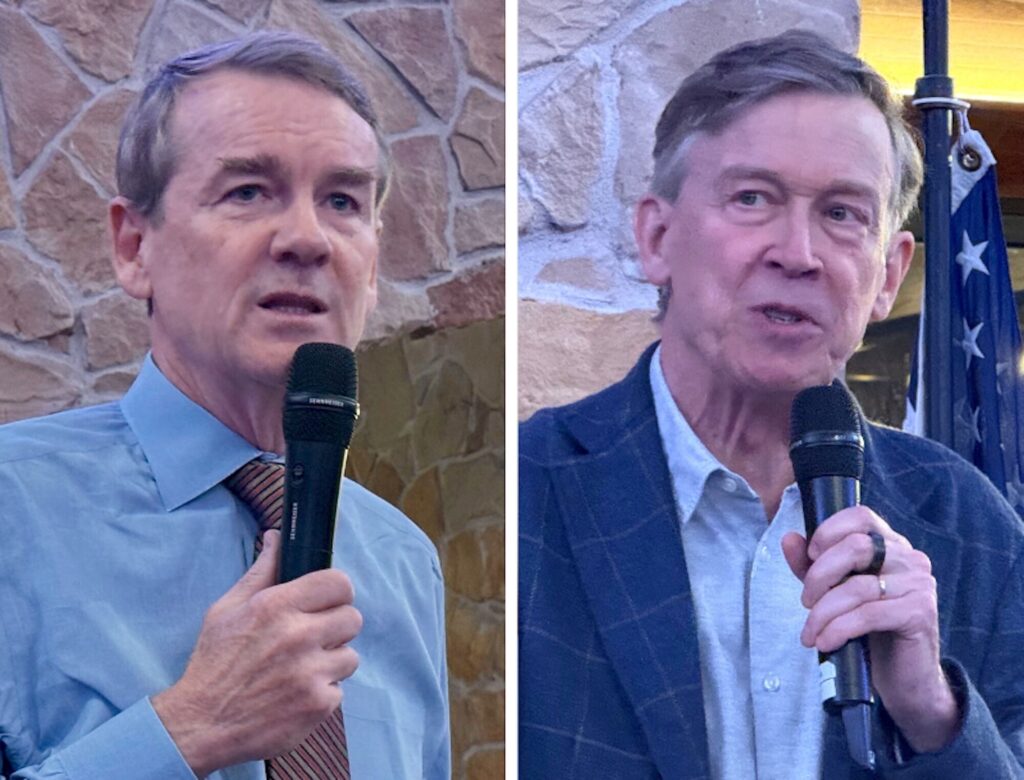
Bennet, Hickenlooper to vote against Trump’s 10th Circuit nominee from Colorado
Michael Karlik
michael.karlik@coloradopolitics.com
Updated 8 hours ago
Colorado’s two Democratic senators will not vote to confirm President Donald Trump’s nominee to a vacancy on the Denver-based federal appeals court. Trump has selected U.S. District Court Chief Judge Daniel D. Domenico, who he appointed as a federal trial...
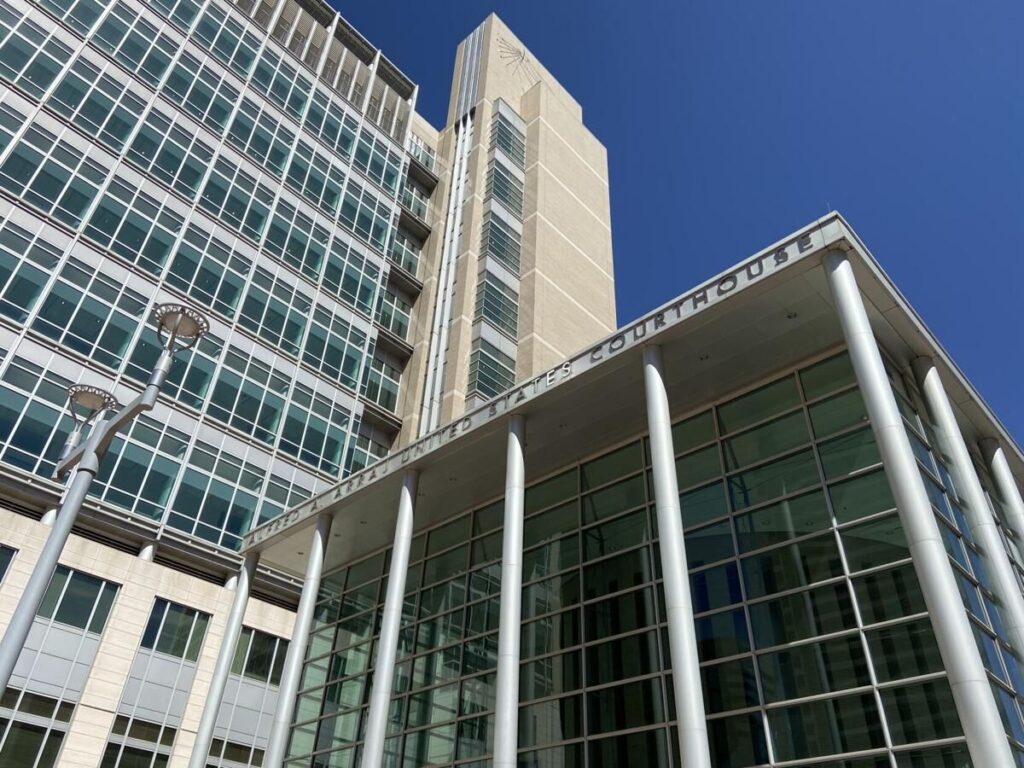
U.S. government declines to oppose multiple challenges to immigration detention in Colorado
Michael Karlik
michael.karlik@coloradopolitics.com
Updated 7 hours ago
Multiple federal judges in Colorado granted petitions from people challenging the lawfulness of their immigration detention this week after the government took the unusual step of declining to submit arguments in opposition. Colorado’s federal trial court is facing a flood of...
Colorado justices discuss solution to confusion from prior criminal ruling
Michael Karlik
michael.karlik@coloradopolitics.com
Updated 6 hours ago
The Colorado Supreme Court pondered the fallout on Tuesday from its nearly six-year-old decision interpreting the state’s impaired driving laws, with the justices now addressing how defendants affected by the legal change must seek postconviction relief. In contrast to other...
Colorado justices suggest father entitled to appeal of custody decision
Michael Karlik
michael.karlik@coloradopolitics.com
Updated 1 day ago
Members of the Colorado Supreme Court signaled strongly on Tuesday that a father deserved some avenue for challenging a temporary child custody order that no lower court believed it could review due to the unusual circumstances of the case. Because...

Court snuffs out challenge to Denver’s flavored tobacco ban
Deborah Grigsby
deborah.smith@denvergazette.com
Updated 14 hours ago
The smoke finally cleared in Denver’s battle over a citywide ban on flavored tobacco products when a Denver court dismissed a challenge from local vape shop owners seeking to declare the ordinance unconstitutional and block its enforcement. On Wednesday, Denver...
Colorado justices agree fraud claims belong in corporate dispute
Michael Karlik
michael.karlik@coloradopolitics.com
Updated 2 days ago
The Colorado Supreme Court decided on Tuesday that a corporate plaintiff validly pursued fraud claims over conduct that was not covered by a contract or by a set of interrelated business agreements leading up to the contract. Previously, the Court...
Colorado Supreme Court says intimate messages irrelevant to assault case
Michael Karlik
michael.karlik@coloradopolitics.com
Updated 2 days ago
The Colorado Supreme Court decided on Tuesday that a Douglas County judge acted reasonably by blocking evidence of a defendant’s BDSM-related conversations with the victim in his trial for assault and false imprisonment. While the Court of Appeals believed that...
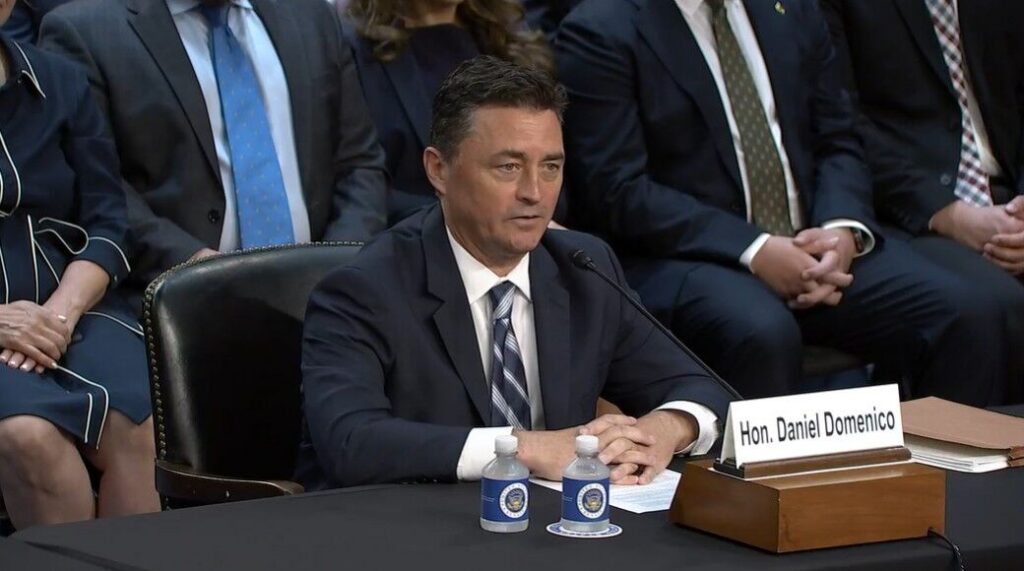
Trump’s 10th Circuit nominee declines to name 2020 election winner, defends immigration decisions
Michael Karlik
michael.karlik@coloradopolitics.com
Updated 2 days ago
President Donald Trump’s nominee to the Denver-based federal appeals court declined to say who won the 2020 presidential election during his appearance before the U.S. Senate Judiciary Committee on Wednesday, and defended his recent rulings in immigration detention cases. U.S....
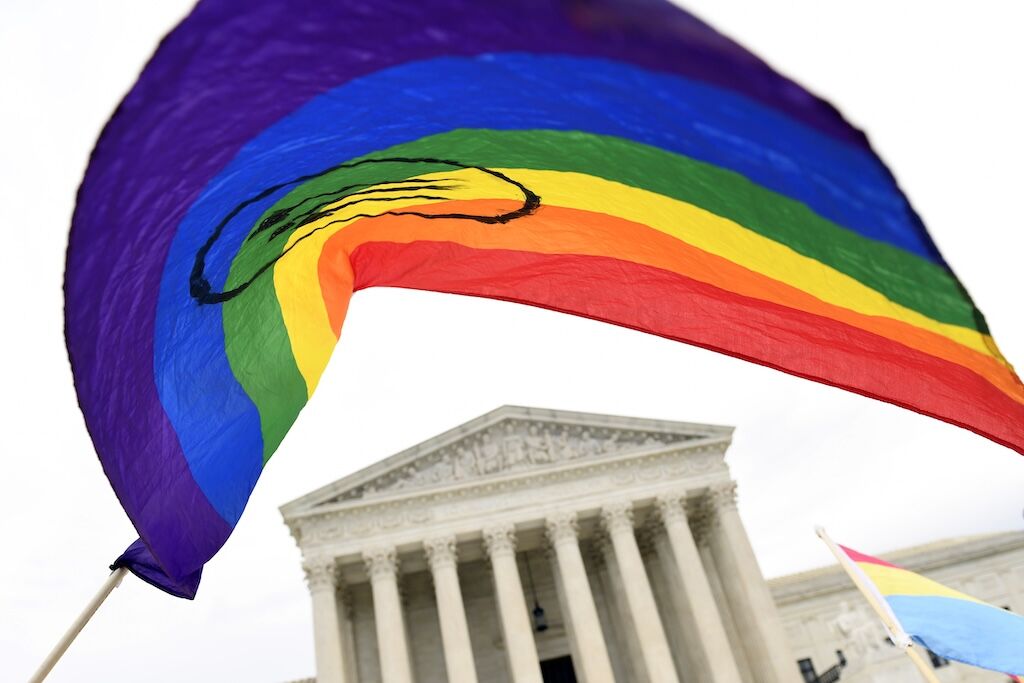
Colorado law allowing lawsuits against ‘conversion therapy’ providers takes effect July 1
Marissa Ventrelli
marissa.ventrelli@coloradopolitics.com
Updated 7 hours ago
With a new law taking effect July 1, Colorado is creating a legal pathway for people to sue licensed providers of “conversion therapy,” even as debate over the practice’s constitutionality continues in the wake of a recent U.S. Supreme Court...
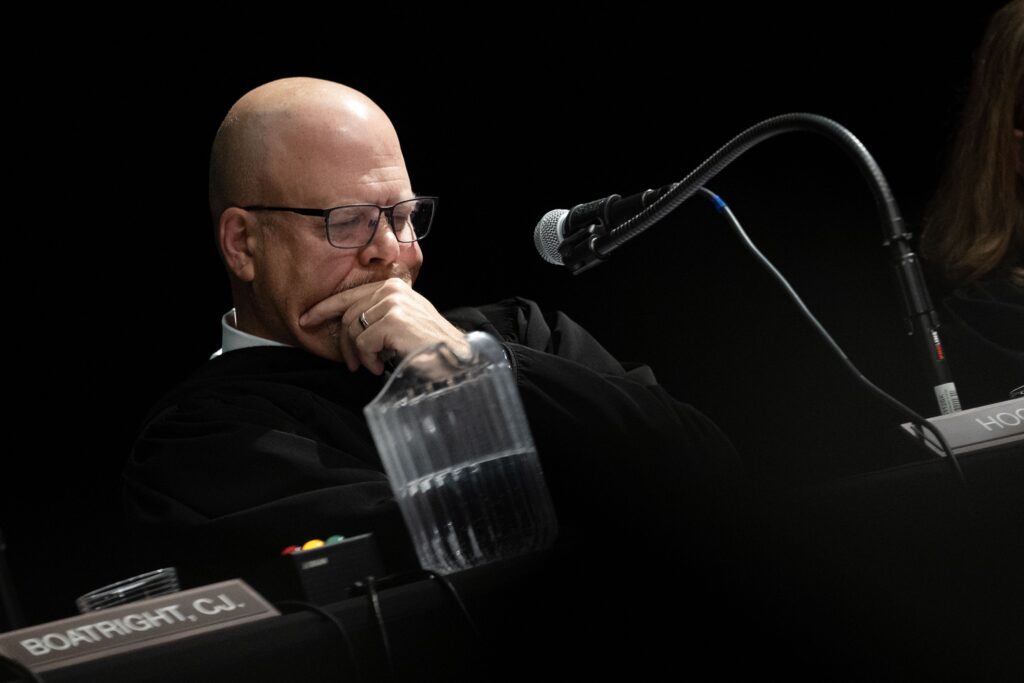
Colorado justices expand ability for civil defendants to avoid participating, win after trial
Michael Karlik
michael.karlik@coloradopolitics.com
Updated 2 days ago
The Colorado Supreme Court decided on Tuesday that a civil defendant, whose non-participation in the case meant that he legally admitted to the sexual assault allegations against him, could nonetheless prevail after he showed up to testify at trial. A...
PREV
PREVIOUS

Titone honored for bill on agency rulemaking search engine
A group made up of some of Colorado’s top business minds is honoring state Rep. Brianna Titone for her legislative work earlier this year. Colorado Concern, a CEO-based organization that describes itself as “devoted to investing in and promoting a pro-business environment through the political process,” presented its 2021 In the Arena Leadership Award to […]

COVER STORY | Bennet's GOP challengers slow out of the gate, post modest fundraising totals
Colorado voters won’t be marking their ballots to pick their next U.S. senator for another year, but already the match-up between U.S. Sen. Michael Bennet, the Democratic incumbent, and his Republican challenger is beginning to take shape. Following a flurry of candidate announcements in early October – after the end of the third fundraising quarter […]