

TRAIL MIX | Candidates scramble as dog days drift to autumn
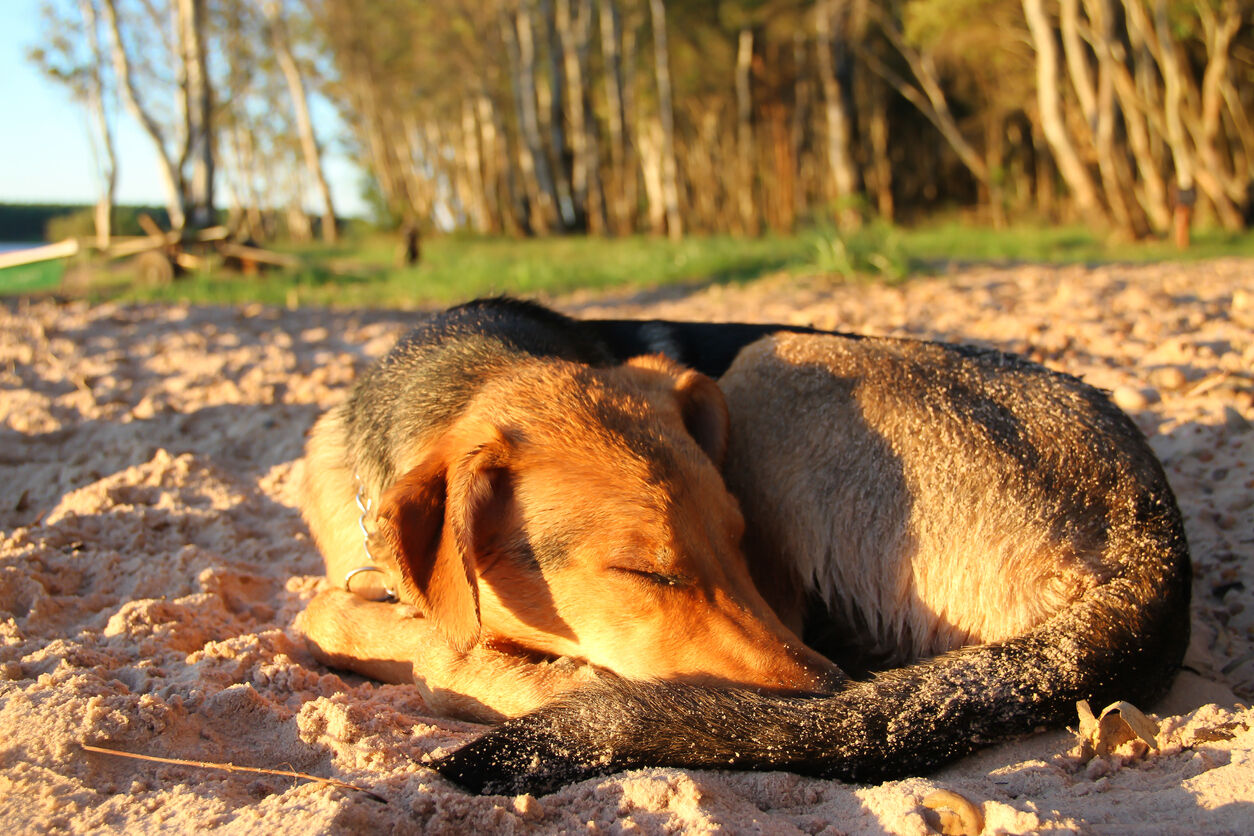
The dog days of 2021 are nearing their conclusion.
Technically, that sweltering stretch of summer occurs when the Sun appears in the same part of the sky with Sirus, the Dog Star, the brightest star in the constellation Canis Major.
As the Farmer’s Almanac tells it, the ancient Romans believed that Sirius generated its own heat, helping account for the sultry, lazy days that fall a customary 20 days either side of the star’s conjunction with the sun, when the two rise and set at the same time. This year, that’s July 3 to Aug. 11.
Over the years, as the phrase’s astrological origin has receded, people have filled in the meaning by noting that dogs tend to sleep a lot when it’s hot out, or by suggesting the days aren’t fit for a dog or even that the heat drives dogs mad.
In the summer between election years, the dog days are the lull when the political world tends to recline in anticipation of the busy months ahead, between legislative sessions and typically before campaigns are in full swing. This year, the pace hasn’t slowed a bit in the U.S. Senate, with lawmakers scrambling to reach a vote on a massive infrastructure bill as the weeks-long August recess looms, but back in Colorado the political world appears to be taking a breather.
Partly, that’s because Republicans have yet to field prominent candidates for most major offices, including the four statewide slots on next year’s ballot and the U.S. Senate seat held by Democrat Michael Bennet and U.S. House members in the eight congressional districts that will be voted on in 2022.
There are plenty of reasons why the Republicans have been slow to field their starting line-up, including the party’s shallow bench following the series of drubbings the GOP has suffered in recent elections. But most of all, it’s the delayed congressional – and legislative – maps, keeping ambitious politicians in both parties in a holding pattern until later this fall.
As the days shorten and the sun begins to creep farther south, expect a cavalcade of Republican candidates for major office to start launching their campaigns, though with the boundaries of the state’s new 8th Congressional District uncertain for at least another couple months, there might be some lingering entrants closer to winter.
Before long, voters can expect to have a clearer picture of the races Democratic incumbents holding statewide office will be facing next year, with opponents lining up for Bennet, Gov. Jared Polis, Secretary of State Jena Griswold and State Treasurer Dave Young.
Some of the races already have Republicans running, including gubernatorial candidate Greg Lopez, the former Parker mayor who finished third in the 2018 GOP primary and has been running a grassroots campaign on a shoestring almost ever since, and Army veteran Erik Aadland, who declared himself a Republican a few months ago before launching a U.S. Senate campaign.
University of Colorado Regent Heidi Ganahl – the only Colorado Republican left in statewide office – is expected to be joining Lopez in the primary for governor. Olympian Eli Bremer, a former El Paso County GOP officer, told Colorado Politics recently that he’s strongly considering mounting a challenge to Bennet and could make a move after his work as a commentator on the Tokyo Games wraps up later this week.
Former Mesa County Commissioner Rose Pugliese has been inching toward a secretary of state campaign for months, and this week the Colorado Sun’s Unaffiliated political newsletter reported that she created a nonprofit called Rose for Colorado last month and reserved a website with the same name months ago.
In what has so far been the lowest-profile of the statewide and congressional races – unusually so, since the office has been a steppingstone to runs for governor in years past – Young could soon find himself with an opponent in his bid for a second term as state treasurer. Buzz has been increasing recently around former Air Force Top Gun instructor Lang Sias, a former state senator and the Republican’s 2018 nominee for lieutenant governor.
The office that has yet to attract a strong contender – or any contender at all – is attorney general, though Republican strategists insist Democrat Phil Weiser won’t get a pass next year, predicting that one of several current or former district attorneys could decide soon to make a run.
In these last relatively quiet days before of the end-of-year rush and next year’s return to the election year’s campaign frenzy, it’s a good time to take stock of the standards the 2022 crop of candidates will be stacking up against.
Denver Democrat Diana DeGette is the state’s longest continuously serving elected official. First elected to the state House in 1992, she won her 13th term in Congress last year and is running for a 14th in next year’s election in the overwhelmingly Democratic 1st Congressional District.
The district DeGette represents holds an even greater distinction, though, having been represented by women for longer than any other district in the country. Before DeGette took office in 1997, the seat was occupied for a dozen terms by the first woman sent to Congress by Colorado voters, Democrat Pat Schroeder, first elected in 1972 – making next year the 50th straight year the Denver-based district has had a congresswoman.
The political longevity award, however, is split between Mike Coffman and Scott McInnis, two Republicans who each served lengthy stints in the statehouse and in Congress before their current positions in local government.
Coffman, elected to his first term as mayor of Aurora in 2019, has held office with two brief interruptions since 1989, after he won a state House seat in Arapahoe County in 1988. He ascended to the state Senate in late 1994 – replacing Republican Bill Owens, who had been elected state treasurer a couple months earlier – and then followed Owens into the treasurer’s office four years later, after Owens was elected governor.
Coffman, a Marine, left office for about nine months to serve in Iraq and then was elected secretary of state, a position he held for two years until he won a seat in Congress representing the suburban 6th Congressional District. He won re-election four times until losing in 2018 to Democrat Jason Crow but then bounced back the next year to win his job at Aurora city hall.
McInnis, serving his second term as a Mesa County commissioner, was first elected to the state House in 1982 and served five terms until winning a seat in Congress, representing the 3rd Congressional District. He held the seat for six terms until retiring after the 2004 election. McInnis attempted a return to office with a run for governor in 2010 but lost the GOP primary to tea party dark horse Dan Maes.
Maes went on to lose the general election to Democrat John Hickenlooper with 11% of the vote, the lowest percentage ever recorded by a major party candidate since the early 20th century when the Republican and Democratic parties became the dominant parties.
McInnis mounted a comeback in 2014 and has been helping run things in Mesa County since.
On the flip side, every student of Colorado politics knows about the famous day in 1905 when the state boasted three governors in a single 24-hour period.
Following the contentious 1904 election, the GOP-controlled legislature declared Republican James Peabody the winner shortly after Democrat Alva Adams had taken office, though lawmakers imposed the condition that Peabody would have to resign immediately and let his lieutenant governor, Republican Jesse McDonald, serve out the term.


Colorado Politics Calendar Apr. 6-12
Rachael Wright, Special to Colorado Politics
rachael.wright@coloradopolitics.com
Updated 3 days ago
CoPo’s weekly political calendar will help you find political and public-policy events throughout Colorado. It includes candidate and issue campaign events, public policy meetings, court hearings, state and local party conventions, assemblies, debates, rallies, parades, speaking engagements, traveling dignitary appearances,...
Democrats rebounding without learning necessary lessons | SONDERMANN
Eric Sondermann
eric-sondermann@coloradopolitics.com
Updated 47 minutes ago
“When we fight, we win!” That, reportedly, was the chant heard over and over again at the Colorado Democratic Assembly a week ago. It suggests that pugilism has been the piece missing from the Democratic toolkit. Perhaps it was just...
An April Fool’s Day to remember | Capitol M | Week of April 4, 2026
Marianne Goodland
marianne.goodland@coloradopolitics.com
Updated 2 days ago
The lighter side of the Capitol, and if light were weight, the Capitol would have lifted off better than the Artemis II rocket on April Fool’s Day. There was a plethora of Fools at the Capitol for April Fool’s Day...
Federal judge sides with Mesa County school district in ex-student’s First Amendment claims
Michael Karlik
michael.karlik@coloradopolitics.com
Updated 15 hours ago
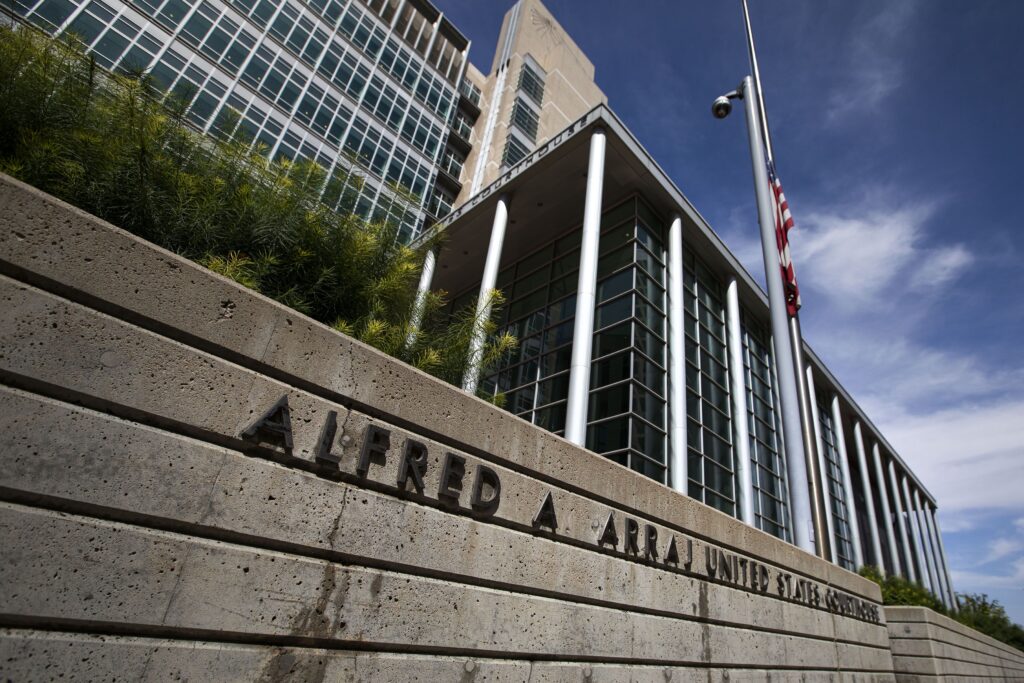
A federal judge concluded last week that Mesa County Valley School District 51 and three of its administrators did not violate the First Amendment rights of a former student when they imposed minor discipline in response to disruptive behavior. In...

Colorado Supreme Court intervenes in 4 ongoing cases
Michael Karlik
michael.karlik@coloradopolitics.com
Updated 18 hours ago
The Colorado Supreme Court recently moved to intervene in four ongoing cases, including two criminal prosecutions, a civil lawsuit, and a child welfare proceeding. At least four of the court’s seven members must agree to hear a case outside of...
Colorado ski resorts announce early closures amid historic snowpack lows, high temperatures
Kyla Pearce
kyla.pearce@gazette.com
Updated 19 hours ago
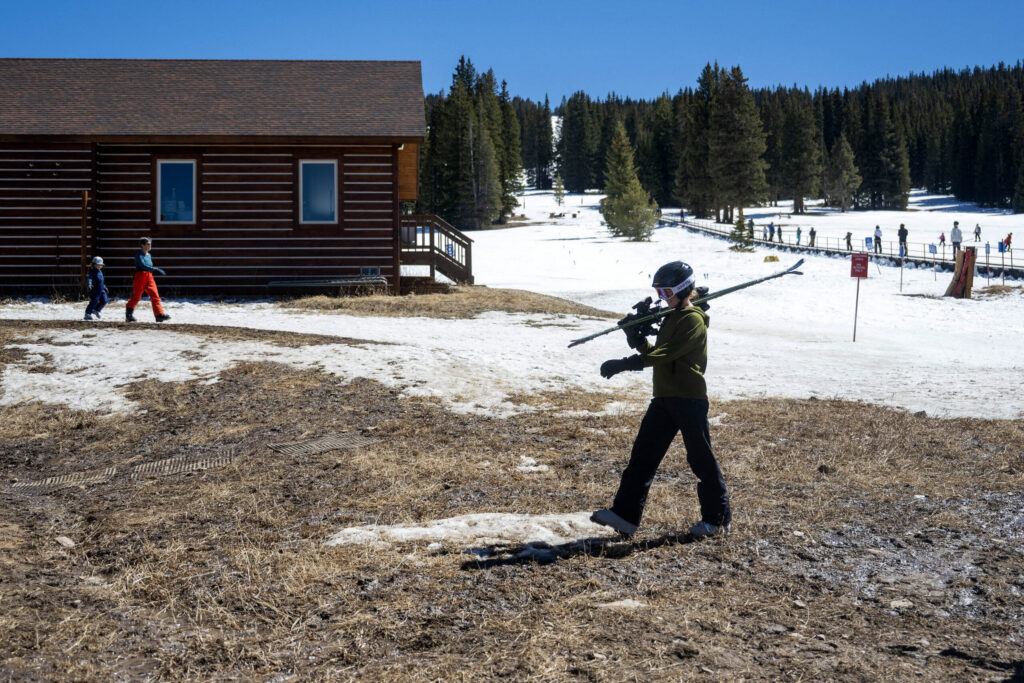
Vail Resorts is the latest area to announce season closure Wednesday As Colorado’s historically low snowpack year comes to a close and spring conditions take over the mountains, the state’s major ski resorts are announcing closing dates — some of...

Kentucky Gov. Andy Beshear set to headline Colorado Democrats’ annual fundraising dinner
Ernest Luning
ernest.luning@coloradopolitics.com
Updated 18 hours ago
Kentucky Gov. Andy Beshear, one of the Democrats’ top 2028 presidential prospects, is scheduled to deliver the keynote address at the Colorado Democratic Party’s annual fundraising dinner in June in Denver, the party said Friday. Serving his second term as...
Gov. Polis names new leaders for Colorado health agencies in wake of Medicaid turmoil
Marianne Goodland
marianne.goodland@coloradopolitics.com
Updated 20 hours ago
Gov. Jared Polis, on Thursday, announced he was appointing Gretchen Hammer to serve as acting executive director of the Colorado Department of Health Care Policy and Financing, and deputy executive director Stephanie Beasley to become the next commissioner of the...
Federal judge releases man immediately as consequence for immigration judge disobeying orders
Michael Karlik
michael.karlik@coloradopolitics.com
Updated 18 hours ago
A federal judge ordered a man’s immediate release from immigration detention on Thursday after finding an immigration judge disregarded his prior orders requiring a bond hearing. For the past year, Colorado’s federal district court has faced a flood of “habeas corpus”...
Colorado sues Trump administration, calling new election order ‘unconstitutional’
Marissa Ventrelli
marissa.ventrelli@coloradopolitics.com
Updated 22 hours ago
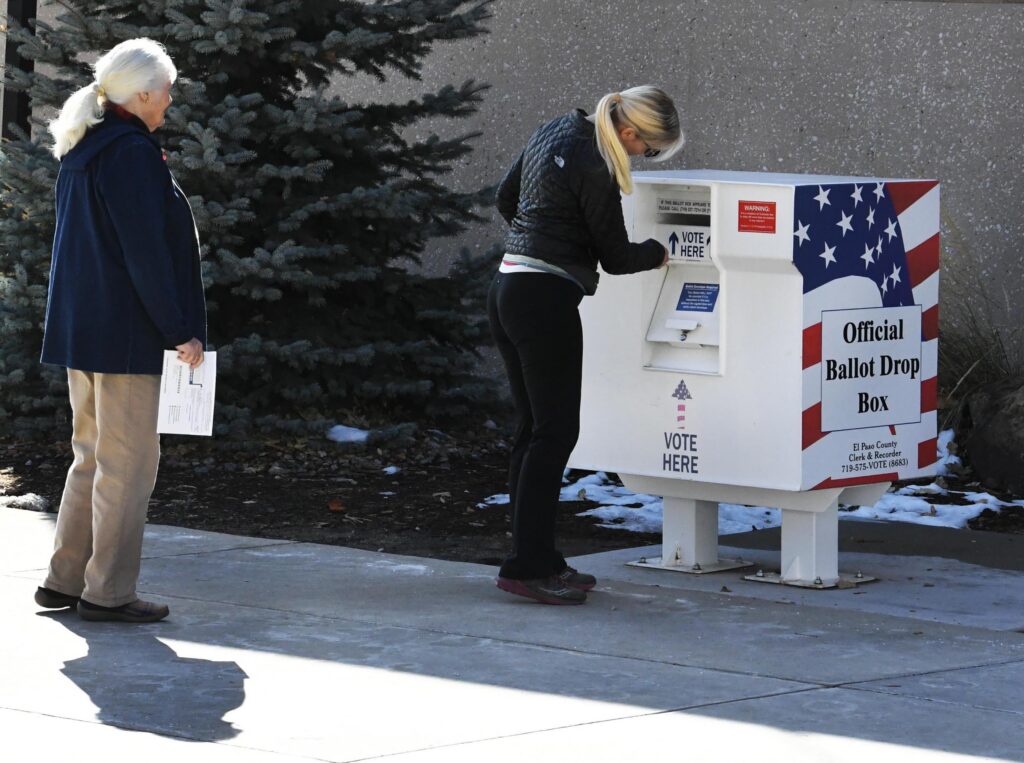
Colorado Attorney General Phil Weiser has joined a multistate coalition suing President Donald Trump over a new executive order on elections, arguing the directive unlawfully intrudes on states’ authority to run their own voting systems and threatens access to mail...
PREV
PREVIOUS

Smoky air will impact Denver, Front Range for foreseeable future, experts say
Heavy smoke from wildfires in the Pacific Northwest and Canada will adversely affect the air quality in Denver and along the Front Range for the foreseeable future, officials said Thursday. Smoke carried by winds originating from the burning areas has been in Colorado for several months, but so far the particulates – soot, dust or ash – […]

Public memorial for Gov. Lamm set for Aug. 31 at Lowry museum
Friends, family and other Coloradans will memorialize former Gov. Richard D. Lamm on Aug. 31. His widow, writer Dottie Lamm, announced the public memorial service Friday morning. Lamm died July 29 from a pulmonary embolism earlier in the week. He was 85. Lamm was Colorado’s governor from 1975 to 1987. The memorial will be at the […]