

After CDC masking guidance, Denver metro area counties await state response

Denver isn’t re-instituting any of its COVID-19 measures in the wake of new masking guidelines from the federal government, while other metro-area counties are waiting to see how the state responds to the recommendations.
The Centers for Disease Control and Prevention on Tuesday advised even vaccinated Americans to wear masks indoors in counties with high rates of transmission. Under the CDC’s benchmarks, data from the state Department of Public Health and Environment shows residents of every county in the metro should be masking.
The largest part of the metro area, Denver itself, isn’t changing anything, at least not yet. Bob McDonald, executive director of the city’s Department of Public Health and Environment, said in a statement Wednesday officials will “make a data-driven approach and will be careful and thoughtful as we evaluate next steps,” but that “at this time there is no change to our existing public health order.”
Denver, like much of the state, saw a steady decline in cases and hospitalizations after the most recent peak in late April and early May. That downturn had held for more than two months, but it’s reversed in recent days. Numbers are still far below any other spike, but the state is now reporting more cases on average per day than at any point in the past two months.
Much of the state and metro area largely ended COVID-19 mitigation efforts after the state health department in the spring gave counties the role of driving the pandemic response. Denver’s vaccination rate is high — over 70% — but a health official said last week that the latest spike in cases is being driven by the delta variant, which has “broken through” to infect some vaccinated people.
Angela Simental, spokeswoman for Boulder County Public Health, said the agency was “awaiting the official publication of updated mask guidance” from the federal government and state.
“When that official guidance is available, we will review our current guidelines,” she said in a statement Wednesday morning.
Simental said the county had continued to recommend masking, noting that “… Given that the more transmissible Delta variant is widely circulating in our state, we support and strongly recommend mask-wearing as a precaution for anyone in indoor public spaces regardless of vaccination status.”
The Tri-County Health Department, which oversees Arapahoe, Douglas and Adams counties, is in a similar position. The agency issued a statement last week reporting it had seen a substantial increase in cases. Cases in Adams County had increased 155% in its per-100,000 rate since late June.
Tri-County had “closely followed” the new CDC guidance and is awaiting for “official publication and subsequent comments from (the state health department) for any additional guidance for the counties in our district,” agency spokesman Gary Sky said in an email.
The three counties under Tri-County’s umbrella qualify for more masking under the CDC’s guidance. And given the jump in cases, the health officials “support enhanced mask-wearing in the settings recommended by CDC while we work with our communities on our most effective strategy: increasing our vaccination rates as quickly as possible,” Sky said.

Colorado Supreme Court upholds police search of car based on arm movements
Michael Karlik
michael.karlik@coloradopolitics.com
Updated 11 hours ago
The Colorado Supreme Court decided last week that Denver officers’ search of a vehicle was constitutional, based on their perception of the occupants’ arm movements that a trial judge found to not be credible. Officers Keegan Grubb and Richard Eberharter...
Flat or graduated income tax? Colorado groups push dueling measures for November election
Marissa Ventrelli
marissa.ventrelli@coloradopolitics.com
Updated 2 hours ago
Colorado voters could face two opposing income-tax measures on the November ballot, with the dueling campaigns seeking to advance proposals that would take the state in sharply different fiscal directions. One initiative seeks to replace Colorado’s flat income tax with...
10th Circuit tosses Pueblo County sheriff defendants’ appeal in fatal shooting lawsuit
Michael Karlik
michael.karlik@coloradopolitics.com
Updated 18 hours ago
The Denver-based federal appeals court rejected an attempt from Pueblo County sheriff’s employees on Wednesday to rely on their own version of the facts to escape liability for fatally shooting an unarmed man outside a middle school. A trial judge...
Backers of Colorado road-funding initiative reject withdrawal deadline, negotiations with lawmakers continue
Marissa Ventrelli
marissa.ventrelli@coloradopolitics.com
Updated 16 hours ago
The standoff over Colorado’s road‑funding initiative will continue after supporters declined state lawmakers’ request to withdraw the measure, while both sides signaled they are still willing to pursue a broader agreement ahead of the fall deadline. Initiative No. 175, backed...

US primed for summer of unpredictable gas prices as Iran war rages on: ‘Living this uncertainty’
Emily Hallas, Washington Examiner
emily.hallas.washington.examiner@gazetteedit.wpenginepowered.com
Updated 17 hours ago
The war with Iran has made summer gas prices unpredictable, as President Donald Trump’s shifting messaging on hostilities keeps the energy markets in limbo. There’s little concrete direction on where gas prices could go in the coming months, an expert...

USPS proposes changes to mail-in ballots in states that don’t hand over voter rolls
Molly Parks, Washington Examiner
molly.parks.washington.examiner@gazetteedit.wpenginepowered.com
Updated 2 hours ago
The Postal Service proposed a new rule pushing states to turn over their mail-in and absentee voter rolls to the agency, a move in line with President Donald Trump’s March executive order tightening regulations on mail-in voting in federal elections....
Colorado justices uphold strict interpretation of consumer protection law against debt collector
Michael Karlik
michael.karlik@coloradopolitics.com
Updated 14 hours ago
The Colorado Supreme Court concluded last month that a debt collector failed to comply with state law by suing a woman for an unpaid credit card debt without documentation that it owned her account. Portfolio Recovery Associates, LLC filed a...

The Latest: US military launches strikes against Iran in response to downing of American helicopter
The Associated Press
the-associated-press@coloradopolitics.com
Updated 2 days ago
The U.S. military announced that it has begun strikes against Iran following the crash of a U.S. Army Apache helicopter off the coast of Oman. In a statement posted to social media, U.S. Central Command said the strikes would be...
Colorado governor signs bill requiring pollution controls, cost reporting for extended coal operations
Scott Weiser
scott.weiser@gazette.com
Updated 2 days ago
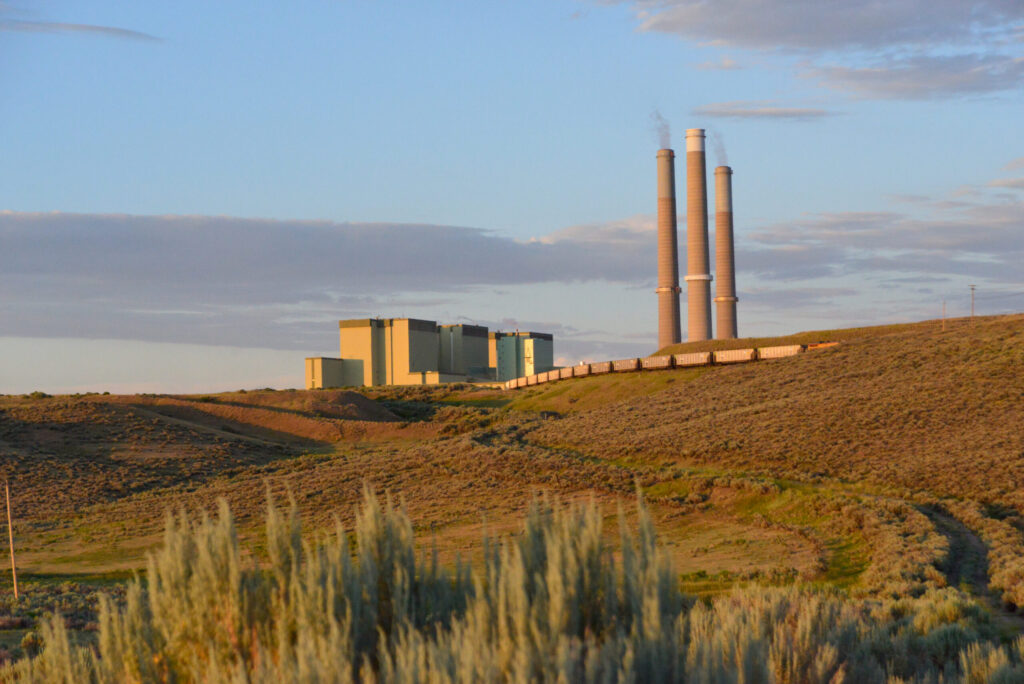
Gov. Jared Polis signed into law a bill in reaction to orders from the U.S. Department of Energy to keep older coal units online. The federal government’s instructions applied to Craig Unit 1 in Colorado, one of five coal units...

Mental Health Colorado names 2026 legislators of the year
Marissa Ventrelli
marissa.ventrelli@coloradopolitics.com
Updated 2 days ago
Six state lawmakers have received recognition from the advocacy organization Mental Health Colorado for their work during the 2026 legislative session. “Mental Health Colorado’s work to pass laws, change practices, and build a movement depends on courageous advocates and bipartisan...
PREV
PREVIOUS

State water task force says monsoons coming, drought lessening in southwest Colorado
While much of Colorado is still in extreme drought, June and July rains have lessened some of the shortfalls in southwestern Colorado. That’s according to members of the state’s Water Availability Task Force, who met Tuesday to look at monthly numbers on precipitation and reservoir levels. But even with above-average precipitation in the last two […]

Colorado will allow four-year colleges to grant associates degrees to those who dropped out. Will more students go back for a bachelor’s?
Over 13,000 Colorado residents have earned more than 70 college credits at four-year state universities in the past five years but stopped short of a degree, according to the Colorado Department of Higher Education. Now, a new Colorado law lets universities award those students with an associate’s degree. Giving students with some college an associate’s […]