

Denver City Council approves additional $1 million for STAR program

Denver’s City Council on Monday night voted to add $1 million in general fund money to the city’s Support Team Assisted Response program that sends pairs of paramedics and case workers instead of police to nonviolent calls.
District 10 Councilmember Chris Hinds said the boost in funding will allow the STAR program to expand across Denver. He said his office has gotten a flood of positive feedback about the program.
“I think that this is a great move for our city, for our unhoused neighbors, and for our housed neighbors. We should be putting more funding [into] treatment of causes to issues in our city, and STAR is one of those programs, including sending addiction and mental health counselors to calls that require that specialized training.”
A report released last winter evaluating the program’s first six months found that the more than 700 calls the STAR team responded to did not lead to arrests or require a police officer response. The pilot phase of the program ran through May this year.
Police and the community organizations involved with STAR’s implementation and operations cheered the early success of STAR, but also have said the program needs to be viewed as one piece of a broader goal of increasing resources for long-term crisis services – such as mental health care, substance use treatment and housing services – to address the issues that put people in crisis and prompted a 911 call in the first place.
Vinnie Cervantes, the organizing director of the Denver Alliance for Street Health Response who participated in the STAR program’s evaluation, told The Denver Gazette last winter that tracking the number of times responders connect a person to long-term services such as mental health or substance use treatment is a key metric for measuring STAR’s long-term success.
The extra funding approved by City Council on Monday evening will flow through the Denver Department of Public Health and Environment.
Advocates of STAR program look to ways of evaluating its long-term success


Immigration reporting measure fuels debate over Colorado’s role with ICE
Marissa Ventrelli
marissa.ventrelli@coloradopolitics.com
Updated 5 hours ago
A coalition of advocacy groups and several district attorneys rallied outside the Colorado Capitol on Thursday to oppose a ballot measure that, if approved by voters in November, would require state and local law enforcement to cooperate with federal immigration...

Colorado Politics Calendar Sept. 14-20
Rachael Wright, Special to Colorado Politics
rachael.wright@coloradopolitics.com
Updated 3 days ago
CoPo’s weekly political calendar will help you find political and public-policy events throughout Colorado. It includes candidate and issue campaign events, public policy meetings, court hearings, state and local party conventions, assemblies, debates, rallies, parades, speaking engagements, traveling dignitary appearances,...
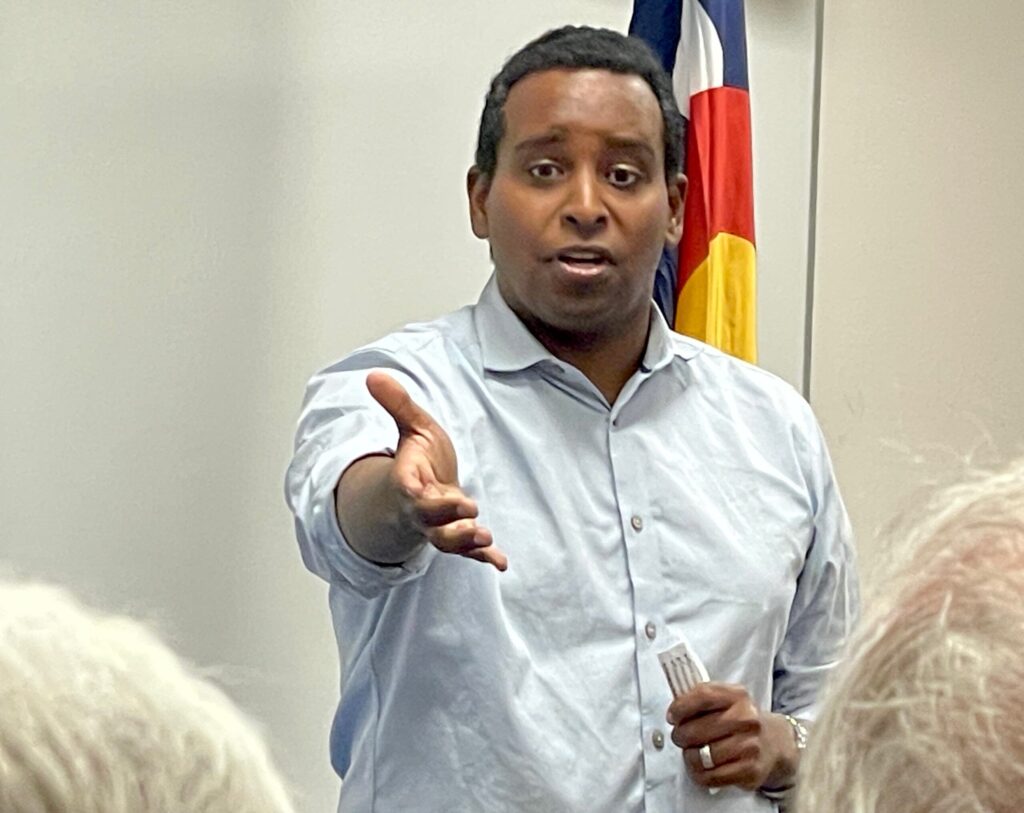
The African roots of three Colorado leaders | SONDERMANN
Eric Sondermann
eric-sondermann@coloradopolitics.com
Updated 3 days ago
Colorado’s political transformation is measured in many ways. A once reliably red state (with asterisks) became purple and is now a rather deep blue. For better or worse, probably the latter, power is ever more consolidated along the Front Range...
Federal judge green-lights civil trial against ex-Fort Collins DUI officer
Michael Karlik
michael.karlik@coloradopolitics.com
Updated 1 day ago
A federal judge ruled on Thursday that Fort Collins’ former “DUI officer” will face a civil trial for allegedly investigating a motorist for impaired driving without any reasonable suspicion to do so. In recent years, several people arrested by Officer...

Denver police reopen 13 sex assault cases after retesting Missy Woods’ CBI work
Jenny Deam
jenny.deam@gazette.com
Updated 1 day ago
Thirteen previously closed Denver sexual assault cases have been reopened after the city’s crime lab retested DNA evidence once analyzed by former Colorado Bureau of Investigation forensic analyst Yvonne Woods. A police spokesperson told The Denver Gazette the once-closed cases...

Ballot measure aims to shift Colorado sporting goods tax revenue to land, water and wildfire projects
Marissa Ventrelli
marissa.ventrelli@coloradopolitics.com
Updated 5 hours ago
Colorado voters this November will decide whether to direct a share of sales tax revenue from sporting goods — including bicycles and skiing equipment — toward land and water conservation, wildfire prevention and expanding outdoor recreation. Supporters say the measure...

Colorado Supreme Court suspends Mesa County judge pending misconduct investigation
Michael Karlik
michael.karlik@coloradopolitics.com
Updated 7 hours ago
The Colorado Supreme Court suspended Mesa County Court Judge Michael J. Grattan on Thursday amid a misconduct investigation. The court’s Sept. 10 order gave Grattan 21 days to explain why his paid suspension should not continue through the end of...

Trump honors the fallen of the 9/11 terrorist attacks during Pentagon speech
Mabinty Quarshie
mabinty-quarshie@coloradopolitics.com
Updated 1 day ago
President Donald Trump and first lady Melania Trump honored the roughly 3,000 Americans killed during the Sept. 11, 2001, terrorist attacks during a ceremony at the Pentagon. The event marking the 25th anniversary of the deadliest attack on American soil...
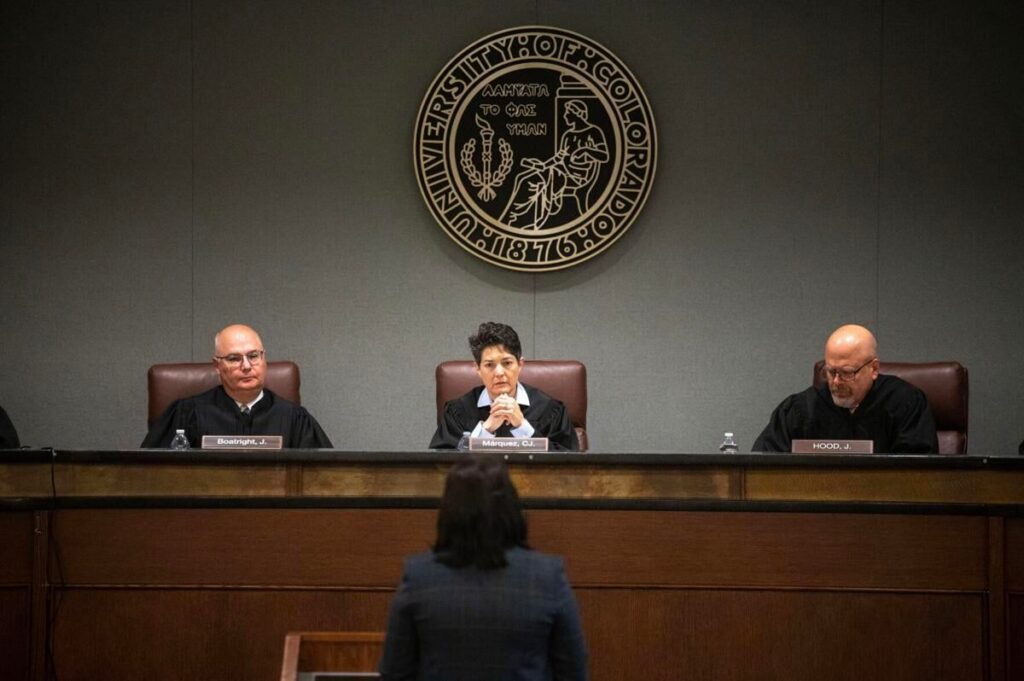
Colorado Supreme Court changes course, dismisses case about special district bonds
Michael Karlik
michael.karlik@coloradopolitics.com
Updated 7 hours ago
The Colorado Supreme Court declined on Friday to decide a dispute between a large-scale Commerce City development and the various districts financing it, after initially showing interest in the ongoing case. Colorado has roughly 2,800 special districts, which are local...

Colorado leaders express outrage and pain following 9/11 attacks | A LOOK BACK
Rachael Wright, Special to Colorado Politics
rachael.wright@coloradopolitics.com
Updated 2 days ago
Twenty-Five Years Ago This Week: “Responding to the 9/11 terrorist attacks, Colorado Gov. Bill Owens told reporters in a statement, “I join all Coloradans in expressing outrage and horror at the senseless terrorist bombings in New York and Washington D.C....
PREV
PREVIOUS

Denver City Council OKs new wage theft crime, elimination of STI testing mandate, more
The Denver City Council unanimously passed several ordinances during its meeting Monday night, including implementing a new wage theft crime, eliminating mandatory STI testing for sex worker arrests, requiring special business licenses for massage parlors and reelecting council leadership. Wage theft The first ordinance creates a new wage theft crime to fill gaps in Denver’s […]

Jefferson County deal seen as 'win-win' for outdoor recreation, mining
Open space officials in Jefferson County are eyeing a land exchange that they say would benefit recreation and wildlife as well as a mining company. The proposed deal was described as a “win-win” in a recent press release. The sales tax-funded Jeffco Open Space program would acquire 1,192 acres that would be funded by Martin […]