

Residents in parched Colorado county fight water speculation

Local residents, including former state Rep. Wes McKinley, have spent months fighting the appropriation of wells in Baca County, Colo., where water levels are steadily receding. (Video by Skyler Ballard)
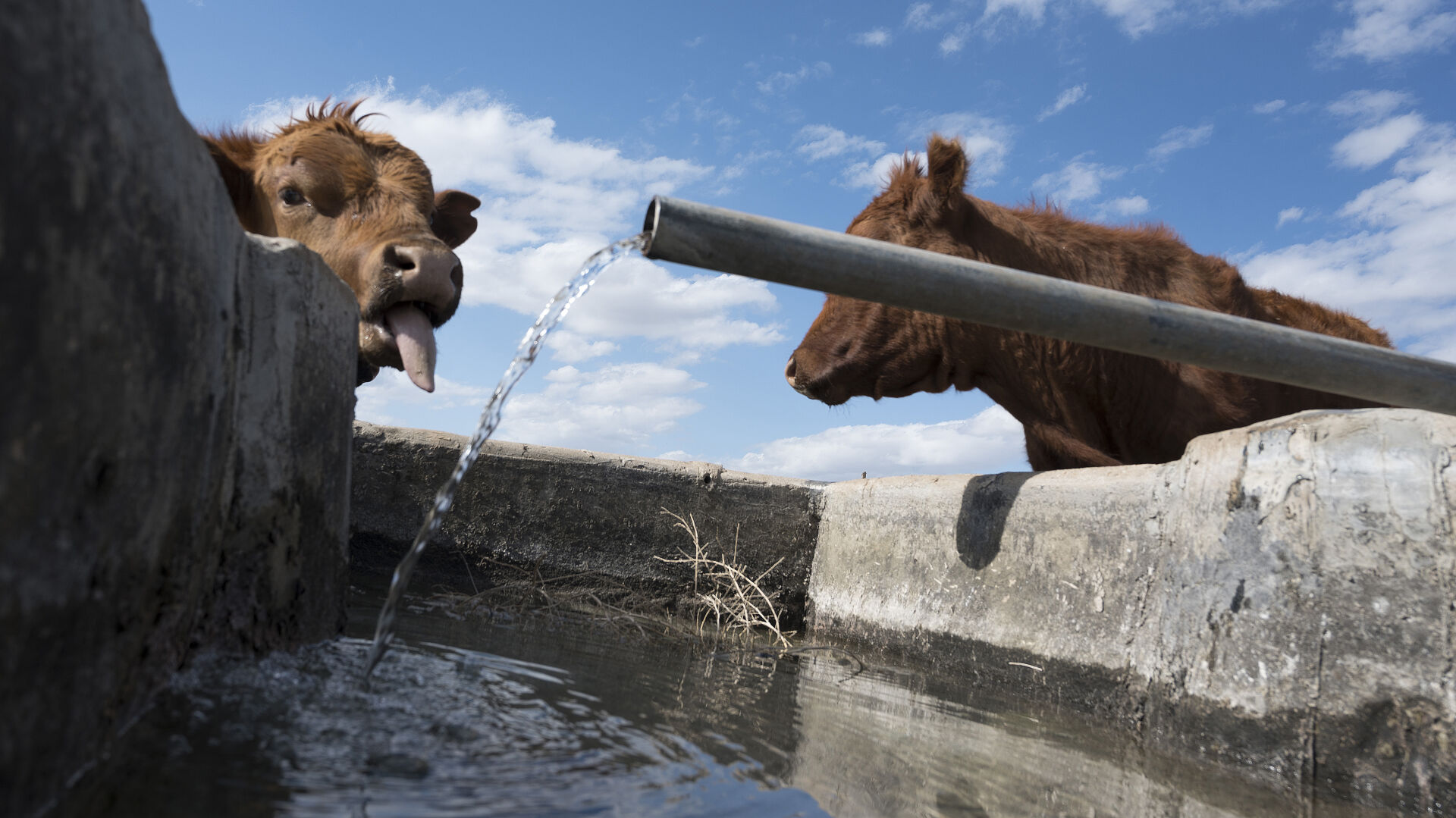
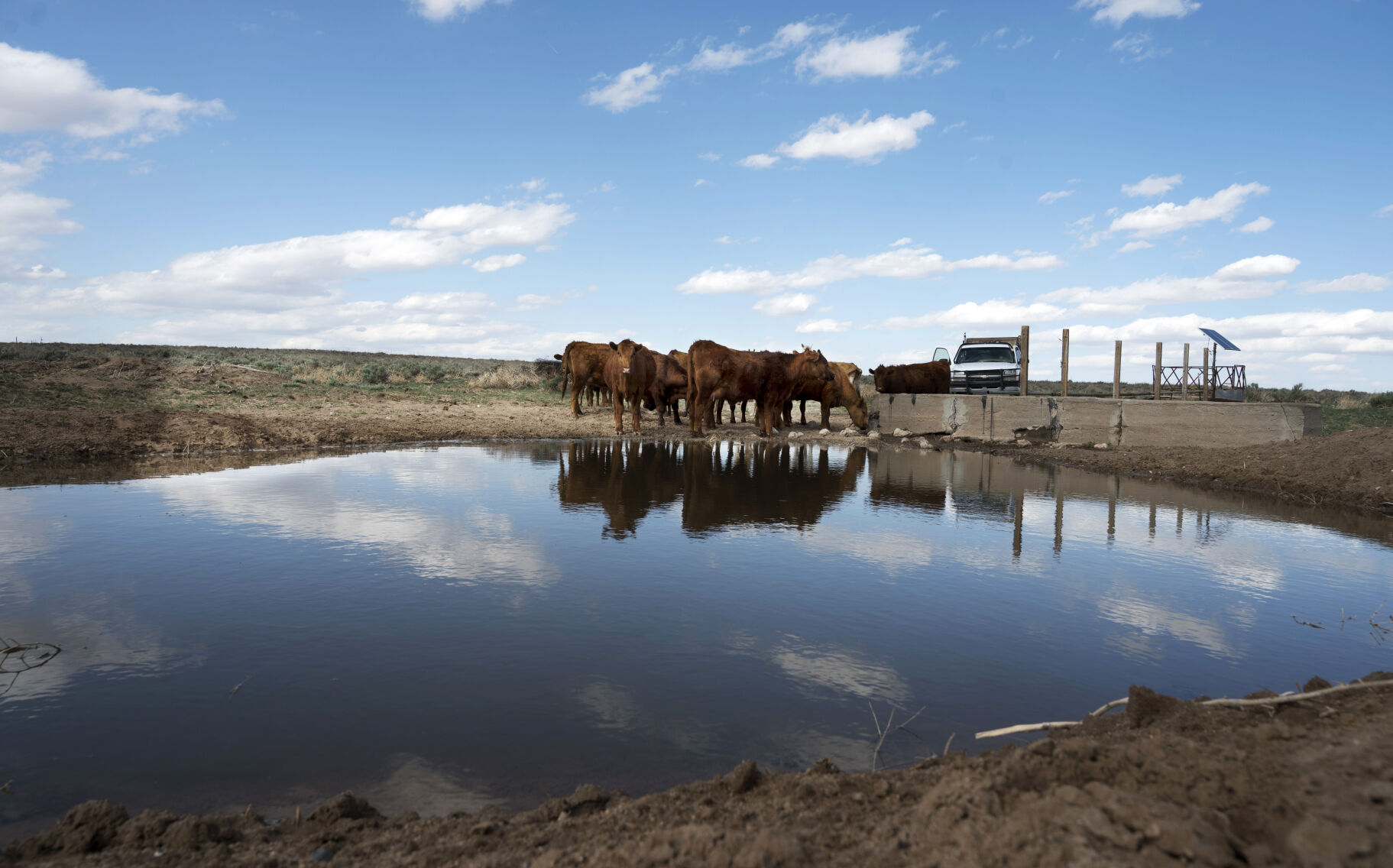
Tumbleweeds bounced along County Road 44, 20 miles south of the Colorado town of Walsh. Vast expanses of dry grassland spread in every direction in this southeast corner of the state, the occasional small herd of dusty cattle grazing at roadside.
Farmhouses dotted the horizon.
To most people, this would be the middle of nowhere, but to Wes McKinley, a former state representative who lives in one of those farmhouses along County Road 44, it’s “the center of everything.”
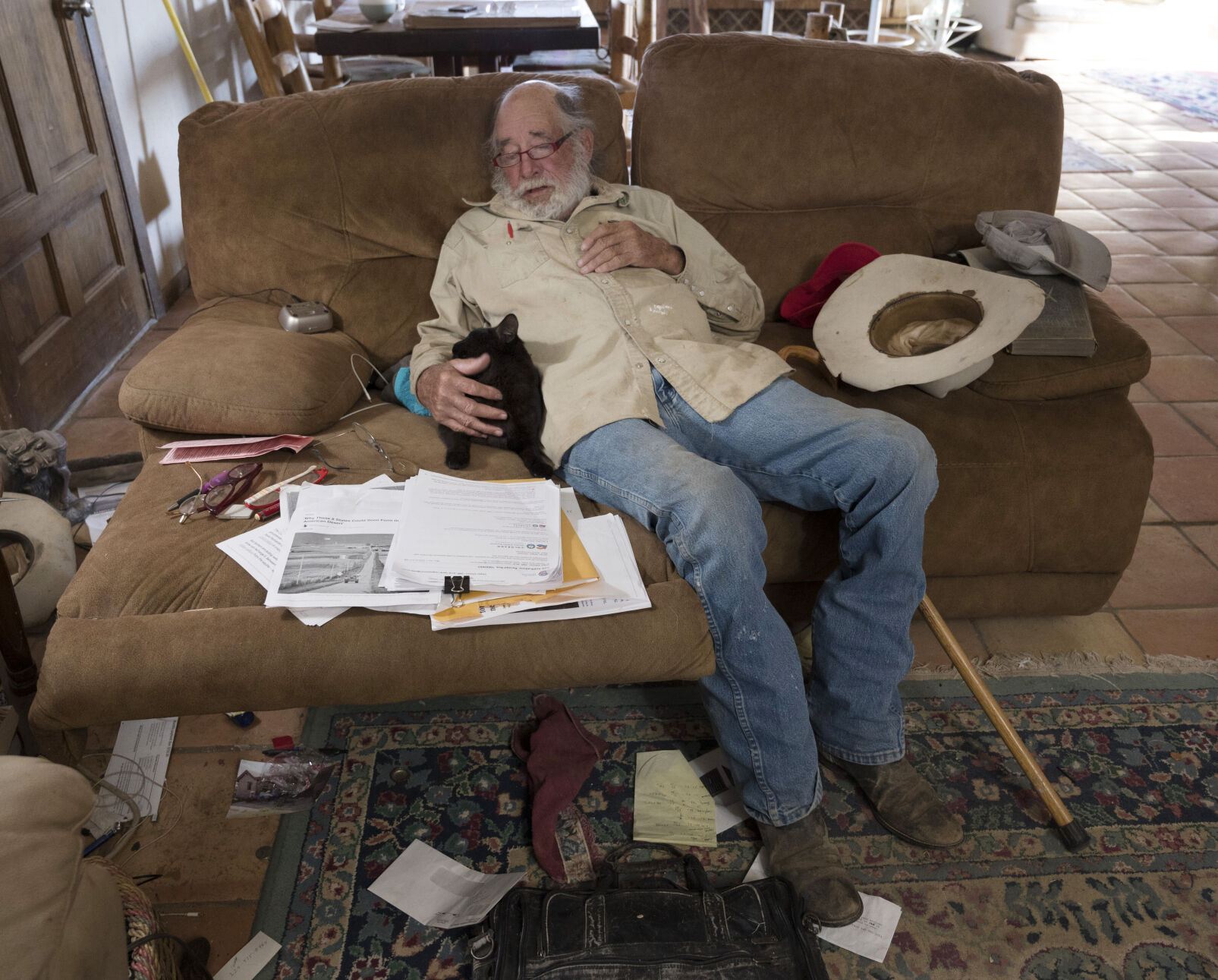
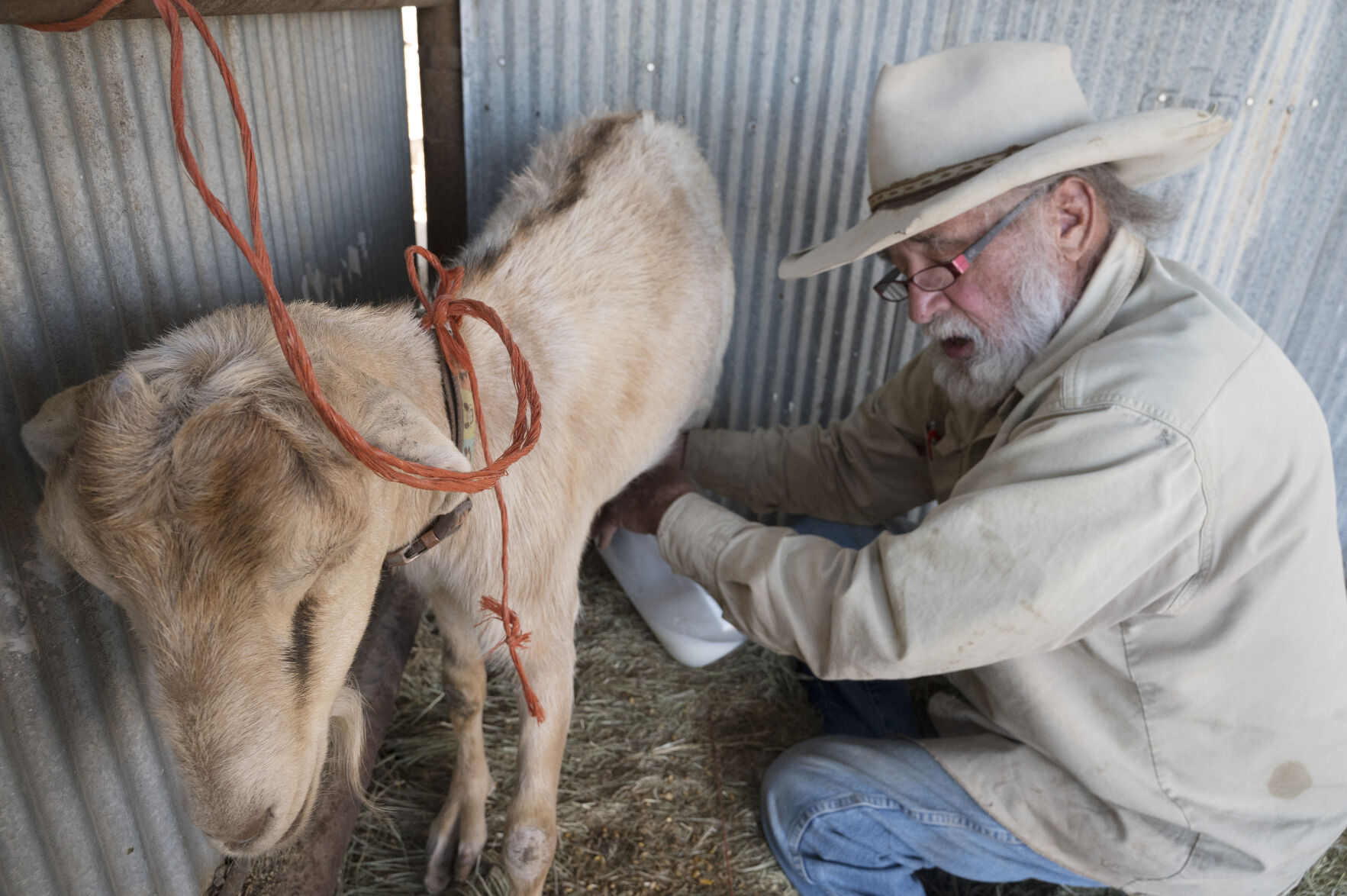
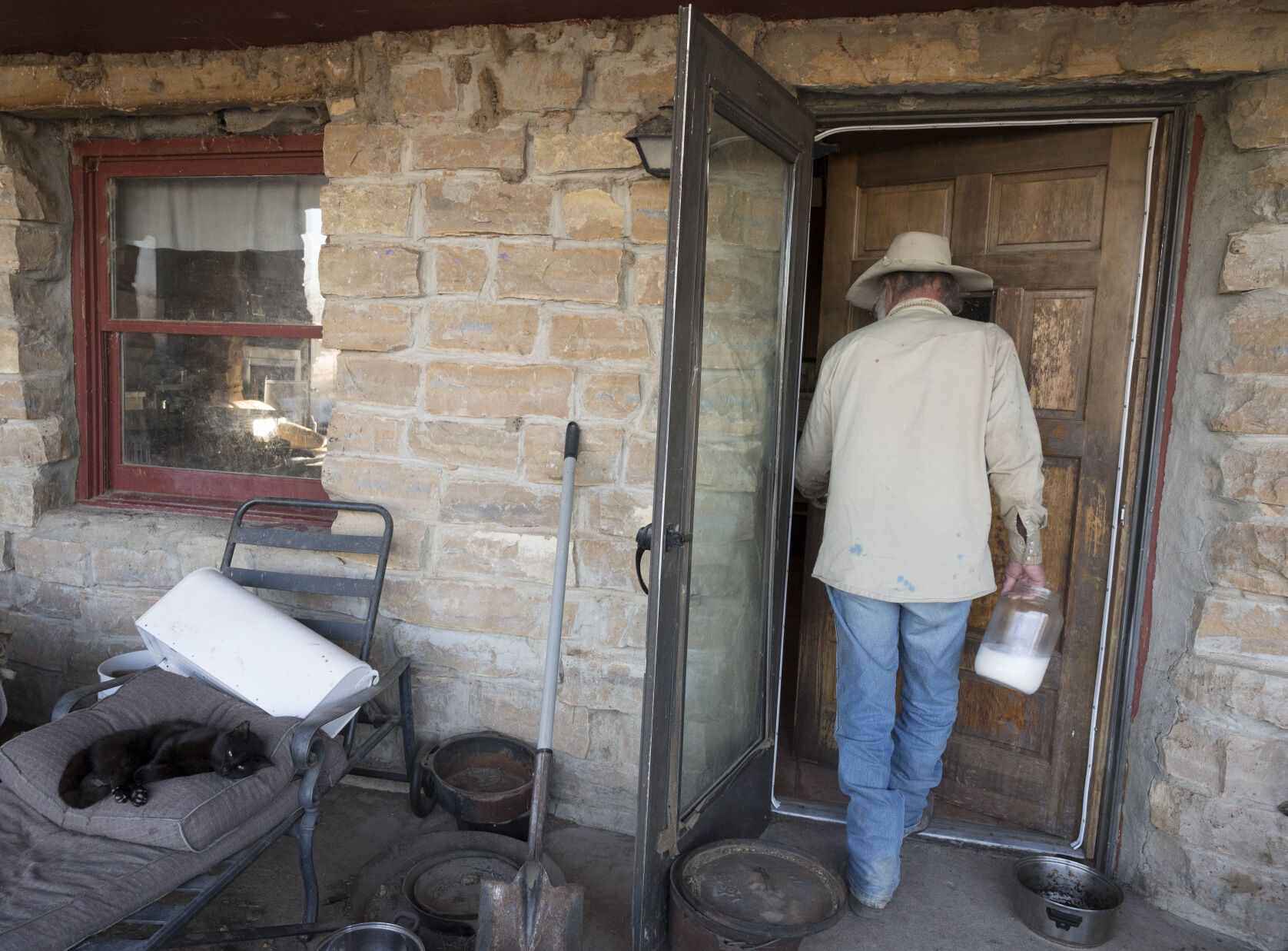
McKinley, 76, walked out of his house leaning on a wooden cane, a cowboy hat shading his face.
“Want a peanut?” he asked, holding out a Tupperware container.
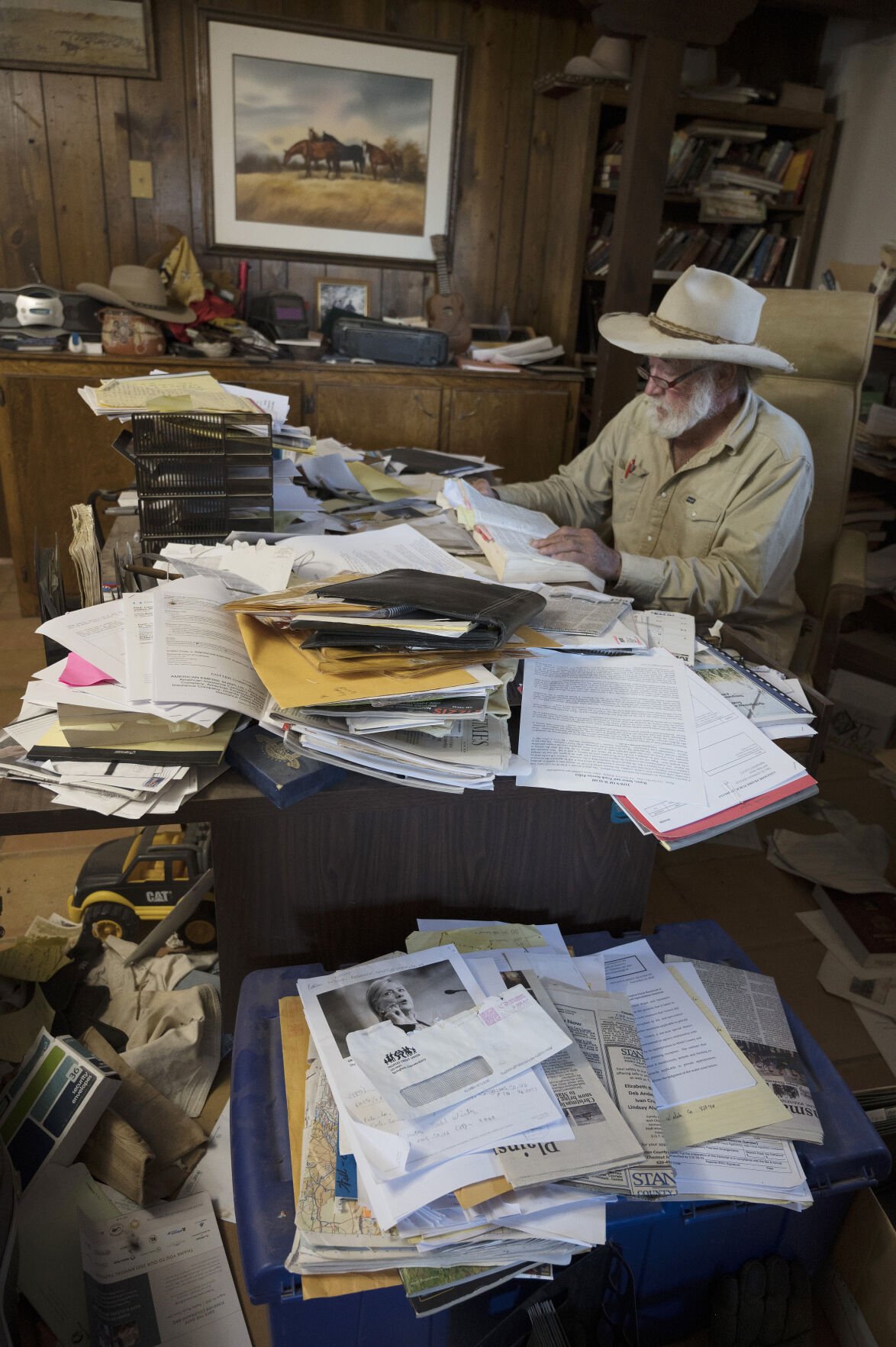
Odd pieces of metal, old cars and even a broken-down school bus littered his property.
To most people, it’s junk. To McKinley it’s a gold mine.
“It all depends on perspective,” McKinley said.
His family homesteaded on the land in 1910 and has been there since, McKinley said. During the days of the Dust Bowl in the 1930s, water in the region was scarce and day-to-day existence was desperate.
Nearly 100 years later, McKinley said he faces a similar challenge as his ancestors.
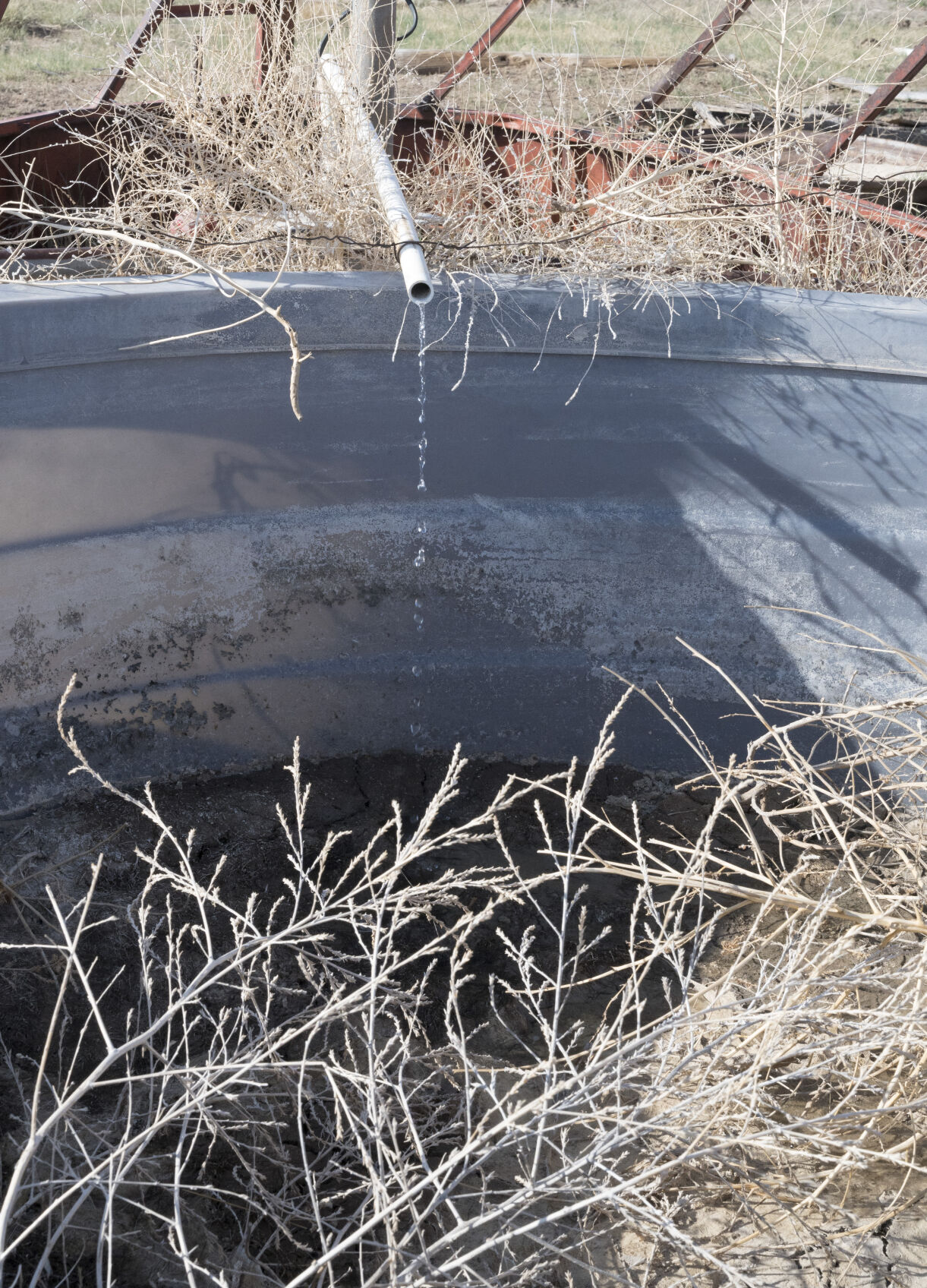
“I just got through having to redo my water well, my pump,” McKinley said. “My water level dropped.”
“You have to have water; water is the universal substance. Without water, you only live three days.”
That thought and others similar have exacerbated a bitter feud that McKinley and other local residents are having with LGS Holdings Group, a Georgia-based real estate company, which they believe is buying up Baca County land in order to speculate on the water rights that come with it.
When it comes to conflict over water in the parched region, Baca County is one of the active fronts in a wider war around Colorado and the West, in which developers seek to buy local water rights to sell for profit elsewhere.
Two years ago, in the San Luis Valley, private interests from metro Denver were seeking to buy valley water for export.
“Over my dead body,” said former Colorado U.S. Senator Ken Salazar at one public meeting. Salazar’s family has farmed the valley for generations.
LGS declined comment for this article. McKinley, a pure adversary to LGS, has previously described their position for them: “It’s big boys sitting out there with their fancy suits, cigars and their diamond rings and the girls on their shoulder,” he said. “This is not a little deal.”
Living off the land
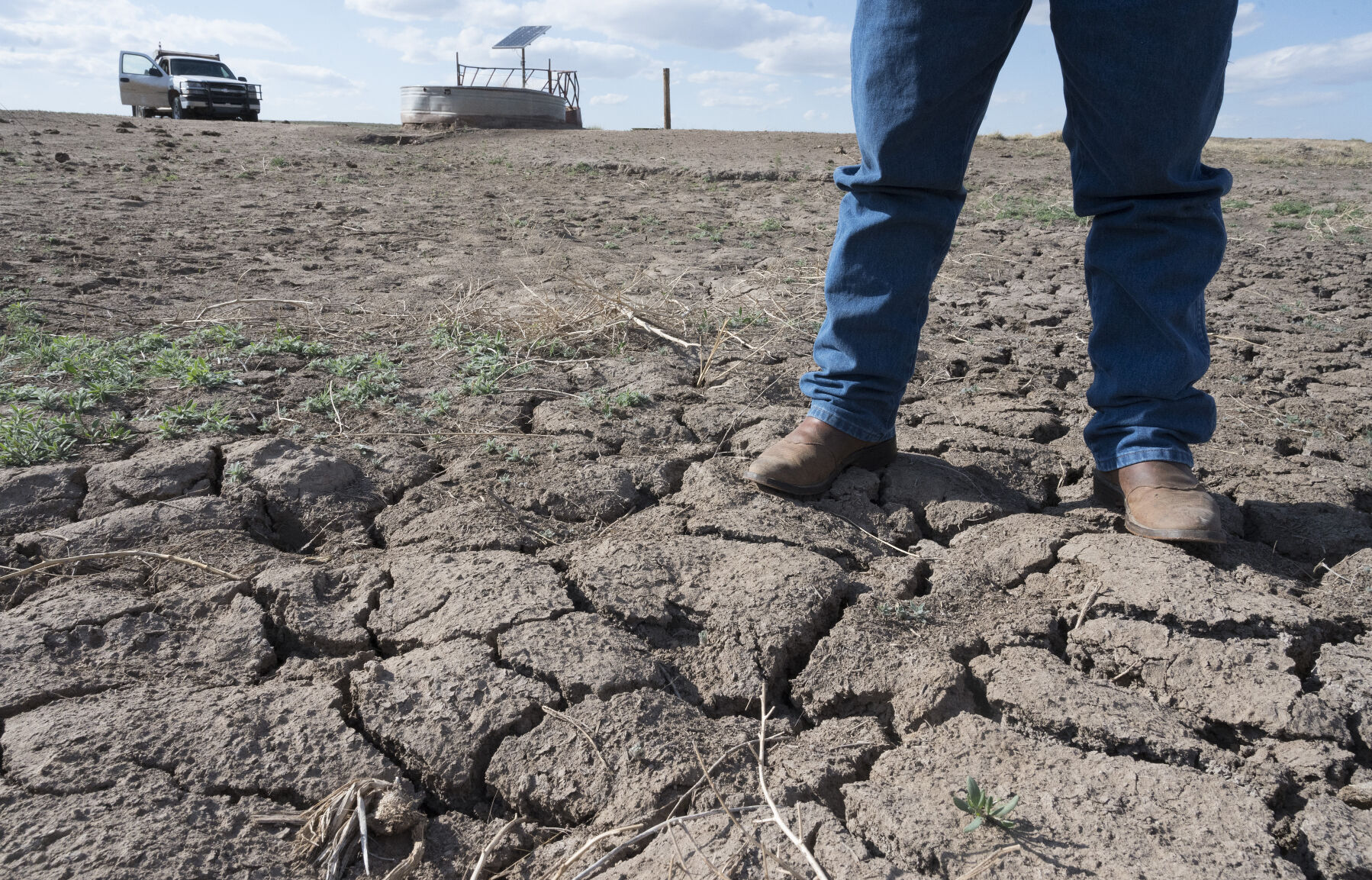
Baca County, nestled in the corner of the state kissing corners with Kansas and Oklahoma, faced extreme drought conditions during the spring of 2021 after the third worst years of drought in state history during 2020.
Baca County residents rely heavily on ground water from the Ogallala Aquifer, a basin that spans from South Dakota to Texas. But the colossal aquifer’s water levels have been steadily receding.
During 2020 to 2021 wells pumping water from the aquifer measured an average water level decrease of 2.75 feet. Over the past 10 years, the average water level sunk by 12 feet, according to a ground water levels report from the Colorado Division of Water Resources.
Some residents like McKinley who rely on water for daily use, for farming and ranching, worry that the aquifer’s depletion is exacerbated by the 60 water wells LGS drilled.
LGS, incorporated in Stockbridge, Ga., has branches in Kansas and Colorado, but obtaining information about the company beyond their well permits was difficult to find. Adam Printz, an attorney for LGS, declined to comment.
Based on online searches, LGS appears to be an entity formed by real estate developers in Stockbridge. They have interests in several projects in multiple states and under different limited liability company names, which is a common practice from developers.
Douglas Adams, listed online as an LGS principal, also declined to comment.
LGS’ wells vary in use from irrigation and livestock to monitoring and sampling wells and 59 more wells are pending approval, according to well permit applications filed with the Colorado Ground Water Commission, an arm of the Division of Water Resources that administers groundwater resources in eastern Colorado.
The company’s previous well applications were approved but not without strong opposition from residents like McKinley.
“It is a complicated issue,” McKinley said.
Over a period of two years, McKinley filed over 40 objections to the Colorado Ground Water Commission challenging the construction of wells applied for by LGS.
He believes there is not enough water to support the wells, 40 of which are high-capacity wells, which can pump hundreds of gallons of water per minute.
McKinley filed objections in hopes that the Colorado Ground Water Commission would set a hearing to determine whether there is enough water to support the wells.
But the water commission did not agree with McKinley.
Hearings objecting to over-appropriation are intended to decide whether the the construction of one well threatens the functionality of another well, which is determined if the well is built within half mile radius of another, Kevin Rein, the state engineer and director for the Colorado Division of Water Resources, said.
The wells McKinley challenged were not within a half-mile radius of his wells, therefore he didn’t have standing to file objections, Rein said.
“And for that reason, of course, the hearing officer dismissed the hearing, because there was no grounds for one,” Rein said.
Eventually McKinley was barred from submitting objections by a district court judge who found him in contempt of court for his zealous attempts to object to the well applications.
The well permits were approved, but the battle did not stop there.
Over a dozen other residents took up the mission of objecting to LGS’ well requests at the start of 2021.
Almost every objection cited “stress on the Ogallala aquifer” as the reason for opposing the wells, while others cited environmental concerns, including depriving trees of water.
Belinda Sturges, who owns a home near Walsh, helped lead the push for a hearing.
“Water is our lifeblood, you know – we cannot survive without water, every human needs it,” Sturges said. “And I believe that water for people to farm, ranch and reside takes precedence over development water.”
But when Sturges and other residents objected, they were denied hearings from the Ground Water Commission.
“Instead, the people that objected receive these basically threatening letters that, you know, ‘You’re going to be held responsible and you could have to pay damages’ and all this stuff,” Sturges said. “So a lot of them chose to not go forward because they were fearful of having legal repercussions similar to what Wes had.”
If residents are concerned about the aquifer’s sustainability, instead of objecting to individual well permits, residents need to petition to amend the rules and create a new rule that says the Ogallala Aquifer is over-appropriated and closed from further use, Rein said.
“It’s really about local control,” Rein said, “because there are other landowners in the southern High Plains that may want to continue to have that right to appropriate water.”
But when local wells go dry, people migrate from the area to larger towns and cities, McKinley said.
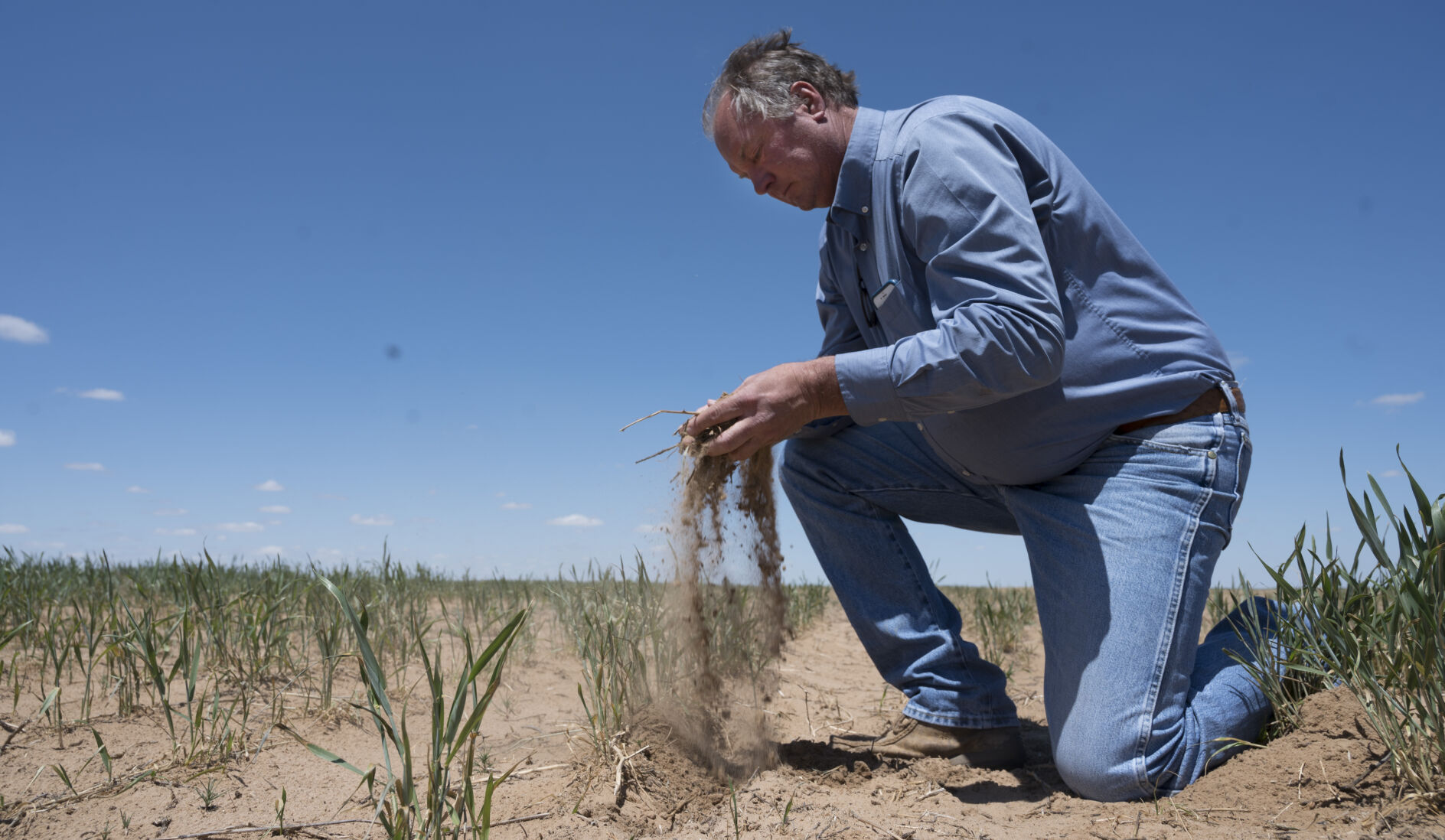
Keith Simon, a farmer near Walsh, says he’s experienced loss of water firsthand.
“In last couple, three years I’ve noticed that the water is just, some of your wells that were pumping 800 (gallons per minute) are now pumping 500,” Simon said.
“I think it’s going to ruin the old farmer way of life. I mean, you’re going to lose the farm family and (what’s left) it’s going be more of a corporation … which I’m not saying is bad, but I hate to see all the smaller families go with it.”
The business of speculation
Flying above the fields of Baca County in a Cessna plane, veins of streams and clusters of trees formed an intricate map of land hundreds of feet below – all of it brown except for lush patches of green fields where wells watered the land.
“Those must be new,” McKinley says pointing to small irrigation ponds gleaming below.
The water below appeared to bring life to everything, but McKinley and some of the other residents worry the wells and the water they release are a venture to drive up the worth of the land and sell it for a profit.
“I’m not saying you’re going to sell your water for $1.49 (per gallon),” McKinley said. “But that is the potential, that’s the water market, it’s money.”
Water speculation is illegal in Colorado, and those who gain rights to water must put it to beneficial use.
In the case of LGS, the water is used for irrigation, livestock and daily use, according to well permits filed with the state.
But based on real estate listings, LGS is trying to sell a plot of more than 45,000 acres for nearly $40 million, which Rein says is within the bounds of the law.
“In terms of making money off of using water rights to irrigate is standard procedure,” Rein said “People can sell the water rights and the land.”
The real estate listing claims the plot has “some of the best hunting in the country” with “incredible diversity in regard to terrain, wildlife, livestock grazing, income opportunities.”
“Speculation in and of itself is not a bad thing, either,” said Steven Greenhut, a water expert with R Street Institute, a public policy research organization. “I mean, it’s just a normal market process. There’s a new water market that’s been created where people can buy and sell a futures.”
Having a market to trade water as a commodity means pricing can provide signals about what is happening on the ground, Greenhut said.
“Anti-speculation laws actually discourage water banking and other collaborative approaches to saving water,” Greenhut said.
But that’s not the way Colorado lawmakers see it.
Speculation occurs when a person or entity seeking water rights does not intend to use the water, but instead keeps the rights in hopes that they will be worth more in the future, said Peggy Montaño, a lawyer with the state’s Anti-Speculation Law Work Group, a body convened to examine and provide recommendations to improve the state’s anti-speculation laws.
“So they want to flip it, in essence, and that doesn’t benefit the economy of the state of Colorado,” Montaño said. “We’re a desert state, we don’t have enough water to meet all of our needs. So the law says, ‘Nope, you can’t claim a water right and just hold on to it for the future, because someone else might be able to use that water for a purpose now.'”
Montaño said disputes like this are not unusual. That’s why she and other experts were called to investigate Colorado’s anti-speculation laws and give lawmakers recommendations on how to improve the existing laws.
“The local people are concerned that because we are a state that goes from drought, I mean, a large part of our state is now in drought and exceptional drought, that this could impact their livelihood,” Montaño said.
The work groups recommendations will be given to lawmakers this fall, she said.
Ownership
McKinley drove across bumpy county roads in his beat-up pickup truck, exposed wires hanging beneath the steering wheel.
“If you control the water, you control the people,” McKinley said, as he sped past fields some cracked and dry, and others freshly green.
“All I want to do is for them to have a hearing and to prove the water is there,” McKinley said.
It’s reasonable for residents to ask for a hearing, Rein, the state engineer, said, but it must be done through the proper legal processes.
“Although some users would like us to make certain decisions on their behalf, if we act contrary to the District Court’s decision, the law, or the rules to do that, it would have a more general, negative impact on their perception of the Ground Water Commission and in most cases, our actions would be challenged or appealed and we would likely end up in the same place anyway,” Rein said.






Colorado Politics Calendar Aug. 3-9
Rachael Wright, Special to Colorado Politics
rachael.wright@coloradopolitics.com
Updated 4 days ago
CoPo’s weekly political calendar will help you find political and public-policy events throughout Colorado. It includes candidate and issue campaign events, public policy meetings, court hearings, state and local party conventions, assemblies, debates, rallies, parades, speaking engagements, traveling dignitary appearances,...

The primary political reform and precondition for all others | SONDERMANN
Eric Sondermann
eric-sondermann@coloradopolitics.com
Updated 4 days ago
In its current state, the American political system has no end of ailments. Far too many factors accelerate polarization and work against moderation and narrowing the differences. Media, and the way so many citizens limit themselves to agreeable, reinforcing sources,...
Susemihl wins surprise victory to replace Steve Durham as Colorado Springs state senator | A LOOK BACK
Rachael Wright, Special to Colorado Politics
rachael.wright@coloradopolitics.com
Updated 3 days ago
Forty-five years ago this week: In a closed session, the vacancy committee for Colorado’s Senate District 12 selected attorney Peter Susemihl to complete Sen. Steve Durham’s, R-Colorado Springs, term. Durham resigned his seat to become Region 8 Director of the...

10th Circuit partially revives lawsuit over 2020 Denver protest injuries
Michael Karlik
michael.karlik@coloradopolitics.com
Updated 1 day ago
The Colorado-based federal appeals court revived a man’s claims against Denver on Friday after concluding a trial judge resolved the case in the city’s favor without analyzing two of the three instances of alleged excessive force and other constitutional violations....

At conservative summit, Colorado Republican leaders concede Democrats’ election edge
Marissa Ventrelli
marissa.ventrelli@coloradopolitics.com
Updated 15 hours ago
Four Republican state lawmakers told attendees at a gathering of conservative leaders on Friday they doubt their party can win statewide races, noting that Colorado’s electorate has been shifting toward Democrats but adding they see an opening in several pockets....
Federal judges find Colorado immigration judge violated several orders
Michael Karlik
michael.karlik@coloradopolitics.com
Updated 9 hours ago
Multiple federal judges in Colorado have freed people from immigration custody after determining that one immigration judge violated their directives for properly conducting bond hearings. For nearly a year, Colorado’s U.S. District Court has faced a flood of habeas corpus petitions...
Q&A with Mike Pence | Former vice president says GOP’s populist turn from conservatism isn’t permanent
Ernest Luning
ernest.luning@coloradopolitics.com
Updated 12 hours ago
Former Vice President Mike Pence says he’s concerned that the Republican Party has taken a populist turn away from bedrock conservative principles during President Donald Trump’s second term, but he believes the party will return to its roots when Trump...
New federal plan sets short-term rules for Colorado River management
Marianne Goodland
marianne.goodland@coloradopolitics.com
Updated 1 day ago
Interior Department’s plan spares Colorado from mandatory cuts for now After years of stalled negotiations among the seven states that rely on the Colorado River, the federal government on Friday released its own plan for managing the drought-strained system. Calling...
Fauci’s diary details blooming outrage toward ‘far right,’ softness toward Biden and China
Hudson Crozier
hudson.crozier@washingtonexaminer.com
Updated 2 days ago
Dr. Anthony Fauci increasingly railed against “far right” critics of his approach to COVID-19 issues while describing strong support from the Biden White House in his pandemic-era diary, which was recently released by Congress. The former National Institute of Allergy...
Colorado is spared mandatory cuts under federal Colorado River proposal
The Associated Press
the-associated-press@coloradopolitics.com
Updated 2 days ago
California, Arizona and Nevada to take less water under plan While Colorado has been spared from mandatory reductions, Arizona, California and Nevada would take less water from the Colorado River under a proposal announced Friday by the federal government to...
PREV
PREVIOUS

Aurora City Council indefinitely postpones 2019 sugary drink ordinance
After a year and a half of discussions, votes and postponements, the Aurora City Council voted Monday to indefinitely postpone an ordinance that would make non-sugary drinks the default on kids’ menus. The Healthy Kid Meal Ordinance was first introduced to council committees in December 2019 and passed its first vote 6-3 in March 2020; […]

Michael Bennet tells donors Democrats have a 'moral responsibility' to keep Senate majority
U.S. Sen. Michael Bennet said Monday night during a virtual fundraiser that electing Democrats next year – including by winning his own bid for a third term in Colorado – is “critical” to strengthening the country’s form of government and moving past the Trump administration years. “Our democracy had a near-death experience, and that was […]