

Colorado Supreme Court puts full stop on challenges to hospital provider fee legality

Updated with statement from the Department of Health Care Policy and Financing.
The Colorado Supreme Court on Monday ended more than six years of challenges to the state’s hospital provider fee, denying plaintiffs one last chance to challenge the fee’s constitutionality.
The Court issued a denial of writ of certiorari, a legal term that means they won’t hear the case.
The lawsuit, originally filed in 2015, was brought by the TABOR Foundation, led by former lawmaker Penn Pfiffner, and which claimed the hospital provider fee was a tax, subject to voter approval from the Taxpayer’s Bill of Rights. It also challenged the law based on the Constitution’s single-subject rule, which requires that bills follow the titles.
Last November, the Colorado Court of Appeals ruled against the Foundation’s appeal of a Denver District Court decision, scolding the lower court for even hearing the case at all. That was based on the appeal court’s unanimous decision that the Foundation had no standing to sue, and their finding that the hospital provider fee was not subject to TABOR because there is no taxpayer money involved.
The fee was set up through legislation in 2009, levying hospitals a charge for every overnight patient stay and for certain outpatient visits. That money was pooled, matched with federal funds under the Affordable Care Act, and redistributed to hospitals, in part to cover health care costs for uninsured and Medicaid patients.
By 2017, the fee was drawing about $600 million per year and pushing the state over its TABOR revenue limits, which could result in a refund to taxpayers. It also would mean a budget cut to hospitals. About a dozen rural hospitals complained they could not survive such large budget cuts and would be at risk of closing.
To solve the looming crisis, in 2017, a bipartisan group of lawmakers (then House Majority Leader KC Becker of Boulder, Republican Rep. Jon Becker of Fort Morgan, Senate Minority Leader Lucia Guzman of Denver and Senate President Pro tem Jerry Sonnenberg of Sterling) came up with Senate Bill 17-267, which converted the program to an enterprise, a state-run business. As an enterprise, monies collected under the program would not count toward the state’s revenue cap under TABOR.
The bill’s title, Sustainability of Rural Colorado, was so broad that the bill contained a whole slew of seemingly unrelated provisions, from Medicaid co-pays, to the enterprise for the provider fee, as well as funding for rural roads and bridges and an increase in the exemptions for business personal property.
Judge Ross Buchanan of the Denver District Court ruled in March 2019 that the provider fee is made up of “fees, and not taxes, and therefore are not subject to TABOR.” The difference, according to Buchanan, is that if the statutory language indicates that the primary purpose of the charge is “to raise revenues for general governmental spending,” the charge is likely a tax.
But the statutory language of both the 2009 and 2017 legislation spoke to specific purposes for those funds, and a specific category of entities that would pay the fee (hospitals), making the HPF a fee, he wrote.
While Buchanan dismissed part of the lawsuit, the ruling allowed that the plaintiffs had standing to sue, stating the member plaintiffs’ standing is “based on their challenge to the constitutionality of the subject provisions under TABOR” and that the foundation plaintiffs have associational standing based on their members’ standing.
That’s where the appeals court differed, not only in dismissing the lawsuit on its merits but finding that the plaintiffs all lacked standing.
“There is no evidence in the record that individual taxpayer dollars are used by the programs in any way,” the appeals court decision said. “Simply put, the unrebutted evidence is that the programs are funded solely by the hospitals and matching federal dollars. Thus … there is no nexus between the member plaintiffs’ taxpayer dollars and the hospital programs.”
In a statement, Kim Bimestefer, executive director of the Colorado Department of Health Care Policy and Financing (HCPF), said “Our Department is now providing health care coverage to about 1.5 million Coloradans through Colorado Medicaid. The [hospital provider] CHASE fee is critical to our ability to fund and serve more than one-third of those individuals. We join Colorado families, hospitals and other providers as well as the state in celebrating the Court’s decision.” HCPF administers the hospital provider fee program.
Pfiffner told Colorado Politics Tuesday that one of ways Colorado politics has stayed clean is to prevent “logrolling,” what he referred to as SB 267’s broad bill title.
In their lawsuit, the TABOR Foundation said that under single subject, SB 267 could not open the state to $400 million in new taxation and spending per year (the provider fee), put the state $2 billion into debt (the road and bridge portion), deal with Medicaid copays, marijuana taxes and all in a bill that deals with rural Colorado.
“You can imagine our frustration with the court, which said taxpayers can be taxed $400 million, therefore the state can spend that much and you don’t have standing,” Pfiffner said. Then the appellate court issued a ruling that ignored all those issues except for the standing issue on the bed tax. “Didn’t they read the lawsuit and amended complaint? The appellate court ruling was so insufficient, so lacking, as to be amateurish,” Pfiffner said.
Then along came the state Supreme Court, which he said didn’t take the time or thought to figure out whether the appellate court had it right. Whether or not the Supreme Court agreed with the appellate court with standing on bed tax, the high court “should not have walked away from a plethora of other issues that directly impact the taxpayers and citizens.”
Pfiffner added that “We’re supposed to have citizen control of government. We have seen a Court in this case, and more broadly, ignore the concept of citizens being in charge of their governments, and instead allow these dishonest workarounds to stay in place.”
Clarification: this story was clarified to more accurately represent the views of the TABOR Foundation on the bed tax.


Colorado Politics Calendar Aug. 3-9
Rachael Wright, Special to Colorado Politics
rachael.wright@coloradopolitics.com
Updated 3 days ago
CoPo’s weekly political calendar will help you find political and public-policy events throughout Colorado. It includes candidate and issue campaign events, public policy meetings, court hearings, state and local party conventions, assemblies, debates, rallies, parades, speaking engagements, traveling dignitary appearances,...

The primary political reform and precondition for all others | SONDERMANN
Eric Sondermann
eric-sondermann@coloradopolitics.com
Updated 3 days ago
In its current state, the American political system has no end of ailments. Far too many factors accelerate polarization and work against moderation and narrowing the differences. Media, and the way so many citizens limit themselves to agreeable, reinforcing sources,...
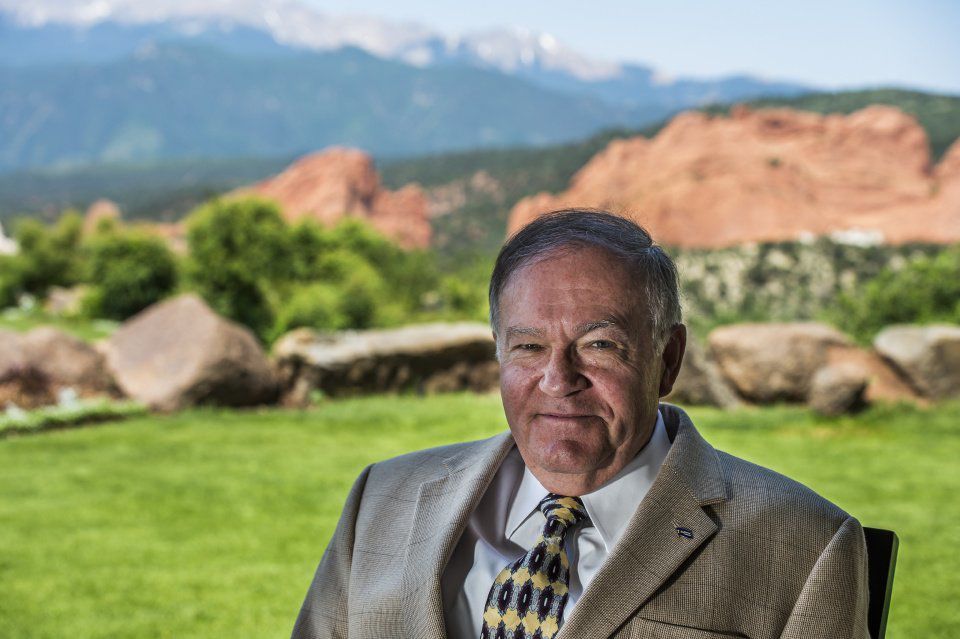
Susemihl wins surprise victory to replace Steve Durham as Colorado Springs state senator | A LOOK BACK
Rachael Wright, Special to Colorado Politics
rachael.wright@coloradopolitics.com
Updated 3 days ago
Forty-five years ago this week: In a closed session, the vacancy committee for Colorado’s Senate District 12 selected attorney Peter Susemihl to complete Sen. Steve Durham’s, R-Colorado Springs, term. Durham resigned his seat to become Region 8 Director of the...

10th Circuit partially revives lawsuit over 2020 Denver protest injuries
Michael Karlik
michael.karlik@coloradopolitics.com
Updated 1 day ago
The Colorado-based federal appeals court revived a man’s claims against Denver on Friday after concluding a trial judge resolved the case in the city’s favor without analyzing two of the three instances of alleged excessive force and other constitutional violations....

At conservative summit, Colorado Republican leaders concede Democrats’ election edge
Marissa Ventrelli
marissa.ventrelli@coloradopolitics.com
Updated 7 hours ago
Four Republican state lawmakers told attendees at a gathering of conservative leaders on Friday they doubt their party can win statewide races, noting that Colorado’s electorate has been shifting toward Democrats but adding they see an opening in several pockets....
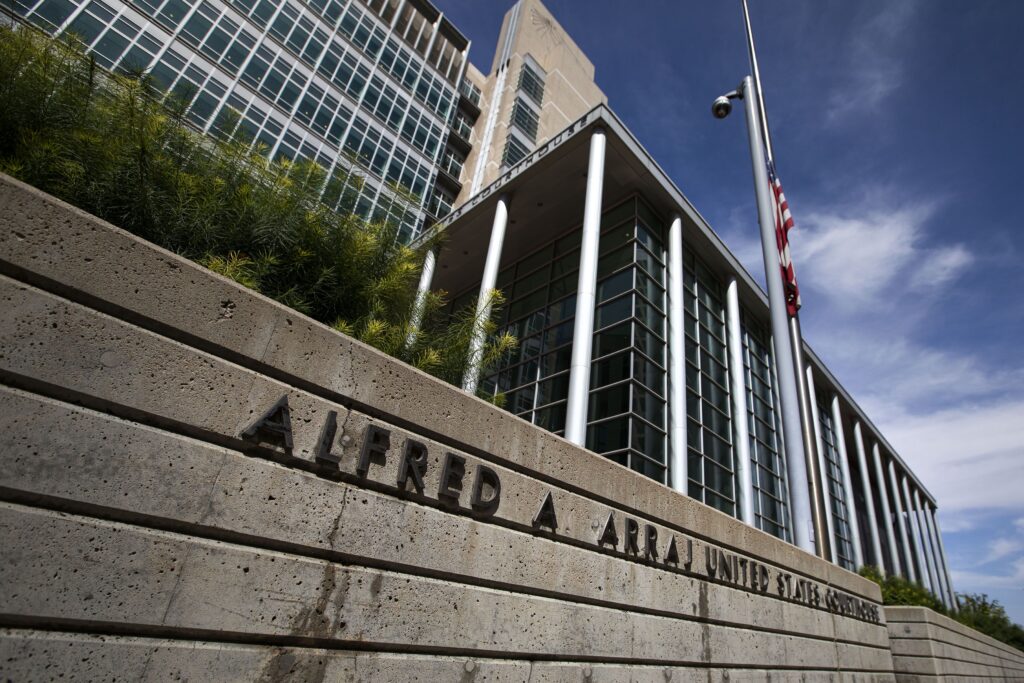
Federal judges find Colorado immigration judge violated several orders
Michael Karlik
michael.karlik@coloradopolitics.com
Updated 1 hour ago
Multiple federal judges in Colorado have freed people from immigration custody after determining that one immigration judge violated their directives for properly conducting bond hearings. For nearly a year, Colorado’s U.S. District Court has faced a flood of habeas corpus petitions...
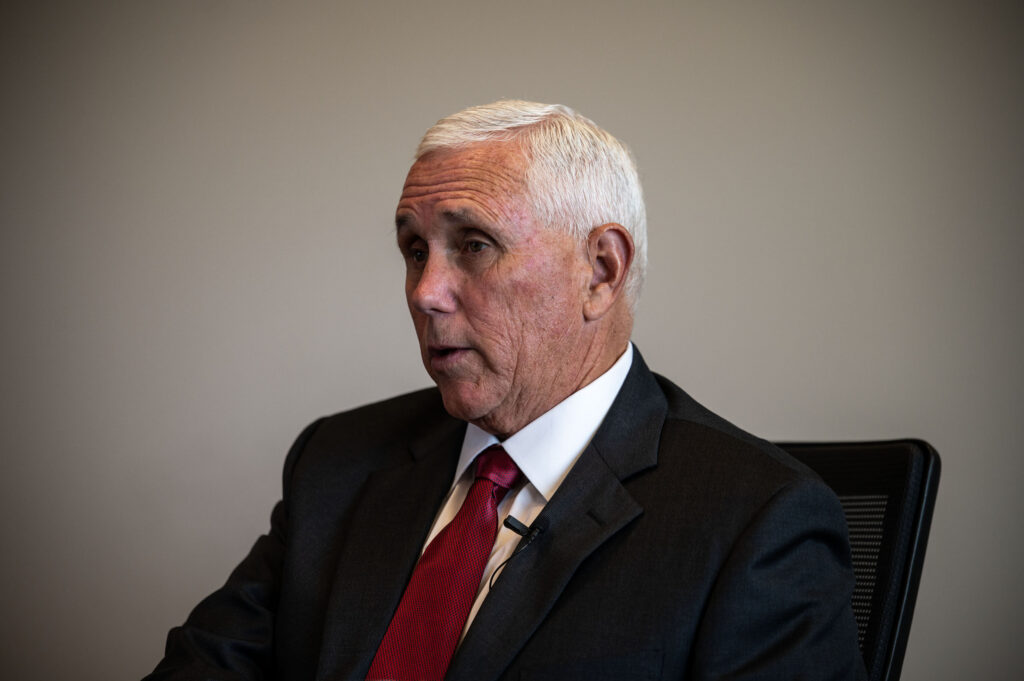
Q&A with Mike Pence | Former vice president says GOP’s populist turn from conservatism isn’t permanent
Ernest Luning
ernest.luning@coloradopolitics.com
Updated 5 hours ago
Former Vice President Mike Pence says he’s concerned that the Republican Party has taken a populist turn away from bedrock conservative principles during President Donald Trump’s second term, but he believes the party will return to its roots when Trump...

New federal plan sets short-term rules for Colorado River management
Marianne Goodland
marianne.goodland@coloradopolitics.com
Updated 1 day ago
Interior Department’s plan spares Colorado from mandatory cuts for now After years of stalled negotiations among the seven states that rely on the Colorado River, the federal government on Friday released its own plan for managing the drought-strained system. Calling...
Fauci’s diary details blooming outrage toward ‘far right,’ softness toward Biden and China
Hudson Crozier
hudson.crozier@washingtonexaminer.com
Updated 1 day ago
Dr. Anthony Fauci increasingly railed against “far right” critics of his approach to COVID-19 issues while describing strong support from the Biden White House in his pandemic-era diary, which was recently released by Congress. The former National Institute of Allergy...

Colorado is spared mandatory cuts under federal Colorado River proposal
The Associated Press
the-associated-press@coloradopolitics.com
Updated 1 day ago
California, Arizona and Nevada to take less water under plan While Colorado has been spared from mandatory reductions, Arizona, California and Nevada would take less water from the Colorado River under a proposal announced Friday by the federal government to...
PREV
PREVIOUS

Arvada rejects rezone that would have brought Amazon to town
Arvada City Council members voted 5-2 early Tuesday to reject an annexation and rezoning proposal that would have paved the way for Amazon to build a 112,000 square-foot distribution center next to Maple Valley Park. The vote came after a marathon 8-hour meeting that lasted until 2 a.m. Tuesday. The meeting saw green-shirted “Protect Maple […]

Justices strike down employer policies requiring forfeiture of earned vacation pay
Colorado employers may not require workers to forfeit their earned vacation pay upon termination, the state Supreme Court decided on Monday. Although the Colorado Wage Claim Act does not itself grant vacation pay to employees, it is now clear that the law does protect the benefit for workers who do receive it. “We believe the […]