

Q&A with Amiah Hanson | Student school board member who weighed in to the Supreme Court

Colorado Politics: In April, the U.S. Supreme Court heard oral arguments in the case of a former high school cheerleader in Pennsylvania who was suspended from her team after she didn’t make varsity and sent out a profane message on Snapchat complaining that she was passed over. When you heard about her predicament and how the school disciplined her, what did you think? Do you suppose you or your friends might have done the same thing if you were in Brandi Levy’s shoes?
Amiah Hanson: When I heard about Brandi Levy’s predicament, I thought that while I don’t support what she was saying, I do support the right Levy has to speak her opinion. Although there are rules students have to follow when part of a school-based organization, something written completely outside of school, during a weekend and on a social media platform seems outside of that particular organization’s rights to punish. While I don’t use Snapchat, I know of many messages similar to the one authored by Levy spread both orally and online about school and school-related activities.
If schools had the right to enact consequences based on these messages, there would be many unintended consequences. If every student was prohibited from participating in their particular activity because of something profane they said about that activity, a large portion of students would be barred from participating.
FAST FACTS
- Amiah Hanson, 16, is a high school sophomore and ex-officio student representative to the School District 9-R Board of Education in Durango.
- She is one of 192 current and former student school board members – and the only one from Colorado – who signed a brief to the U.S. Supreme Court in March in support of a former high school student’s right to be free from school discipline for her off-campus online comments.
- Hanson signed the brief in her capacity as a student board representative, not on behalf of the board or the district.
- She has been a student board member since October 2020.
- Hanson enjoys skiing, biking, wrestling, singing and acting, and also likes learning about psychology and neuroscience.
An additional problem with schools enacting consequences based on something profane or potentially offensive is the censorship of student opinions. As a school board member, the truest analysis of the education system happens by those it most directly affects: students. Although younger people don’t always communicate in the most rational or clear-headed way, their opinions are still valid and their rights to free speech should be protected.
CP: You joined a brief to the Supreme Court in support of Levy along with 191 other current or former student members of school boards across the country. How did you find out about this organized effort in the first place?
Hanson: I found out about this brief through Instagram. Matt Post, a previous student representative [in Maryland], asked me to sign this amicus brief. After asking questions and researching more about the case, I decided that it was something I really wanted to support.
CP: So basically the nine Supreme Court justices of the United States may be reading what you and 191 other students have to say about this case. How did you decide whether you wanted to put your name out there in support of students’ free speech rights? Did you talk to any of your friends or teachers or parents before getting on board?
Hanson: When I heard about the opportunity to sign, I was initially skeptical. I obviously don’t want to sign my name on something that has no evidential foundation, so I looked at resources and research supporting the case and talked with my family about it. As former educators, they offered a unique perspective and we talked about my decision thoroughly. As a school board member, I need to take all student perspectives into consideration when representing them on the school board. These student perspectives are most true when uninhibited by fear of any type of retribution.
CP: I’m looking at your brief and you respond to the Pennsylvania school district’s argument that it’s difficult to draw the boundary around school-related speech by saying, “the answer cannot be to erase all lines between school and home, and simply assert school authority to punish any speech that ‘involves the school.'” You go on to say that students would have “effectively no space where they are entitled to full First Amendment protection, even when they engage in core political speech.”
How do you and your friends handle the dilemma where something you say on social media outside of school can potentially be grounds for discipline in school?
Hanson: Most of the students I’ve interacted with have kept their opinions regarding school-related topics to private text threads and avoided publishing them on public sites. Many social media sites are also coming up with “hide” features, where the messages posted disappear after a specific amount of time. Students will post messages only sent to a few people or will use the hide feature to feel safer about posting things that could be construed as offensive or profane.
Many students supporting certain political views will repost a political comment they’ve seen elsewhere into their own stories in Instagram, where the comment can be seen and will disappear after a few hours. That way students can support their political views without being credited with saying something originally.
CP: As a school board representative, can you envision scenarios in which your school might need to discipline someone for what they say on TikTok or Facebook on their own time?
Hanson: There are definitely scenarios where discipline is necessary. “Material and substantial disruption” is a key term in determining whether a message is worthy of punitive action or not. Things like threats to the school or comments endangering the welfare or safety of others are not to be trifled with, and such actions are subject to school interference. However, Brandi Levy’s comment was not intended to be a large disruption or to endanger someone else, and that is the line we are trying to draw.
CP: In your experience, do teachers and principals have a good understanding of teenagers’ social media habits? In other words, do they react appropriately to truly disruptive posts and let go of minor things?
Hanson: In my experience, it is hard for teachers and principals to understand all aspects of teenagers’ social media habits, primarily because administration is not as immersed in social media as most teenagers are. While I have not personally experienced a school reaction to a truly disruptive post, I do know that many things said in a similar vein to Brandi Levy’s message are circulated and messaged all the time. Profane remarks about classes, activities, and other school-related things are often commonplace in teenage culture, especially on social media.
CP: In learning about Levy’s case, were you aware that the major court decision about students’ free speech rights occurred during the Vietnam War?
Hanson: Despite being the primary recipient of the school’s services, it’s shocking how little student voices are taken into account when it comes to big system change. The last case regarding students’ free speech rights was over 40 years ago, and the amount of communication technology and societal change since that time period is immense.
The introduction of social media platforms, instant messaging, and digital influence has completely changed the way humanity, and especially teenagers, interact with each other. With how fast society is progressing, it makes sense that laws and policies regarding student voice need to be revised. This case represents one of the first steps in changing these policies to better encompass how students interact with each other and their schools in this technologically-dependent world.
CP: So if you were recommending a policy for Durango – or for other school districts in Colorado – about when they should intervene after a student posts on social media and when they should let the student speak freely, what would your policy be?
Hanson: I would refer back to the original clause “material and substantial disruption” as a foundation for determining what merits punitive action from the school or not. Social media represents a different aspect to this original definition, but in many respects the definition is still applicable.
Generalized statements, especially those not targeting a specific individual, are within a student’s legal rights. Statements harmful to an individual’s/group of individuals’ safety or wellbeing, or statements which are threatening the school or causing a large disruption in school organization/events, are within the school’s rights to take action against.
CP: Finally, how does writing to the Supreme Court compare with other work you have accomplished during your time on the board of education.
Hanson: As a student representative to a district of about 5,400 students, most of the work I have been involved with during my time has been localized. The recent superintendent search and interview process for the 9-R school district was one of the most impactful situations I have been a part of during my time on the board. My signing of the amicus brief was the first national interaction I have had during my time as a student representative.

Colorado’s chief federal judge orders return of wrongfully deported man, second judge to explore ‘series’ of violations
Michael Karlik
michael.karlik@coloradopolitics.com
Updated 12 hours ago
Colorado’s chief federal judge took the extraordinary step of directing the government on Tuesday to do everything it can to return a man it deported in violation of his order. At the same time, Colorado’s chief magistrate judge has set...
Denver murder, assault convictions reversed due to faulty jury instructions
Michael Karlik
michael.karlik@coloradopolitics.com
Updated 11 hours ago
Colorado’s second-highest court reversed a defendant’s convictions for murder and assault last week after concluding a Denver judge incorrectly omitted key jury instructions that could have affected the verdict and sentencing. Stephen C. Swainson fatally stabbed Israel Casillas in downtown...
‘Understand people for who they are’: 2 federal judges talk about compassion in courtroom
Michael Karlik
michael.karlik@coloradopolitics.com
Updated 18 hours ago
Before taking the bench in 2022, U.S. District Court Judge Charlotte N. Sweeney was an employment discrimination attorney. While the cases could be emotionally charged, they were different from the criminal proceedings she is now handling. “It wasn’t necessarily affecting...
Denver murder conviction reversed for incomplete self-defense instruction
Michael Karlik
michael.karlik@coloradopolitics.com
Updated 1 day ago
Colorado’s second-highest court reversed a defendant’s murder conviction last week because a Denver judge gave an incomplete instruction to the jury about the man’s right to self-defense. Donald R. Gonzales and Gary McLaughlin met up in a Capitol Hill parking...
Colorado lawmaker, House leaders named in workplace-retaliation lawsuit
Marianne Goodland
marianne.goodland@coloradopolitics.com
Updated 2 days ago
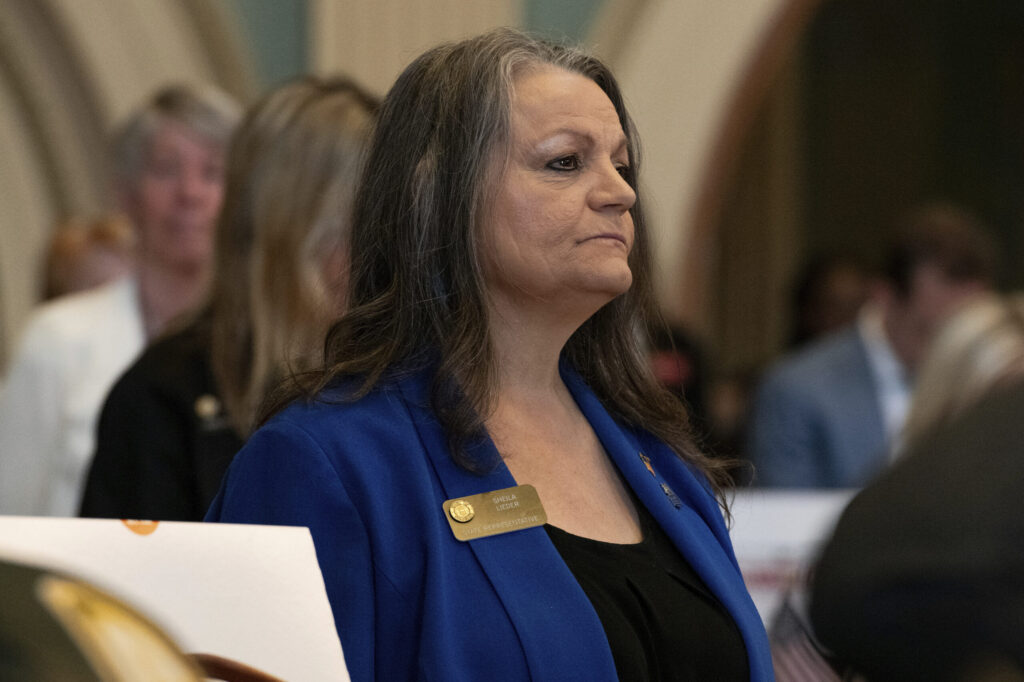
A former legislative aide has filed a lawsuit alleging she was mistreated, illegally directed to perform campaign work and harmed by a House leadership structure she charged was fragmented, politicized and ineffective at protecting employees. The lawsuit, filed by Jennifer...
Federal judge hears arguments about Colorado’s 3-day gun purchase waiting period
Michael Karlik
michael.karlik@coloradopolitics.com
Updated 2 days ago
A federal judge heard arguments on Monday about the constitutionality of a 2023 Colorado law that generally imposes a three-day waiting period on firearm purchases after the initiation of a background check. The test that the U.S. Supreme Court created...
Colorado Supreme Court intervenes in Weld County prosecution dismissed due to Missy Woods misconduct
Michael Karlik
michael.karlik@coloradopolitics.com
Updated 1 day ago
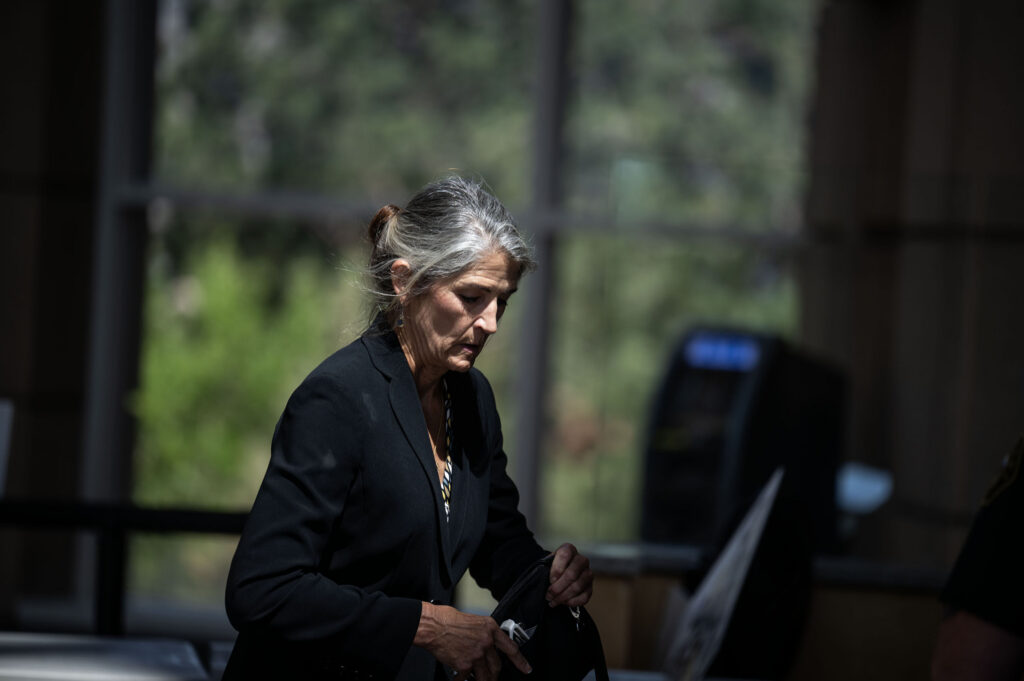
The Colorado Supreme Court ordered a Weld County trial judge last week to respond to the district attorney’s claim that he improperly dismissed a criminal case because of “outrageous” conduct by the Colorado Bureau of Investigation. Daniel Lee Eatinger stood...
Schoolchildren’s presence at child sex-related trial did not harm Arapahoe County defendant, appeals court says
Michael Karlik
michael.karlik@coloradopolitics.com
Updated 4 days ago
Colorado’s second-highest court decided on Thursday that the presence of a group of schoolchildren on the first day of a child sexual exploitation trial did not violate an Arapahoe County defendant’s constitutional right to a fair trial. Prosecutors charged Jerry...
Appeals court cites week-old Colorado law to reinstate child neglect case at child, father’s request
Michael Karlik
michael.karlik@coloradopolitics.com
Updated 4 days ago
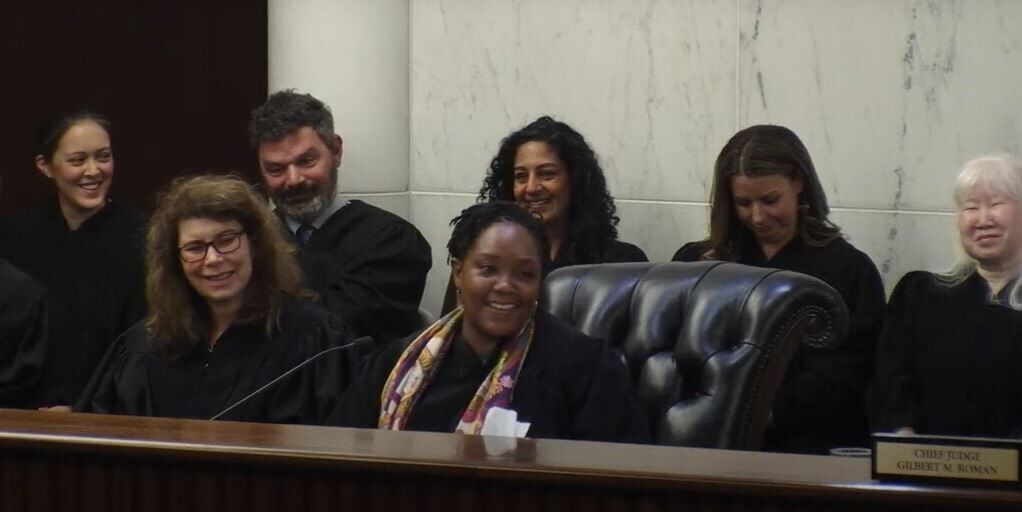
Colorado’s second-highest court invoked a new state law for the first time on Thursday and reinstated a child neglect case that both the child and her father wished to reopen. House Bill 1227 took effect on Aug. 12, reversing a...
Colorado Supreme Court names William Hood as next chief justice
Michael Karlik
michael.karlik@coloradopolitics.com
Updated 5 days ago
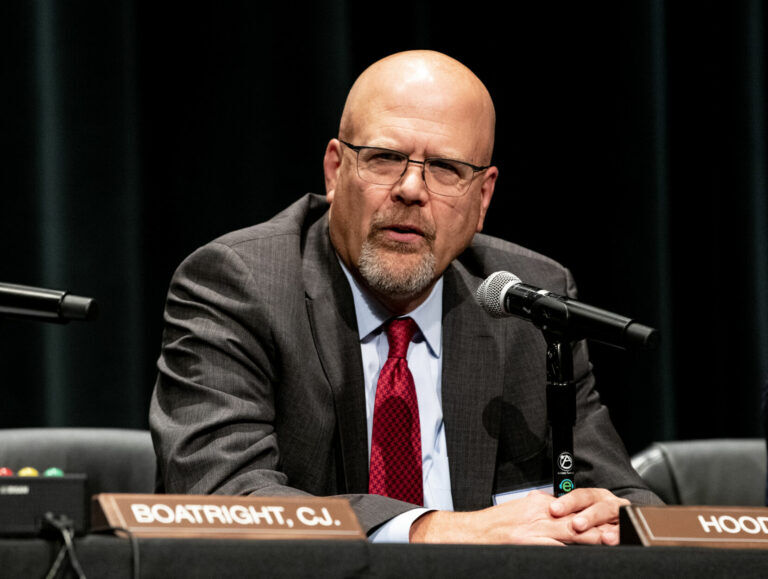
The Colorado Supreme Court has selected Justice William W. Hood III to be the next chief justice, the judicial branch announced on Friday. Hood will succeed Chief Justice Monica M. Márquez, who took over the role in July 2024. “I...
PREV
PREVIOUS

For-profit flap revived in battle for Montana med school; one candidate has Colorado ties
Two universities are eyeing the chance to be the first to build a medical school in one of the few states without one. The jockeying of the two schools – one a nonprofit, the other for-profit – to open campuses in Montana highlights the rapid spread of for-profit medical learning centers despite their once-blemished reputation. […]
House approves diaper distribution bill
The House on Monday voted to give final passage to a bill seeking to provide diapers and hygienic products for families hard hit by the financial fallout from COVID-19. Senate Bill 27 would send the Department of Human Services $4 million over the next two fiscal years to partner with nonprofit organizations and distribution centers […]