

Lockheed Martin teams with GM on moon mobility vehicle

Denver-based Lockheed Martin announced Wednesday the aerospace company will team up with General Motors to build the next-generation lunar vehicle.
Developing the vehicle is part of NASA’s Artemis program, which hopes to land female and people of color astronauts on the moon. The program challenged the aerospace industry to design a lunar terrain vehicle to carry astronauts farther than the 4.7 miles previous rovers have traveled.
GM’s Alan Wexler, senior vice president of Innovation and Growth, said at a Wednesday video news conference to announce the partnership that the car company has a 50-plus year partnership history with NASA, dating to the Apollo 11 landing in 1969.
“The scope of this is beyond the walls of General Motors,” Wexler said. “It’s beyond the planet. … We’ll apply our mobility platform literally out of this world, with the potential to drive science forward exponentially for all humankind. How could we pass this up?”
Kirk Shireman, vice president of Lunar Exploration Campaigns for Lockheed (NYSE: LMT) added, “There’s a scientific bounty on the moon.”
Shireman explained “The south polar basin of the moon is a unique place. It’s got the oldest impact craters, and there’s no wind or weather so it’s not eroded. We want to go and look at how the moon was formed, and possibly the Earth and our inner planet.”
Lockheed’s Waterton Campus southwest of Denver is home base for about 8,000 of the company’s 11,000 Colorado employees.
Officials at the news conference showed a brief video of some early-stage designs.
“We want to leverage our electric battery know-how, our engineers and learning applications,” said Jeff Ryder, vice president of Growth and Strategy for General Motors Defense. “It’s a challenge to operate in space, with extreme thermal environments, extreme temperature swings, nights that can last 14 days. Our engineers and scientists are up to the challenge to demonstrate our capabilities.
“You could call this an extreme off-road environment.”
GM (NYSE: GM) has pledged $27 billion to deliver all zero-emission vehicles by 2035.
Lockheed has extensive development history with robots, autonomy and robotic arms, proving the technology most recently with the Osiris-Rex spacecraft landing on asteroid Bennu to collect samples, said Lisa Callahan, vice president and general manager of Lockheed’s Commercial Civil Space.
“We’ll be able to infuse that technology, like a natural feature tracker,” Callahan said.
Osiris-Rex is flying back to Earth and expected to land in 2023.
Lockheed designed NASA’s Orion exploration-class spaceship for Artemis and numerous other Mars and planetary spacecraft.
“This alliance brings together powerhouse innovation from both companies to make a transformative class of vehicles,” Rick Ambrose, executive vice president of Lockheed Martin Space, said in a statement. “Surface mobility is critical to enable and sustain long-term exploration of the lunar surface. These next-generation rovers will dramatically extend the range of astronauts as they perform high-priority science investigation on the Moon that will ultimately impact humanity’s understanding of our place in the solar system.”




Gazette family of papers rakes in 64 awards at 2025 Colorado Press Association Better News Contest
Elizabeth Pond
elizabeth.pond@denvergazette.com
Updated 11 hours ago
The Gazette family of newspapers won 64 awards in the Colorado Press Association’s annual Better News Contest — a whopping 36 more than the three papers collectively won last year. Colorado Politics raked in 27, The Colorado Springs Gazette took...

What courageous citizenship really looks like | Vince Bzdek
Vince Bzdek
vince.bzdek@gazette.com
Updated 1 day ago
By Vince Bzdek What exactly is courage? Ernest Hemingway famously called it grace under pressure. Mark Twain wrote that “courage is resistance to fear, mastery of fear — not absence of fear.” C.S. Lewis refined that even more: “Courage is...

The coming election and mischief in the making | SONDERMANN
Eric Sondermann
eric-sondermann@coloradopolitics.com
Updated 4 days ago
America’s tribalism is such these days that we struggle to even agree on the basic rules. Elections have always been hotly contested. As the saying goes, “Politics ain’t beanbag.” The process has long involved elements of nastiness and underhanded conduct....

Colorado Politics Calendar Aug. 31-Sept. 6
Rachael Wright, Special to Colorado Politics
rachael.wright@coloradopolitics.com
Updated 5 days ago
CoPo’s weekly political calendar will help you find political and public-policy events throughout Colorado. It includes candidate and issue campaign events, public policy meetings, court hearings, state and local party conventions, assemblies, debates, rallies, parades, speaking engagements, traveling dignitary appearances,...

Tancredo in Running for Dept. of Ed. Position | A LOOK BACK
Rachael Wright, Special to Colorado Politics
rachael.wright@coloradopolitics.com
Updated 5 days ago
Forty-five years ago this week: “I know that my name has been placed before the Secretary of Education, and I know that I’m one of three or four being considered for the Department of Education’s Region 8,” said state Rep....

Colorado measure adding ID checks to mail-in voting qualifies for ballot
Marissa Ventrelli
marissa.ventrelli@coloradopolitics.com
Updated 2 days ago
A ballot initiative that would require voters to include additional information on mail-in ballots has qualified for the November election, according to the Secretary of State’s Office. Backed by El Paso County Treasurer Chuck Broerman and former Deputy Secretary of...

Colorado election website error exposes personal data of confidential voters
Marissa Ventrelli
marissa.ventrelli@coloradopolitics.com
Updated 2 days ago
A system update accidentally lifted protections on confidential records in Colorado, exposing dozens of voters’ personal information, according to the Secretary of State’s Office. The limit that normally blocks access to confidential voter profiles was inadvertently disabled during an update...

PUC adds weekly comment after killing private talks
Scott Weiser
scott.weiser@gazette.com
Updated 2 days ago
The Colorado Public Utilities Commission will take public comment at the start of every commissioner’s weekly meeting beginning Sept. 9 as part of its new transparency mandate, the commission announced, expanding a slot previously limited to the second Wednesday of...

10th Circuit overturns framework for sentencing probation violators by 11-1
Michael Karlik
michael.karlik@coloradopolitics.com
Updated 1 day ago
In a rare decision by all 12 of its full-time judges, the Denver-based federal appeals court ruled in a lopsided vote on Friday that one of its members created a sentencing process for probation violators that was out of step...

Federal judge dismisses excessive force lawsuit against Colorado Springs, officer
Michael Karlik
michael.karlik@coloradopolitics.com
Updated 2 days ago
A federal judge concluded last week that a Colorado Springs police officer could not be held liable for shooting a suspect three times after the man menaced two victims with a gun and fled the scene. Al’morion Germany was involved...
PREV
PREVIOUS

State Senate rejects Polis appointment to groundwater commission
Update: with comments from former state Rep. Wes McKinley The Colorado state Senate on Tuesday, in a vote seen partly as a rebuke to the state’s groundwater commission and partly a slap at Gov. Jared Polis, rejected the nomination of Jason Ryan Crane of Springfield to the state’s groundwater commission. It’s the first time the […]
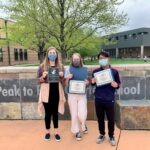
3 Colorado high schools win Secretary of State voter registration award
Three high schools from around Colorado earned the Secretary of State’s 2021 Eliza Pickrell Routt Award this year for registering students to vote. The Secretary of State’s Office announced this year’s winners Wednesday as Cloud City High School in Leadville, Crowley County High School in Ordway and Peak to Peak Charter School in Lafayette. “As […]