

Department of Public Safety director talks officer retention, jail depopulation bill and vaccines for first responders

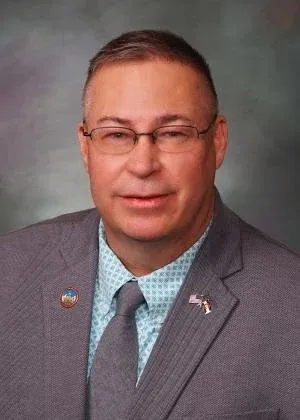
On Thursday, Denver’s Department of Public Safety Director Murphy Robinson held a call with reporters to discuss current policing and other first-responder issues. The following excerpts from the group conversation have been lightly edited and condensed.
Robinson gave some thoughts on Senate Bill 21-62, a measure currently in the state legislature intended to reduce jail populations and limit the use of cash bail, though Denver has not taken a formal position on the bill. It would require police to issue summonses rather than making arrests for traffic, petty, municipal and misdemeanor offenses and some low-level felonies. Felonies classified as levels 4, 5 and 6 and Class 3 and 4 drug felonies are covered by the bill. The bill makes some exceptions allowing arrests, such as if another statute requires it for a specific crime.
It also prohibits cash bail for some misdemeanor and low-level felonies unless the person is considered a flight risk.
I think the bill itself and what it’s trying to do, the drafters’ hearts are in the right place. Where they’re trying to go with the bill is good. I do believe, though, that we have to consider all unintended consequences. I know that the chiefs of police across the state have recognized and shown that they believe that there’s going to be crime consequences with having felony floors and above to be able to write a citation for those, and that all of the laws that are included in the bill are good but that the bill, the laws that you can write tickets for, mandatory writing tickets for, some of them will still have unintended consequences of reoccurrence of crime.
And so it’s a constant conversation I know that the state is having with law enforcement officials like myself. I have to give folks with the ACLU and and other folks that are participating in the drafting of that bill credit, because they have been reaching out. I have personally had briefings from them, but I believe that there’s still quite a bit of concern from our law enforcement community as all the stakeholders continue to reach out and lean into that bill.
I know that amendments have been been pushed around. I think these amendments will help tremendously. But I do have concern that there might be unintended consequences. But as of all bills, we hope that the drafters and senators and representatives that are a part of this bill are open to if it’s passed, in the future are open to amendments if those unintended consequences are seen.
But I am a little bit worried that we may send the wrong message to folks who commit some of these crimes if we’re mandatorily writing felony summonses is an areas in which we shouldn’t be writing felony summonses.
On changes the Denver Police Department has made since the state legislature passed Senate Bill 20-217, the Enhance Law Enforcement Integrity Act, and since the Office of the Independent Monitor issued a report in December on DPD officers’ use of force during last summer’s protests of police violence:
First off, I should say we were compliant with most of 217 before 217 was even drafted, so that’s good news. Second is, I have to admit that we have had a lot of conversations about how do we change policing; how do we make sure we address the riots and things of that nature in a manner that fits what our goals and our values are as a Department of Public Safety. And it’s important to know that you can’t just change policy and change direction of a department with 5,000 or so people at the drop of a hat like that. You have to be specific, you have to be transparent, and you have to be systematic about it.
And so as you know, 217 came out [last summer], that monitor report came out in [December]; it’s only April, and so we have really concentrated in making sure we implement both of those very strategically and very intentionally. So that’s important to know.
But we have not made drastic changes to, say, the entire use of force policy or whatever that is, because it takes more time than just a couple of months, and I’d be sitting here lying to you if I said, “Oh yeah, we’ve changed the entire police department.” There’s not been enough time that has passed for that.
But I will also say this: Our police department in preparation of the riots that we would see, whether it’s the inauguration or whether it’s in response to George Floyd, or just maybe one of the regular protests that we see, we have leaned in hard to make sure that we address some of the issues that have not only come to us [from] the independent monitor, but some of the organizational issues we have identified ourselves, and making sure that our officers are trained properly, making sure they have the resources that they need and also understanding and helping people understand our values as a department but also as a city, that everyone is able to protest.
We have no tolerance for riots; we have no tolerance for destruction. But we have to treat everyone the same, and [make] sure that our officers are prepared [and] are well equipped and will continue to serve the city in the manner of which meets our values.
On efforts to get the city’s first responders vaccinated and estimating how many public safety employees have received COVID-19 vaccinations:
HIPAA laws prohibit us from asking how many people are actually vaccinated, but from voluntary compliance [and] involuntary just sharing of information, I believe the vast majority of our staff is vaccinated, over 50%, I would say. And so we don’t have exact numbers because of the laws right, but we do believe that the vast majority of our folks are vaccinated.
The reason we know that is because we’ve set up clinics where we say, go and get vaccinated. We were one of the first [groups] of folks that were able to get vaccinated because we’re first responders. And so when we set up those clinics, we just saw the response that we had from those folks, and that’s what I mean by the voluntary compliance — through the city and not necessarily through their personal doctors. And they could also go through their personal doctors, as you know. We would never know those numbers.
On retention in the police and sheriff’s departments in the past year of heightened scrutiny on policing:
We have seen a lot of people retire. We’ve seen some officers quit. And I will just say it’s a hard time to be a police officer, especially because the vast majority of police officers do a fantastic job. They’re in the community every day doing things that most people don’t even realize, and I get stories every day about the really good things that officers do. And it’s unfortunate that what’s out there in the community is only the negative things, because that weighs on a person who has dedicated their life to this and frankly can lose their life at any given moment for some of the things that they see.
So that has been a that has been a topic: How do we, number one, keep our officers, but also how do we recruit in this day and age? and so, we will continue to lean on that, and that’s one of the major initiatives that I’m implementing is recruitment. And frankly, how do we recruit folks who want to be the change they want to see? And so we are continuing to look at that, but it has been a challenge.
But it’s not just a challenge for us, it is a challenge for police departments across the country. I’m in constant communication with the other major-city chiefs and major-city public safety directors and police commissioners, and everyone across the country is having this challenge.
The very fact that we can even say we’re going to make sure we are taking [an] equitable approach means we’ve moved the needle, because when I started in this career field in 2008, that was not the topic of conversation, so it’s a good thing.
Chief Pazen Q-and-A: 2020 hits retentions, but he’s proud of officers’ resolve


Cherry Creek School District paid law firm $114K, including $40K for political consultant, over superintendent allegations
Nico Brambila
nico.brambila@denvergazette.com
Updated 6 hours ago
The Cherry Creek School District paid $114,000 to hire outside counsel to provide the Board of Education with legal advice as it navigated the allegations that were swirling around the former superintendent. Fisher Phillips invoices obtained through a Colorado Open...
Ex-attorney cannot remain anonymous while suing Colorado judicial branch, says 10th Circuit
Michael Karlik
michael.karlik@coloradopolitics.com
Updated 2 hours ago
The Denver-based federal appeals court concluded last month that a former attorney cannot mask her identity while suing the Colorado Judicial Department for alleged improprieties in her disability and disbarment proceedings. “Jane Roe,” representing herself, sued the Judicial Department and...

DOJ announces ‘inmate tablets’ despite California prison pornography scandal
Rena Rowe
rena.rowe@washingtonexaminer.com
Updated 7 hours ago
The Justice Department’s Federal Bureau of Prisons announced Wednesday that it is rolling out a new inmate tablet program designed to expand communication, education, and rehabilitative services across federal prisons, despite growing scrutiny over similar technology used in California’s prison...

Mark Carney says Trump has ‘won the argument’ on NATO defense spending
Brady Knox
brady-knox@coloradopolitics.com
Updated 8 hours ago
Canadian Prime Minister Mark Carney said that President Donald Trump has “won the argument” on NATO defense spending, successfully pushing members to spend more on defense. Carney, one of Trump’s most articulate critics, conceded on Wednesday that he had been...
Convicted ex-Judge Hannah Dugan sentenced to no prison time for helping illegal immigrant evade arrest
Jack Birle
jack-birle@coloradopolitics.com
Updated 8 hours ago
Former Milwaukee County Circuit Judge Hannah Dugan was sentenced to a $5,000 fine Wednesday for helping an illegal immigrant evade arrest last year but avoided prison time in her criminal case. U.S. District Judge Lynn Adelman, a Clinton appointee, declined to give Dugan a...
DPS Superintendent Alex Marrero misses cut for Miami-Dade job
Nico Brambila
nico.brambila@denvergazette.com
Updated 7 hours ago
Denver Public Schools (DPS) Superintendent Alex Marrero did not make the short list of candidates vying for the top job with the Miami-Dade County Public School District. The Miami-Dade school board narrowed the field from 21 applicants to six semifinalists....
Appeals court reverses convictions after judge blocked defendant’s character witnesses
Michael Karlik
michael.karlik@coloradopolitics.com
Updated 11 hours ago
Colorado’s second-highest court reversed a defendant’s convictions for forgery and attempting to influence a public servant last month because a Boulder County judge improperly blocked him from calling witnesses who could testify about his truthfulness. A three-judge Court of Appeals...

Aspen Acres fire damage footage released, residents seek reentry
Savannah Eller
savannah-eller@coloradopolitics.com
Updated 7 hours ago
First looks at the damage path are emerging in the Aspen Acres fire, as more than 11,000 people wait for news on when they can return. Tuesday afternoon, the Pueblo County Sheriff’s Office released a nine-minute video showing fire damage...

Uncertain status of McConnell could create legal firestorm over possible replacement
Kaelan Deese
kaelan-deese@coloradopolitics.com
Updated 16 hours ago
Sen. Mitch McConnell’s (R-KY) extended hospitalization is drawing new attention to an unresolved legal question in Kentucky that could trigger a high-stakes court battle if the longtime Republican senator were unable to complete the remainder of his term. The question...
Overruling the voters before they even vote | PODIUM
Colorado Politics
colorado-politics@coloradopolitics.com
Updated 4 hours ago
By Chris Richardson There is something profoundly wrong with a legislature that sees a citizen-led constitutional amendment gaining momentum and responds not by making its case to the public, but by passing a law designed to neutralize it before voters...