

SLOAN | Other businesses need tax relief, too
Kelly Sloan

It is all too easy to rail on in these pages about all the terrible economic things happening at the State Capitol; there’s good reason for that, because there is much terrible economics happening in the State Capitol. But if for no other reason than that to do otherwise would offend mere chance, every so often even in the worst environment a good bill comes along that reflects a sliver of fiscal sanity, if but a sliver.
One of these is House Bill 1265, a bill that would allow certain businesses negatively impacted by the COVID shutdowns to retain the sales tax they collect as a means to offset their revenue losses.
Basically, this is COVID relief done right. Rather than what has become the conventional approach of doling out money hand over fist — money which first has to either be taken from someone else or borrowed — this approach simply eases the tax overhead borne by small businesses, giving them a chance to restart their engines. The approach has much going for it, not the least of which is that it touches on something that actually falls within the responsibility of the government to touch — namely how much of a burden it chooses to impose on businesses in the form of taxation. Relieving this overhead is also in line with the soundest of economic thought.
One can understand, therefore, my reluctance to drop an ink stain on the bridal purity of this lovely bipartisan effort, which I would be nonetheless remiss to not drop. The bill language, while heralding its appeal to fiscal lucidness still cries out for an important, even critical, improvement — and that is to simply broaden its applicability.
The concern lies with the concept of “certain businesses.” In the bill, this tax relief is limited to those delineated in the definitions, specifically establishments which sell food or alcoholic beverages. This is all well and good, for Heaven knows those establishments took a devastating uppercut to the chin over the last year (and the legislature is not making it easier on them by trying to ban the takeout containers they relied on to keep most of the lights on). But they were not the only ones. A great number of small businesses, across several industries, were similarly impacted by the shutdowns, the social distancing guidelines, and the drop in consumer activity. Why should they not receive similar relief from the state government?
Take movie theaters, for instance. It is hard to argue that any industry was more severely crippled by the social lockdown than the theater industry, restaurants included. Movie theaters, by definition, are places where people gather in relatively close quarters for at least a couple hours at a time, to take in entertainment. When the entire concept of people gathering was collectively struck from the public repertoire last March, movie theaters obligingly shut their doors with the expected effect; revenue for the movie theater industry declined by 77.2 percent in 2020. Most of that revenue loss was attributable to the height of the shutdowns coinciding with the industry’s most profitable time of year, the summer blockbuster season. Not only that, but they were not afforded an opportunity to adjust their model, like restaurants were – i.e. a theater couldn’t re-tool itself to a take-out or delivery model.
So why, then, are they excluded from the tax relief blessings offered by HB 1265? One could point to any number of other small businesses that suffered similar economic depredations throughout 2020; gyms, for instance, or vehicle repair shops, and so forth.
The issue illuminates an ongoing problem in the world of fiscal policy, and that is the role of exemptions. Every time government incorporates into its tax codes benefits for activities it favors, or penalties for those it does not, or special provisions for special situations, economic distortion occurs — the behavior of the taxpayer changes from that which is designed to increase productivity to that which aims at reducing tax exposure.
And yet it is difficult not to acknowledge special problems, and certainly COVID represented a special problem. But government policy should be directed towards two things: interfering as little as possible in the natural inclinations and working of the economy, and, where interference is deemed absolutely necessary, to minimize the resultant disruption. If the general idea is to encourage recovery of injured businesses by eliminating, even temporarily, the overburden created by taxation, then that benefit ought to be extended to all businesses which faced that injury.
It is most welcome to see good legislation work its way from the brambles of the current legislative session, and it should not be thought ungrateful to encourage important modifications.

The uncharted implications of increasing unaffiliateds ahead of Colorado’s primaries | Paula Noonan
Paula Noonan
paula-noonan@coloradopolitics.com
Updated 8 hours ago
The primaries are about 60 days away. The large majority of statewide races will be decided on June 30. Those contests will be between moderate and progressive Democrats and moderate to super-conservative Republicans. Analysis of voter registrations does not look...
All Coloradans should have a say at the Public Utilities Commission | GUEST COLUMN
Colorado Politics
colorado-politics@coloradopolitics.com
Updated 8 hours ago
By Emma Pinter I have a sticky note in my kitchen that reminds me of Xcel Energy’s peak hours, when they charge higher rates for electricity. From 5 p.m. to 9 p.m., I avoid running the laundry or the dishwasher...
Protect patient access to life-saving drugs | OPINION
Colorado Politics
colorado-politics@coloradopolitics.com
Updated 8 hours ago
By Leslie Herod Since its inception, Colorado’s Prescription Drug Affordability Board (PDAB) created fear among patients around effects to life-saving medicines and the negative ramifications price controls have on affordability. Five years on, those fears persist. Patients and advocates continue...
Don’t upend Colorado’s ‘healthy balance’ on stream access | PODIUM
Colorado Politics
colorado-politics@coloradopolitics.com
Updated 1 day ago
By Ashley House “The horizon is a perfect line between sky and water.” I heard this line of dialogue waft through my parents’ living room recently as they tuned into one of the newest Taylor Sheridan TV dramas, “The Madison.” As...
Colorado can’t fall behind on refocusing nutrition assistance | GUEST COLUMN
Colorado Politics
colorado-politics@coloradopolitics.com
Updated 1 day ago
By Travis Couture-Lovelady Nutrition assistance should be a safety net — not a source of chronic illness. That was the mindset behind Colorado and 21 other states pursuing waivers from the U.S. Department of Agriculture to prohibit the purchase of...
Homeschool enrichment programs serve vital and cost-effective role | GUEST COLUMN
Colorado Politics
colorado-politics@coloradopolitics.com
Updated 1 day ago
By Richelle McKim The Colorado state legislature is considering the introduction of a measure to strip funding from homeschool enrichment (HSE) programs, which are one of the most cost-effective and impactful educational tools the state currently has to offer. If...

Colorado’s leaders must pass No Kings Act to rein in out-of-control federal officials | GUEST COLUMN
Colorado Politics
colorado-politics@coloradopolitics.com
Updated 19 hours ago
By Ariane Frosh In July of 2021, Pikes Peak area activists organized a housing rights march to bring awareness to the region’s increasing unaffordability. Lying in wait, however, was the Colorado Springs Police Department (CSPD); they had been spying on...
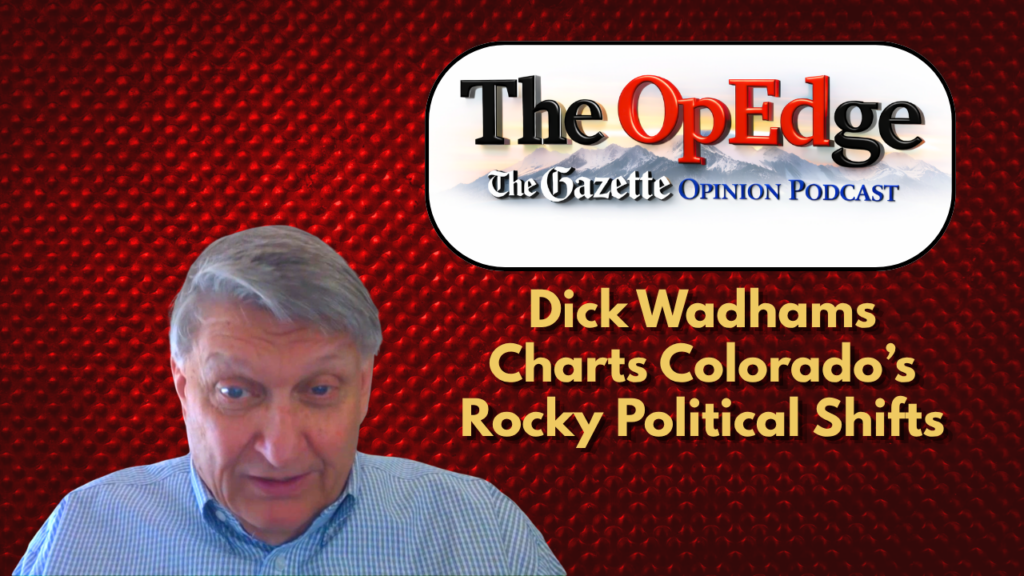
Dick Wadhams charts Colorado’s rocky political shifts | The OpEdge Podcast
Tony Olivero
tony.olivero@gazette.com
Updated 2 days ago
In the latest episode of The OpEdge — The Gazette’s new opinion podcast — veteran campaign winner, political analyst and Gazette columnist Dick Wadhams dissects the electoral shifts of Colorado politics with OpEdge host and investigative columnist Jimmy Sengenberger. Wadhams charts...
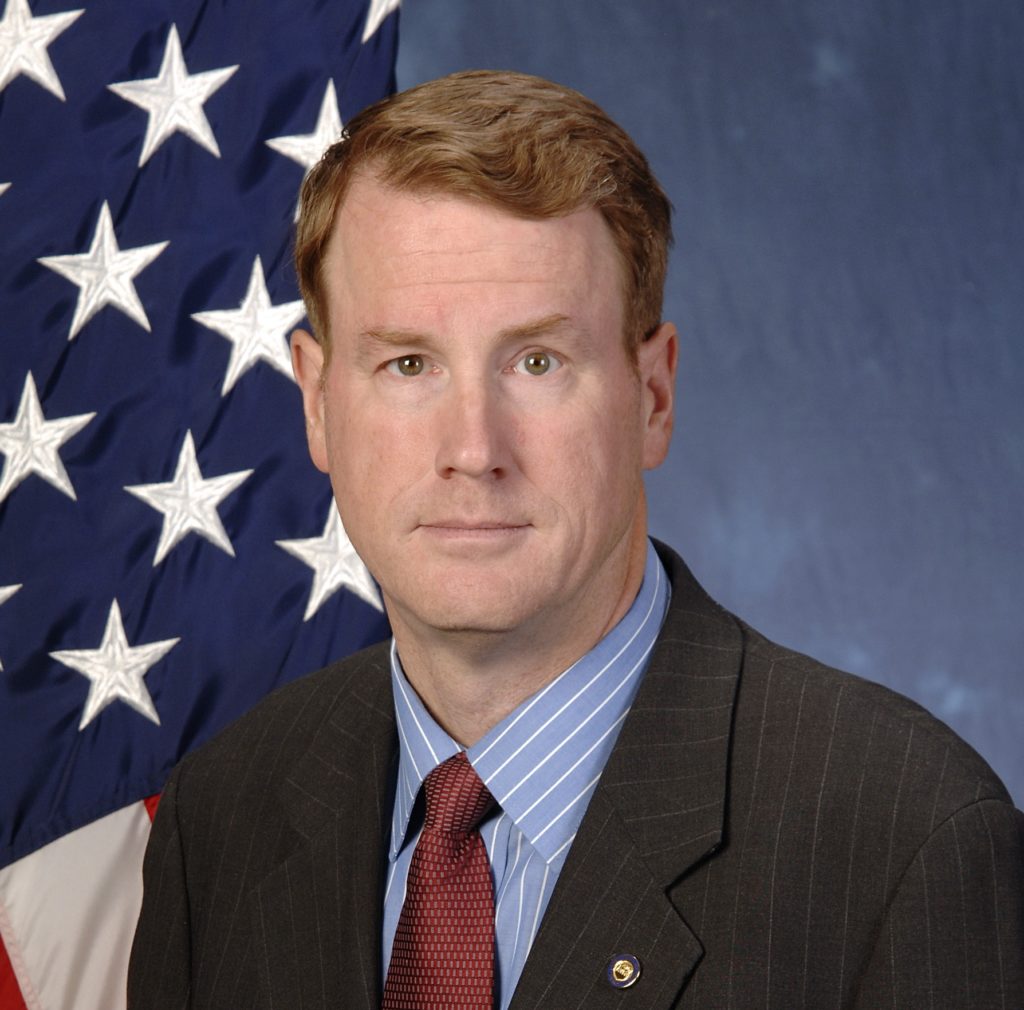
Kudos for cooperation on critical Colorado water issues related to tribal communities | Hal Bidlack
Hal Bidlack
hal-bidlack@coloradopolitics.com
Updated 2 days ago
Way back in 1997, while I was still an active-duty Air Force officer, I was working a summer temporary duty assignment during the academic break at the Air Force Academy. I ended up doing this work for two summers, and...
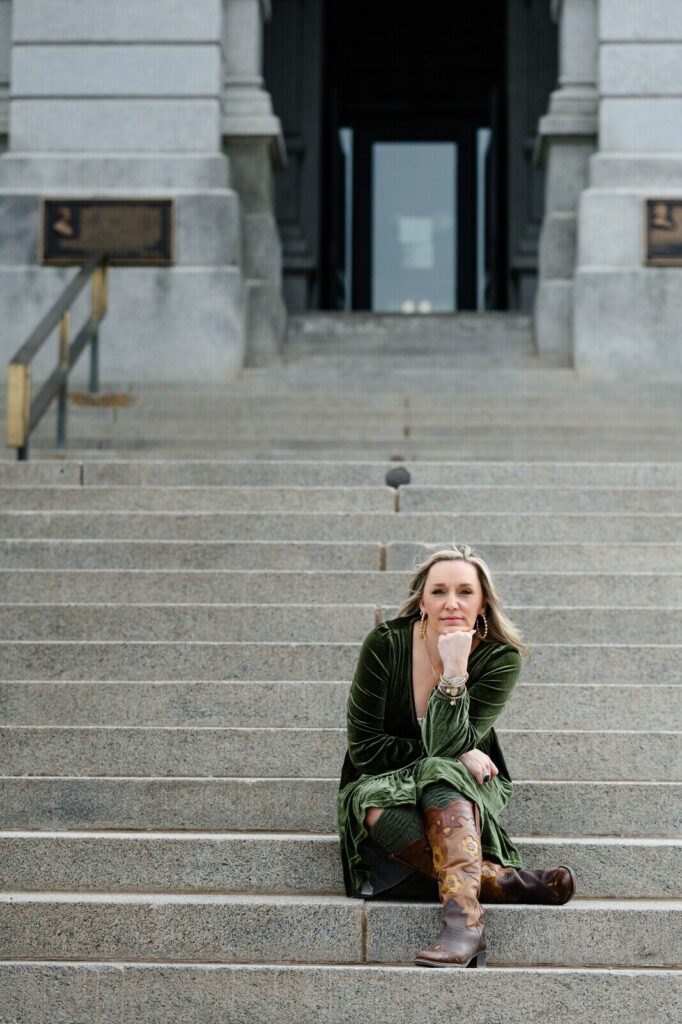
Colorado is ensuring children come first | OPINION
Colorado Politics
colorado-politics@coloradopolitics.com
Updated 2 days ago
By Jenelle Goodrich For years, parents and advocates have been calling for stronger regulations around technology that interacts with our children. Colorado House Bill 26‑1263 is a serious acknowledgment by lawmakers conversational AI systems are deeply embedded in the lives...
PREV
PREVIOUS

NOONAN | A stride for environmental justice
Paula Noonan When a half moon puts out its soft light against a bright blue-day sky, as in this third week of April 2021, special things can happen. And so, Cultivando, the Commerce City-based health leadership and equity nonprofit, received a $1.7 million award to administer and implement an air quality program based on $2.5 […]

FEEDBACK | Bipartisan pair will lead Ag ably
It seems all too easy these days to find fighting across the political aisle, but the bipartisan appointment of Reps. Karen McCormick, D-Longmont, and Marc Catlin, R-Montrose, as the chair and vice chair of the House Agriculture, Livestock and Water Committee is a great example of putting policy over politics. Speaker of the House Alec […]