

NOONAN | A stride for environmental justice
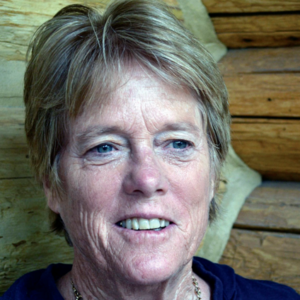
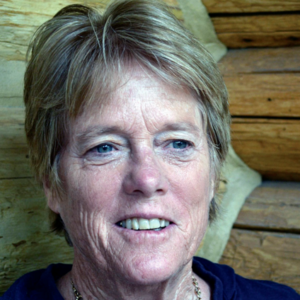
Paula Noonan

When a half moon puts out its soft light against a bright blue-day sky, as in this third week of April 2021, special things can happen. And so, Cultivando, the Commerce City-based health leadership and equity nonprofit, received a $1.7 million award to administer and implement an air quality program based on $2.5 million of $9 million of the Suncor refinery pollution fine from 2020 for over 100 emissions violations.
It’s been a long time coming. The Suncor refinery has produced millions of tons of licensed pollution over the years, and some more on top of that. Its violations have been widely reported and seen in the form of flaring, soot, yellow smoke, and various other particles and toxic chemicals rising into the skies of the Denver metro area. A recent report describes its problems, most particularly human error in estimating risks in its operation practices.
The Cultivando program will use its award to set up air monitoring equipment to measure over 50 different pollutants continuously and report the results in a website for the public to review. This will be the first time in Suncor’s history that so much data will tell the pollution story.
It’s a win for Adams and Denver counties whose residents live close to the refinery and for the entire metro area as winds and air currents move pollution around the city. It’s also a win for the refinery itself, which voted YES for the measurement portion of the Cultivando proposal. It will now have detailed, ongoing understanding of the emissions impacts of its industrial activities.
Olga Gonzalez is executive director of Cultivando. She has spent years performing community leadership training and developing health programs targeted to the Latina/o neighborhoods in the north metro region. She’s had conversations with the Colorado Department of Public Health and Environment that houses the Air Pollution Control Division, with Suncor, and with municipal and county governments about the health conditions around the refinery.
“Our kids are suffering,” Gonzalez reports. “They get sick or have bloody noses. Or there’s an emission from the refinery and parents keep their kids at home so they don’t go outside. Parents become afraid schools will call Child Protection if they keep their children home too much.” Another problem involves any activity outside. “It’s important for people to exercise and Cultivando encourages exercise for health. But exercising outside when the air is not good is unsafe.”
Gonzalez frequently hears from the community about the impact of the refinery, but environmental justice was not part of her background. “The community was taking the lead on this, and health and community are our mission, so I needed to learn and get involved.”
Enter Lucy Molina, a Cultivando mentee who participated in its leadership training program. Molina worked with various environmental social justice groups interested in documenting the impact of pollution on the health of residents near the refinery. She introduced Gonzalez to science, engineering, and project management professionals retired from US federal agencies interested in improving Colorado’s notorious air quality.
At that point, putting the Cultivando proposal together became a team effort that involved building trust between her organization and its community and the “white folks who are also a part of the project.” “We’re always asked to participate in research projects, but without our voice. We treat these requests with skepticism as to who are the people and who are they trying to help.”
Barb Mills-Bria, president of Be the Change, and other environmental and health groups coordinated with Gonzalez and Molina to find the experts, develop the detailed proposal and budget, identify resources, and locate supporters of the project. Former Colorado Governor Richard Lamm is first on the supporter list.
The key to success, Gonzalez says, is the community centeredness of the work. Too often, these types of projects work from the top down. This project will work from the community up. Schools and families will have air monitors. They will contribute to the data analysis to increase expertise and understanding of how air quality affects health and safety.
The project will put a light on a dreary problem. As William Shakespeare said, “See how far a little candle can throw its beam. So shines a good deed in a weary world.”

The uncharted implications of increasing unaffiliateds ahead of Colorado’s primaries | Paula Noonan
Paula Noonan
paula-noonan@coloradopolitics.com
Updated 6 hours ago
The primaries are about 60 days away. The large majority of statewide races will be decided on June 30. Those contests will be between moderate and progressive Democrats and moderate to super-conservative Republicans. Analysis of voter registrations does not look...
All Coloradans should have a say at the Public Utilities Commission | GUEST COLUMN
Colorado Politics
colorado-politics@coloradopolitics.com
Updated 7 hours ago
By Emma Pinter I have a sticky note in my kitchen that reminds me of Xcel Energy’s peak hours, when they charge higher rates for electricity. From 5 p.m. to 9 p.m., I avoid running the laundry or the dishwasher...

Protect patient access to life-saving drugs | OPINION
Colorado Politics
colorado-politics@coloradopolitics.com
Updated 7 hours ago
By Leslie Herod Since its inception, Colorado’s Prescription Drug Affordability Board (PDAB) created fear among patients around effects to life-saving medicines and the negative ramifications price controls have on affordability. Five years on, those fears persist. Patients and advocates continue...
Don’t upend Colorado’s ‘healthy balance’ on stream access | PODIUM
Colorado Politics
colorado-politics@coloradopolitics.com
Updated 1 day ago
By Ashley House “The horizon is a perfect line between sky and water.” I heard this line of dialogue waft through my parents’ living room recently as they tuned into one of the newest Taylor Sheridan TV dramas, “The Madison.” As...
Colorado can’t fall behind on refocusing nutrition assistance | GUEST COLUMN
Colorado Politics
colorado-politics@coloradopolitics.com
Updated 1 day ago
By Travis Couture-Lovelady Nutrition assistance should be a safety net — not a source of chronic illness. That was the mindset behind Colorado and 21 other states pursuing waivers from the U.S. Department of Agriculture to prohibit the purchase of...
Homeschool enrichment programs serve vital and cost-effective role | GUEST COLUMN
Colorado Politics
colorado-politics@coloradopolitics.com
Updated 1 day ago
By Richelle McKim The Colorado state legislature is considering the introduction of a measure to strip funding from homeschool enrichment (HSE) programs, which are one of the most cost-effective and impactful educational tools the state currently has to offer. If...
Colorado’s leaders must pass No Kings Act to rein in out-of-control federal officials | GUEST COLUMN
Colorado Politics
colorado-politics@coloradopolitics.com
Updated 17 hours ago
By Ariane Frosh In July of 2021, Pikes Peak area activists organized a housing rights march to bring awareness to the region’s increasing unaffordability. Lying in wait, however, was the Colorado Springs Police Department (CSPD); they had been spying on...

Dick Wadhams charts Colorado’s rocky political shifts | The OpEdge Podcast
Tony Olivero
tony.olivero@gazette.com
Updated 2 days ago
In the latest episode of The OpEdge — The Gazette’s new opinion podcast — veteran campaign winner, political analyst and Gazette columnist Dick Wadhams dissects the electoral shifts of Colorado politics with OpEdge host and investigative columnist Jimmy Sengenberger. Wadhams charts...

Kudos for cooperation on critical Colorado water issues related to tribal communities | Hal Bidlack
Hal Bidlack
hal-bidlack@coloradopolitics.com
Updated 2 days ago
Way back in 1997, while I was still an active-duty Air Force officer, I was working a summer temporary duty assignment during the academic break at the Air Force Academy. I ended up doing this work for two summers, and...

Colorado is ensuring children come first | OPINION
Colorado Politics
colorado-politics@coloradopolitics.com
Updated 2 days ago
By Jenelle Goodrich For years, parents and advocates have been calling for stronger regulations around technology that interacts with our children. Colorado House Bill 26‑1263 is a serious acknowledgment by lawmakers conversational AI systems are deeply embedded in the lives...
PREV
PREVIOUS

CRONIN & LOEVY | Early returns on Biden presidency
Tom Cronin and Bob Loevy President Joe Biden came to the White House with little or no public policy mandate. The election of 2020 was primarily a referendum on whether voters approved or disapproved of Donald Trump’s way of governing. Most of those who voted for Trump in 2016 voted for him again in 2020. […]

SLOAN | Other businesses need tax relief, too
Kelly Sloan It is all too easy to rail on in these pages about all the terrible economic things happening at the State Capitol; there’s good reason for that, because there is much terrible economics happening in the State Capitol. But if for no other reason than that to do otherwise would offend mere chance, […]