

Judge greenlights claim against prison contractor for inmate’s suicide

A jury will decide whether an Arapahoe County jail contractor disregarded the risk to an inmate and downplayed his potential for suicide hours before he killed himself, a federal judge ruled last month.
U.S. District Court Judge R. Brooke Jackson determined the family of Brian Heath Roundtree had plausibly alleged a medical counselor’s assessment of Roundtree disregarded or minimized multiple indicators that the 43-year-old would attempt to kill himself while detained.
Law enforcement arrested Roundtree in January 2018, and he confessed to committing nearly 20 armed robberies in a three-week period — crimes the lawsuit subsequently described as “amateurish.” An investigator was worried Roundtree would attempt suicide given his statements and his demeanor, and placed him on suicide watch. Sheriff’s deputies booked him accordingly at the Arapahoe County Detention Facility.
Once there, jail staff logged Roundtree’s actions every 15 minutes. The intake officer understood, based on the investigator’s fears, that Roundtree may attempt “suicide by cop,” meaning he might provoke a lethal response from police.
Under 24 hours later, Roundtree met with Shaundiva Garrett, a counselor with Correct Care Solutions, now known as Wellpath. Based in Nashville, the for-profit company provides medical services to inmates. Roundtree told Garrett during an assessment of his suicidality that he had not experienced any suicidal thoughts in the past month or wanted to be dead. However, Roundtree disclosed he attempted to kill himself less than four months prior.
While Garrett identified Roundtree’s previous suicide attempt as a risk factor, she found he was not at risk for impulsiveness, new criminal charges, or a history of manic or depressive episodes. Despite Roundtree saying he had stopped taking his prescription antidepressant medication, Garrett did not note it on her assessment. After the five-and-a-half minute interaction, she recommended he be removed from suicide watch.
Hours later that same day, Roundtree hung himself in his cell.
Roundtree’s family sued Correct Care Solutions and Garrett. They claimed Garett placed “a heavy thumb on the scale in favor of declaring an obviously suicidal detainee ‘safe’ for a general population cell.”
Garrett asserted qualified immunity, which is a judicial doctrine that generally shields government employees from civil liability unless they violate a clearly-established legal right. Although federal courts of appeals have decided differently on whether prison contractors qualify for immunity, Jackson concluded Garrett was ineligible for the defense, given her work was not in the category of corrections, a typically governmental function.
To violate the Eighth Amendment’s prohibition on cruel and unusual punishment, a prison or jail employee must show deliberate indifference to a detainee’s medical needs. Such conduct could take the form of failing to adequately treat a condition or blocking an inmate from access to medical treatment.
At the same time, an official needs to have consciously disregarded a substantial risk of harm to be held liable. Garrett argued a jury would be unable to find she knew and ignored the likelihood that Roundtree would die by suicide.
“Mr. Roundtree wanted to wake up, didn’t want to die, denied suicidality a number of times, stated that he wanted to live and had no reason to die, was seeking treatment, trying to make things better for himself, and experienced a ‘wake up call’,” her attorneys wrote, “all of this in a ‘conversational’ manner that assured her he was not imminently suicidal.”
Jackson was unpersuaded. “Despite her familiarity with these risk factors — and their appearing on the suicide assessment form that Ms. Garrett completed — plaintiffs have produced evidence that Ms. Garrett did not check all of the factors applicable to Mr. Roundtree,” the judge explained in a March 16 order.
“For instance, Ms. Garrett admitted that she knew Mr. Roundtree was prescribed Citalopram, and that he was not currently taking it. Ms. Garrett did not include this information on the form,” the judge continued.
He also noted that Roundtree’s disclosure of a previous suicide attempt — in which he crashed his car at 60 miles per hour — had not prompted Garrett to indicate impulsivity or manic or depressive episodes as risk factors.
In addition to this failure to chronicle multiple risk factors, the investigator, the deputy district attorney and the judge in Roundtree’s criminal case all voiced concern about his suicidality. (The judge said the jail was the “best place” to ensure Roundtree did not harm himself.) Garrett had not attempted to understand the reasons for Roundtree’s placement on suicide watch and appeared to have taken his denials of suicidality at face value.
“Garrett’s training indicates that she knew Mr. Roundtree’s recent suicide attempt created a considerable likelihood of another attempt,” added Jackson. “The length of the assessment coupled with a less than thorough assessment form support the inference that the five-minute assessment was insufficient.”
Garrett’s online resume indicates she left Correct Care Solutions in 2018. A message left at her current place of work was not immediately returned. A Reuters analysis found that more than five dozen detainees died by suicide between 2009 and 2019 in Colorado’s 10 largest jails.
Wellpath representatives did not immediately provide a request for comment. In 2019, The Augusta Chronicle in Georgia reported that Correct Care Solutions had been the defendant in 1,351 federal lawsuits over the prior decade across the country.
An attorney for the Roundtree family said the case is scheduled for a trial beginning on June 1 in front of Jackson, but declined to offer any further comments. The plaintiffs previously agreed to drop claims against Arapahoe County, the county sheriff and another Correct Care Solutions employee.
The case is Estate of Brian Roundtree v. Correct Care Solutions et al.

10th Circuit dismisses woman’s lawsuit following 10-year attempt to undo restraining order
Michael Karlik
michael.karlik@coloradopolitics.com
Updated 2 days ago
The Denver-based federal appeals court rejected a woman’s challenge on Friday to a restraining order imposed on her more than a decade ago, finding that she cannot credibly claim she will be prosecuted for violating the restraining order through her...
10th Circuit dismisses woman’s lawsuit following 10-year attempt to undo restraining order
Michael Karlik
michael.karlik@coloradopolitics.com
Updated 3 days ago
The Denver-based federal appeals court rejected a woman’s challenge on Friday to a restraining order imposed on her more than a decade ago, finding that she cannot credibly claim she will be prosecuted for violating the restraining order through her...
Colorado equal pay law does not require plaintiffs to allege gender-based retaliation, appeals court finds
Michael Karlik
michael.karlik@coloradopolitics.com
Updated 2 days ago
The 2019 Colorado law aimed at rooting out pay discrimination on the basis of sex does not require a plaintiff to allege their employer retaliated against them for sex- or gender-related reasons, the state’s second-highest court decided on Thursday. Lawmakers...
Hudson faces lawsuit over ICE detention facility
Nicole C. Brambila
nicole-c-brambila@coloradopolitics.com
Updated 3 days ago
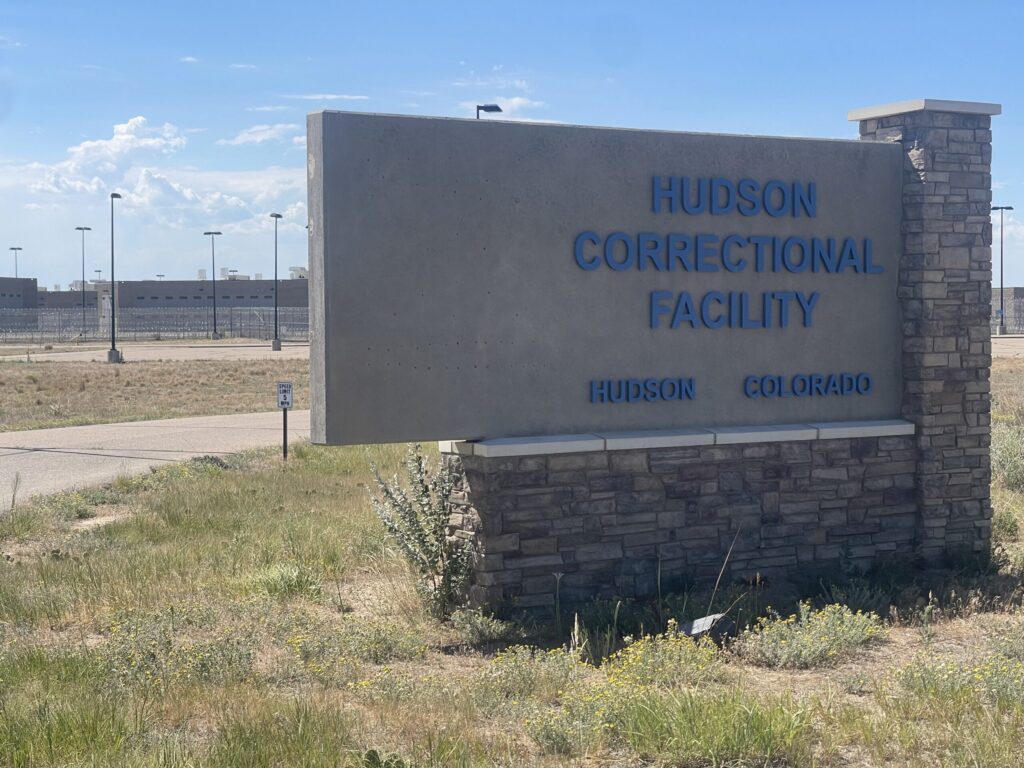
A nonprofit organization filed a lawsuit against the Town of Hudson Wednesday, challenging plans to reopen a former federal prison in the town as a U.S. Immigration and Customs Enforcement detention facility. Together Colorado, along with Janet E. Carlson, filed...
Senate committee advances Trump’s 10th Circuit nominee, as Domenico responds to questions about delays
Michael Karlik
michael.karlik@coloradopolitics.com
Updated 3 days ago
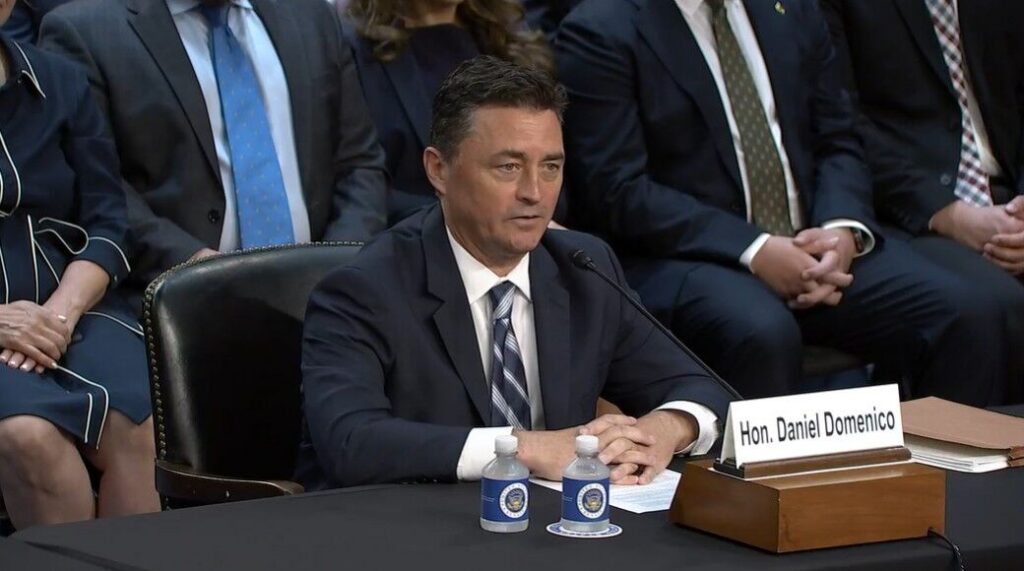
The U.S. Senate Judiciary Committee advanced President Donald Trump’s nominee to the Denver-based federal appeals court on Thursday by a party-line vote of 12-10. U.S. District Court Judge Daniel D. Domenico, who was Trump’s first-term appointee to Colorado’s federal trial...
Colorado justices to hear embryonic donation dispute
Michael Karlik
michael.karlik@coloradopolitics.com
Updated 3 days ago
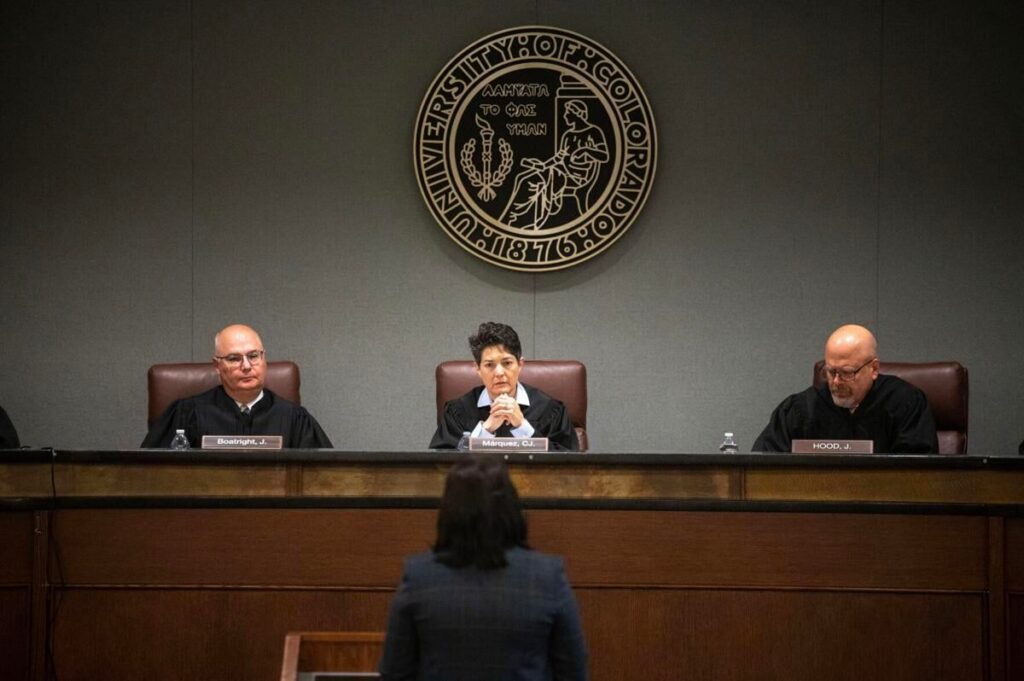
The Colorado Supreme Court announced on Monday that it will decide whether lower court judges properly applied its framework for adjudicating disputes over the fate of pre-embryos, in which one person wants to use them to become a parent and...

Isolation, emotion, persona: Colorado judicial programming prepares people for life on the bench
Michael Karlik
michael.karlik@coloradopolitics.com
Updated 3 days ago
As a trial judge and now as a member of the Colorado Supreme Court, Justice Carlos A. Samour Jr. has heard the view that being a judge is isolating. “In neither court have I felt isolated. I’ve always interacted a...

Federal judge dismisses Colorado county sheriff’s challenge to law limiting immigration cooperation
Michael Karlik
michael.karlik@coloradopolitics.com
Updated 2 days ago
A federal judge dismissed a challenge from Mesa County Sheriff’s Office leaders last week to a Colorado law limiting public employees’ cooperation with immigration authorities, concluding that the plaintiffs did not allege they engage in any conduct that the law...
10th Circuit raises bar for fraud victims to sue debt collectors over inaccurate information
Michael Karlik
michael.karlik@coloradopolitics.com
Updated 1 day ago
The Denver-based federal appeals court wiped away a jury’s $500,000 award to a fraud victim on Monday and made it more difficult for consumers to hold companies liable for disseminating inaccurate credit information. The Fair Credit Reporting Act regulates credit...
Montezuma County judge’s censure, suspension approved by discipline panel
Michael Karlik
michael.karlik@coloradopolitics.com
Updated 4 days ago
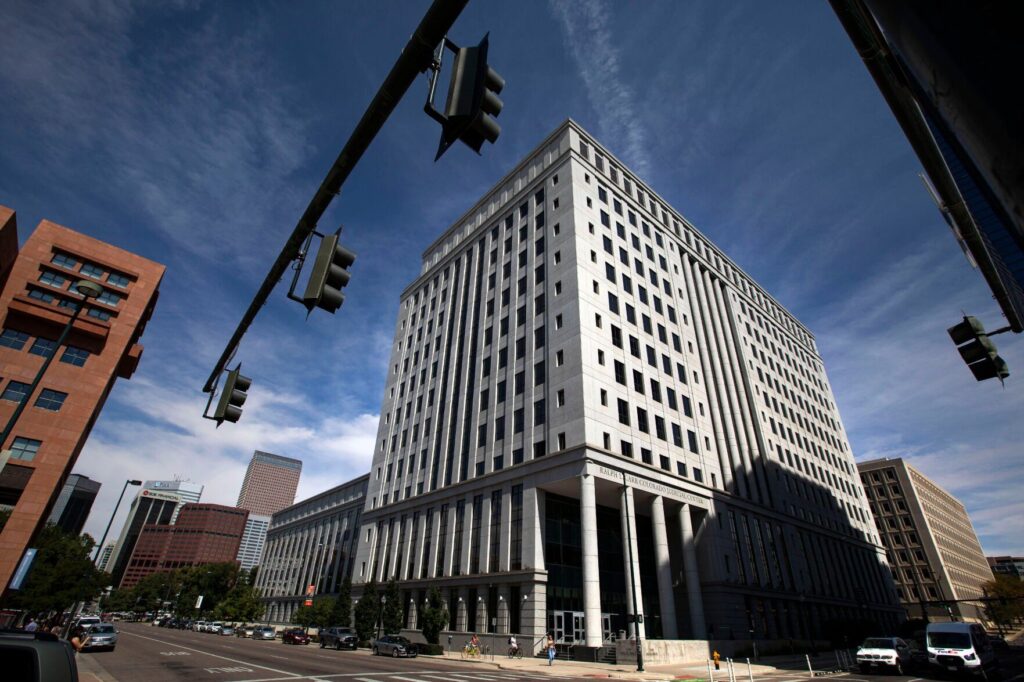
A three-member disciplinary panel accepted, on Monday, an agreement between a Montezuma County judge and the Colorado Commission on Judicial Discipline that specifies he will receive a censure, a suspension, and additional education for his admitted instances of misconduct. Under...
PREV
PREVIOUS

Muslim employee allowed to sue Department of Corrections for alleged discrimination
A Pueblo County man may sue the Colorado Department of Corrections, a federal judge ruled, for allegedly demoting him and characterizing his performance as poor only after a supervisor witnessed him performing a Muslim prayer at work. “While we cannot comment on the merits of the case, we are pleased with the current progress and […]

Colorado Supreme Court mandates diversity, equity, inclusivity training
Over objections that the programming constitutes “indoctrination,” the Colorado Supreme Court on Thursday approved mandatory equity, diversity and inclusivity training for attorneys as a means of retaining diverse attorneys and recognizing systemic bias. Colorado joins more than half a dozen other states that have a standalone requirement for EDI, as the training is known. It […]