

BARTELS | In the culture wars, common sense is a casualty
The movie “Blazing Saddles” debuted when I was a junior in high school, and the only thing I remember from that time is everyone talking about the campfire scene after all the cowboys had eaten beans.
Of course, this satirical spaghetti-Western film is so, so, so much more. According to Hollywood lore, it was one of the few movies of the 1970s to touch on racism. Sheriff Bart is Black and the people of Rock Ridge are aghast when the governor sends him to work in their town.
For years I’ve watched “Blazing Saddles” whenever I find it on TV. Every time I laugh at the one-liners – many racist and sexist – and I think, “There’s no way you could make this movie today.”
Years later, director Mel Brooks addressed that very issue in an interview. “I could barely make it then!” he said.
Brooks wrote the script with Black comedian Richard Pryor, who insisted on the use of the N-word. All these years later, viewers are now warned about the language.
Culture wars, anyone? Cancel culture? Are we too sensitive or are we righting past wrongs?
I go back and forth on the issue.
Sometimes it’s just plain ignorance. I still remember the Rocky Mountain News editor who was horrified that I used the word “Oriental” in a story to describe a slain woman. “Lynn!” she said. “The word is Asian.”
Other times, it’s an attempt by someone to prove they’re not politically correct. A couple of years ago, I said, “Happy holidays!” to someone. “I’m not a liberal,” the caller snapped. “I say Merry Christmas.”
The latest example of cancel culture, of course, involves Dr. Seuss.
“Did you hear they’re banning Dr. Seuss books because some people think the books are racist?” my brother-in-law asked.
“That’s terrible,” I responded. “This political correctness has got to stop.”
Then I found out it wasn’t true.
Dr. Seuss Enterprises chose to no longer publish six books that included caricatures of people of African, Asian and Arab descent. I haven’t read one of Theodor Geisel’s books in decades but I don’t recall ever looking at them and thinking, “Are you kidding?” But times change and I cringed when I recently saw the images critics referred to.
Geisel’s stepdaughter, Lark Grey Dimond-Cates, told the New York Post there “‘wasn’t a racist bone in that man’s body,’ but also said suspending publication of the six titles was ‘a wise decision.'” The Guardian reported, “The controversy left many perplexed, since the decision was made by Dr. Seuss Enterprises and not as a result of public pressure that has preceded other such decisions.”
Enter Fox News.
As clever columnist Mike Littwin of The Colorado Sun wrote: “Dr. Seuss was not canceled in a box. He was not canceled with a fox. Thing One and Thing Two: Whatever you might hear on FoxNews, Seuss wasn’t canceled with gall. His publisher withdrew six books with racist imagery, that’s all.”
My friend Deb Goeken once owned early editions of the Nancy Drew books, which included racial stereotypes. Over the years the language changed when the publishers republished editions about the young detective.
Cancel culture has also hit the food world. Long beloved and familiar brand names are gone or are going. That includes Aunt Jemima, Mrs. Buttersworth, Eskimo Pie and Uncle Ben’s.
Many of the announcements regarding new names and new packaging for these products were made in the wake of riots following the death of George Floyd, a Black man. His death in May 2020 at the hands of a Minneapolis police officer galvanized the Black Lives Matter movement.
“The Mrs. Butterworth’s brand, including its syrup packaging, is intended to evoke the images of a loving grandmother,” Conagra said in a statement at the time. “We stand in solidarity with our Black and Brown communities and we can see that our packaging may be interpreted in a way that is wholly inconsistent with our values.”
I never thought of those brand images as being racist, but when I googled “Who is Aunt Jemima?” the section “People Also Search For” popped up. It featured a photo of actor LeVar Burton with an iron collar around his neck. “Kunta Kinte” reads the tagline. Kunta Kinte, who was kidnapped from Africa and sold into slavery, is the main character in the book “Roots.” I was in shock.
How could that happen if Aunt Jemima has nothing to do with slavery?
A conservative recently posted this on Facebook: “So, if the Redskins can’t be red, and Aunt Jemima can’t be on the syrup, what do we call the White House (for the next four years)?”
I read it to my brother-in-law, who pointed out that cosmetic companies also haven’t been immune to the Black Lives Movement. I looked it up.
News reports show Johnson & Johnson will no longer sell two skin-lightening lotions. L’Oreal is removing the words “white,” “fair” and “light” from its skin products. Nivea’s parent company is removing “whitening” and “fair” from products and marketing. Unilever is renaming it’s popular Fair & Lovely cream to Glow & Lovely.
Let’s get back to “Blazing Saddles.” Pryor was to play the sheriff but the studio refused to insure him, so Pryor recruited actor Cleavon Little.
Brooks thought there was too much of the N-word, but Pryor disagreed.
“Richard said, ‘No, we are writing a story of racial prejudice. That’s the word, the only word. It’s profound, it’s real, and the more we use it from the rednecks, the more the victory of the black sheriff will resonate,'” Brooks recalled, in an interview.
After a sneak preview of the film, the studio chairman ordered Brooks to eliminate, among other things, all uses of the N-word and flatulence sound effects. Brooks ignored him and “Blazing Saddles” went on to become the top grossing movie of 1974.
The film features an all-star cast, including Brooks, Harvey Korman, Gene Wilder and the amazing Madeline Kahn. She plays Lili Von Shtupp, the dance hall singer who lisps through the film and lusts after the sheriff. At one point she sings, “Hewe I stand, the goddess of desire. Set men on fire. I have this powah. Morning, noon, and night is dwink and dancing Some quick womancing. And then a showah.”
Shtupp, by the way, is one of Brooks’ contributions to the film. Brooks is Jewish and schtupp is Yiddish for doing the deed. Mike Littwin turned me on to that delicious factoid.
“Blazing Saddles” fans went slightly berserk last year when what is called a “trigger warning” was displayed on the movie, warning of racist comments and such.
New York Post columnist Kyle Smith had a field day.
“Ridiculous, unnecessary trigger warnings are getting plastered all over everything. Realtors are afraid to use the term ‘master bedroom.’ But HBO Max seems to think we all live in kindergarten. What kind of melonhead doesn’t realize the purpose of the slurs in Blazing Saddles is to make the racists look bad?” he asked.
In this case, the culture wars have gone overboard.
As Lili Von Shtupp would say, “It’s twue, it’s twue.”

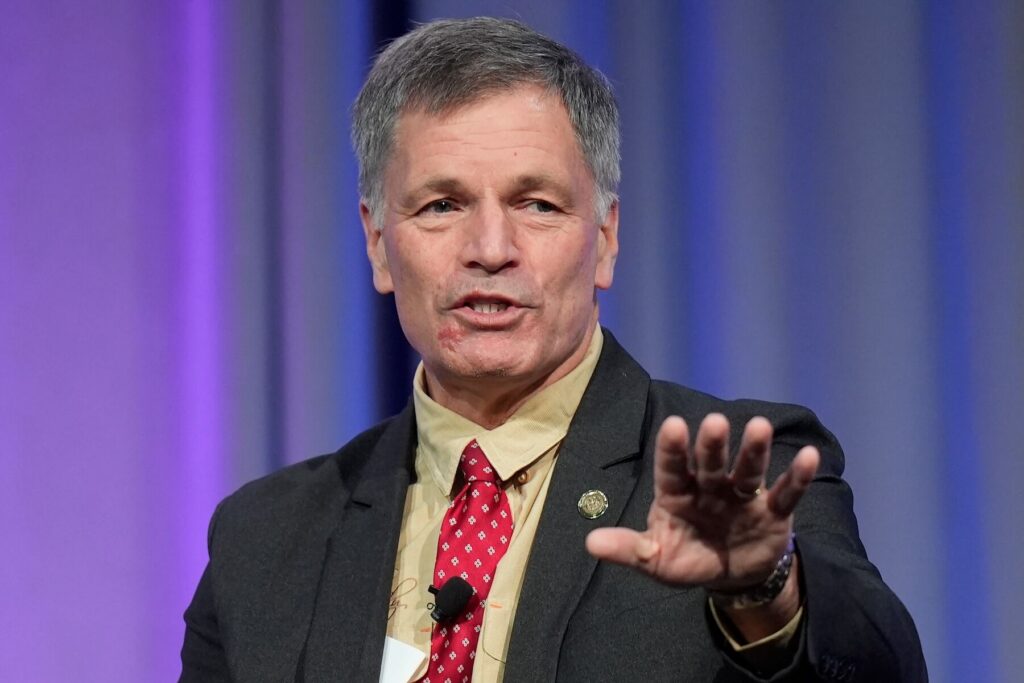
Wyoming governor sues state board, asks court to enforce property tax cap | OUT WEST ROUNDUP
The Associated Press
the-associated-press@coloradopolitics.com
Updated 4 days ago
WYOMING Governor sues over property tax cap Gov. Mark Gordon filed a lawsuit on June 16 to force the State Board of Equalization to certify residential property tax values after the panel concluded it could not do so due to...
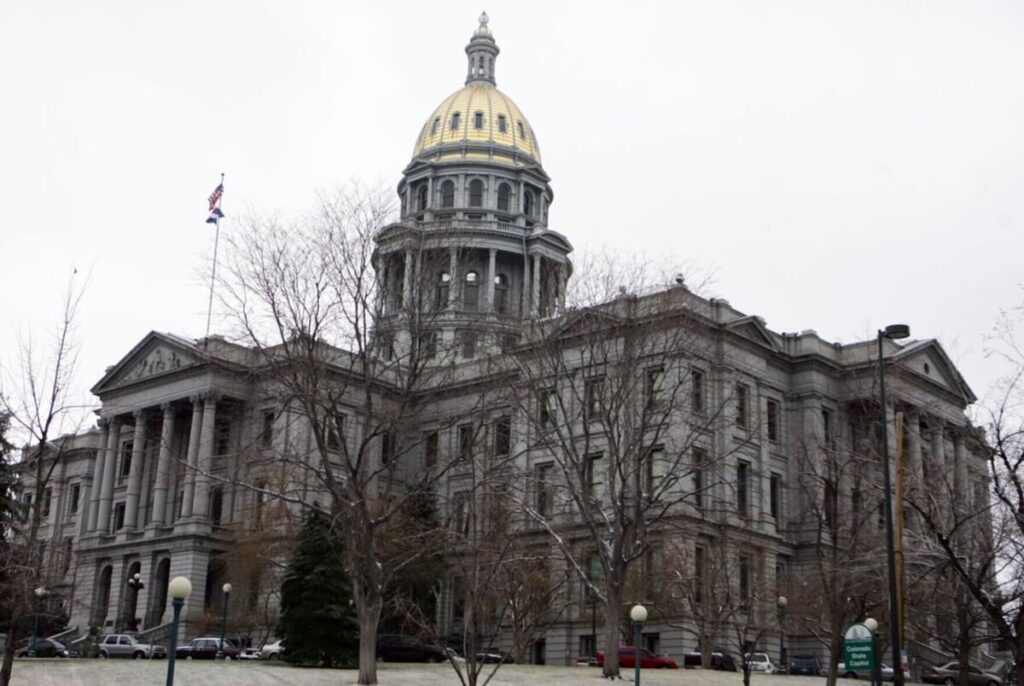
Democratic Colorado rural congressman threatens to caucus with GOP to preserve PILT | A LOOK BACK
Rachael Wright, Special to Colorado Politics
rachael.wright@coloradopolitics.com
Updated 3 days ago
Forty-Five Years Ago This Week: “It’s sometimes like talking to a brick wall,” said Colorado Congressional District 3 U.S. Rep. Ray Kogovsek. Kogovsek was frustrated at the lack of support from congressional representatives from the East Coast and the Midwest...

25 lessons and wishes to celebrate America’s 250th | SONDERMANN
By Eric Sondermann
by-eric-sondermann@coloradopolitics.com
Updated 4 days ago
The 250th celebration of America’s birth is upon us. There is undoubtedly much to salute. Despite plenty of strife and discontent at home, America remains a beacon to much of the world. The wisdom of our founders has largely withstood...
Colorado Politics Calendar July 6-12
Rachael Wright, Special to Colorado Politics
rachael.wright@coloradopolitics.com
Updated 4 days ago
CoPo’s weekly political calendar helps you find political and public policy events throughout Colorado. It includes candidate and issue campaign events, public policy meetings, court hearings, state and local party conventions, assemblies, debates, rallies, parades, speaking engagements, traveling dignitary appearances,...
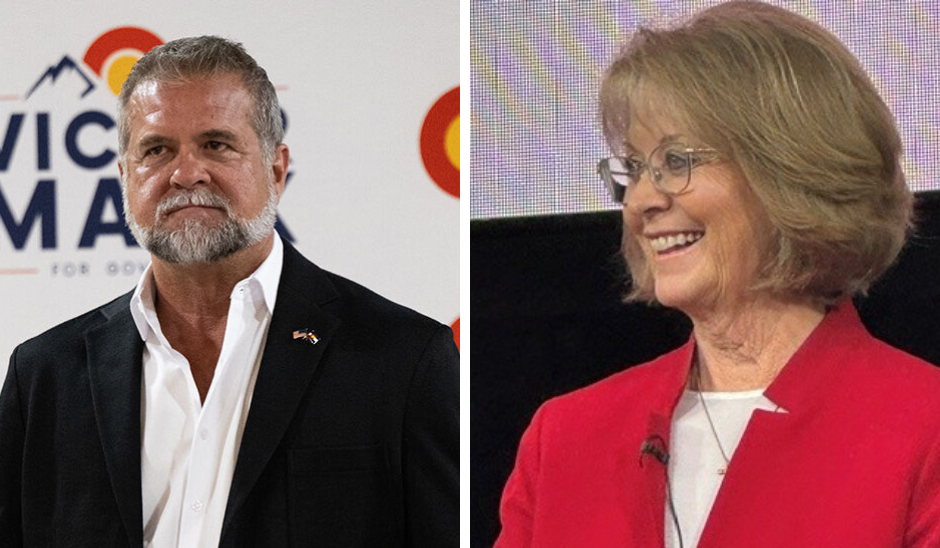
Victor Marx holds a steady lead over Barbara Kirkmeyer in Colorado Republican governor contest
Thelma Grimes
thelma.grimes@coloradopolitics.com
Updated 2 days ago
Victor Marx overtook state Sen. Barbara Kirkmeyer in the Republican primary for governor on Wednesday evening, seizing a narrow lead after trailing her since polls closed. Kirkmeyer, one of three candidates, opened the night with a clear advantage, at one...

Democrats confront shift as socialist-aligned candidates win races in Colorado
Thelma Grimes
thelma.grimes@coloradopolitics.com
Updated 22 hours ago
Democratic socialists’ recent electoral gains — punctuated by Melat Kiros’ victory on Tuesday over U.S. Rep. Diana DeGette, the dean of Colorado’s congressional delegation — are the result of a movement that has been taking shape in metro Denver for...
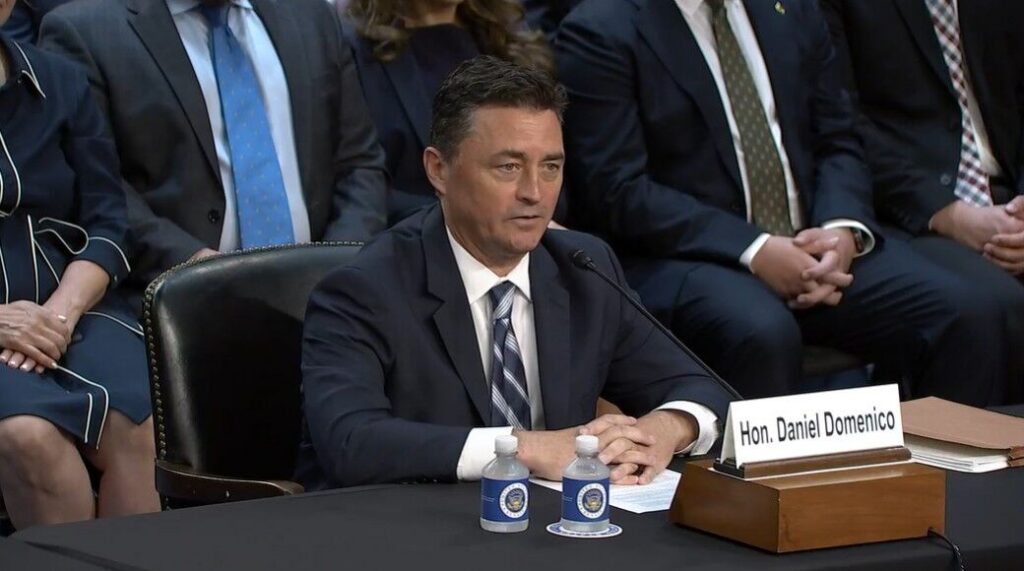
Trump’s judicial nominee orders bond in wave of cases after 10th Circuit rejects government’s position
Michael Karlik
michael.karlik@coloradopolitics.com
Updated 3 days ago
Within 24 hours of the Denver-based federal appeals court rejecting the government’s expansive view of its immigration detention authority, the lone judge in Colorado to embrace that view ordered bond hearings for detainees in at least 20 cases. U.S. District...

Cherry Creek spent $65K on investigation, but invoices remain secret, records show
Nico Brambila
nico.brambila@denvergazette.com
Updated 3 days ago
After previously refusing to disclose the cost associated with the investigation into the former superintendent and his wife, the former human resources chief, Cherry Creek School District officials partially released records showing the cost to taxpayers: $65,054.85. The Denver Gazette...
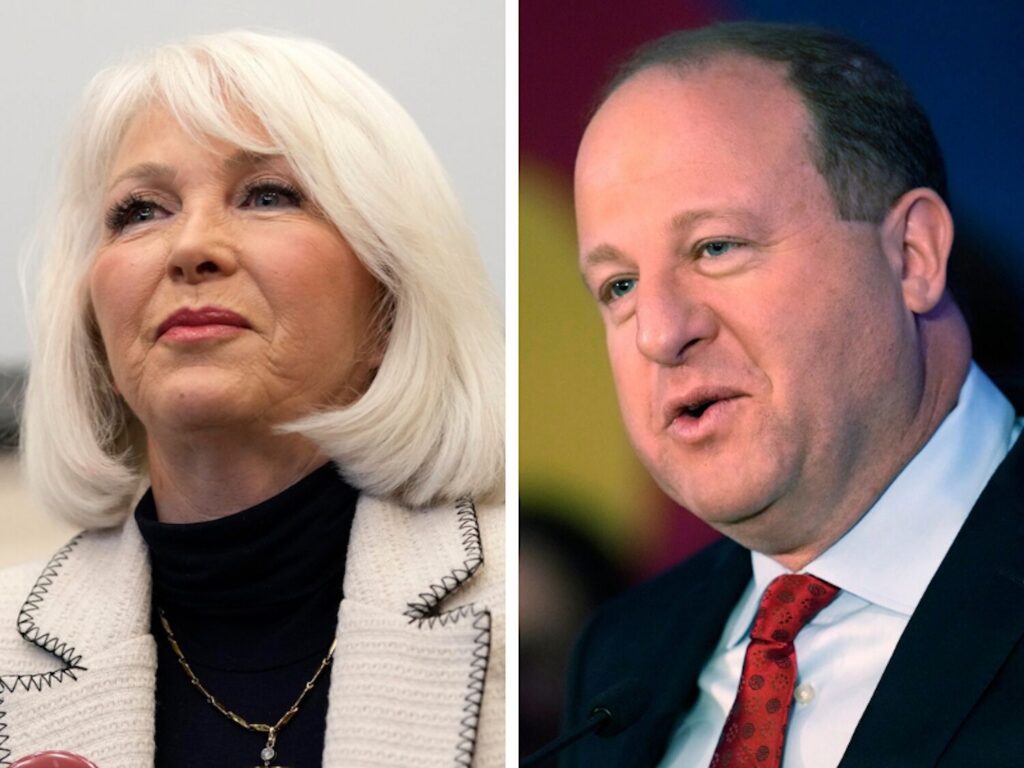
Colorado governor fires clemency board members who opposed Tina Peters commutation
Marissa Ventrelli
marissa.ventrelli@coloradopolitics.com
Updated 3 days ago
Gov. Jared Polis has fired two members of his clemency board who opposed his commutation of Tina Peters’ sentence, according to Colorado Politics news partner 9News. In firing Azra Taslimi and Hannah Seigel Proff, Gov. Jared Polis said they had...
Democrats supercharge court fight after campaign finance ruling
James A. Downs
james.a..downs@washingtonexaminer.com
Updated 3 days ago
Democrats are hoping to dampen the GOP’s midterm cash advantage after Republicans scored a major win allowing unlimited coordination between political parties and candidates. Republican campaign arms say they can access discounted TV ad rates after the Supreme Court lifted...
PREV
PREVIOUS

Lawmakers seek fee on insurers to fight fires
Colorado state lawmakers are set to consider a proposal to inject funds into efforts to mitigate natural disasters by charging insurance companies a fee on certain policies they offer. The plan from Reps. Lisa Cutter, D-Littleton, and Matt Gray, D-Broomfield, and Sens. Faith Winter, D-Westminster, and Kevin Priola, R-Henderson, would create an enterprise that would […]

Serving lawfully? Corporate board members evade eligibility questions in Thornton subdivision
It might not be obvious that the sprawling residential construction site near Holly Street and East 144th Avenue in Thornton is also a local government: the Willow Bend Metropolitan District, organized in 2013 to finance and maintain the infrastructure for the subdivision. Like any other local government, the metro district has elected officials, in the […]