

BARTELS | How to address the city’s homeless? It’s a problem that continues to vex us all

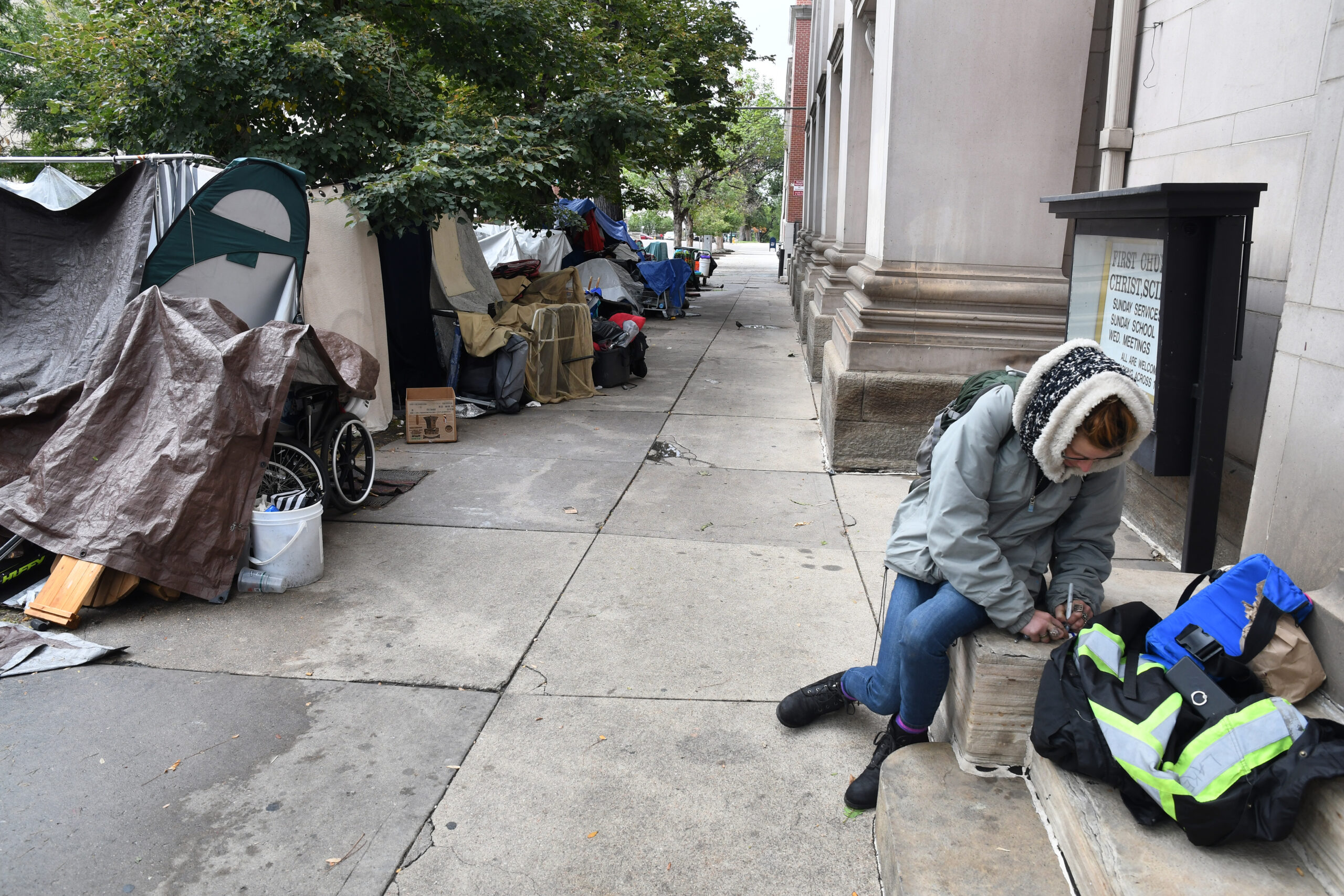
Rarely a week goes by without some Denver news outlet mentioning the homeless, whether it’s a sweep of a homeless camp or a court ruling on those sweeps or the death of a homeless person or another round of money being spent on the homeless.
Over the past months, the homeless have set up tent cities near the Capitol, the City-County Building and even schools. After the dismantling of one camp because of the proliferation of rats, city officials found needles, trash and human feces.
I recently drove by a homeless camp and saw water bottles lying around that were filled with a yellow liquid. I don’t think it was Mountain Dew, although the taste might be similar.
“What is the future of Denver’s homeless encampments in a post-pandemic world? Is their contribution to urban blight and neighborhood distress here to stay?” Denver Post columnist Vince Carroll recently asked.
“It seems like a distant era, but less than two years ago Denver voters trounced a ballot measure seeking to create a right to camp in public spaces such as parks and sidewalks. More than 80% of voters said no.”
I’m not sure there’s enough money to deal with a problem that challenges elected officials in good times and in bad.
Denver in 2007 installed parking meters where passersby could get rid of loose change that was earmarked for people experiencing homelessness. Last year, Denver voters authorized a tax increase to raise an estimated $40 million annually for housing and homeless services.
Yet in the years to come, there will be more stories about the plight of the homeless.
There were plenty when I moved to Colorado in 1993 to cover the police beat for the Rocky Mountain News I went out on calls about trash fires, assaults and calls for medical help involving the homeless.
Because I worked the night shift, I was always getting lost trying to find the locations of these incidents. Some occurred at an abandoned flour mill that had become a hangout for some homeless people but also drifters, grifters, adrenaline seekers, the addicted and the afflicted.
Westword in 1999 interviewed a teen counselor who had visited the flour mill.
“The last time he was here, getting a tour from three street kids, he had to crawl under a chain-link fence, past a plywood barricade, through an old coal chute and into a dank, muddy basement of broken beer bottles, spray cans and urine. .. he climbed the cracked concrete steps to the seventh floor, wind blowing through broken windows, graffiti everywhere … .”
By then, the building north of Coors Field was being turned into condominiums and lofts as the Platte Valley and other parts of Denver were reborn. I remember wondering where vagrants would migrate.
That same year, a series of men identified as homeless were slain in lower downtown Denver. I protested when an editor at the Rocky assigned me to write a profile on the victims. “They’re homeless. How can I write a story?” I said.
And that’s when I made a startling discovery:
Handyman George “Billy“ Worth wasn’t homeless. He wasn’t homeless at all.
For 10 years he had lived in a friend’s basement in northwest Denver, coming and going as he pleased.
It’s true that when the urge to drink became too powerful to ignore, Worth returned to what the gentrified call Lower Downtown and what the less fortunate still refer to as Skid Row.
It was there in LoDo that police found the battered bodies of Worth and his buddy, Donald Dyer. Within the next two months, three more men were beaten to death in the area, creating panic among the down and out in LoDo.
The victims were always described as homeless, never as somebody’s friend or cousin or neighbor. That hurts the people who cared for them, got them jobs and places to live and invited them home for the holidays.
“George was a part of this household. He was a person,” said his friend and landlord, Earl Klingensmith. “I’m still crying.”
The friends and families of the other victims told the same story.
I happened to be working when the story appeared on the front page of the Sunday edition in December 1999. The newspaper got all sorts of phone calls. One woman cried as she described how she recognized one of the slain men because he usually loitered outside her building. His presence annoyed her, she admitted, and she wished she had sometimes offered a kind word.
I thought of that story when Aurora Mayor Mike Coffman went underground for a week after Christmas and camped with the homeless in his city and in Denver. His goal, he told CBS4 reporter Shaun Boyd, was to find out why the problem of homelessness was growing and what he, as a mayor, could do to address it.
Coffman discovered, as I did two decades earlier, that a surprising number of people are homeless by choice. Some have mental health issues. Those with substance abuse issues shun shelters because of restrictions.
“It is a lifestyle choice and it is a very dangerous lifestyle choice,” Coffman concluded at the end of his experiment.
Homeless advocates were outraged, but the event was overshadowed by what happened a day after Boyd’s report aired. Traitors stormed the U.S. Capitol determined to overthrow the results of the presidential election and physically harm elected officials.
But homeless issues quickly returned to the forefront in Denver.
The city council in January extended three contracts that allow the city to continue providing temporary housing in hotel rooms for some experiencing homelessness during the COVID-19 crisis.
And the city appealed a decision by a federal court judge ordering Denver to give at least 48 hours’ notice prior to sweeping homeless camps, even if the city deems the camp a public safety hazard. The city claims the order limits Denver’s ability to address public health, environmental and safety risks related to conditions in large-scale encampments.
The court documents refer to “sweeps,” although that word is opposed by Denver Mayor Michael Hancock and an advocacy group.
Denverite’s Kevin Beaty reported that Team Hancock believes the word “mischaracterizes” the city’s “commitment” to helping people dealing with homelessness and “dehumanizes our most vulnerable residents.” The activist group From Allies to Abolitionists believes the more appropriate description of sweeps is “traumatic displacements,” Beaty reported.
But there’s also trauma for the people who live or work near these tent cities, and I understand their concern. When Occupy Denver took over Lincoln Park in 2011, I drove by the mess every morning on the way to cover the Capitol. I saw people drinking, pooping, shooting it up and getting it on. The cleanup gave workers nightmares.
We have to remember that when we take care of the homeless we have to take care of our needs, too.


Trump lowers flags to half-staff for Dolly Parton: ‘The World loves you’
Naomi Lim
naomi-lim@coloradopolitics.com
Updated 7 hours ago
President Donald Trump is honoring the life of country music legend and philanthropist Dolly Parton by ordering federal buildings across the country to lower flags to half-staff for a week. “Very sad to report that Dolly Parton, one of the...
Ted Cruz suggests GOP realignment coming after Trump leaves office
Emily Hallas
emily-hallas@coloradopolitics.com
Updated 7 hours ago
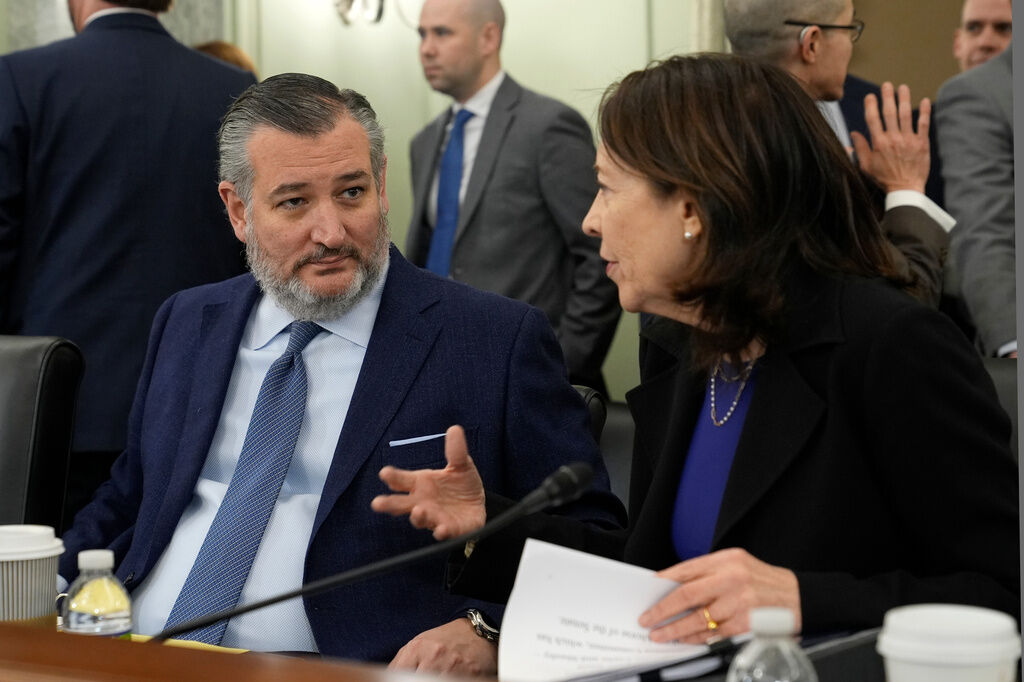
Sen. Ted Cruz (R-TX) on Monday suggested the Republican Party could embrace a directional shift after President Donald Trump leaves office, a transition that promises to leave a gaping hole in the GOP. Cruz is known as a critical ally...
2 Colorado State troopers shot near Woodland Park; suspect killed
DEBBIE KELLEY
debbie-kelley@coloradopolitics.com
Updated 6 hours ago
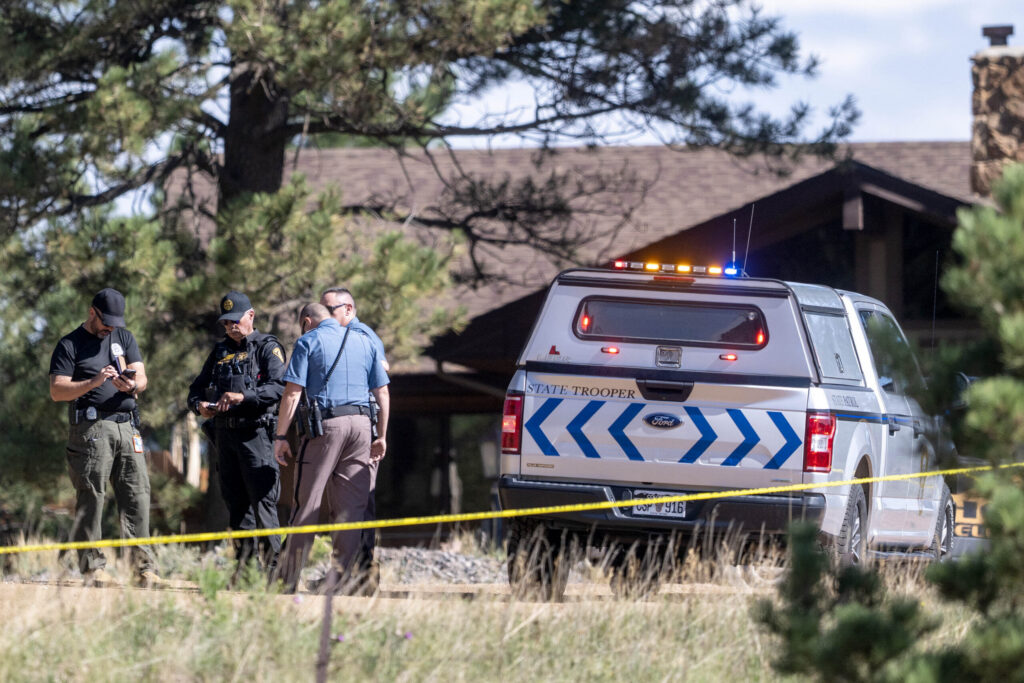
Two Colorado State Patrol troopers were hospitalized, and a suspect is dead after a shooting during a traffic stop Tuesday. The initial incident happened at about 7:15 a.m., when a resident reported suspicious activity in the area near milepost 286...
Aurora moves forward with data center regulations
Kyla Pearce
kyla.pearce@gazette.com
Updated 6 hours ago
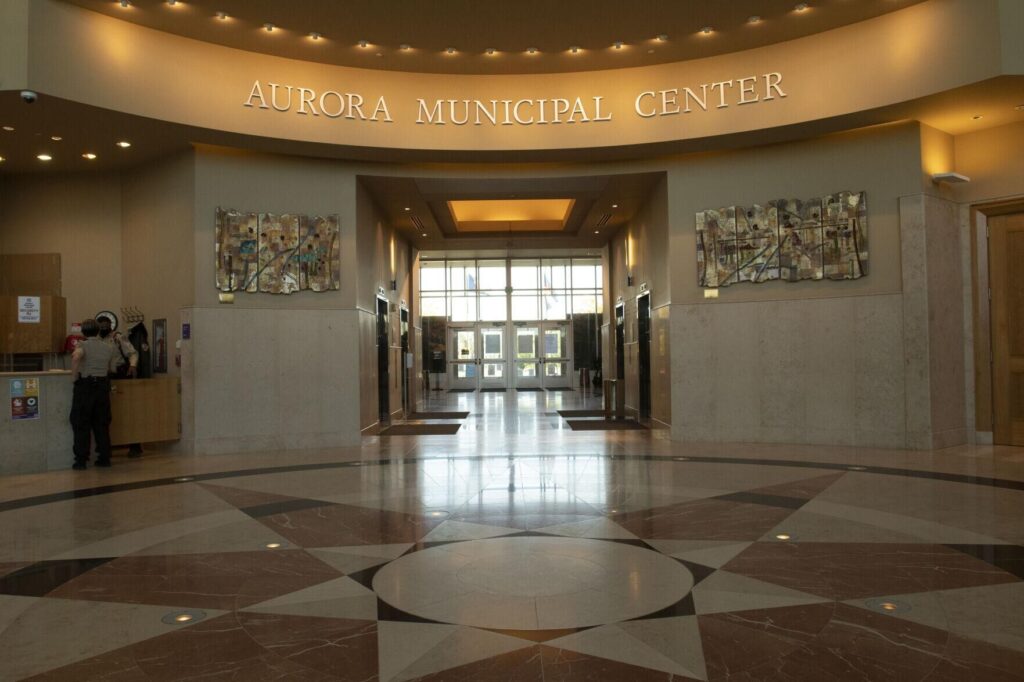
The Aurora City Council approved moving forward with two new regulations on data centers and directed staff to come back at the next study session with others. At a council meeting in early August, council members directed city management to...

Aurora City Council considers stricter food truck regulations
Kyla Pearce
kyla.pearce@gazette.com
Updated 6 hours ago
The Aurora City Council is considering passing laws to limit the number of food trucks on properties in the city and how and when they operate. Councilmember Angela Lawson, who sponsored the ordinance, said she understands the importance of food...
Denver murder conviction reversed for incomplete self-defense instruction
Michael Karlik
michael.karlik@coloradopolitics.com
Updated 4 hours ago
Colorado’s second-highest court reversed a defendant’s murder conviction last week because a Denver judge gave an incomplete instruction to the jury about the man’s right to self-defense. Donald R. Gonzales and Gary McLaughlin met up in a Capitol Hill parking...
Colorado lawmaker, House leaders named in workplace-retaliation lawsuit
Marianne Goodland
marianne.goodland@coloradopolitics.com
Updated 7 hours ago
A former legislative aide has filed a lawsuit alleging she was mistreated, illegally directed to perform campaign work and harmed by a House leadership structure she charged was fragmented, politicized and ineffective at protecting employees. The lawsuit, filed by Jennifer...

Secret Service confirms awareness of Iranian state media video threatening Barron Trump’s life
The Associated Press
the-associated-press@coloradopolitics.com
Updated 12 hours ago
WASHINGTON (AP) — The U.S. Secret Service has confirmed it is aware that Iranian state media has aired a video that appears to threaten the life of Barron Trump, President Donald Trump’s youngest son. “The U.S. Secret Service is aware...
Federal judge hears arguments about Colorado’s 3-day gun purchase waiting period
Michael Karlik
michael.karlik@coloradopolitics.com
Updated 12 hours ago
A federal judge heard arguments on Monday about the constitutionality of a 2023 Colorado law that generally imposes a three-day waiting period on firearm purchases after the initiation of a background check. The test that the U.S. Supreme Court created...
Denver auditor finds oversight failures in $175.6M 16th Street project
Nico Brambila
nico.brambila@denvergazette.com
Updated 6 hours ago
Surprise historic sewer discovery delayed completion a year, cost $18M The Denver Auditor recently found significant oversight and contracting problems with the $175.6 million 16th Street Improvement Project, including an $18 million contract increase and a nearly one-year extension that...
PREV
PREVIOUS

Colorado House Democrats approve bill on safe storage of guns
Colorado House Democrats on Monday passed the first of several bills intended to improve safety around firearms, sending a bill on safe gun storage to the full House. The House State, Civics, Veterans and Military Affairs Committee voted along a 7-4 party line to approve House Bill 21-1106, which requires gun owners to securely store […]

Former spokesman for Colorado Democrats joins White House press office
Chris Meagher, a former spokesman for the Colorado Democratic Party and veteran communications adviser to several leading Democrats, has been hired as a deputy White House press secretary. Currently the top spokesman for Transportation Secretary Pete Buttieigeg, Meagher starts the new job Wednesday, the Washington Post first reported. He will replace TJ Ducklo, who resigned […]