

Lawyers, judges ask for investigations, reform following judicial scandal
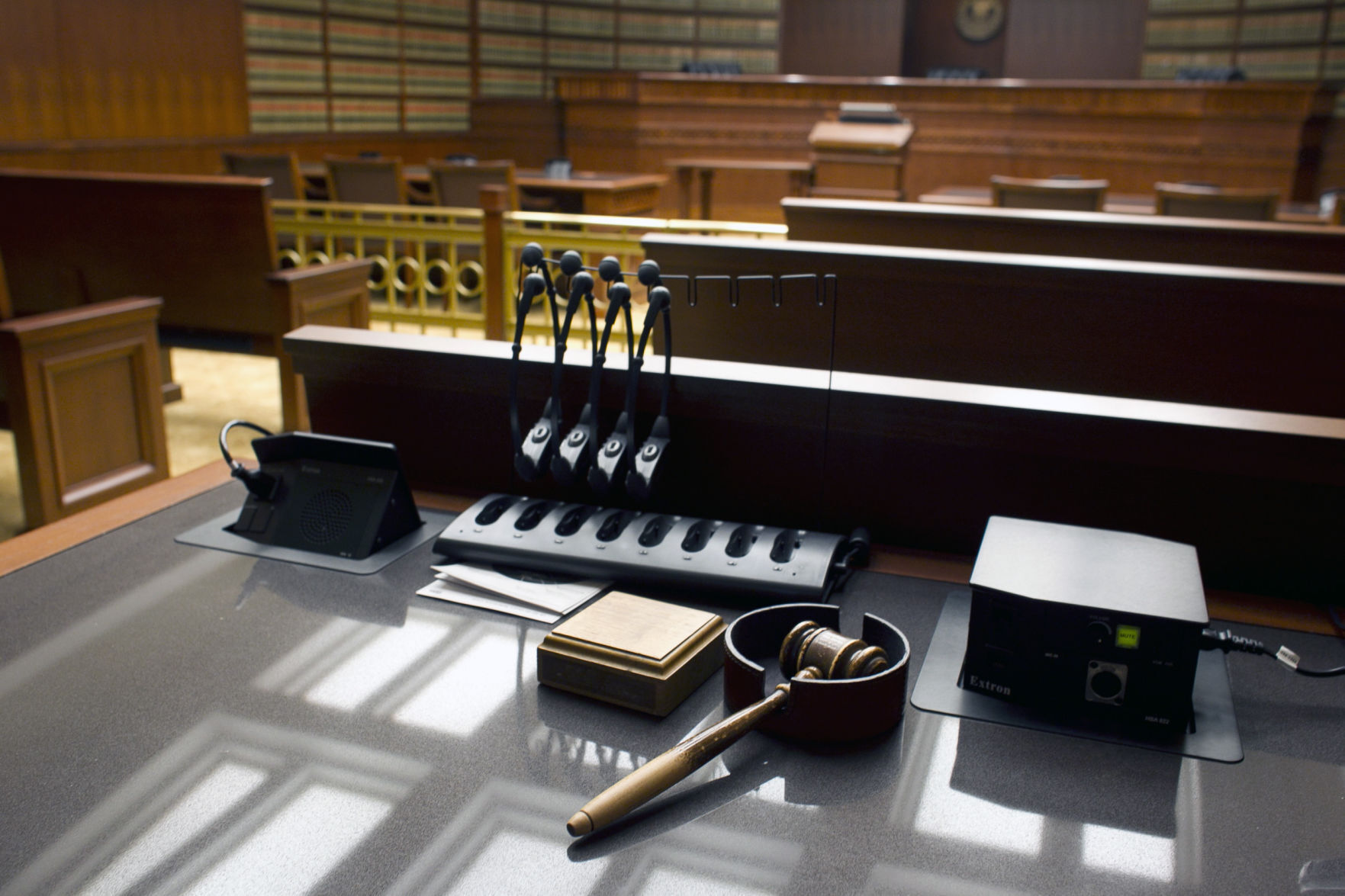
After reports emerged that the Judicial Department and Colorado’s former chief justice awarded a multimillion-dollar contract to an employee to prevent her from disclosing incidents of workplace misconduct and sex discrimination, multiple legal associations and judges are now urging an inquiry.
“The Colorado Bar Association condemns in the strongest terms sexual misconduct and sexual discrimination in the workplace,” the Colorado Bar Association said in a statement. “The allegations against the Colorado Judicial Department are grave and serious, and we strongly encourage the Department to continue to address concerns as they unfold.”
Last week, The Denver Post and The Gazette reported that Mindy Masias, the former chief of staff for the State Court Administrator’s Office, alleged numerous instances of sexism, harassment and misconduct, including against judges and an unnamed chief justice of the Supreme Court. The specific misconduct, including a judge sending pornography over his government email and a confidential agreement between a clerk who was the victim of harassment and her judge, came to light in a two-page memo that the Judicial Department released on Monday.
Then-Chief Justice Nathan B. Coats reportedly approved giving Masias an approximately $2.72 million contract from the department to prevent her from going public with the allegations. The Office of the State Auditor referred to the contract award in December, before the memo came to light, as having “the appearance of impropriety.”
“As a woman, I am not surprised by this development,” said Alexis King, the First Judicial District Attorney in Jefferson and Gilpin counties. “No branch of government is above the law, and that includes the rights of workers to be free from harassment and abuse.”
The Colorado Trial Lawyers Association went a step farther on Thursday, likening the Judicial Department employees involved in misconduct to offenders.
The group “stands with all victims of discrimination, including sexual harassment, abuse, and workplace misconduct,” the association wrote. “The recently reported actions of the Colorado Judicial Department to shield judges and other high-ranking employees from accountability is unethical and corrodes public trust in our judicial system. Any effort to prevent offenders at any level from being held accountable cannot be tolerated.”
One Colorado judge, who spoke on condition of anonymity for fear of retribution, said they had no evidence so far that the scandal had diminished confidence in the judiciary, but said that would likely be the result.
“The whole series of events smacks of hypocrisy. We judges sit in judgment of people who apparently have violated the law,” they said. “But when we’re the ones who may have violated the law or engaged in pretty horrible conduct, we circle the wagons and protect ourselves. It sends a terrible message.”
David Lane, an attorney with Killmer, Lane & Newman, likened the judicial mentality to the concepts of the “thin blue line” and “blue wall of silence,” terms referring to solidarity among police officers and a reluctance to speak out over misconduct.
“This entire scandal is a black eye for the judiciary and if true, they deserve it. Like the thin blue line, there is a thin black line as well, and judges default to keeping scandals quiet,” Lane said.
Multiple Colorado legislators said they could not comment fully on the subject because of the auditor’s ongoing investigation, but Senate President Leroy Garcia, D-Pueblo, and House Speaker Alec Garnett, D-Denver, both echoed the call for an investigation.
Some retired judges indicated that reform needs to occur in the process for reviewing complaints of judicial misconduct.
“I would recommend a real in-depth discussion about confidentiality, non-disclosure agreements and settlement agreements,” said Dennis Maes, a former chief judge in Pueblo. “I think the more egregious the situation is, there probably ought to be more transparency. I think that’s where the discussion might need to take place is: what are those instances? Sexual harassment, discrimination, whatever it is.”
The Colorado Commission on Judicial Discipline exists to receive and investigate complaints of misconduct against judges. The sanctions – which the Supreme Court is responsible for imposing – can include suspension without pay, removal from office, privately-administered discipline, and public reprimand or censure.
In its annual report for 2019, the commission only named two judges who received public censure: former Court of Appeals Judge Laurie A. Booras disclosed confidential information and referred to a colleague as a “little Mexican,” and District Judge Lance P. Timbreza pleaded guilty to driving while ability impaired. In December of 2020, the Supreme Court also publicly admonished former District Judge Ryan L. Kamada for obstructing a federal drug investigation. The public action came six months after Kamada pleaded guilty, and the details were publicly available.
However, other complaints against judges – including one in which the judge had a sexual relationship with a staff member – resulted in a private censure without naming the judge.
This contrasts sharply with attorney sanctions, in which the Office of the Presiding Disciplinary Judge posts disciplinary opinions online, dating to 1999, detailing all stipulations of misconduct.
“We get an email from [the Office of Attorney Regulation Counsel] annually about every lawyer that has been disciplined. We don’t get that for judges,” said Kate S. Hulme, an attorney at Cannon Law in Fort Collins.
Coincidentally, the Supreme Court held a hearing this week about proposed changes to rules for the discipline of attorneys. The allegations about the Judicial Department “only further feed the skepticism of the public,” one commenter told all seven justices. “The rules of attorney regulation are meaningless without honorable justices enforcing them.”
Michael L. Bender, the chief justice from 2010 to 2014, said a key part of the problem lies in the Colorado constitution, namely a provision mandating that “all papers filed with and proceedings before the commission on judicial discipline…shall be confidential.”
“If the constitution didn’t require it, it would be an easy matter for the chief justice and the Supreme Court to change it,” Bender said, adding he would have moved toward more transparency during his term if he could have.
“I think the modern thinking is that’s the way it ought to be. We changed that a long time ago with lawyers. But you can’t change it without a constitutional amendment,” he said.
Acknowledging the likelihood that a constitutional change to the judicial discipline process would be necessary, Sen. Bob Gardner, R-Colorado Springs, also raised the possibility of an inspector general to investigate judicial misconduct, something that members of Congress have proposed for the federal judiciary without success.
“I know that the chief justice really wants to see this resolved, that the truth would be made known,” said Gardner, who is a member of the Senate Judiciary Committee, referring to current Chief Justice Brian D. Boatright. Gardner recalled the General Assembly’s own procedural changes after an outcry over sexual harassment at the capitol, climaxing with the first expulsion of a legislator in over 100 years in 2018.
The Judicial Department “has, by its nature, been largely self policing and there are reasons for that,” Gardner added. “By the same token, there’s a public demand for transparency and accountability that needs to be met.”
The judge who asked to speak on condition of anonymity doubted that legislation was the appropriate means of furthering transparency in the judiciary, given the separation of powers between branches. They felt “robust measures through a chief justice directive” would be sufficient.
“Once you’re a judge, assaults on your reputation really take a toll on you,” they warned, acknowledging that only if complaints had probable cause should they be disclosed.
Asked how confident the judge would be that the current system could fairly handle a hypothetical misconduct complaint against a colleague, the judge responded simply, “it depends on the complaint, but not very.”


10th Circuit overturns framework for sentencing probation violators by 11-1
Michael Karlik
michael.karlik@coloradopolitics.com
Updated 1 day ago
In a rare decision by all 12 of its full-time judges, the Denver-based federal appeals court ruled in a lopsided vote on Friday that one of its members created a sentencing process for probation violators that was out of step...

Federal judge dismisses excessive force lawsuit against Colorado Springs, officer
Michael Karlik
michael.karlik@coloradopolitics.com
Updated 1 day ago
A federal judge concluded last week that a Colorado Springs police officer could not be held liable for shooting a suspect three times after the man menaced two victims with a gun and fled the scene. Al’morion Germany was involved...

Weld County man sentenced to 236 years for sexually assaulting 9-year-old girl
Kyla Pearce
kyla.pearce@gazette.com
Updated 2 days ago
A Weld County man was sentenced to 236 years in prison for repeatedly sexually assaulting a 9-year-old girl. Joshua Andrews, 41, was charged in June with 12 counts of sexual assault on a child by a person in a position...
Wrongfully deported man to be returned to U.S., Colorado federal judge orders
Michael Karlik
michael.karlik@coloradopolitics.com
Updated 3 days ago
Colorado’s chief federal judge took the extraordinary step of directing the government on Tuesday to do everything it can to return a man it deported in violation of his order. At the same time, Colorado’s chief magistrate judge has set...
Denver murder, assault convictions reversed due to faulty jury instructions
Michael Karlik
michael.karlik@coloradopolitics.com
Updated 2 days ago
Colorado’s second-highest court reversed a defendant’s convictions for murder and assault last week after concluding a Denver judge incorrectly omitted key jury instructions that could have affected the verdict and sentencing. Stephen C. Swainson fatally stabbed Israel Casillas in downtown...
‘Understand people for who they are’: 2 federal judges talk about compassion in courtroom
Michael Karlik
michael.karlik@coloradopolitics.com
Updated 2 days ago
Before taking the bench in 2022, U.S. District Court Judge Charlotte N. Sweeney was an employment discrimination attorney. While the cases could be emotionally charged, they were different from the criminal proceedings she is now handling. “It wasn’t necessarily affecting...
Denver murder conviction reversed for incomplete self-defense instruction
Michael Karlik
michael.karlik@coloradopolitics.com
Updated 5 days ago
Colorado’s second-highest court reversed a defendant’s murder conviction last week because a Denver judge gave an incomplete instruction to the jury about the man’s right to self-defense. Donald R. Gonzales and Gary McLaughlin met up in a Capitol Hill parking...
Colorado lawmaker, House leaders named in workplace-retaliation lawsuit
Marianne Goodland
marianne.goodland@coloradopolitics.com
Updated 5 days ago
A former legislative aide has filed a lawsuit alleging she was mistreated, illegally directed to perform campaign work and harmed by a House leadership structure she charged was fragmented, politicized and ineffective at protecting employees. The lawsuit, filed by Jennifer...
Federal judge hears arguments about Colorado’s 3-day gun purchase waiting period
Michael Karlik
michael.karlik@coloradopolitics.com
Updated 5 days ago
A federal judge heard arguments on Monday about the constitutionality of a 2023 Colorado law that generally imposes a three-day waiting period on firearm purchases after the initiation of a background check. The test that the U.S. Supreme Court created...
Colorado Supreme Court intervenes in Weld County prosecution dismissed due to Missy Woods misconduct
Michael Karlik
michael.karlik@coloradopolitics.com
Updated 5 days ago
The Colorado Supreme Court ordered a Weld County trial judge last week to respond to the district attorney’s claim that he improperly dismissed a criminal case because of “outrageous” conduct by the Colorado Bureau of Investigation. Daniel Lee Eatinger stood...
PREV
PREVIOUS

'Recharge Where You Recharge' campaign pushes for electric vehicle plugs in state parks
Environment Colorado, an advocacy group based in Denver, has launched a campaign to install at least one electric vehicle charging station in every state park, a goal that Colorado Parks and Wildlife supports. “We are very excited to be a part of this initiative. For the past three or so years we’ve dabbled in EV […]

In rural Colorado, one town is looking to its community college to help survive the end of coal
Even in the dark of night, chalky smoke from the coal power plant looms over Craig. For generations, coal has been a constant in this northwestern Colorado city. But by 2030, the Craig Station stacks will go quiet as Colorado shifts to renewable energy. Coal has fueled not only Colorado’s power needs, but also Craig’s […]