

Colorado bear encounters dropped in 2020, but problems still persist
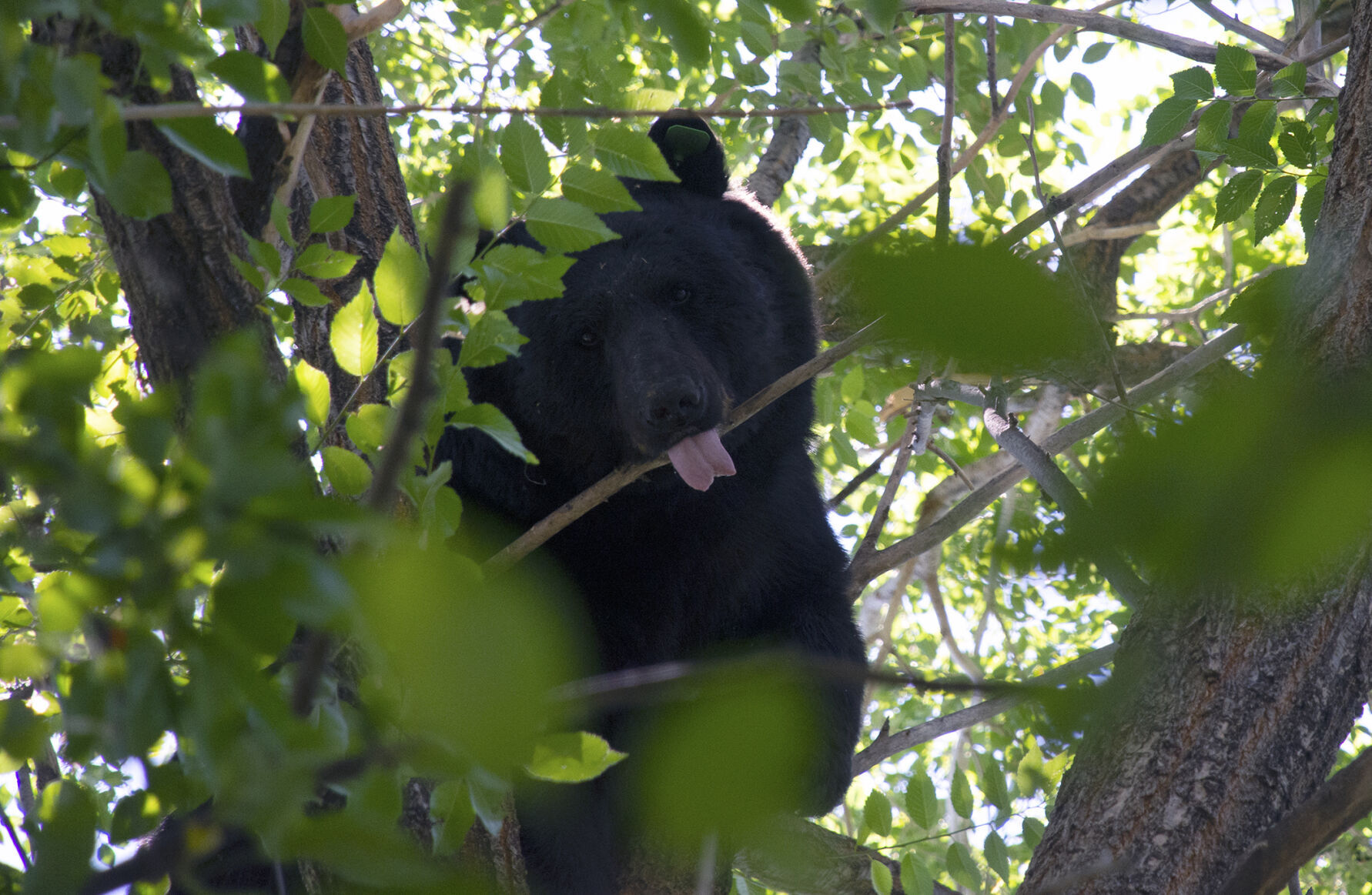
Bear encounters with people were down in 2020, with trash being left in unsecured containers blamed for the bulk of them, Colorado Parks and Wildlife said.
Nearly 4,943 reports about bears were filed in 2020 compared to 5,369 in 2019. Of the 4,943 encounters, a third were trash-related. While the number of encounters dropped, bears’ habituation to humans is a major concern for Colorado Parks and Wildlife because encounters can lead to more bears being euthanized.
“The goal of every wildlife officer in Colorado is to perpetuate the wildlife resource, not eliminate it,” Matt Yamashita, area wildlife manager for Glenwood Springs, Aspen and Vail area, said in a Colorado Parks and Wildlife Q&A.
During 2020, 120 bears were euthanized – a significant increase from 92 in 2019 and 63 in 2018.
Any time a bear poses a threat to human health and safety they must be put down, said Bill Vogrin, spokesman for Colorado Parks and Wildlife’s southeast region.
Orphaned bear cubs placed in artificial dens on Pikes Peak
“If a bear enters a house or lays a paw on a human, we have no choice,” Vogrin said.
Teaching bears to fear humans instead of viewing them as a source of food is imperative and it’s up to people to do, Vogrin said. Securing trash, locking windows and doors and cleaning grills are all ways people can help prevent attracting bears.
Any bear that Colorado Parks and Wildlife has to handle receives a “strike” and is tagged. If a bear gets two strikes, the agency’s policy is to euthanize that bear. Often the agency tries to use techniques like hazing to save giving bears strikes. Hazing involves using loud noises to a create negative association for bears seeking food from humans to reinstill their fear of humans.
CPW places tracking collar on wolf in northern Colorado
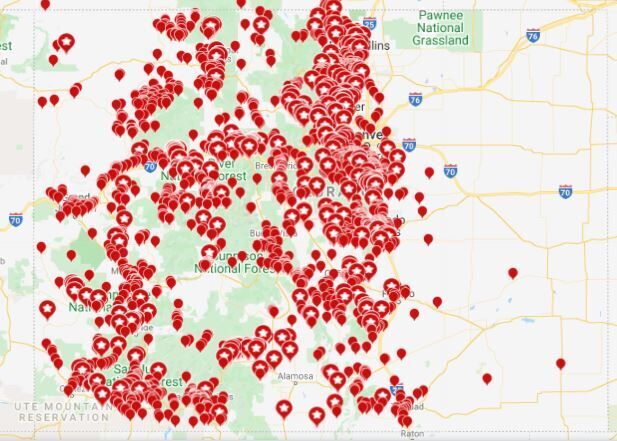
The Pikes Peak region had upward of 600 bear encounters in 2020, including two cubs captured in Acacia Park in downtown Colorado Springs.
When cubs are separated from their mother, they are placed in rehabilitation programs such as Wet Mountain Wildlife Rehabilitation, an animal center in southern Colorado so they can be reintroduced into the wild.
But the challenges of human encounters with bears is not likely to disappear anytime soon. Wildfires and periods of drought can drive bears to rely on humans in an unhealthy way.
“In areas where human-bear conflict already exists, loss of natural food sources often lures bears into seeking human-related food sources (trash, bird feeders, fruit trees), which can offset food shortages and mitigate the natural biological checks that control bear populations,” Yamashita said. “With a finite amount of room and increasing numbers of both humans and bears it is inevitable that there will be more conflicts.”


Colorado to get $615M from Meta child safety settlement
Thelma Grimes
thelma.grimes@coloradopolitics.com
Updated 9 hours ago
The parent company of Facebook and Instagram will pay hundreds of millions of dollars to Colorado, part of an $18 billion multistate deal, in which the company also agreed to adopt extensive child-safety changes to its operations. The settlement ended...

Colorado’s chief federal judge orders return of wrongfully deported man, second judge to explore ‘series’ of violations
Michael Karlik
michael.karlik@coloradopolitics.com
Updated 12 hours ago
Colorado’s chief federal judge took the extraordinary step of directing the government on Tuesday to do everything it can to return a man it deported in violation of his order. At the same time, Colorado’s chief magistrate judge has set...

Counties warn CPW that new comment limits sideline local governments
Marianne Goodland
marianne.goodland@coloradopolitics.com
Updated 10 hours ago
The September meeting of the Colorado Parks and Wildlife Commission will feature newly revised public‑comment rules — changes introduced by chair Jay Tutchton of Bent County, who announced them without first discussing the revisions publicly with the rest of the...

Controversial two-bag furbearer limit heads to CPW meeting under legal threat
Marianne Goodland
marianne.goodland@coloradopolitics.com
Updated 10 hours ago
Next week’s Colorado Parks and Wildlife Commission meeting in La Junta is likely to open under the cloud of threatened legal action. Safari Club International and the Sportsmen’s Alliance Foundation warned the commission this month that its July vote imposing...

Golden to pay $155,000 to fired city manager
Matt Kyle
matt.kyle@denvergazette.com
Updated 12 hours ago
The Golden City Council on Tuesday approved a roughly $155,000 severance payout to former city manager Scott Vargo, who was fired earlier this month following a “racist incident” at a city fire station. The payout is part of a separation...

Trump says the US doesn’t need Canada. America’s economy says otherwise.
The Associated Press
the-associated-press@coloradopolitics.com
Updated 13 hours ago
TORONTO (AP) — U.S. President Donald Trump says his country does not need Canada. But every day, roughly 4 million barrels of Canadian crude oil flow south, helping fuel American cars, trucks and airplanes and supply U.S. industry. And oil...

USPS ballot rule faces lawsuit from Colorado, other states
Thelma Grimes
thelma.grimes@coloradopolitics.com
Updated 11 hours ago
Colorado, along with 25 other states, filed a lawsuit against the U.S. Postal Service to challenge a new rule that seeks to restrict the mailing of ballots to American citizens in an eligible voters list. Colorado relies heavily on the...

FDA approves landmark pancreatic cancer drug that’s shown to improve survival
The Associated Press
the-associated-press@coloradopolitics.com
Updated 13 hours ago
WASHINGTON (AP) — The Food and Drug Administration on Wednesday approved a groundbreaking new drug for advanced pancreatic cancer, offering U.S. patients a more effective treatment against one of the deadliest types of cancer. FDA officials gave expedited approval to...
Trump defends pause on beef tariffs: Prices are ‘coming down very rapidly’
Naomi Lim
naomi-lim@coloradopolitics.com
Updated 16 hours ago
President Donald Trump defended his decision to pause tariffs on some beef imports, even as Republicans criticize the decision. “Prices are coming down very rapidly, and now beef is starting to come down,” Trump told The Glenn Beck Program on...
Denver murder, assault convictions reversed due to faulty jury instructions
Michael Karlik
michael.karlik@coloradopolitics.com
Updated 10 hours ago
Colorado’s second-highest court reversed a defendant’s convictions for murder and assault last week after concluding a Denver judge incorrectly omitted key jury instructions that could have affected the verdict and sentencing. Stephen C. Swainson fatally stabbed Israel Casillas in downtown...
PREV
PREVIOUS

Colorado senators recommend candidates to White House for federal justice appointments
U.S. Sens. Michael Bennet and John Hickenlooper have recommended the White House nominate Regina M. Rodriguez to be a federal district judge in Colorado, and have presented six candidates for the positions of U.S. Attorney and U.S. Marshal, including the city attorney of Denver and two county sheriffs. “These positions are vital to ensuring we […]

Judge blasts lawyer for publishing confidential information in Arvada police lawsuit
A federal judge has denied the city of Arvada’s request to dismiss a use-of-force lawsuit against its officers, but not before excoriating one of the lawyers involved for disclosing information that he pledged to keep confidential. “I hope that a lesson has been learned very clearly. This is not the way to practice law. This […]