

‘Petition Rights Amendment’ proponents to make five more attempts before Title Board

The proponents of a ballot initiative that would drastically reform the state’s direct democracy process will have another chance to plead their case before the Title Board on Wednesday.
Five more chances, in fact.
John Ebel of Lone Tree and Donald L. “Chip” Creager III have submitted five additional versions of a proposal that has appeared several times before the ballot title-setting body. Nicknamed the “Petition Rights Amendment,” the initiative seeks to legalize ballot initiatives throughout most units of state and local government, limit the legislature’s ability to shield laws from referendum, and impose fines on people who impede the activities of signature gatherers, among other changes.
Although the board has considered multiple iterations beginning in the 2020 election cycle and into the current one, in no instance has the Petition Rights Amendment been successfully petitioned onto the statewide ballot.
Memoranda from Legislative Council Staff, which reviewed each of the proposals scheduled for this week, indicated confusion over a section in the one-page measure that repeals several provisions of the state constitution.
“The first sentence in section 4 appears to limit, and therefore conflict with, the Colorado Constitution. If this is the case, is this sentence unconstitutional?” the memo reads.
The question echoed the doubts of Title Board members, who rejected a virtually identical measure in January. At the time, board members felt they lacked jurisdiction to set a ballot title, which requires a finding that the proposed initiative adheres to a single subject. The board explained to Ebel and Creager that they could not amend the constitution through a statutory change, as the Petition Rights Amendment now attempts.
In one of the five proposed versions, the section repealing parts of the constitution is replaced with the statement: “This statute is an alternative to the existing petition process.”
Legislative Council Staff questioned the intent of the provision. The office also called into question the vague wording of yet another version that would entitle “anyone defending this right to petition” to monetary compensation, without further elaboration.
Concerns about how exactly the initiative would work have surfaced repeatedly at the Title Board, with critics arguing that far-reaching changes are embedded in overly-simplified language.
“You simply can’t know what this thing means because it uses these terms not used anywhere else in law and not defined,” argued attorney Thomas M. “Trey” Rogers III last March.
The board, however, cannot consider the effects of a measure when deciding to set a ballot title – only whether it contains a single subject.


USPS ballot rule faces lawsuit from Colorado, other states
Thelma Grimes
thelma.grimes@coloradopolitics.com
Updated 10 minutes ago
Colorado, along with 25 other states, filed a lawsuit against the U.S. Postal Service to challenge a new rule that seeks to restrict the mailing of ballots to American citizens in an eligible voters list. Colorado relies heavily on the...
Colorado lawmaker, House leaders named in workplace-retaliation lawsuit
Marianne Goodland
marianne.goodland@coloradopolitics.com
Updated 23 hours ago
A former legislative aide has filed a lawsuit alleging she was mistreated, illegally directed to perform campaign work and harmed by a House leadership structure she charged was fragmented, politicized and ineffective at protecting employees. The lawsuit, filed by Jennifer...
Democratic candidate in Colorado’s 4th CD urges long-term water planning
Marianne Goodland
marianne.goodland@coloradopolitics.com
Updated 4 days ago
The Democrat hoping to become the next representative of Colorado’s 4th Congressional District on Thursday made her case on the final day of Colorado Water Congress in Steamboat Springs. Eileen Laubacher, who spent 34 years in the U.S. Navy and...
Democratic gubernatorial candidate Phil Weiser promises to appoint rural outreach director, water adviser
Marianne Goodland
marianne.goodland@coloradopolitics.com
Updated 5 days ago
Democratic gubernatorial candidate and current Attorney General Phil Weiser told the Colorado Water Congress Thursday he intends to appoint a rural outreach director and a water policy adviser should he win the election in November. Weiser’s speech at the Steamboat...
Attorney general candidates present priorities at Colorado Water Congress
Marianne Goodland
marianne.goodland@coloradopolitics.com
Updated 5 days ago
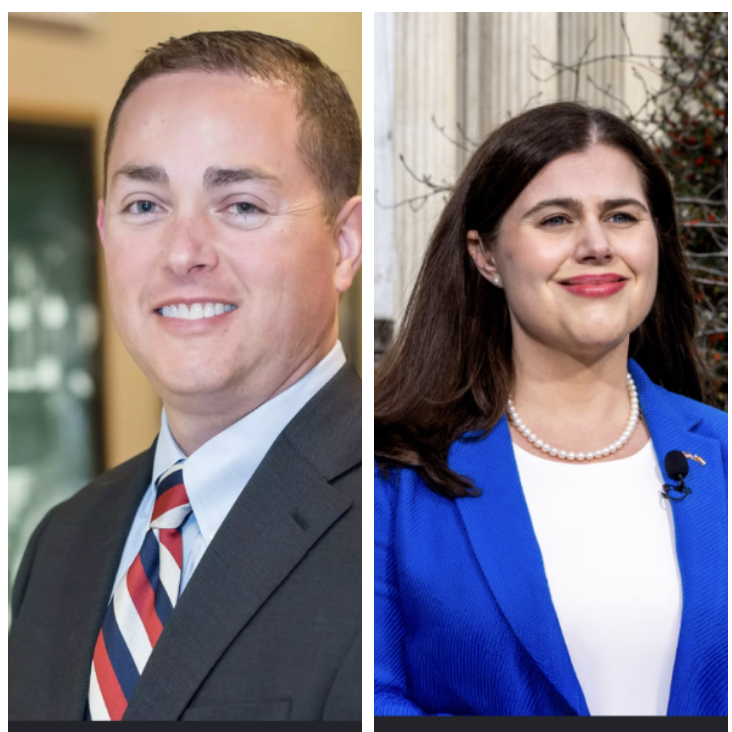
The two major-party candidates for attorney general — Republican Michael Allen, the district attorney for Teller and El Paso counties, and Democratic Secretary of State Jena Griswold — on Thursday outlined their priorities at the Colorado Water Congress. Griswold attended...

Denver named finalist for 2028 Democratic Convention site
Thelma Grimes
thelma.grimes@coloradopolitics.com
Updated 6 days ago
The Mile High City competes with Boston and Philadelphia The list of cities being considered to host the 2028 Democratic National Convention has narrowed even further, with Denver making the cut as one of the final three, along with Boston...
GOP gubernatorial candidate Victor Marx pushes aggressive water-storage expansion at Colorado Water Congress
Marianne Goodland
marianne.goodland@coloradopolitics.com
Updated 6 days ago
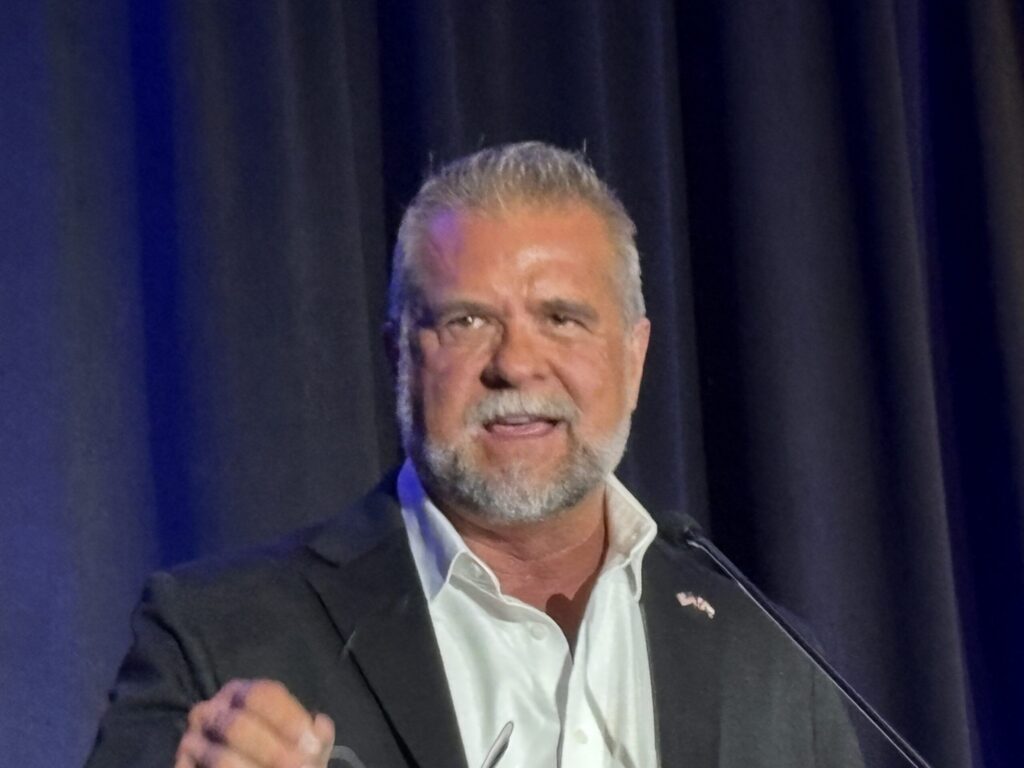
Victor Marx, the Republican nominee for governor, took the spotlight Wednesday during the opening day of the Colorado Water Congress, laying out how he says the state should approach its water future. Marx told the standing-room-only audience in Steamboat Springs...

U.S. Rep. Lauren Boebert stresses storage, forest health and Upper Basin rights at Colorado Water Congress
Marianne Goodland
marianne.goodland@coloradopolitics.com
Updated 6 days ago
Republican U.S. Rep. Lauren Boebert used her brief Wednesday appearance at Colorado Water Congress to tout her record on delivering water projects for the state and her district. Boebert, who is running for her second term representing the 4th Congressional...
Colorado House Democrats’ caucus finances under scrutiny as ethics case against leader advances
Marianne Goodland
marianne.goodland@coloradopolitics.com
Updated 4 days ago
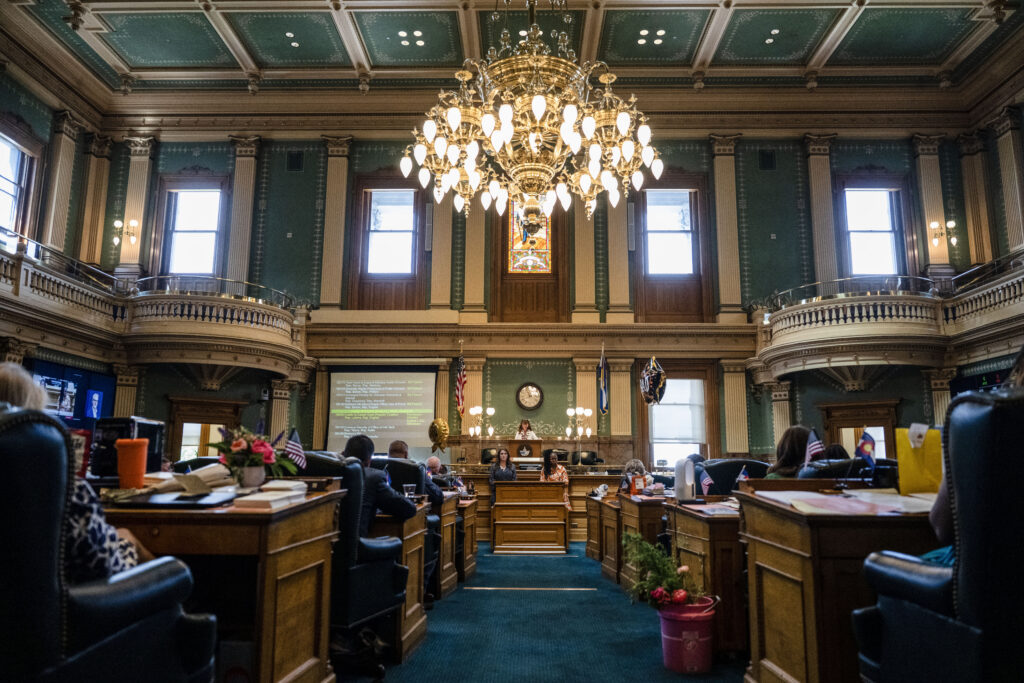
Democratic lawmakers told a legislative ethics panel that a leader’s management of caucus finances left them with unanswered questions, disputed reimbursements and a breakdown in communication that ultimately triggered a formal complaint. The House Ethics Committee is examining a complaint...

Colorado lieutenant governor candidate Markert says early discipline and key mentors set his course
Marianne Goodland
marianne.goodland@coloradopolitics.com
Updated 1 week ago
Editor’s note: This is the first installment in a three-part series examining Colorado’s candidates for lieutenant governor. In this piece, Colorado Politics speaks with George Markert, the Republican running mate to gubernatorial candidate Victor Marx. Marx is competing against Democrat...
PREV
PREVIOUS

Crow reintroduces gun safety bill stemming from 2019 Columbine aficionado incident
U.S. Rep. Jason Crow has reintroduced legislation to close the federal firearms loophole exploited by the out-of-state woman who prompted school closures in spring 2019 throughout Colorado after law enforcement considered her “extremely dangerous.” The Closing the Loophole on Interstate Firearm Sales Act, which Crow has termed the Colorado Loophole Act, would prohibit a federally-licensed […]

Court tosses lawsuit by pro-business group seeking to alter environmental data reporting
The state’s air quality regulator does not have the authority to report lower ozone levels to the federal government by factoring in international emissions and forest fire effects, the Court of Appeals decided last week in dismissing a pro-business group’s lawsuit. “Polluters in the region refuse to clean up their mess and instead are pointing […]