

BIDLACK | A highway runs through it, and it hurts

Let me begin this column with a spoiler, so you do not have to read all the way to the end if you don’t want to: I don’t know the right answer, and it is complicated. There, now you are all caught up…
And now, please allow me to introduce you to the late Mary R. Kohl.
Mary R. Kohl was, as far as I can tell, a nice lady living in Cincinnati, Ohio in the latter part of the 19th century. She apparently had some economic success, because in 1875 she owned a particularly interesting parcel of land. And because of that bit of land, Mary would find herself forever tied to a controversial, yet vital, question in law.
You see, Mary’s plot of land had caught the eye of government officials, who judged that parcel to be the perfect place for the construction of a new post office, customs building, and a few other government buildings. That would all have been well and good, save for the fact that Mary did not want to sell her land to the government. She wanted to keep it.
But the government really, really wanted that land.
Thus in 1876, Mary found herself a party to a legal case that would wind all the way up to the U.S. Supreme Court. And because of Mary, our nation’s highest court would eventually issue its very first ruling on the issue of eminent domain, the legal concept that the government can, with just compensation, seize private property when that property is deemed vital to a governmental project that will benefit the greater society.
Mary lost the case.
The court ruled that the interests of the people, in the form of the new government buildings, took precedence over an individual property owner’s desire not to sell. As long as the property owner was given just compensation, the government (federal or state) could legally take the land.
Which, of course, brings me to I-70 as it passes through north Denver.
A recent Colorado Politics story tells the compelling story of rights in conflict. Now, I’ve written about that issue – the rights of some people being in conflict with the rights of others – on a number of occasions. And in the case of the good people living in the north Denver neighborhoods of Globeville and Elyria-Swansea, those concerns about rights are very much front and center.
The Central 70 Project, a massive infrastructure project to upgrade and improve the vital I-70 highway corridor, has been underway for four years, and it has made the lives of many of the local residents very difficult indeed. It has been what might be called a troubled project for most of its history, as has been previously reported. A number of homes and businesses have been razed and eminent domain has been used a few times when owners did not want to sell.
In the abstract, widening and improving I-70 seems like a good idea, but this particular project has quite a few problems. When the highway was first constructed back in the 1960s it was constructed by basically cutting through existing neighborhoods, a design concept that would not be utilized today. So, the designers are trying to, at least in part, make up for that decades-old error by removing the existing viaduct and putting portions of the new highway underground.
But as you can imagine, four years (with at least a couple more to go) of having your neighborhoods turned into construction sites, with the concomitant noise, dust, and other environmental factors have turned many residents off to the entire project. Lawsuits were filed in an effort to get the entire project moved a few miles north, to avoid slicing through the existing community, but those efforts were unsuccessful. Others worry that the “just compensation” paid when homes are removed are not truly “just,” in that they may reflect the value of a home or business destined for destruction, but do not reflect the cost of trying to find new housing elsewhere in Denver, which is not cheap, to say the least.
It is not unreasonable, when stuck on I-70 during rush hour, to wish for a highway system that can handle the volume of traffic it faces every day. And it is not unreasonable for a person to want a small home in a quiet neighborhood, free from dust, noise, and the bedlam that construction can cause. I suspect that I would be most unhappy if the state decided that it really needed to build a road through the plot upon which my house sits. And I admit that I also wish Colorado Springs had a wider east-west road to handle our traffic jams, even as I admit that such a new road would require people to lose their homes.
And so, as I said at the start, I do not know what the right answer is. That said, we should always remember that every decision on such construction projects impacts people directly and harshly. Improved highways are great, but we should also always remember Mary, and the costs of such convenience.


Colorado can’t forget the lessons of COVID | Jon Caldara
Jon Caldara
jon-caldara@coloradopolitics.com
Updated 2 days ago
We are finally getting a clearer picture of what happened during COVID. Not because the people who locked us up, masked our faces and forced unproven chemicals into our bodies have suddenly become transparent, but because Anthony Fauci’s COVID-era diary...
Historic preservation supporters organize to oppose Trump changes | Bob Loevy
Tom Cronin
tom-cronin@coloradopolitics.com
Updated 1 day ago
Historic preservation organizations in Colorado Springs, the remainder of Colorado and across the nation are organizing to resist a recent effort to relax and weaken historic preservation laws in the United States. In Washington, D.C., the Advisory Council on Historic...

The primary political reform and precondition for all others | SONDERMANN
Eric Sondermann
eric-sondermann@coloradopolitics.com
Updated 4 days ago
In its current state, the American political system has no end of ailments. Far too many factors accelerate polarization and work against moderation and narrowing the differences. Media, and the way so many citizens limit themselves to agreeable, reinforcing sources,...
Pueblo mayor, council concoct Trumpian Texas Two-Step | Dennis Maes
Dennis Maes
dennis-maes@coloradopolitics.com
Updated 2 days ago
Several weeks ago, an article was published positing Pueblo Mayor Heather Graham is a disciple of the calamitous Donald Trump school of governance — specifically as it related to questionable ethical practices and the misuse of public funds. Recently, Graham...
Colorado can’t afford to turn its back on proven public safety technology | GUEST COLUMN
Colorado Politics
colorado-politics@coloradopolitics.com
Updated 2 days ago
By Samuel G. Michael I recently saw a report that said Colorado is leading the way in artificial intelligence adoption for businesses. Across our state, more business owners and employees than ever before use AI for their everyday functions —...
As education conflicts abound across Colorado, who puts the kids first? | Paula Noonan
Paula Noonan
paula-noonan@coloradopolitics.com
Updated 3 days ago
Elected school boards and the Colorado Department of Education (CDE) have hit the headlines with fired superintendents, superintendent resignations, failures of oversight, and misdirected dollars. Cherry Creek School District’s superintendent was fired. Jefferson County Schools’ superintendent found a less stressful...

Clock is ticking on Colorado’s new AI rules | PODIUM
Colorado Politics
colorado-politics@coloradopolitics.com
Updated 3 days ago
By Aashis Luitel On Jan. 1, organizations using covered automated systems must begin complying with Senate Bill 26-189, Colorado’s new Automated Decision-Making Technology Act. They can identify those systems and start building the processes the statute clearly requires. What they...
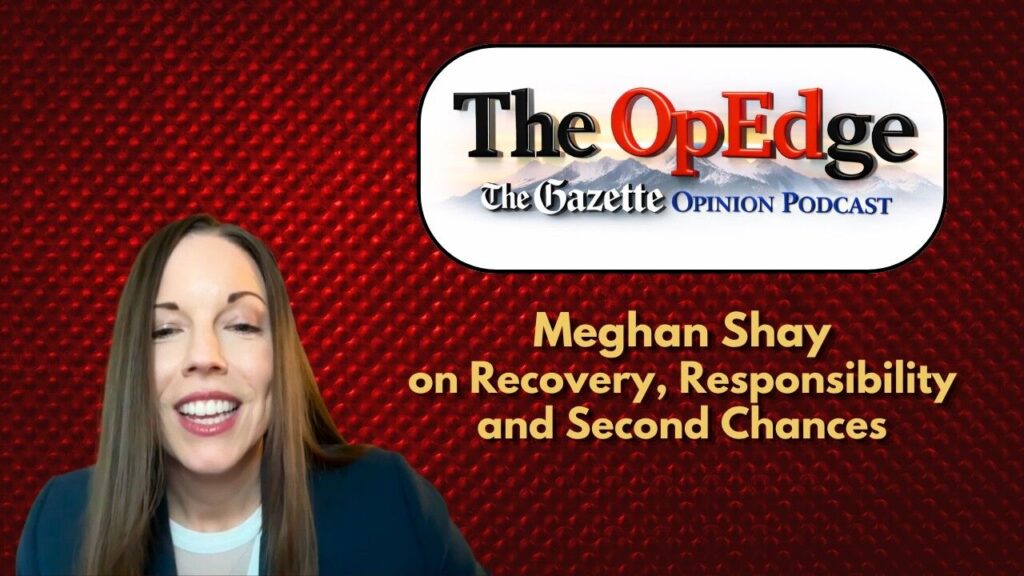
Meghan Shay on recovery, responsibility and second chances | The OpEdge Podcast
Tony Olivero
tony.olivero@gazette.com
Updated 5 days ago
Step Denver and Step Springs CEO Meghan Shay joins The OpEdge to explore addiction recovery, homelessness, and the role of accountability in lasting change. Shay tells host and investigative columnist Jimmy Sengenberger why she believes recovery is built on personal...

The outrages mount | Hal Bidlack
Hal Bidlack
hal-bidlack@coloradopolitics.com
Updated 5 days ago
My kindly and forgiving editors understand that, from time to time, I can’t help myself from leaping atop my rickety soapbox to vent. And, like many other political commentators have already done, I could easily fill this entire missive with...
Rural Colorado deserves a tax holiday | GUEST COLUMN
Eric Mulder
jstooksberry@gmail.com
Updated 5 days ago
Spend enough time in Colorado’s Eastern Plains, the San Luis Valley, or the Western Slope, and you’ll see boarded-up storefronts, schools consolidating classrooms, and small rural communities stretching every dollar to keep basic services afloat. Once the backbone of Colorado’s...
PREV
PREVIOUS

OPINION | 'Public banks' would pose risks, play politics
Michael Van Norstrand A public bank, by the people for the people? Sounds appealing. Since the 2008 recession, a number of states and cities have considered proposals to establish public, state-owned banks across the U.S. These public banks would be run by a governmental entity that removes funds currently deposited and protected by the private […]

FEEDBACK | Undermining our right to self-defense
It’s Ground Hog Day and I’m reading another lopsided story about gun control in Colorado Politics (“Safe gun storage campaign launches ahead of legislation from General Assembly,” Feb. 1). At least Bill Murray had some good days. We now face the confluence of two bills that will likely become law and work together to screw […]