

Corrections officer who shot fleeing inmate may be sued for use of force, federal judge rules

A defendant may sue the correctional officer who shot him while he attempted to flee a courtroom, a federal judge in Colorado decided last week.
The officer’s “immediate resort to his firearm, and the large number of shots discharged, evince little to no consideration of whether such force was necessary, nor any effort to minimize the force used,” wrote U.S. District Judge William J. Martínez in a Jan. 20 order.
Brian Estrada was a pretrial detainee at Sterling Correctional Facility. On May 30, 2018, he was present in the Logan County Justice Center for a proceeding related to his charge of second-degree assault on a peace officer. The Denver Post reported Estrada previously received convictions for introduction of contraband at Sterling.
Bound with wrist and ankle shackles at the time, Estrada attempted to flee the courtroom.
There were four correctional officers present in the courtroom, including Officer Jacob Smart. As Estrada moved toward the door, Smart shot him four times in his midsection, chest, hand and arm. Estrada collapsed in the hallway outside the courtroom.
Estrada filed a federal complaint against Smart in February 2020, alleging the officer used greater force than was necessary to prevent his escape in violation of the Eighth Amendment, which prohibits cruel and unusual punishment. Smart invoked qualified immunity, which is a judicial doctrine that shields government employees from liability absent a violation of clearly-established legal rights.
Estrada argued it was unnecessary for Smart to shoot him because of the substantial obstacles preventing his escape, including the four officers, an additional security guard at the exit, and the fact that he had little idea where he was going in the building.
“During an interview following the shooting, the judge in the courtroom, Judge [Carl] McGuire, stated that the thought that ran through his head when Mr. Estrada was attempting to leave the courtroom was that there was no way Mr. Estrada was going to run fast enough to get out the doors, down the stairs, and out the front door, before somebody got him,” wrote Scott H. Palmer, an attorney representing Estrada.
In April 2019, the 13th Judicial District Attorney’s Office deemed Smart justified in his use of force. The findings quoted Smart’s statement to the Colorado Bureau of Investigation that he was the “last line of defense” between Estrada and the public, and noted the officer’s concern that Estrada might attempt to grab his weapon.
“All the witnesses described the officer’s verbal commands to stop and get down on the floor,” wrote Brittny B. Lewton, the district attorney at the time. “All the witnesses described the officer’s attempt to back up and then ultimately firing at Estrada once it became clear he was not heeding any commands to stop.”
Palmer and James P. Roberts, Estrada’s other attorney, acknowledged to Colorado Politics that “mental health issues likely played a role” in their client’s decision to exit, but explained that another officer in the room had managed to push Estrada to the ground with only one hand – a far lesser degree of force than Smart used.
The Colorado Attorney General’s Office, defending Smart, argued in response to the lawsuit that previous court rulings illustrated how “a corrections officer may violate an inmate’s Eighth Amendment right to be free from excessive force if that officer, believing the inmate would be a threat to the community if he escaped, shot an inmate who attempted to escape from a courthouse.”
The defense cited multiple cases, but Martínez rejected all of those examples, noting a key difference in Estrada’s shooting: “unlike as is manifestly the case here, they were not otherwise restrained,” he wrote.
“The Court finds that given the totality of these circumstances, the Plaintiff has met his burden of alleging facts that establish that Defendant acted maliciously and sadistically,” the judge concluded, using terminology the U.S. Supreme Court has established for evaluating such cases.
Martínez denied Smart’s motion to dismiss the case.
“Mr. Estrada has recovered the best he can from the injuries Defendant Smart inflicted,” said Estrada’s attorneys. However, “he has multiple scars on his body from the bullet wounds and he lost his thumb as a result of this unnecessary shooting.”
Spokespersons for the Attorney General’s Office and the Department of Corrections indicated they could not comment on active litigation.
The case is Estrada v. Smart.



Gazette family of papers rakes in 64 awards at 2025 Colorado Press Association Better News Contest
Elizabeth Pond
elizabeth.pond@denvergazette.com
Updated 7 hours ago
The Gazette family of newspapers won 64 awards in the Colorado Press Association’s annual Better News Contest — a whopping 36 more than the three papers collectively won last year. Colorado Politics raked in 27, The Colorado Springs Gazette took...

What courageous citizenship really looks like | Vince Bzdek
Vince Bzdek
vince.bzdek@gazette.com
Updated 1 day ago
By Vince Bzdek What exactly is courage? Ernest Hemingway famously called it grace under pressure. Mark Twain wrote that “courage is resistance to fear, mastery of fear — not absence of fear.” C.S. Lewis refined that even more: “Courage is...
The coming election and mischief in the making | SONDERMANN
Eric Sondermann
eric-sondermann@coloradopolitics.com
Updated 4 days ago
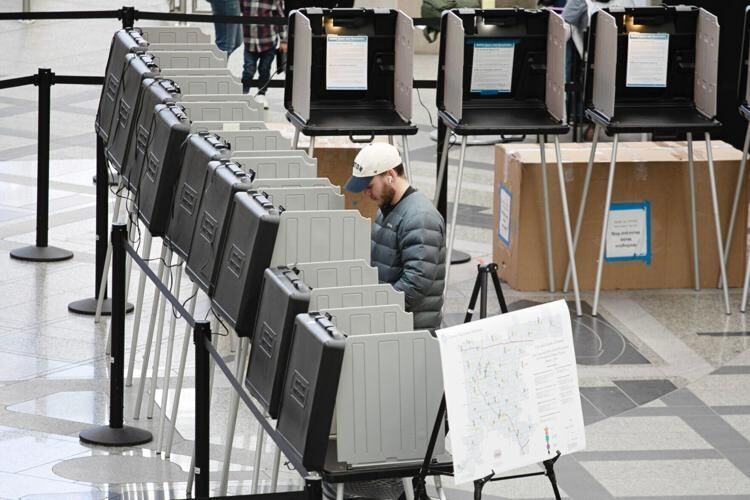
America’s tribalism is such these days that we struggle to even agree on the basic rules. Elections have always been hotly contested. As the saying goes, “Politics ain’t beanbag.” The process has long involved elements of nastiness and underhanded conduct....

Colorado Politics Calendar Aug. 31-Sept. 6
Rachael Wright, Special to Colorado Politics
rachael.wright@coloradopolitics.com
Updated 4 days ago
CoPo’s weekly political calendar will help you find political and public-policy events throughout Colorado. It includes candidate and issue campaign events, public policy meetings, court hearings, state and local party conventions, assemblies, debates, rallies, parades, speaking engagements, traveling dignitary appearances,...

Tancredo in Running for Dept. of Ed. Position | A LOOK BACK
Rachael Wright, Special to Colorado Politics
rachael.wright@coloradopolitics.com
Updated 4 days ago
Forty-five years ago this week: “I know that my name has been placed before the Secretary of Education, and I know that I’m one of three or four being considered for the Department of Education’s Region 8,” said state Rep....
Colorado measure adding ID checks to mail-in voting qualifies for ballot
Marissa Ventrelli
marissa.ventrelli@coloradopolitics.com
Updated 2 days ago
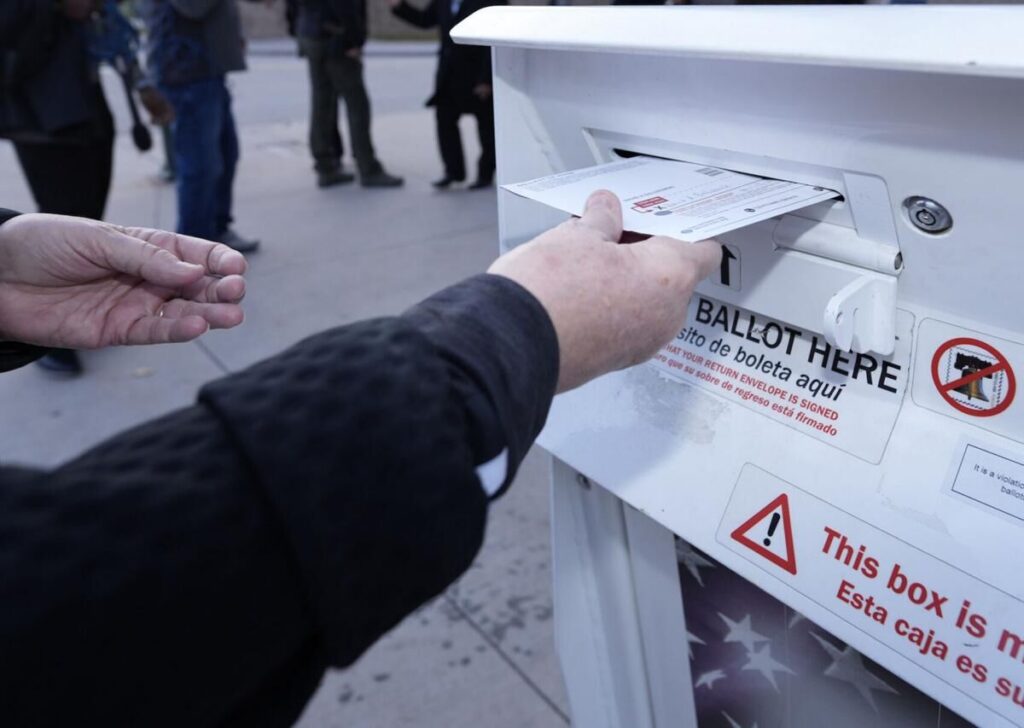
A ballot initiative that would require voters to include additional information on mail-in ballots has qualified for the November election, according to the Secretary of State’s Office. Backed by El Paso County Treasurer Chuck Broerman and former Deputy Secretary of...
Colorado election website error exposes personal data of confidential voters
Marissa Ventrelli
marissa.ventrelli@coloradopolitics.com
Updated 2 days ago
A system update accidentally lifted protections on confidential records in Colorado, exposing dozens of voters’ personal information, according to the Secretary of State’s Office. The limit that normally blocks access to confidential voter profiles was inadvertently disabled during an update...

PUC adds weekly comment after killing private talks
Scott Weiser
scott.weiser@gazette.com
Updated 2 days ago
The Colorado Public Utilities Commission will take public comment at the start of every commissioner’s weekly meeting beginning Sept. 9 as part of its new transparency mandate, the commission announced, expanding a slot previously limited to the second Wednesday of...
10th Circuit overturns framework for sentencing probation violators by 11-1
Michael Karlik
michael.karlik@coloradopolitics.com
Updated 1 day ago
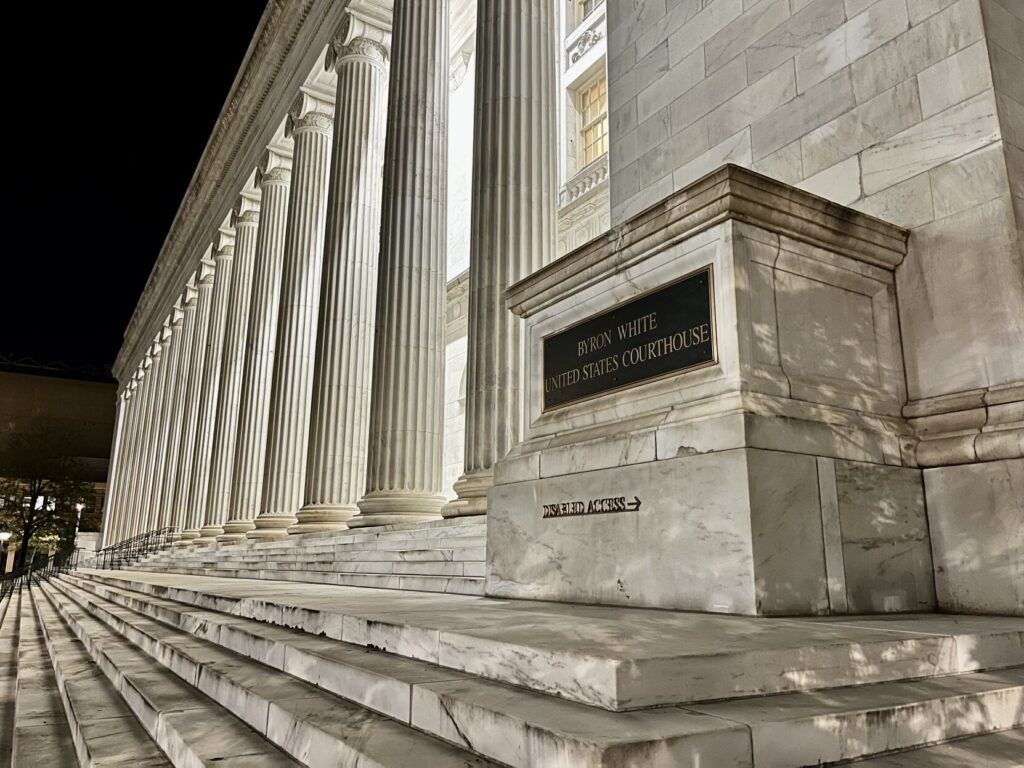
In a rare decision by all 12 of its full-time judges, the Denver-based federal appeals court ruled in a lopsided vote on Friday that one of its members created a sentencing process for probation violators that was out of step...
Federal judge dismisses excessive force lawsuit against Colorado Springs, officer
Michael Karlik
michael.karlik@coloradopolitics.com
Updated 1 day ago
A federal judge concluded last week that a Colorado Springs police officer could not be held liable for shooting a suspect three times after the man menaced two victims with a gun and fled the scene. Al’morion Germany was involved...
PREV
PREVIOUS

Aurora City Council strikes down two immigration protection ordinances in tie-breaking votes
After multiple delays, the Aurora City Council voted down a pair of immigration protection ordinances Monday night, choosing to decline both ordinances in a 5-6 vote. The ordinances, sponsored by Council members Crystal Murillo and Alison Coombs, would have banned Aurora police from working with federal immigration authorities and established a legal defense fund for […]

BARTELS | A 'Homegrown Year,' and a newfound love of life
Blame it on having just given birth to her second child, or a day spent drinking and eating in Napa Valley, or on joyous Kelly Maher being, well, Kelly Maher. However the planets aligned, six months ago the Republican political pundit found herself embarking on a journey that’s equal parts “Little House on the Prairie,” […]